





For many smartphone users, Google Photos is the undisputed default—a seamless, AI-powered vault that curates our digital lives. However, for those who view cloud storage as a finite, shared resource rather than an infinite convenience, the service can quickly become a point of friction. As an Android enthusiast and tech writer who manages a 15GB storage pool across Gmail, Google Drive, and Photos, I reached a breaking point. The constant battle between high-resolution backups and the looming threat of a "Storage Full" notification prompted me to seek a different path: moving toward a purely local, offline photo management ecosystem.
The Problem with the Cloud-First Paradigm
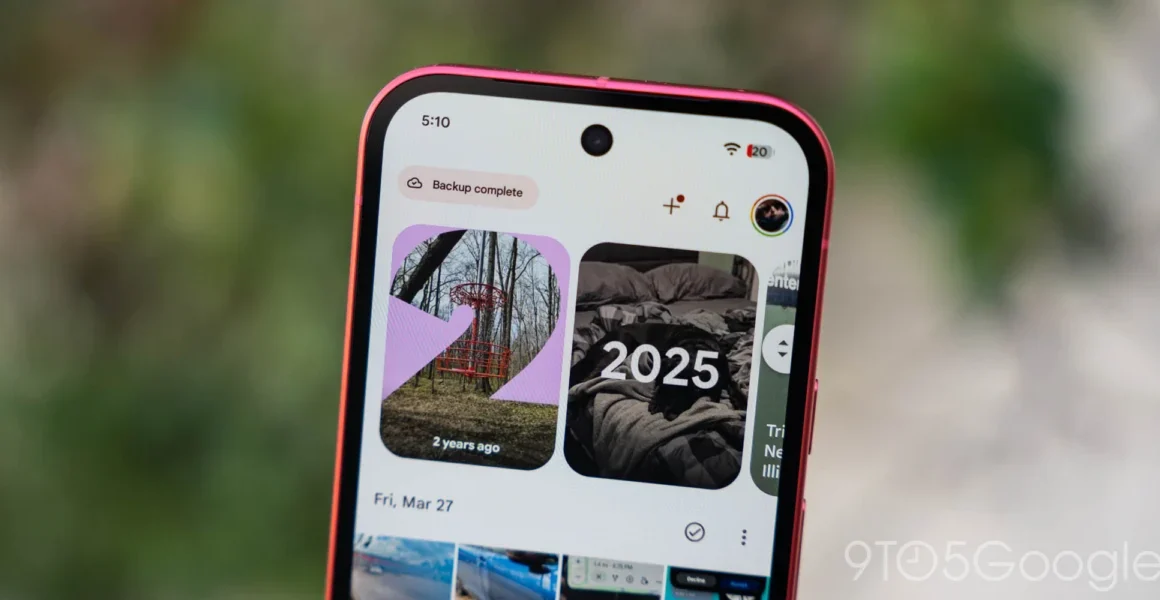
The primary issue I faced with Google Photos was not necessarily the quality of the service, but the lack of autonomy it provides regarding storage management. Google Photos is designed to be a "set it and forget it" solution. Once enabled, it indiscriminately syncs everything—from screenshots and memes to high-resolution camera captures—directly to your Google One account.
For a power user, this is a recipe for rapid data depletion. Because my 15GB of free storage is shared across my email and professional documents, having my photo library hemorrhage storage space felt inefficient. Furthermore, relying on cloud-based sync for every image captured means that even temporary photos, which I have no intention of keeping long-term, are pushed to the cloud, cluttering the virtual landscape.
I found myself craving an experience that prioritized local, device-specific storage—a return to the days of "gallery" apps that simply displayed what lived on my internal flash memory without demanding a data connection or subscription fees.
A Chronology of the Shift: From Sync to Silo
My transition away from Google Photos did not happen overnight. It was a gradual realization that my habits were dictated by software defaults rather than personal preference.
- Early 2022: Upon joining the Android Police team, I began testing a wide array of devices. My usage of Google Photos spiked, as I used it to maintain continuity across various review units.
- Late 2024: The "Storage Full" alerts became a daily nuisance. I realized that a significant portion of my data usage was derived from redundant backups of temporary testing assets.
- Early 2025: I began experimenting with local file management, utilizing tools like Files by Google to manually prune my library, which felt like a step backward in efficiency.
- Mid-2026: I officially disabled Google Photos on my daily driver, the Google Pixel, and transitioned to the "Gallery by Google" app (the standalone, offline-capable version) to regain control over my data residency.
The Solution: Gallery by Google
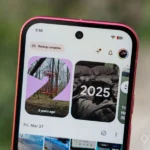
The answer to my dilemma proved to be unexpectedly simple: the standalone Gallery by Google app. While it shares a name with the cloud-integrated service, the experience is fundamentally different. It is a lightweight, offline-first application that treats your phone’s internal storage as the primary—and only—repository for your images.
Why the Shift Matters
The transition offered immediate benefits. Without the automated background sync to the cloud, I am forced to be intentional about what I keep. If I want a photo saved, I know it exists on my device. If I want to share it, I move it to a specific folder or send it via third-party transfer tools.
This shift also mitigates my paranoia regarding digital privacy. By keeping my photos off the cloud, I eliminate the risk of third-party scanning or accidental exposure through compromised account credentials. It is a "privacy-by-default" approach that requires discipline but provides significant peace of mind.
Supporting Data: The Privacy and Storage Trade-off
The decision to move to an offline gallery involves a series of technical trade-offs that every user must weigh. When comparing cloud-synced galleries against local alternatives, the data reveals two distinct user profiles.
| Feature | Google Photos (Cloud) | Gallery by Google (Local) |
|---|---|---|
| Storage Usage | Consumes Google One/Shared Pool | Uses Local Flash/SD Storage |
| Privacy | Subject to Google’s Data Policy | On-Device; No Cloud Upload |
| AI Capabilities | Advanced (Magic Editor, Search) | Minimal (Basic Auto-Enhance) |
| Backup | Automatic/Redundant | Manual/User-Defined |
The implications are clear: you are trading convenience for control. While Google Photos offers the ability to use generative AI to expand backgrounds or remove photobombers, the local gallery focuses on simple, reliable organization.

The Missing Pieces: Editing and Security
Transitioning to an offline solution is not without its hurdles. One of the most significant compromises is the loss of the "Locked Folder" feature—a secure, biometrically protected vault within the standard Google Photos app that keeps sensitive images hidden from the main gallery.
In my testing, I found that the standalone Gallery app lacks this robust layer of protection. To compensate, I have had to look toward alternative solutions. Using "Private Spaces" on the Pixel—which creates a distinct, encrypted user profile—provides a comparable level of security. It is a more cumbersome workaround, but it satisfies the requirement for privacy without forcing me back into the cloud ecosystem.
Furthermore, the post-processing tools in the Gallery app are intentionally bare-boned. Where Google Photos provides a robust suite of AI-driven editing tools, the local gallery offers only basic cropping, rotation, and an "Auto-Enhance" feature. For those who demand high-end editing, this may be a dealbreaker. Personally, I rely on the advanced editing suites found in my Samsung devices for heavy lifting, treating the Pixel’s local gallery as a consumption-first platform.
Implications for the Ecosystem
The existence of a lightweight, offline gallery app from Google is an interesting paradox. It signals that even the industry’s biggest cloud proponent recognizes that not all users want their lives digitized and hosted on remote servers. However, it also brings up the "Killed by Google" anxiety. Given the company’s historical tendency to deprecate services that don’t align with their broader monetization strategy, I have to wonder how long this offline alternative will remain available.
If Google were to sunset this app, the implications for privacy-conscious users would be significant. It would push users toward third-party open-source alternatives like Fossify Gallery. Having experimented with Fossify, I can attest that it provides a very similar, highly polished experience without the bloat of trackers or ads. It is a robust fallback for anyone who, like me, is wary of entrusting their entire visual history to a single corporate entity.
Looking Ahead: The Future of Photo Management
My experiment with local photo management has changed the way I interact with my hardware. I am no longer a passive recipient of automated memories; I am an active curator of my own digital footprint.
The move away from Google Photos has not been about hating the service—it is a powerful, world-class product—but about recognizing that "convenience" is not always the optimal strategy for every user. For those who feel the walls of their storage quotas closing in, or for those who simply want to reclaim ownership of their data, the local-first approach is not just a viable alternative; it is a liberating one.
As we move deeper into an era dominated by AI-integrated cloud services, the choice to keep one’s data local is an act of digital preservation. Whether I eventually switch to an open-source solution like Fossify or continue to nurse the standalone Google Gallery app, one thing is certain: I will not be returning to the cloud-default lifestyle anytime soon. The peace of mind that comes with knowing exactly where my photos are—and who has access to them—is worth far more than the convenience of an automated backup.