By Nolen Jonker
Published October 15, 2026
Main Facts: A Paradigm Shift in Local File Retrieval
For decades, the human brain has operated on associative memory, recalling documents by their concepts, themes, and emotional resonance rather than precise file-naming conventions or exact textual strings. Operating systems, conversely, have remained rigidly literal.
For users without specialized, high-end hardware, finding a forgotten note or code snippet on a Windows PC has long meant playing a frustrating guessing game with exact keywords. Type the wrong term, and you are met with zero relevant local results—often accompanied by an unwelcome deluge of web search clutter piped straight from Bing.
However, a quiet revolution is taking place at the intersection of local artificial intelligence and developer tooling. By leveraging local Large Language Models (LLMs) equipped with the Model Context Protocol (MCP), power users are bypassing traditional operating system indexing entirely.
Instead of relying on rigid keyword matches, users are deploying local AI runners—such as LM Studio, AnythingLLM, and Jan—coupled with the official filesystem MCP server. This setup allows local AI models to inspect, read, and interpret entire directory trees in real time.
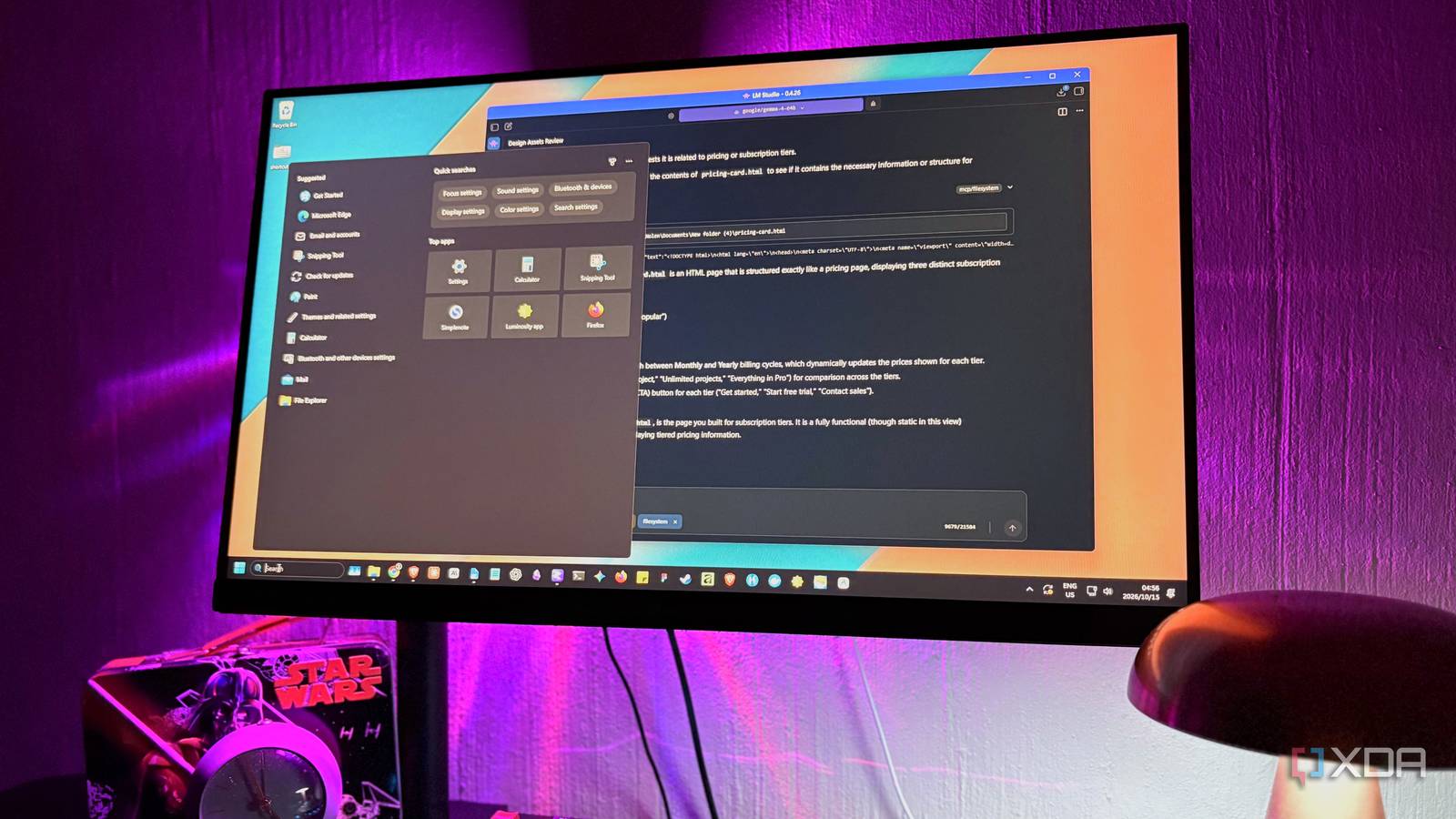
The result is a transformative semantic search workflow that runs entirely on standard consumer GPUs, rendering legacy tools like Windows Search increasingly obsolete for conceptual queries.
Chronology: The Evolution of Local Search and AI Integration
To understand how local LLMs became viable search engines, it is helpful to trace the technological trajectory that led to this point:
- Pre-2023 (The Keyword Era): Desktop search relied entirely on inverted indexes and exact string matching. Tools like Windows Search and third-party utilities like Everything excelled at blazing-fast filename retrieval, but failed utterly when confronted with conceptual or abstract queries.
- Late 2023 – 2024 (The Rise of Local LLMs): Open-source weight releases from Meta (Llama), Google (Gemma), and Mistral transformed consumer hardware. With optimization libraries like llama.cpp, running sophisticated language models locally on consumer GPUs shifted from a novelty to a practical daily workflow.
- Late 2024 (Introduction of MCP): Anthropic introduced the Model Context Protocol (MCP), establishing an open standard for connecting AI models securely to local data sources, development environments, and filesystem tools.
- 2025 (The Copilot+ Hardware Divide): Microsoft introduced semantic indexing to Windows 11, but restricted these advanced local AI search capabilities exclusively to "Copilot+ PCs" equipped with dedicated Neural Processing Units (NPUs), leaving millions of capable desktop users with older hardware behind.
- 2026 (The DIY AI Search Movement): Frustrated by hardware artificial scarcity and web-search bloat in the Start menu, tech-savvy users began configuring filesystem MCP servers inside local LLM runners, inadvertently discovering that a standard GPU running a local model could outperform native operating system search for conceptual tasks.
Supporting Data: Comparative Analysis of Search Methodologies
The practical divergence between traditional keyword indexing and local LLM semantic retrieval becomes starkly apparent during side-by-side evaluations.
Performance and Capability Metrics
| Search Metric | Traditional Windows Search (Non-Copilot+ PC) | Local LLM + Filesystem MCP |
|---|---|---|
| Primary Indexing Method | Exact keyword and filename string matching | Vector embeddings and contextual language comprehension |
| Handling Synonyms ("Night Theme" vs. "Dark Mode") | Fails unless exact keyword appears in text/title | Immediately maps conceptual equivalence |
| Query Latency | Instantaneous (pre-indexed background service) | Variable (dependent on GPU VRAM, model size, and context window processing speed) |
| Privacy Profile | Local, but integrates web search (Bing) telemetry | 100% offline and local (zero cloud telemetry) |
| Interactivity | Returns clickable file links directly in the shell | Returns paths and file analyses; requires manual navigation |
| Hardware Requirement | Standard CPU/Storage | GPU with sufficient VRAM (e.g., 8GB+) for smooth token generation |
Real-World Query Discrepancies
- Query: "Night Theme"
- Windows Search: Returned third-party Pinterest boards and Microsoft Edge add-ons, completely missing a local markdown file detailing a "dark mode audit."
- Local LLM (Gemma E4B): Initially found no exact filename match, but successfully reasoned that "night theme" and "dark mode" shared semantic equivalence, surfacing the correct local document instantly.
- Query: "Subscription"
- Windows Search: Surfaced a Windows Settings control panel page for user subscriptions, followed by a clutter of legacy software code directories.
- Local LLM: Bypassed system settings entirely to locate a specific pricing card page draft buried deep within a project folder.
Official Responses and Industry Context
Microsoft’s official stance on local search has been heavily tied to its broader hardware ecosystem strategy. With the rollout of Copilot+ PCs, the corporation positioned semantic indexing as a defining feature of next-generation Windows devices.
According to Microsoft documentation, semantic search relies on underlying NPU hardware acceleration to parse natural language queries across files without heavily penalizing CPU performance or battery life.

However, industry analysts have noted a growing friction point between Microsoft’s unified vision and consumer hardware realities. Millions of enterprise workstations and high-end gaming rigs—featuring powerful multi-core CPUs (such as the Intel Core i7-13700F) and robust discrete graphics cards—lack the specific NPU silicon mandated by Microsoft for native semantic indexing.
Independent developers and open-source advocates have seized upon this gap, demonstrating that consumer GPUs are more than capable of handling local context processing via standardized protocols like MCP.
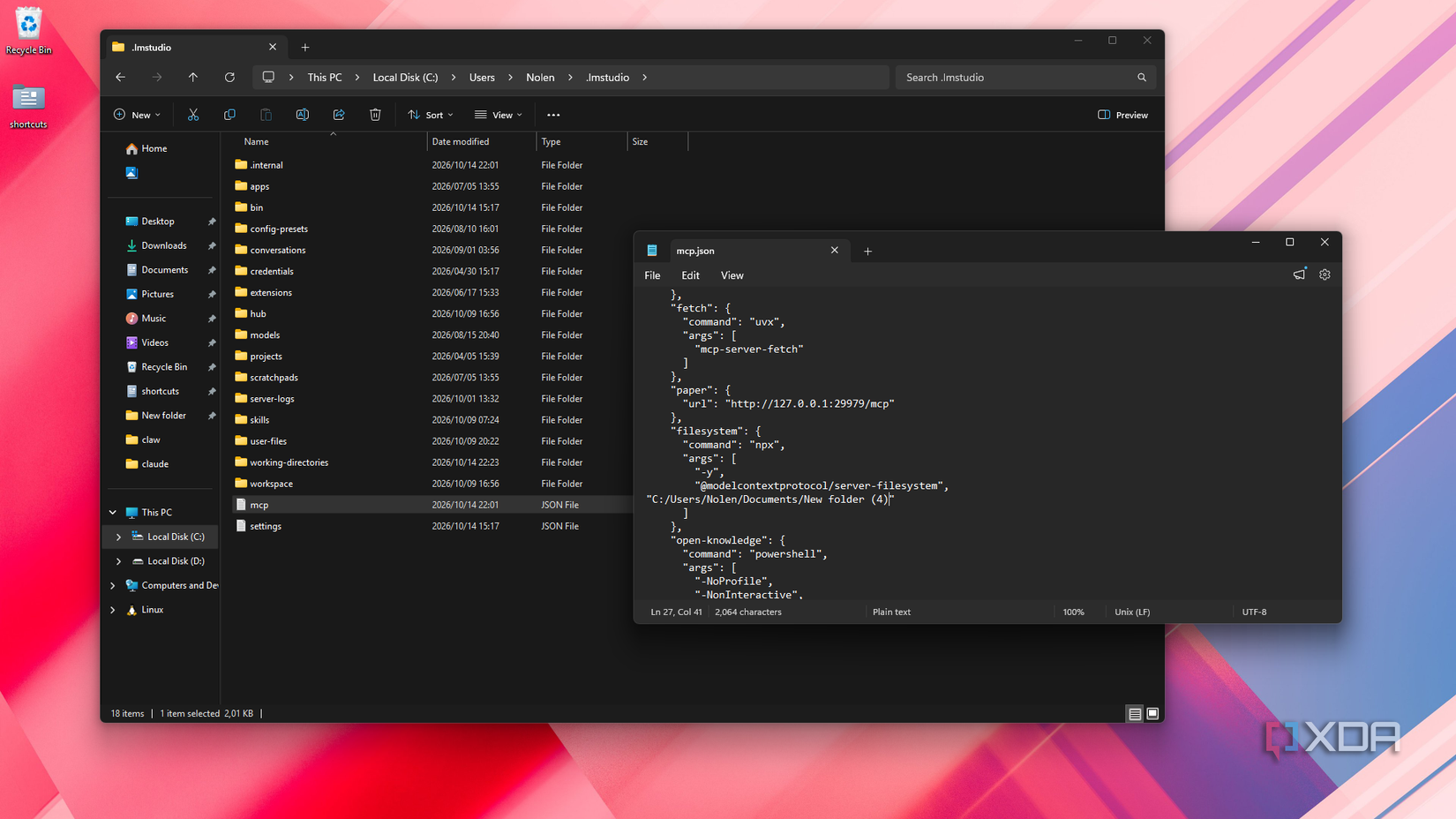
Representatives from the open-source AI community emphasize that protocols like MCP were specifically designed to democratize access to local files. By treating the filesystem as just another tool accessible via JSON configuration files, users reclaim absolute sovereignty over their data storage without needing to subscribe to cloud-tethered operating system ecosystems.
Implications: The Future of Desktop Computing and File Management
The unexpected rise of local LLMs as desktop search replacements carries profound implications for software developers, operating system architects, and everyday computer users alike.
1. The Redefinition of File Organization
For decades, users have been forced to conform to rigid directory hierarchies and deliberate naming conventions to ensure files remain retrievable. As local LLMs gain the ability to read and contextualize entire directory trees on demand, the psychological burden of file organization diminishes. When an AI can understand the underlying thesis of a document regardless of where it is saved or what it is named, the folder structure itself becomes secondary.
2. Privacy and Local-First AI Workflows
Cloud-based AI assistants have raised persistent concerns regarding data privacy, intellectual property leakage, and telemetry tracking. By routing file searches through local runners like LM Studio, AnythingLLM, or Jan, users maintain absolute air-gapped security. The data never leaves the local drive, proving that advanced contextual intelligence does not require cloud infrastructure.
3. Hardware Demands vs. Software Ingenuity
The reliance on local LLMs for search highlights a broader shift in consumer expectations. While Microsoft attempts to gate advanced search behind proprietary NPU hardware requirements, the open-source community continues to prove that existing consumer GPUs can bridge the gap. Users are no longer willing to wait for official operating system updates to gain intelligent workflow tools.
4. Remaining UX Hurdles
Despite its impressive capabilities, the local LLM search workflow is not without friction. Speed remains a limiting factor, particularly on smaller 8GB GPUs where token generation lags behind the instantaneous feedback of traditional indexing engines. Furthermore, security safeguards must be maintained; while read-only permissions can be configured within JSON files to prevent an AI from accidentally mutating or deleting local files, users must remain vigilant during initial setup.
Conclusion
As operating systems grapple with the balance between intelligent automation and user privacy, the grassroots adoption of filesystem MCP servers offers a compelling glimpse into the future. It is undeniably ironic that a consumer graphics card excluded from Microsoft’s official AI hardware definition is currently providing a superior, privacy-respecting search experience. For now, many power users are gladly trading a fraction of a second in search speed for a tool that finally understands what they meant, rather than forcing them to remember what they typed.