










The digital customer journey is rarely a straight line. A typical modern shopper might arrive via a social media link, browse anonymously while toggling between multiple browser tabs, exit to perform a quick search, and return later with an entirely different product category in mind. For years, the eCommerce industry has struggled to keep pace with this erratic, non-linear behavior.
Traditional personalization platforms have long relied on the "known customer" model—a methodology that hinges on historical CRM data, past purchase history, and logged-in user profiles. However, in an era where privacy concerns and guest checkouts dominate, the vast majority of traffic remains anonymous. This creates a "personalization gap" where brands are effectively blind to the intent of the visitors who matter most.
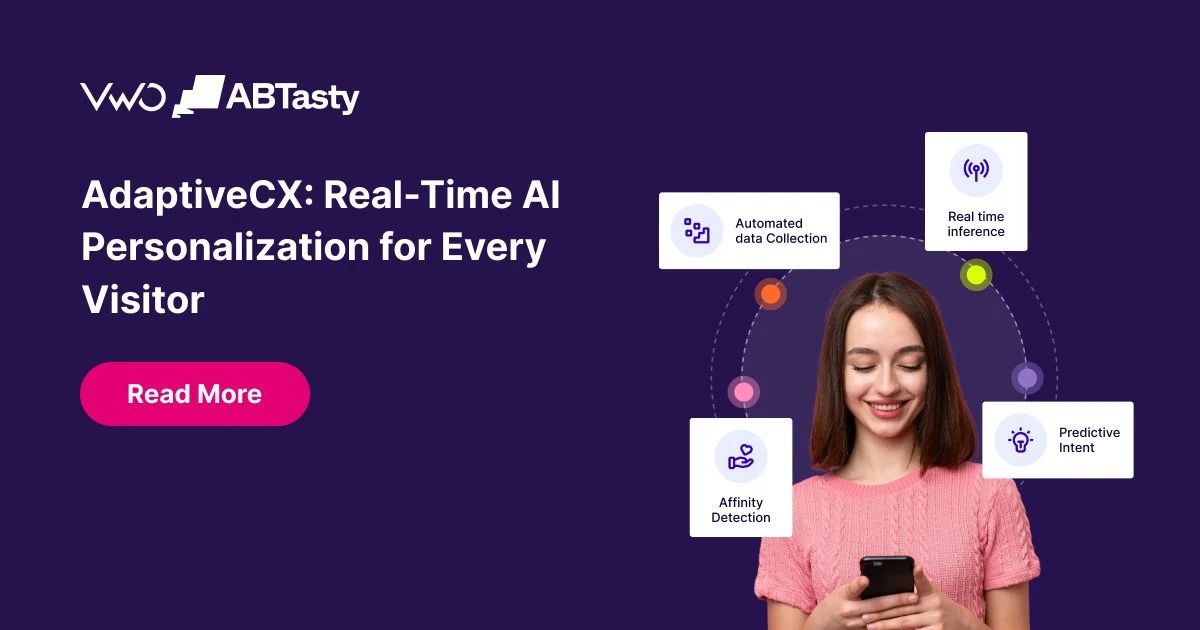
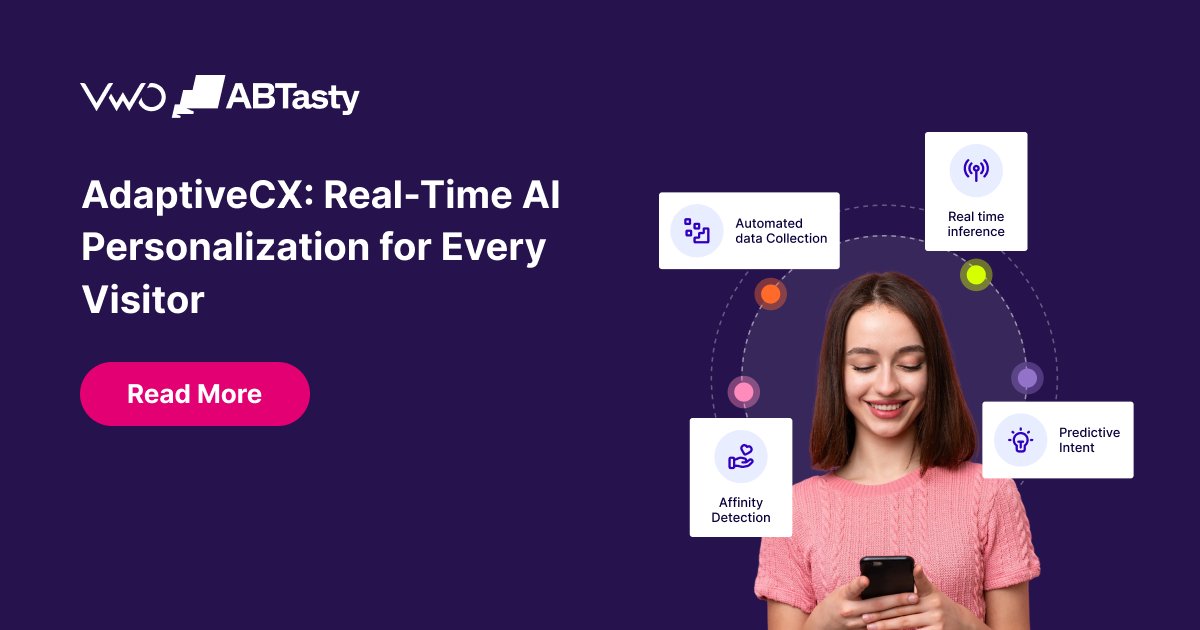
Enter AdaptiveCX, a new paradigm in AI-driven engagement that prioritizes real-time, session-based intent over historical data. By shifting the focus from who the customer was to what the customer is doing right now, AdaptiveCX is enabling brands to transform anonymous traffic into high-converting revenue streams.
The Core Facts: Bridging the "Identity Gap"
At its foundation, AdaptiveCX is a SaaS-based, no-code solution that operates on a simple but revolutionary premise: Intent is revealed in the click, not just the profile.
Most enterprise eCommerce businesses currently operate in a reactive state. Analytics tools provide a post-mortem of performance—bounce rates, session duration, and traffic sources—but they rarely provide actionable insights while the visitor is still on the page. AdaptiveCX changes this by utilizing a continuous, millisecond-cycle of:
- Signal Capture: Harvesting non-PII (Personally Identifiable Information) behavioral data.
- Intent Prediction: Using machine learning to interpret those signals into actionable goals.
- Experience Activation: Dynamically adjusting the on-site interface to match the predicted intent.
Unlike legacy systems that require weeks of data collection to "build a profile," AdaptiveCX begins providing value from the very first interaction of a session, making it a critical tool for the modern, privacy-conscious web.
Chronology of a Shift: From Static Rules to Adaptive AI
The evolution of personalization has reached a critical juncture. For the past decade, the industry relied on Static Personalization, defined by rigid "If-Then" rules. These systems assumed that a user’s past behavior was a reliable predictor of future needs.
- The Early Days (2010s): Personalization was synonymous with segmentation. If a user bought winter boots, they were placed in a "Cold Weather" segment.
- The Mid-Cycle (2015–2020): Rules became more granular. Brands began using CRM data to trigger emails and homepage banners based on past order history.
- The Current Era (2024–Present): The rise of "Intent-Based Personalization." As consumers became more protective of their data and browser privacy updates (like the phasing out of third-party cookies) intensified, the old methods faltered.
AdaptiveCX represents the next logical step in this chronology. It acknowledges that intent is transient. A user searching for a luxury watch one day might be searching for a gift for a colleague the next. By prioritizing current session behavior, AdaptiveCX eliminates the "baggage" of outdated historical data, ensuring that the experience remains relevant to the immediate, shifting needs of the consumer.
Supporting Data: Quantifying the Impact
The business case for moving to real-time, adaptive experiences is supported by substantial performance gains observed across early adopters. For mid-market and enterprise retailers, the metrics indicate a significant shift in efficiency:
- Conversion Rate Lifts: Organizations implementing adaptive audiences have reported an average increase of 10% in conversion rates.
- Revenue Per Visitor (RPV): By surfacing the right products at the right time, brands have seen RPV growth of approximately 15%.
- Engagement Metrics: For categories targeted by adaptive content, pageviews per session have seen massive spikes of 40–60%.
- Retention: Perhaps most impressively, visitors who experience an adaptive journey are up to 2.5 times more likely to return, suggesting that relevance builds brand loyalty faster than generic mass-marketing.
These figures illustrate that the cost of inaction—sticking with static, generic interfaces—is a significant "hidden tax" on every marketing dollar spent to drive traffic.
Official Perspective: The Philosophy of Transparent AI
One of the most persistent criticisms of AI in marketing is the "black box" problem—where algorithms make decisions that human marketers cannot explain or control. AdaptiveCX addresses this through Transparent AI Decisioning.
Unlike opaque systems that hide their logic, AdaptiveCX provides teams with a window into the "why." Marketers can see exactly which behavioral signals (e.g., scroll depth, hesitation at price points, mouse movement) triggered a specific personalization event. This ensures that while the AI handles the heavy lifting of real-time calculation, the brand strategy remains firmly in the hands of the human team.
"The goal is not to replace human intuition with automation," says an industry analyst familiar with the technology, "but to augment it. By allowing teams to define the parameters while the AI executes the logic, we create a hybrid model that is both highly effective and fully compliant with internal brand standards."
Strategic Implications: Use Cases That Drive Revenue
AdaptiveCX is not a "set and forget" tool; it is a versatile engine that can be applied to various friction points in the customer journey.
1. The Death of the Generic Carousel
Static homepages are often cluttered with carousels that users ignore. AdaptiveCX reorders these elements in real-time. If a user displays an interest in high-end footwear, the carousel intelligently slides that category to the first position. This simple adjustment has led brands like Colony Brands to achieve double-digit growth in product visibility.
2. Intelligent Out-of-Stock Recovery
The moment a customer realizes their preferred size or color is out of stock is the most common point of abandonment. Instead of a dead-end "Out of Stock" message, AdaptiveCX identifies the user’s intent—are they looking for style, price, or brand loyalty?—and recommends immediate alternatives. This recovery strategy has been shown to drive 1.5 to 2x more follow-up orders compared to standard recovery attempts.
3. Precision Incentives
Broad-brush discounts (e.g., "10% off for everyone") erode margins. AdaptiveCX uses predictive modeling to identify visitors who truly need an incentive to convert, versus those who are likely to buy at full price. By reserving discounts for price-sensitive segments, companies protect their bottom line while maximizing total conversion.
4. Adaptive Search
Search bars are the "high-intent" zones of any site. Before a user even types, their navigation history can inform the search experience. By pre-populating search suggestions based on browsing behavior, brands reduce the "time to product," driving a 10–15% lift in conversion post-search.
Deployment: From Complexity to Simplicity
Historically, the barrier to entry for advanced AI personalization was technical debt. It required massive data science teams, complex CRM integrations, and months of engineering work.
AdaptiveCX disrupts this barrier through a no-code, single-tag deployment model. Because it operates as a SaaS solution, the integration is designed to be lightweight. This allows marketing teams to act with agility, testing hypotheses in days rather than waiting for quarterly product roadmaps.
Furthermore, the system is privacy-first. By focusing exclusively on first-party, in-session signals, it bypasses the legal and ethical minefields associated with third-party tracking and PII collection. It is a solution built for the post-cookie landscape, ensuring longevity as privacy regulations (such as GDPR and CCPA) continue to tighten globally.
Future Outlook: Personalization as a Service
The industry is moving toward a future where "one-size-fits-all" is considered an obsolete strategy. As consumers become more accustomed to hyper-relevant digital experiences, their tolerance for generic web encounters will continue to plummet.
The shift toward AdaptiveCX signals a broader change in how we define "Customer Experience." It is no longer about gathering enough data to build a static profile; it is about having the intelligence to respond to the human behind the screen in the present moment.
For brands using platforms like VWO or AB Tasty, the integration of AdaptiveCX represents the next evolution of an optimization strategy. It is no longer just about A/B testing two versions of a headline; it is about creating a living, breathing website that learns, adapts, and converts in real time.
In the final analysis, the technology is not just about increasing revenue—it is about removing the friction that stands between a consumer and the solution they are looking for. By meeting the user exactly where they are, in the precise moment of their need, brands can turn every anonymous visitor into a potential loyalist. The future of commerce is not about knowing your customer; it is about understanding their intent.



