










The landscape of mobile display technology is undergoing a seismic shift. In a landmark collaboration that underscores the growing synergy between hardware manufacturers and display specialists, OnePlus and BOE have officially unveiled their fourth-generation "Oriental Screen." This new display panel, unveiled during a dedicated technology communication conference, represents more than just an incremental upgrade; it is a fundamental reimagining of how high-refresh-rate visuals, power efficiency, and user eye health coexist on a handheld device.
Set to make its highly anticipated commercial debut on the upcoming OnePlus 16, this display technology is poised to redefine user expectations for flagship smartphones. By integrating custom X4 luminescent materials, a proprietary manufacturing line, and groundbreaking refresh rate capabilities, OnePlus is signaling its intent to dominate the premium smartphone segment as it prepares for its October 12th launch event.
Main Facts: A Leap in Display Engineering
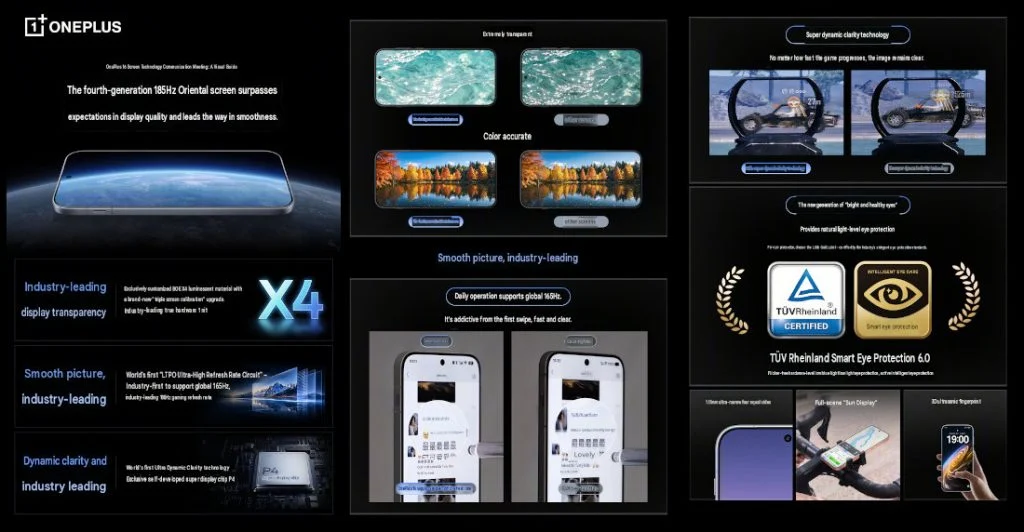
The fourth-generation Oriental Screen is built on a foundation of precision engineering. At its core, the panel leverages custom X4 luminescent materials, which are designed to push the boundaries of what OLED technology can achieve. This isn’t merely about higher brightness; it is about a holistic improvement in color accuracy, energy efficiency, and hardware longevity.
One of the most striking aspects of this new panel is its commitment to "S-level pixel index" specifications. According to OnePlus China President Li Jie, the production process utilizes a proprietary display science manufacturing line—the only one of its kind currently operating in China. This line ensures that every single sub-pixel undergoes three separate rounds of rigorous hardware calibration, ensuring that the visual output is consistent across the entire screen real estate.
Furthermore, the display introduces a true hardware-level 1-nit low-brightness output. Unlike software-based dimming solutions, which often introduce flicker or color shifting, this hardware implementation allows the device to operate at extreme low light levels without inducing eye strain, making it an ideal companion for nighttime usage.
Chronology: The Evolution of the Oriental Screen
To understand the magnitude of the fourth-generation Oriental Screen, one must look at the trajectory of the collaboration between OnePlus and BOE.
- The Foundation: The "Oriental Screen" brand was established to distinguish OnePlus devices in a crowded market. Initial iterations focused on high-peak brightness and basic LTPO (Low-Temperature Polycrystalline Oxide) functionality.
- The Iterative Growth: Each subsequent generation introduced better power management and more refined dimming techniques. The second and third generations focused heavily on outdoor visibility and the integration of the "Bright Eyes" protection suite.
- The Current Milestone: The fourth generation marks the transition from general-purpose high-quality panels to a gaming-optimized, ultra-responsive ecosystem. The move to a 165Hz standard and 185Hz gaming capability represents the largest leap in frame-rate support in the history of the collaboration.
- The Upcoming Launch: With the official unveiling scheduled for October 12th on the OnePlus 16, the industry is bracing for a shift in how gaming performance is measured on mobile devices.
Supporting Data: Refresh Rates and Power Efficiency
One of the primary concerns with high-refresh-rate displays is the "battery tax." Driving a display at 165Hz typically requires significant power, which often leads to rapid thermal throttling and battery drain. However, the data provided by OnePlus suggests that the fourth-generation Oriental Screen has solved this paradox.
The 165Hz/185Hz Architecture
The panel utilizes a revised LTPO circuit architecture designed specifically to handle higher frame rates. The system supports a 165Hz refresh rate for daily application navigation, such as scrolling through social media feeds or system menus. For competitive gaming scenarios, the panel pushes even further, reaching a 185Hz refresh rate.
Efficiency Metrics
Perhaps most impressively, OnePlus claims that the power consumption at 165Hz is comparable to the 120Hz consumption levels of the previous generation. This efficiency gain is attributed to the X4 luminescent material’s reduced energy requirement and the optimized latency paths within the new display controller. By minimizing the "path to light," the display reduces thermal buildup—a common culprit for frame drops—thereby ensuring that the phone maintains high color consistency and frame stability even during prolonged gaming sessions.
Official Responses and Strategic Vision
During the technology conference, leadership from both OnePlus and BOE emphasized the collaborative nature of this breakthrough. Li Jie, President of OnePlus China, highlighted that this technology is not merely a purchase from a supplier, but a co-developed solution where OnePlus’s display science laboratory influenced the very manufacturing process of the panel.
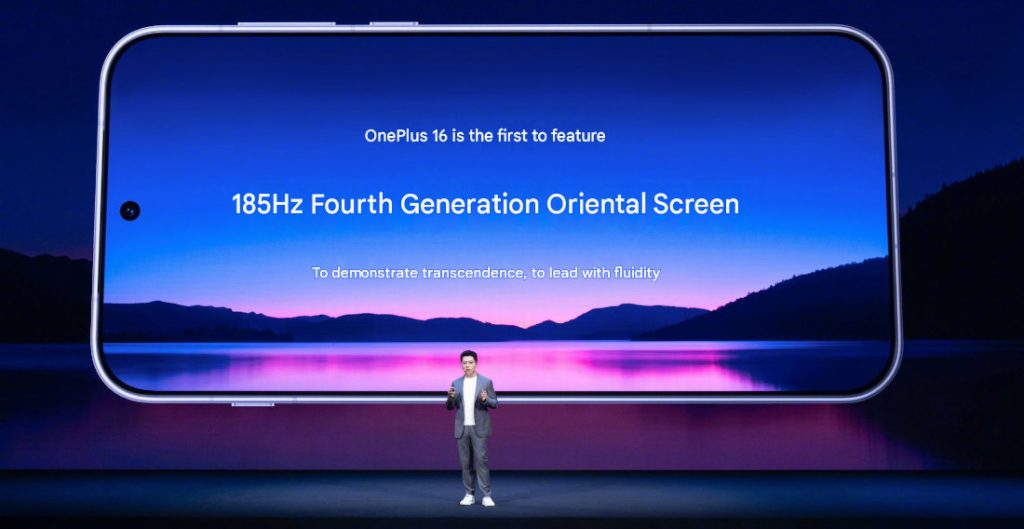
"Our goal was to eliminate the compromise between fluid performance and battery life," Li Jie stated. "By creating a dedicated manufacturing line for these panels, we ensure that the integration between the OnePlus 16’s processor and the screen is seamless."
BOE, for its part, has positioned the fourth-generation Oriental Screen as a flagship-tier product that demonstrates their ability to match, and in some areas exceed, the industry leaders in OLED production. The focus on "S-level" calibration is a direct response to consumer demands for professional-grade color reproduction on mobile devices.
Implications: A New Standard for the Industry
The launch of the OnePlus 16 with this display technology carries several implications for the broader smartphone market:
1. The Death of the 120Hz Plateau
For years, 120Hz has been the gold standard for high-end Android smartphones. By pushing the baseline to 165Hz and optimizing power consumption, OnePlus is effectively forcing the industry to re-evaluate what constitutes a "smooth" experience. Manufacturers who stick to 120Hz may soon find their devices appearing sluggish by comparison.
2. The Rise of Hardware-Level Protection
The emphasis on "Bright Eyes Protection" and hardware-level 1-nit dimming marks a shift toward wellness-oriented tech. As users spend more time on their devices, hardware that actively reduces eye strain is becoming a key differentiator. The 1-nit output is particularly significant for users who value sleep hygiene and comfort in dark environments.
3. Design Symmetry and Aesthetics
The integration of 1.15mm ultra-narrow, symmetric bezels on all four sides of the OnePlus 16 indicates that the company is moving toward a truly bezel-less aesthetic. This design choice, coupled with the high-performance display, suggests that the OnePlus 16 will prioritize an immersive, "all-screen" experience, moving away from the "chin" or uneven bezels that have plagued mobile design for years.
4. Competitive Gaming Dominance
With the inclusion of dedicated triple gaming chips and the 185Hz display capability, the OnePlus 16 is positioning itself as a hybrid between a premium daily driver and a dedicated gaming handheld. This will likely put pressure on traditional gaming phone manufacturers to provide more than just active cooling and trigger buttons—they will now have to compete on raw display fluidity and color accuracy as well.
Conclusion: The Path to October 12th
As the October 12th launch date approaches, the excitement surrounding the OnePlus 16 is palpable. The fourth-generation Oriental Screen is a testament to the fact that, in the world of mobile technology, innovation is often found in the unseen layers of hardware. By focusing on sub-pixel calibration, advanced material science, and intelligent power management, OnePlus and BOE have created a display that does not just look good—it performs at a level that challenges the very nature of mobile interaction.
Whether you are a casual user looking for smooth scrolling or a competitive gamer seeking the edge in frame-rate performance, the new Oriental Screen offers a compelling reason to watch the upcoming OnePlus 16 release closely. It is a bold, technical statement that the era of "good enough" displays is officially over.



