MUMBAI — A renewed and urgent conversation regarding artificial intelligence (AI) sovereignty is sweeping across international technology hubs, triggered by recent regulatory interventions that cut off international access to some of the world’s most advanced artificial intelligence models. The sudden restrictions have reignited long-standing anxieties about deep-seated structural dependencies on foreign-controlled technology platforms, data centers, and digital infrastructure.
As global superpowers weaponize technological boundaries under the banner of national security, emerging technology markets are confronting a stark reality: when a nation’s digital ecosystem relies entirely on external infrastructure, its technological future remains at the mercy of foreign geopolitical agendas.
Main Facts: The Catalyst Behind the Sovereign AI Movement
The current global debate centers around recent actions taken by artificial intelligence pioneer Anthropic, which abruptly suspended international access to two of its frontier AI systems: Fable 5 and Mythos 5. The suspension was enacted following a direct mandate from the United States government, which subjected the models to stringent export-control requirements grounded in national security evaluations.
While Anthropic complied with the federal directive, the company publicly distanced itself from the specific risk assessments driving the decision, creating a complex grey zone where corporate compliance intersects with state-mandated geopolitics.
For international markets—particularly in vibrant technology hubs like India—the fallout was immediate. Users attempting to access the frontier models found themselves locked out overnight. This sudden severance catalyzed a wave of concern among industry leaders, policymakers, and technologists, turning what was once a theoretical academic debate into an urgent commercial and strategic dilemma.
The core issues defining this crisis include:
- The Vulnerability of Dependence: Relying on overseas foundational models exposes domestic industries, cultural sectors, and educational institutions to sudden regulatory cutoffs.
- Geopolitical Realignment: Frontier AI is no longer viewed purely as a commercial utility; it is treated as a strategic national security asset.
- The Push for Indigenous Infrastructure: The necessity for domestic data centers, locally curated datasets, and homegrown foundational models is transitioning from an ambitious policy goal to an absolute economic imperative.
Chronology: How the Crisis and Debate Unfolded
To understand the gravity of the current push toward AI sovereignty, it is essential to trace the sequence of events that brought the issue to a boiling point:
- Phase 1: The Rise of Frontier Models (2023–2024): As generative AI captured global imagination, developers worldwide leaned heavily on a handful of U.S.-based foundational models, including systems developed by OpenAI, Anthropic, and Google. International adoption outpaced local infrastructure development, creating a lopsided global AI economy.
- Phase 2: The Regulatory Tightening (Late 2024 – Early 2025): Concerned about the dual-use capabilities of advanced AI models—such as cybersecurity vulnerabilities and automated biosecurity risks—the U.S. government began formulating tighter export controls and security directives for cutting-edge generative architectures.
- Phase 3: The Anthropic Access Restrictions (Recent): Acting under strict U.S. government directives, Anthropic suspended international availability for its Fable 5 and Mythos 5 models. Users in several regions, including India, experienced immediate service interruptions.
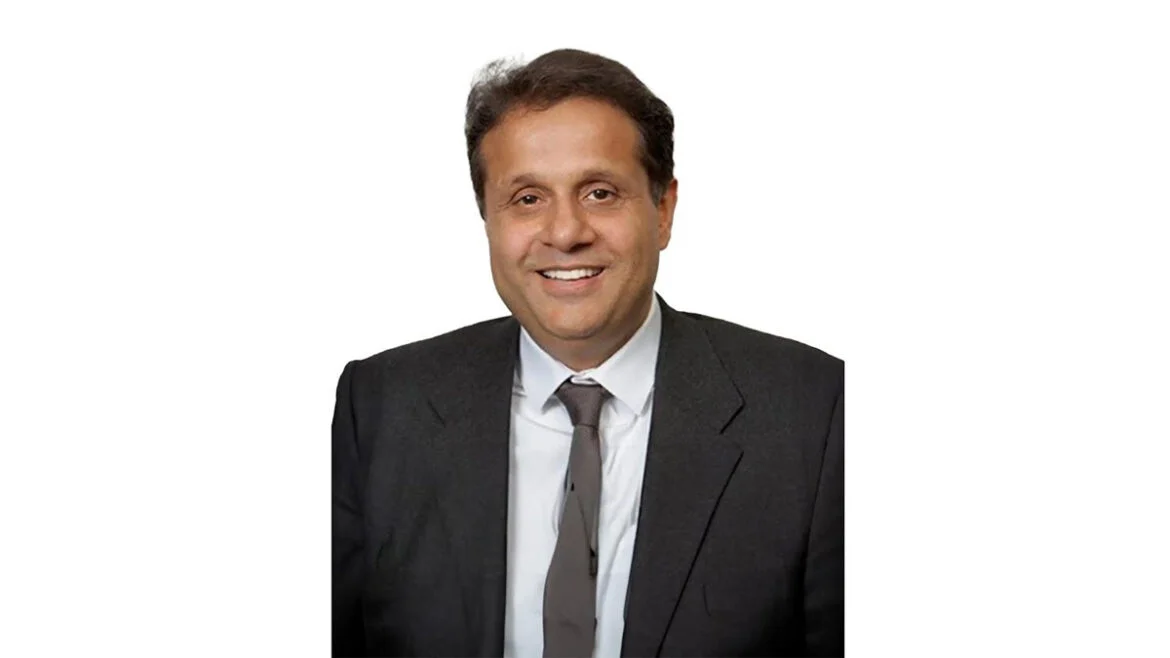
- Phase 4: The Backlash and Call to Action (Present): Industry leaders across the globe seized upon the disruption as a cautionary tale. Prominent figures, including Eros Innovation founder and executive chairman Kishore Lulla, publicly decried the structural dependency on foreign platforms, transforming the incident into a watershed moment for sovereign AI initiatives.
Supporting Data: The Anatomy of Digital Dependency
The structural imbalance of the global AI landscape is reflected in deep disparities in compute power, venture funding, and foundational model ownership.
According to recent technology market analyses:
- The Concentration of Compute: Over 85% of global training runs for frontier AI models occur within the United States and China, leaving the rest of the world reliant on imported silicon (such as advanced GPUs) and foreign cloud infrastructure.
- Cultural Representation Deficit: Language models trained primarily on Western datasets inherently prioritize Western cultural norms, idioms, and historical contexts. When nations like India—with over a billion people and dozens of official languages—rely on these foreign models for digital expression, local heritage risks being marginalized or misrepresented.
- Economic Exposure: A sudden termination of API access can paralyze thousands of startups, creative agencies, and enterprise applications overnight, costing the domestic economy billions in lost productivity and forced migration to alternative systems.
Kishore Lulla, addressing these structural vulnerabilities during a recent industry forum, emphasized that the warning signs have been clear for years.
"I have said this before and I will say it again, this was inevitable. When a nation’s cultural expression depends on foreign platforms, foreign models and foreign infrastructure, those platforms will always make decisions that reflect their own priorities, not ours," Lulla stated.
"Claude restricting access to Indian users is not a surprise. It is a consequence of a structural dependency that India must urgently address."
Official Responses and Indigenous Counter-Measures
As governments and industry titans scramble to insulate themselves from foreign tech volatility, proactive initiatives are already underway to secure technological independence. In India, leaders are leveraging a unique combination of government support, academic excellence, and private sector innovation to build domestic alternatives.
Highlighting Eros Innovation’s contributions to this ecosystem, Lulla pointed to the company’s pioneering work on the Eros LCM family of models. Developed as a flagship sovereign AI initiative, the project has earned formal recognition from India’s Ministry of Electronics and Information Technology (MeitY).
Significantly, the initiative is anchored at the prestigious Indian Institute of Technology (IIT) Madras, ensuring that research, development, and training are conducted exclusively on datasets owned and managed within India.
"This is precisely why we built the Eros LCM family as a sovereign AI initiative," Lulla explained. "India cannot afford to be a consumer of AI built elsewhere. Every time a foreign platform restricts access, changes terms, or simply decides that India is not a priority, we are reminded of what is at stake."
Policymakers in New Delhi and other emerging capitals are actively reviewing national compute strategies, looking to subsidize domestic data center construction, streamline green energy for AI workloads, and foster open-source foundational models tailored to local languages and socio-economic realities.
Implications: What the Shift Toward Sovereign AI Means for the Future
The fallout from the Anthropic access restrictions signals a fundamental paradigm shift in how nations approach technology policy. The era of frictionless, borderless cloud computing and universal software availability is giving way to a more fragmented, security-conscious digital Westphalian system.
1. Geopolitical Realignment of Tech Supply Chains
Just as energy security and semiconductor manufacturing became paramount national security issues in the early 2020s, artificial intelligence is now firmly entrenched in statecraft. Future trade agreements, diplomatic summits, and foreign policies will increasingly incorporate clauses regarding data sovereignty, compute access, and algorithmic transparency.
2. The Rise of Regional Foundational Models
We are witnessing the death of the "one-size-fits-all" global model. In its place, a multi-polar AI ecosystem is emerging. Nations with robust technological capacities—such as India, Japan, France, and the UAE—are heavily investing in regional foundational models trained on domestic data to serve unique cultural, legal, and linguistic requirements.
3. The Balancing Act for Enterprises
For multinational corporations and agile startups alike, navigating this fragmented landscape will require sophisticated multi-cloud and multi-model strategies. Relying on a single foreign API provider is no longer a viable risk-management strategy. CTOs are increasingly adopting hybrid architectures that integrate proprietary global tools with locally hosted open-source models.
4. A Call for Relentless Urgency
Concluding his remarks on the crisis, Kishore Lulla issued a rallying cry to the global technology community, urging nations not to let the momentum fade once the immediate headlines subside.
"Sovereign AI is not a policy ambition. It is a national necessity," Lulla declared. "India has the data, the talent, the institutions, and the government commitment to build it. The question is urgency. I hope this moment accelerates it."
Conclusion
The Anthropic access restrictions will likely be remembered as a critical inflection point in the history of artificial intelligence—the moment the illusion of a borderless digital utopia shattered against the rocks of geopolitical reality.
As AI becomes deeply woven into the fabric of commerce, governance, national defense, and cultural expression, the ability to independently design, train, and control foundational technologies is no longer an economic luxury. For emerging technological powers, achieving true AI sovereignty is the ultimate guarantor of national independence in the twenty-first century.