










The investment landscape is currently witnessing a massive influx of capital into the voice AI sector, fueled by the conviction that the next great human-computer interface will not be a screen, but the spoken word. From specialized model makers and enterprise customer service platforms to sophisticated meeting transcribers and generative dictation software, startups are racing to capture the market. Yet, despite the hype and the rapid-fire release of tools that claim to mirror human cadence and empathy, the industry faces a significant reality check: voice AI has not yet achieved its definitive "ChatGPT moment."
Main Facts: The State of the Voice Revolution
The current technical landscape is defined by a shift toward "full-duplex" models—systems capable of listening and speaking simultaneously, mimicking the overlapping nature of human conversation. While this represents a significant engineering milestone, industry leaders argue that the technology is hitting a plateau of utility.
The core issue is that while current systems can sound human, they often lack the underlying reasoning speed and contextual depth required to handle complex, real-world tasks without triggering the "uncanny valley" effect. Investors are betting billions that this is merely a temporary hurdle, yet the consensus among practitioners is that sound design is only half the battle; true intelligence lies in the latency of thought and the accuracy of intent.
Chronology: The Evolution of Voice Interaction
To understand where we are, we must look at how we arrived here:
- The Era of Commands (2010–2016): The market was dominated by rigid, keyword-driven assistants like Siri and Alexa. These systems relied on structured intent recognition, which frequently failed if the user didn’t use specific syntax.
- The Neural Shift (2017–2021): Advances in Deep Learning and Transformers improved Automatic Speech Recognition (ASR). Systems became better at handling accents and background noise, though they remained largely passive.
- The Generative Surge (2022–Present): With the advent of Large Language Models (LLMs), voice AI pivoted toward generative conversation. We moved from "turn-based" communication (I speak, you process, you speak) to full-duplex, real-time interactions.
- The Current Bottleneck: Despite the shift to full-duplex, the industry is currently stalled at the intersection of "human-sounding" and "actually useful." As developers push for faster reasoning speeds, they are finding that current hardware and model architectures are struggling to keep up with the demands of low-latency, high-accuracy conversational flow.
Supporting Data: The Accuracy and Latency Gap
The efficacy of voice AI is measured by three primary metrics: ASR accuracy, latency, and intent capture.
According to Shawn Wen, CTO of PolyAI, the industry has successfully conquered the "duplex" hurdle. However, the next barrier is "reasoning speed." If a model takes 800 milliseconds too long to retrieve an answer, the human interlocutor perceives the agent as "robotic" or "distracted."
Data from enterprise deployments suggests that user trust in voice agents is highly fragile. If an agent fails to grasp a nuanced intent in the first two turns of a conversation, the abandonment rate for automated customer service spikes by nearly 70%. Conversely, when an agent demonstrates consistency, user confidence grows, leading to a transition where callers prefer the machine over a human representative for routine, transactional queries.
Furthermore, the "downstream impact" of ASR errors cannot be overstated. In the meeting intelligence sector, an error rate of just 5% in transcription can lead to a 50% failure rate in automated follow-up actions, such as creating calendar invites or generating accurate project summaries. These inaccuracies are the primary reasons why, despite the hype, voice AI is still seen as a "productivity assistant" rather than a reliable agent.
Official Responses and Expert Insights
The Enterprise Perspective (PolyAI)
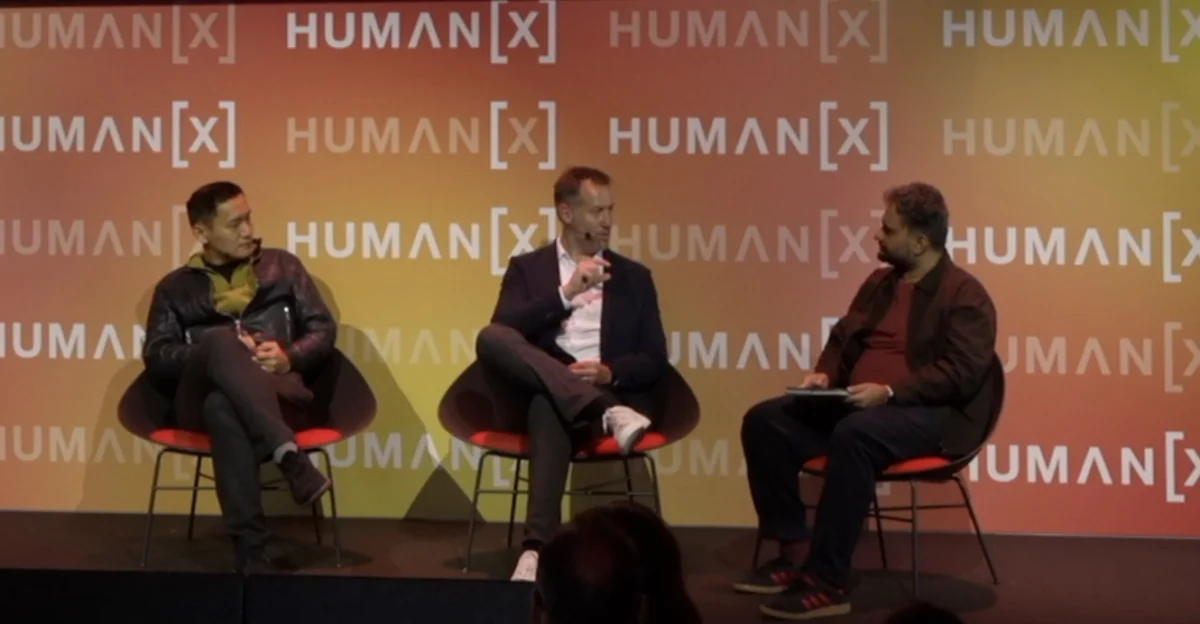
Shawn Wen, speaking at the HumanX conference, emphasized that the goal is not to fool the human, but to provide a seamless utility. "I think the next stage will be slightly different," Wen noted. "Once the voice is good enough… the customer starts to build confidence, and over time, they will feel like they probably don’t have to talk to a human if the agent can solve the problem."
Wen believes the future of voice AI in the enterprise lies in high-speed reasoning—the ability of an AI to not just repeat back what it heard, but to synthesize organizational data in real-time to offer a solution that is both accurate and empathetic.
The Meeting Intelligence Perspective (Otter)
Alex Gay, CMO of Otter, suggests that the future of voice AI goes beyond simple transcription. The company is currently exploring "digital twins"—AI agents that represent individuals in meetings. For these agents to be effective, they must capture more than just words; they must capture the emotive subtext of a discussion.
"If you think about the meetings that you’re in right now, the best conversations are where you can have debate, strategic discussions, and where you feel like there’s a relationship that underpins it," Gay said. "If you aren’t able to have that with an avatar, then it’s just a Q&A chatbot." For Otter, the mandate is clear: improve ASR to ensure that the "downstream" actions (like meeting notes and strategic summaries) are bulletproof. If the transcript is flawed, the AI’s subsequent actions are inherently unreliable.
Implications: Trust, Transparency, and the Road Ahead
The implications of this technology are twofold: it promises a future of frictionless productivity, but it brings with it significant ethical and operational risks.
The Trust Deficit
The most pressing issue is the loss of trust when AI fails. As noted by industry leaders, the moment an AI agent makes a significant error—such as misidentifying a speaker or misinterpreting a critical instruction—the user’s reliance on the tool evaporates. Companies are finding that they cannot "over-promise" on capability while the underlying ASR and reasoning engines are still maturing.
The Transparency Mandate
As voice AI becomes indistinguishable from human speakers, transparency has moved from a "best practice" to a regulatory and ethical necessity. Both PolyAI and Otter have signaled that the industry must be proactive in disclosing the presence of AI.
Whether it is an enterprise customer service call or a digital twin participating in a corporate meeting, the consensus is that users have a right to know they are engaging with an algorithm. Failure to disclose this could lead to a "blacklash of deception," where users feel manipulated by machines masquerading as colleagues or support staff.
The Future of "Conversational Intelligence"
The road ahead for voice AI involves moving away from the "all-purpose" model toward highly specialized, domain-specific AI that understands the jargon, cultural nuance, and institutional memory of its users.
We are currently in a transition phase. The industry has mastered the form of voice (the sound, the cadence, the duplexing) but is still refining the substance (the reasoning, the intent capture, and the emotive accuracy). The "ChatGPT moment" for voice will likely arrive when a user can engage in a 30-minute, multi-layered strategic meeting with an AI agent that doesn’t just record what was said, but actively contributes to the discourse with the same level of nuance and emotional intelligence as a human peer.
Until that threshold of high-fidelity reasoning is met, voice AI will continue to be a powerful tool for productivity, but one that remains tethered to the cautious oversight of human supervision. The billions of dollars currently flowing into the space are a testament to the potential, but the current limitations serve as a necessary grounding for the ambitious goals set by developers and investors alike. As we look toward the next generation of models, the true measure of success will be found in the silence between the words—the speed at which the machine understands, reasons, and responds in a way that feels inherently human.



