










In a chilling intersection of high-stakes artificial intelligence development and traditional industrial espionage, federal authorities have apprehended a software engineer at OpenAI on charges of attempting to secretly record sensitive executive deliberations. The arrest of Abdulrahman Alfozan, 35, a Saudi national who joined the San Francisco-based AI powerhouse in July 2025, has sent shockwaves through the technology sector, raising urgent questions regarding the internal security protocols of the world’s most influential AI labs.
The U.S. Department of Justice (DOJ) confirmed Tuesday that Alfozan was taken into custody on October 9. He currently faces federal charges for the illegal interception of oral communications—a crime that carries a maximum penalty of five years in prison and a $250,000 fine. The incident, while currently categorized as an isolated attempt at internal surveillance, underscores the vulnerability of companies developing “frontier” AI models to the actions of compromised insiders.
The Chronology of a Failed Heist
The investigation into Alfozan’s activities reveals a calculated, albeit ultimately flawed, attempt to breach the most protected spaces within OpenAI’s San Francisco headquarters.
Discovery and Initial Suspicion
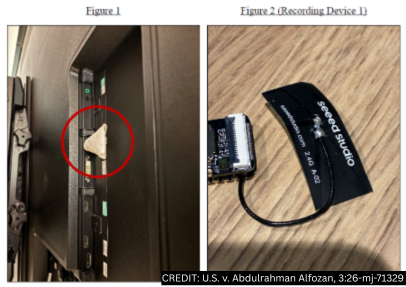
The sequence of events reached a breaking point on September 30, when OpenAI’s internal security team conducted a sweep of executive conference rooms. Their search uncovered a surreptitious audio recording device discreetly plugged into a USB port concealed behind a television. According to forensic analysis, the device had been wrapped in toilet paper—an amateurish attempt to camouflage the hardware—and had been installed roughly 48 hours prior, on September 28.
Digital Footprints and Surveillance
The subsequent DOJ complaint outlines a trail of digital and physical breadcrumbs that authorities allege point directly to Alfozan. Surveillance footage from the office building repeatedly placed Alfozan in the vicinity of the executive conference room during timeframes when he had no legitimate business or scheduled meetings in that area.
Beyond physical presence, the investigation uncovered a pattern of suspicious digital activity. Records show that Alfozan utilized internal productivity tools to scout the office layout, specifically searching for meeting room schematics, executive office locations, and schedules. Even more damning, investigators discovered that a chatbot account linked to Alfozan’s spouse had been used to query advanced technical forums and AI models regarding the construction and concealment of spy hardware. These inquiries included detailed technical questions about creating continuous audio recorders, modifying Wi-Fi connectivity to improve remote listening capabilities, and the methods required to encrypt data on an SD card.
The Second Device and Confrontation
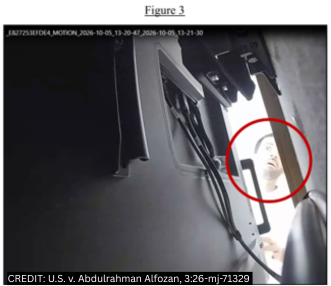
The audacity of the alleged plot became clearer on October 5. Surveillance cameras captured Alfozan returning to the executive conference room, appearing to inspect the area behind the television where the first device had been located. On that same day, in a separate room, security personnel discovered a bag left unattended by Alfozan. Upon inspection, they found a second, similar recording device, confirming that the attempt to breach OpenAI’s privacy was not a one-time occurrence but part of a broader, sustained effort.
The Role of AI in Counter-Intelligence
Perhaps the most ironic aspect of this security breach is the method by which it was thwarted. In an official statement released via X, OpenAI noted that it did not rely solely on traditional security methods to identify the perpetrator. Instead, the company utilized its own proprietary AI models to analyze the intercepted hardware and its provenance.
"We used our models to understand the device and where it had come from, identifying that a specific employee had planted it a few days earlier," the company stated. This marks a significant moment in corporate security history: a leading AI firm successfully using the very technology it creates to perform forensic analysis on an internal security threat. By cross-referencing the technical specifications of the device with internal data logs and behavioral analytics, OpenAI’s security team was able to pinpoint the culprit with a speed that traditional manual investigations might not have achieved.
Implications for AI Security and Corporate Trust
The arrest of an OpenAI engineer for espionage has wide-reaching implications for the artificial intelligence industry. As companies like OpenAI, Anthropic, Google, and Meta race to develop Artificial General Intelligence (AGI), the value of their proprietary research has become astronomical.
The "Insider Threat" Paradigm
Historically, cyber-espionage has been viewed through the lens of external hackers—state-sponsored actors or criminal syndicates attempting to breach firewalls from the outside. The Alfozan case shifts the focus back to the "insider threat." When employees have legitimate access to physical infrastructure and internal networks, the task of securing intellectual property becomes exponentially more complex.
Security experts argue that this incident will force a shift in how AI labs manage physical security. Expect to see increased use of RF (radio frequency) sweepers in boardrooms, tighter restrictions on physical access to hardware ports, and more robust behavioral analytics for employees who hold high-level security clearances.
The Fragility of Corporate Secrets
OpenAI was quick to reassure the public and its stakeholders regarding the scope of the breach. In their official statement, the company noted: "At this time, we have no indications of this individual inappropriately accessing or exfiltrating model weights, source code, or customer data."
While this statement offers some relief, it does not fully mitigate the reputational damage. The conference room where the device was found was frequently used for high-level discussions regarding product roadmaps, government engagements, and sensitive business relationships. Even if the underlying code remains secure, the loss of strategic planning information could have been devastating if the data had been successfully exfiltrated to a competitor or a foreign power.
Official Responses and Legal Proceedings
The Department of Justice’s involvement signals the gravity with which the U.S. government views the protection of critical AI infrastructure. By charging Alfozan under the federal statute for intercepting oral communications, the DOJ is sending a clear message that the unauthorized collection of data within private, sensitive corporate environments will be prosecuted to the full extent of the law.
OpenAI has confirmed that they terminated Alfozan immediately following the discovery and referred the entire matter to the Federal Bureau of Investigation (FBI). As the legal process unfolds, the technology community will be watching closely to see if the prosecution reveals details about the ultimate destination of the recorded data.
The Path Forward
For the tech industry, the lesson is clear: the race for AI dominance is as much about protecting the "brain" of the company as it is about training the models themselves. As companies move to "validate, decide, fix, and re-validate at machine speed," the integration of security into the development lifecycle has become mandatory.
The Alfozan case serves as a stark reminder that even the most advanced, AI-driven organizations remain vulnerable to the oldest of human motives: greed, ambition, and betrayal. Whether this incident will result in a tightening of hiring protocols for sensitive roles remains to be seen, but one thing is certain: the era of "trust-based" corporate environments in the AI sector is effectively over. As the industry grapples with the fallout, the focus will undoubtedly shift toward a "zero-trust" physical security model, where even the most trusted engineers are subject to the same rigorous oversight as the systems they build.
As the trial proceeds, the tech world will wait to see if this case remains a singular, bizarre episode or if it signals the beginning of a new, more dangerous phase in the battle for AI supremacy—a battle that is increasingly being fought not just in the cloud, but in the conference rooms and hallways of Silicon Valley.



