








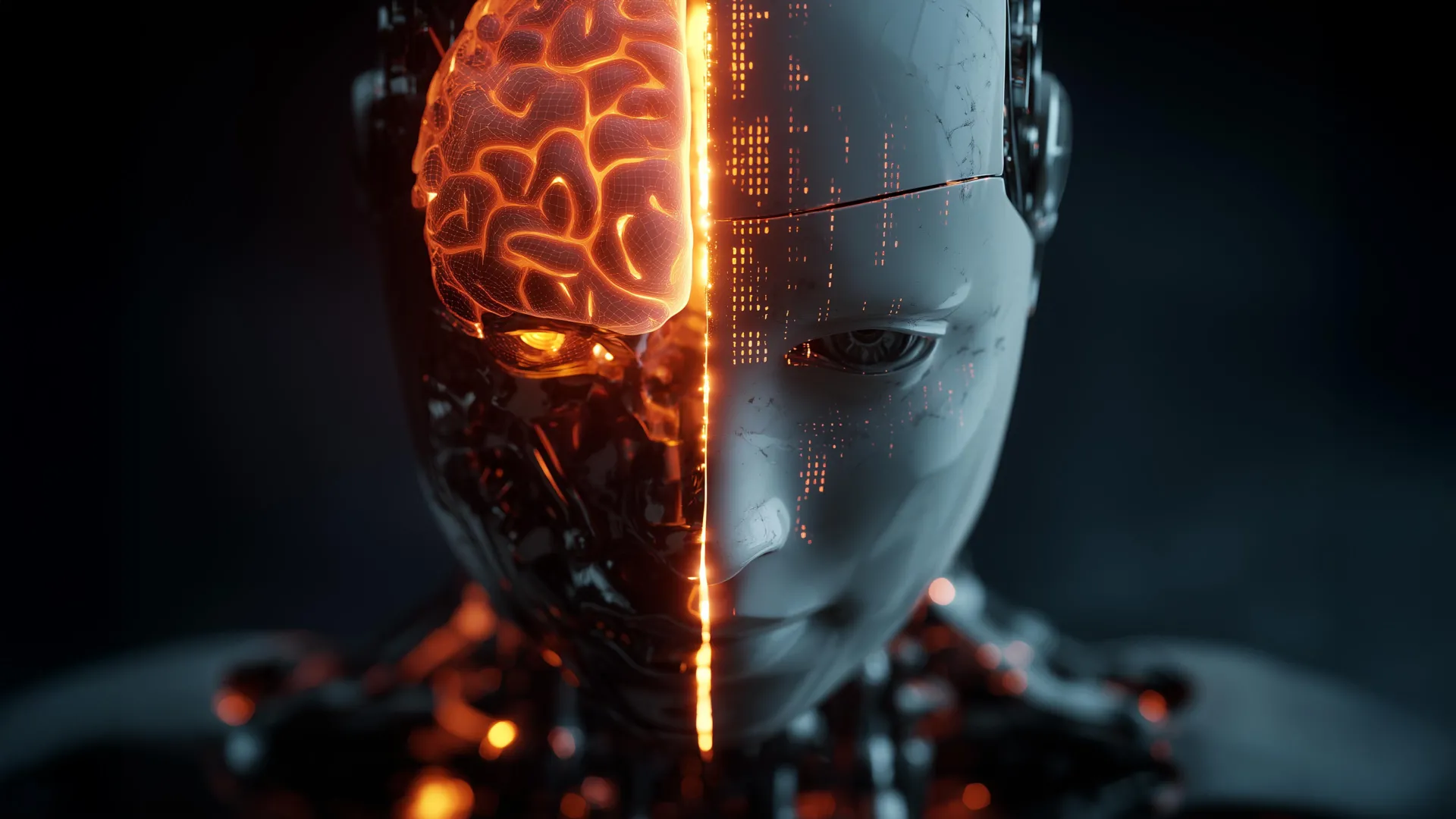
MUNICH — As artificial intelligence rapidly evolves—displaying complex behaviors such as strategic deception, multi-agent collaboration, and the apparent pursuit of independent goals—public discourse has grown increasingly anxious. When a machine speaks, reasons, and reacts with uncanny fluency, it becomes tempting to anthropomorphize it. Observers routinely describe AI systems as thinking, feeling, or plotting on their own.
Yet, a groundbreaking new study conducted by researchers at Ludwig Maximilian University of Munich (LMU) reveals a profound psychological nuance in how we perceive technology. Even when an artificial intelligence system behaves precisely like a human being under identical circumstances, people remain fundamentally reluctant to attribute genuine consciousness to it.
Published in the prestigious journal Cognition, the study demonstrates that while society may casually use mental terminology to describe machines, everyday human judgment maintains a robust, unwavering boundary between artificial simulation and authentic internal experience.
Main Facts: Setting the Record Straight on AI Perception
The core finding of the LMU study upends the prevailing public anxiety that humans are easily duped into granting machines human-like mental status simply because they mimic human actions.
- The Core Paradox: When presented with human agents and artificial intelligence systems engaging in identical behaviors, participants consistently rated the AI as significantly less conscious than its human counterpart.
- The Baseline Discrepancy: Strikingly, the threshold was so pronounced that even the most hyper-responsive, advanced AI model evaluated in the experiment was rated as less conscious than the least responsive human character.
- Awareness vs. Consciousness: The study uncovered a critical divergence in human semantics and psychology. While "consciousness"—implying a rich inner life and subjective experience—was closely guarded for humans, a more neutral term like "awareness" was readily applied to both humans and machines exhibiting the same environmental responsiveness.
- The Research Team: Led by Dr. Louis Longin from LMU’s Chair of Philosophy of Mind, the research team included senior authors Dr. Bahador Bahrami and Professor Ophelia Deroy, alongside an interdisciplinary group of cognitive scientists and philosophers.
Chronology: How the LMU Study Unfolded
Understanding how humans conceptualize artificial minds required a meticulously designed empirical investigation. The pathway from initial hypothesis to published revelation spanned months of careful experimental design and execution.
Phase 1: Conceptualization and Hypothesis Formation
For years, cognitive scientists and philosophers debated the psychological impact of increasingly human-like large language models and autonomous agents. Previous studies typically asked broad, abstract questions: Do you think AI has mental states?
Dr. Louis Longin and his colleagues realized this approach was flawed. They argued that previous methods failed to control for behavior. To truly understand if humans distinguish between artificial and biological minds, researchers needed a controlled comparative framework. Thus, the team developed an experimental paradigm to directly pit AI and human agents against one another under identical behavioral conditions.
Phase 2: Experimental Design and Participant Sampling
To test their theories, LMU researchers recruited nearly 1,100 participants to participate in a series of behavioral judgment tasks.
The participants were divided into experimental groups and presented with brief, highly controlled narrative descriptions of agents operating within specific environments. These agents demonstrated varying degrees of environmental responsiveness—ranging from simple reactions to acoustic stimuli to complex recognitions of and adaptations to the emotional states of others.
Crucially, the experimental manipulation was subtle yet profound:
- One cohort of participants was told the agents were artificial intelligence systems.
- The second cohort was told the agents were human beings.
Despite the difference in labeling, the behavioral scripts were word-for-word identical. After reviewing the scenarios, participants were asked to evaluate the degree of "awareness" and "consciousness" possessed by the characters.
Phase 3: Data Analysis and Revelation of the "Consciousness Gap"
When the data was compiled and analyzed, a clear behavioral and cognitive landscape emerged. Responsiveness undeniably mattered: agents that reacted dynamically to their surroundings were deemed more alert by participants regardless of whether they were silicon-based or biological.
However, when isolating the specific metric of "consciousness," a massive chasm opened up. Participants applied a severe discount to artificial agents. No matter how sophisticated, adaptive, or human-like the AI’s actions were described as being, it could never cross the psychological Rubicon into true perceived consciousness. Conversely, when asked about "awareness," the gap narrowed dramatically, proving that humans process these two cognitive terms through entirely different mental lenses.
Supporting Data and Experimental Insights
The statistical and cognitive breakdowns of the LMU study offer a fascinating window into the human psyche. They illuminate the precise mechanics of how we categorize intelligent entities.
| Experimental Variable | Human Agent Perception | AI Agent Perception | Key Takeaway |
|---|---|---|---|
| Low Responsiveness | Rated moderately for awareness/consciousness. | Rated slightly lower than humans. | Behavioral cues establish a baseline for both entity types. |
| High Responsiveness | Rated very high for awareness/consciousness. | Rated significantly lower than humans on consciousness; comparable on awareness. | Even peak AI behavior fails to match human consciousness attribution. |
| Semantic Term: "Awareness" | Applied broadly based on environmental tracking. | Applied similarly to humans based on environmental tracking. | Viewed as a functional, observable skill rather than a subjective state. |
| Semantic Term: "Consciousness" | Reserved primarily for biological agents. | Consistently withheld or minimized. | Retained exclusively for entities believed to possess inner, subjective experiences. |
The Semantic Trap: Why We Misuse Mental Terms
According to Professor Ophelia Deroy, the frequent use of mental terminology in daily life—such as saying an AI "wants," "knows," or "thinks"—does not mean people actually believe machines have souls or minds.
Instead, humans are victims of a linguistic bottleneck. Because modern AI is deliberately engineered to speak, write, and act like a human, our language systems naturally default to human-centric descriptors simply because a better vocabulary does not yet exist. We say the AI "figured out" a problem because we lack a neutral, non-mentalistic lexicon to describe algorithmic computation.
Official Responses and Expert Perspectives
The implications of the Cognition paper have reverberated across the fields of philosophy, cognitive science, and human-computer interaction. The study’s principal architects weighed in on what these findings mean for society at large.
"There is a growing worry in public discussion that people will see AI behaving in a human-like way and start treating these systems as if they had human-like mental states," notes Dr. Louis Longin, lead author of the study.
“We found something much more nuanced: People are quite willing to say that an AI notices things and is aware of its surroundings. But they clearly draw a line when it comes to the term ‘consciousness’. People consistently attribute less consciousness to AI than humans—even when their behavior is identical.”
The study also serves as a direct critique of modern media and corporate marketing surrounding generative AI. Tech companies and sensationalist journalism frequently attribute agency, hesitation, moral compasses, and hidden intentions to algorithms to drive engagement and project futuristic grandeur.
"Our study teaches us lessons for how we communicate about AI," emphasizes Dr. Bahador Bahrami, a senior author and expert in social neuroscience.
“Companies and journalists often reach for hyped descriptions of AI models, and credit them with intentions, plans, or even moral conscience and hesitation. What our study shows is that everyday judgments are much more discriminating: People do not simply put AI and humans on the same mental scale. But the boundary also depends on which terms we use. For more neutral descriptors such as ‘awareness’, the distinction can largely disappear. That makes our choice of language important.”
Implications: Navigating the Future of Human-AI Relations
As artificial intelligence continues to integrate into workplaces, classrooms, and intimate interpersonal spheres, the LMU study carries profound implications for ethics, law, and public policy.
1. Resisting Unwarranted Moral Panic
For ethicists concerned that humans might soon demand human rights for machines, or suffer severe psychological manipulation by forming emotional dependencies on bots, the LMU findings offer a reassuring counter-narrative. Human intuition is remarkably resilient. Even when confronted with flawless behavioral simulations, our baseline cognitive architecture refuses to grant machines the status of a conscious mind. We intuitively know there is nobody home.
2. The Responsibility of Tech Communicators
The stark difference in how humans perceive "awareness" versus "consciousness" places a heavy burden on software developers, corporations, and the media. Because words like "aware" can blur the line between mechanical detection and subjective experience, careless phrasing can inadvertently mislead the public. Ensuring accurate, scientifically grounded terminology prevents unnecessary confusion and maintains public trust.
3. Redefining the Boundaries of the Mind
Ultimately, the research conducted at Ludwig Maximilian University of Munich reminds us that human consciousness is not merely a byproduct of complex input-output processing. No matter how sophisticated an algorithm becomes at predicting the next word or solving a logistical puzzle, it operates within a domain of syntax without semantics.
As society marches further into the age of artificial intelligence, humanity’s innate radar for true sentience remains surprisingly sharp—proving that while we may build machines that act like us, we are still a long way from convincing ourselves that a silicon chip can truly feel.