





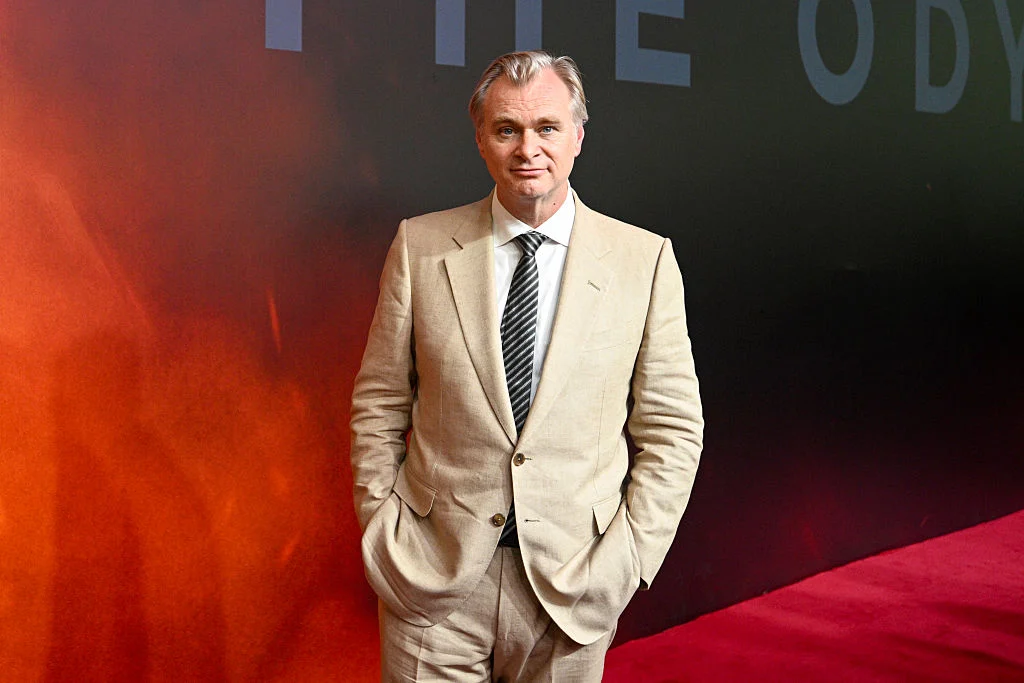
As Christopher Nolan’s latest cinematic epic, The Odyssey, shatters box office records, the director has pivoted from the technical mastery of his production to a more philosophical battleground: the encroaching ubiquity of artificial intelligence. In a recent, widely discussed interview with YouTube creator Hugo Travers (HugoDécrypte), the Oscar-winning filmmaker offered a striking metaphor for our current technological epoch, describing AI not as a hidden threat, but as a "transparent horse" whose contents are visible to all.
Nolan’s remarks come at a time when the friction between generative AI and creative industries has reached a fever pitch. While the director’s films are known for their complex, often tech-heavy narratives, his personal stance toward Silicon Valley’s latest obsession is rooted in a pragmatic, if cautious, brand of "techno-skepticism."
The Main Facts: A Trojan Metaphor for the Digital Age
The central tension of the discussion focused on the classic Trojan horse—a fitting thematic anchor given the narrative threads of The Odyssey. Travers posited that, much like the wooden horse gifted to Troy that concealed an invading force, AI is being welcomed into the fabric of daily life under the guise of convenience, potentially harboring "something darker."
Nolan’s response was immediate and evocative: "I think AI is a Trojan horse that everybody knows the Greeks are inside. It’s a transparent horse; it’s made of glass."
This imagery serves as a sharp departure from the typical "existential risk" narratives often pushed by AI developers. Instead of framing AI as an unseen or inscrutable force, Nolan suggests that the public is acutely aware of the "invaders"—the displacement of human labor, the degradation of artistic authenticity, and the manipulation of truth. For Nolan, the skepticism currently bubbling up in younger generations is not merely a reactionary impulse; it is a vital, healthy, and informed defensive mechanism.
Chronology: From Strikes to Cultural Pushback
The discourse surrounding AI in Hollywood has evolved rapidly over the past several years, moving from theoretical concerns to concrete labor actions.
- 2023 (The Watershed Year): The dual strikes of the Writers Guild of America (WGA) and SAG-AFTRA brought the threat of generative AI to the forefront of the cultural conversation. Writers and actors demanded, and largely secured, guardrails against the non-consensual use of their likenesses and creative output.
- 2025 (Regulatory Consolidation): The Directors Guild of America (DGA), under the leadership of figures like Nolan, successfully negotiated new contract provisions that establish boundaries for the use of AI in the filmmaking process, ensuring that the human element of directorial vision remains protected.
- 2026 (The Current Moment): With the release of The Odyssey, the conversation has shifted from industry-specific protections to a broader cultural critique. Nolan’s commentary reflects a growing consensus among high-level creators that the "AI era" is being met with a level of public resistance that is unprecedented for such a fast-moving technology.
Supporting Data: The "AI Slop" Phenomenon
Nolan pointedly highlighted the emergence of the term "AI slop" among his children’s generation. This colloquialism is more than just slang; it represents a cultural rejection of content generated without human intentionality or "soul."
"I’ve never seen a technology advancing so rapidly that’s been so completely rejected by the public," Nolan noted. This sentiment is supported by a rising tide of consumer fatigue regarding synthetic media. Despite the rapid advancement of Large Language Models (LLMs) and video-generation tools, the public’s instinct to verify, fact-check, and dismiss low-effort synthetic content is sharpening.
The director’s skepticism is not directed at the potential of technology itself, but at the "motives of the people giving it to us." He argues that when technology is pushed as a panacea—a "blind faith" approach—it often masks a profit-driven agenda that ignores the nuance of the human experience.
Official Responses and Industry Context
Nolan’s critique of AI exists alongside a complex landscape of industry reaction. While he maintains his position as a leader within the DGA, advocating for the protection of human craft, others in the tech and entertainment spheres have reacted with varying degrees of hostility.
Notably, the discourse surrounding The Odyssey has been marred by peripheral controversy. Tech billionaire Elon Musk, for instance, has taken to social media to voice intense disapproval of the film’s inclusive casting choices. This distraction, while separate from the technical debate, highlights the polarized nature of the current cultural discourse in which Nolan’s films are now being debated.
Within the filmmaking community, Nolan remains a unique figure. His insistence on shooting entirely on IMAX film, his skepticism of digital-only workflows, and his refusal to rely on smartphones have led some to label him a Luddite. However, Nolan rejects the term, positioning himself instead as a defender of "valid and viable" systems. "We almost lost film," he reminded interviewers, referring to the industry’s near-total abandonment of celluloid in favor of digital imaging—a transition he believes was sold to the industry as an inevitability rather than a necessity.
Implications: The Future of Creative Sovereignty
The implications of Nolan’s stance are profound for both the tech industry and the arts. By framing AI as a "glass horse," Nolan is essentially encouraging the public to look through the technology to see the interests—and the limitations—that reside within it.
1. The Value of Human Imperfection
Nolan’s preference for film over digital imaging is rooted in his belief that film better captures "the way the eye sees the world." This highlights a core philosophical disagreement with the AI-driven future: the idea that perfection and efficiency are the ultimate goals. If human art is defined by its flaws and its unique, subjective perspective, then "AI slop" is destined to remain a poor imitation, regardless of how fast it advances.
2. The Responsibility of the Tech Industry
Nolan’s call for skepticism extends to the creators of these tools. He argues that the tech industry has a history of "throwing the baby out with the bathwater," discarding established, high-quality mediums for the sake of the "new." For the future of creative industries, the challenge will be to integrate technology without allowing it to dictate the terms of artistic creation.
3. A Generational Shift
Perhaps most telling is Nolan’s observation about the youth. While older generations may be more prone to the allure of novelty, younger users—who have grown up in a digital-first environment—are demonstrating a sophisticated capacity for skepticism. This suggests that the next decade of technology adoption may be defined by a "human-first" backlash, where the most valuable commodities are those that can be verified as human-made.
Conclusion
Christopher Nolan stands at a curious intersection of the 20th and 21st centuries. He uses the most advanced cameras on the planet to capture a medium—analog film—that is over a century old. In doing so, he provides a model for how one can be a pioneer without being a sycophant to Silicon Valley’s latest trends.
As The Odyssey continues to draw audiences, the director’s message remains clear: Technology should serve the story, not replace the storyteller. The "glass horse" may be moving quickly, but the audience, it seems, is no longer willing to be deceived by what lies inside. By maintaining a critical distance, Nolan invites us to look closely at the technology that surrounds us, to question the motives of its architects, and to hold onto the human craftsmanship that makes art, in its truest form, possible.
In a landscape dominated by synthetic noise, the most radical act may simply be to prioritize the real. As Nolan aptly puts it, we must embrace the gifts of technology, but we must never lose sight of the fact that the most essential systems—the ones that represent the human eye and the human heart—are already here.