










The Communications Platform-as-a-Service (CPaaS) market is undergoing a quiet, pragmatic migration. For over a decade, Twilio has reigned as the undisputed titan of the developer-focused communications stack, boasting arguably the deepest API, world-class documentation, and an expansive product ecosystem. Yet, a growing cohort of businesses—ranging from lean marketing agencies to scaling SaaS companies—are actively searching their way out.
They aren’t leaving because Twilio has stagnated. With the general availability of its Agent Connect SDK, public betas for hosted Model Context Protocol (MCP) servers, and cutting-edge conversational tools, Twilio continues to ship aggressively. Instead, teams are walking away due to three unglamorous operational friction points: rising list prices, grueling A2P 10DLC (Application-to-Person 10-Digit Long Code) registration loops, and tiered support models that gate essential human assistance behind expensive enterprise plans.
To cut through the marketing noise, we analyzed pricing structures, registration timelines, and live artificial intelligence features across seven top-tier Twilio alternatives. By cross-referencing published vendor documentation and independent data, we have mapped out the current reality of the market.
Main Facts: The Twilio Exodus and the Rise of Alternatives
The push factors away from Twilio center primarily on cost and compliance overhead. At $0.0083 per US SMS segment in each direction, Twilio commands the highest base list rate among major providers. When layered with mandatory carrier pass-through fees—ranging from $0.0035 to $0.0045 per message across AT&T, T-Mobile, and Verizon, with further hikes rolling out—effective costs compound rapidly.
Furthermore, the A2P 10DLC registration process has become an industry-wide bottleneck. While regulatory friction isn’t unique to Twilio, developers frequently report encountering multiple rejections over weeks-long periods, occasionally forcing them to buy into paid "Fast Track" options. Combine this with self-serve support models that lock out struggling marketing teams during account suspensions, and the threshold for switching is easily crossed.
Enter the challengers. Among seven evaluated competitors—Signal House, Telnyx, Plivo, Bandwidth, Sinch, Vonage, and Bird—each carves out a distinct niche based on cost, infrastructure ownership, or workflow simplicity.
Chronology of Market Shifts: The Evolution of A2P Regulations and AI Integration
The current landscape is defined by two major tectonic shifts over the past few years:
- The 10DLC Mandate Era (2021–Present): Telecom carriers instituted strict registration requirements to curb spam, transforming simple SMS dispatching into a heavily scrutinized compliance procedure. Providers that automated or actively managed this bureaucratic burden immediately gained a competitive edge.
- The Generative AI Wave (2024–2026): CPaaS platforms have rapidly evolved from basic text-and-voice pipelines into intelligent orchestration layers. Voice AI agents, bring-your-own-key (BYOK) LLM integrations, and context-aware messaging bots are now table stakes. However, while enterprise giants build sprawling multi-channel AI suites, specialized alternatives are embedding targeted AI directly into everyday user workflows, such as shared reply inboxes for ecommerce.
Supporting Data: Comparing the Top 7 Twilio Alternatives
To provide an objective overview, the following breakdown aggregates the core metrics, pricing points, and feature sets for the leading alternatives as of late 2026.
Platform Comparison Matrix
| Platform | Best For | US SMS Out/In (List) | A2P Registration Support | Support Model | Live AI Features |
|---|---|---|---|---|---|
| Signal House | Business SMS without engineering overhead | $0.0065 out; tiers to $0.0030 at scale | Guided; ~2 days for standard cases | Included with every account | Shopify app AI replies; Cursor/Lovable SDK guides |
| Telnyx | Lowest public rates & developer control | $0.0040 / $0.0040 | Self-serve; TCR fees passed through | Varies by plan | Voice AI Agent ($0.05/min); BYOK OpenAI/Anthropic |
| Plivo | Drop-in replacement for Twilio codebases | $0.0077 / $0.0077 | Self-serve; 1–2 week typical review | Varies by account | No-code voice agent builder; LiveKit/Pipecat |
| Bandwidth | Carrier-grade US enterprise demands | $0.0035 / $0.0035 (registered) | Handled by team; custom timelines | Enterprise-tier plans | Maestro AI call orchestration |
| Sinch | Global multi-channel at scale | $0.0078 / $0.0078 | Handled; timeline unlisted | Scaled to deployment | Smart Conversations; MCP support |
| Vonage | Telephony depth + low-code AI builders | $0.00809 / $0.00649 | Handled; timeline unlisted | Tiered (paid 24/7 option) | AI Studio; Knowledge AI (RAG) |
| Bird | EU-first omnichannel compliance | $0.0035 (via tool) | Fee table published; no timeline | Contact sales | AI-first CRM positioning |
Volume Cost Analysis (Sample: AT&T Pass-Through Integration)
- 10,000 SMS / month: Twilio ($118) vs. Signal House ($100) vs. Telnyx ($75) vs. Plivo ($112).
- 50,000 SMS / month: Twilio ($590) vs. Signal House ($500) vs. Telnyx ($375) vs. Plivo ($560).
- 250,000 SMS / month: Twilio ($2,950) vs. Signal House ($2,500) vs. Telnyx ($1,875) vs. Plivo ($2,800).
(Note: These calculations incorporate platform list rates alongside standard AT&T carrier pass-through fees. They exclude additional monthly number rentals, campaign fees, or optional paid support tiers.)
Official Responses and Strategic Positioning
Different vendors are answering market demands through radically divergent product philosophies.
1. Signal House: The Practical Choice for Marketing and Small Teams
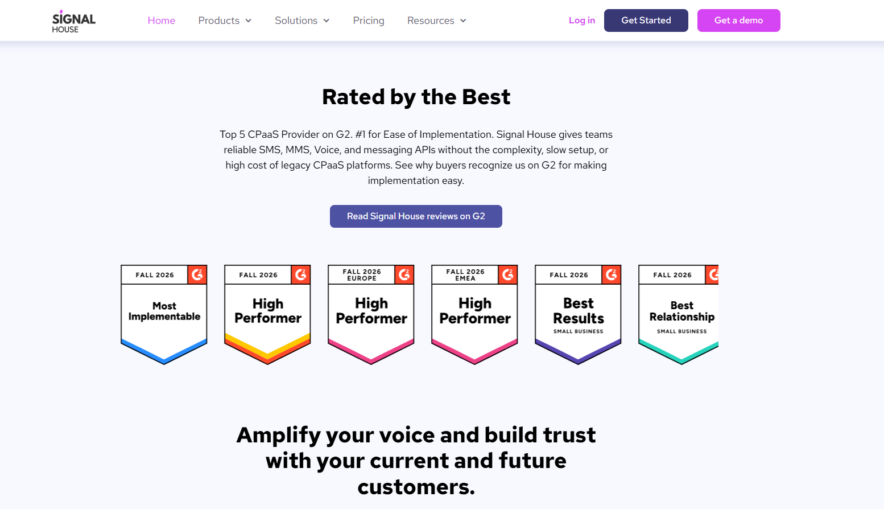
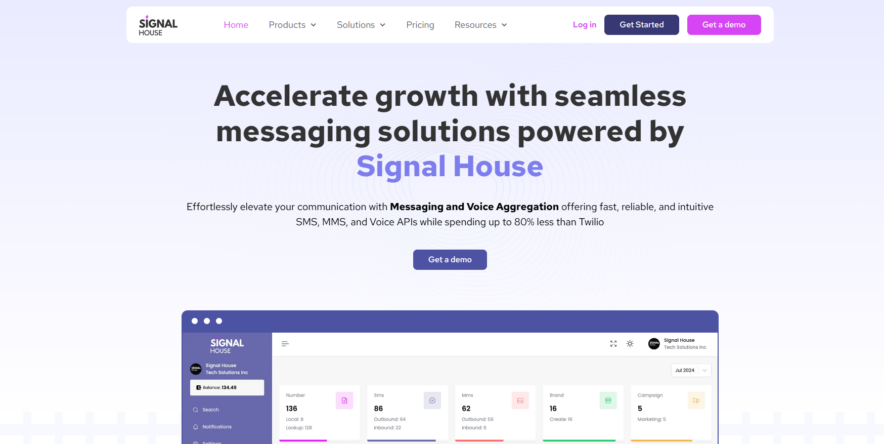
For organizations that prefer running campaigns over managing telecom infrastructure, Signal House has emerged as the definitive winner. Operating at a published US rate of $0.0065 per segment with no minimums, it solves the two biggest pain points of switching: compliance and support. Signal House manages A2P 10DLC brand and campaign registration on behalf of the user—quoting standard approvals in roughly 48 hours—and bundles human support directly into every account without gating it behind a paywall.
Furthermore, non-developers can bypass code entirely via native integrations like its Shopify app (featuring AI-drafted replies for abandoned carts) and GoHighLevel packages.
2. Telnyx & Plivo: The Developer Havens
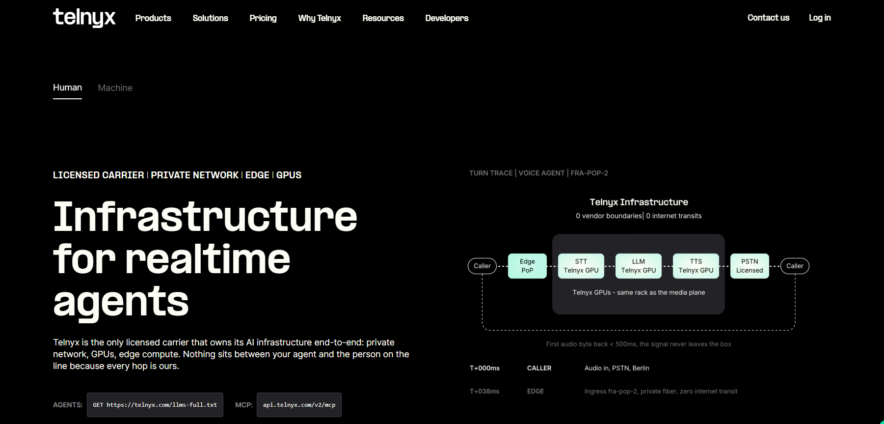
For engineering-led organizations where raw cost-per-message dictates profitability, Telnyx offers the lowest fully published rates ($0.0040 per part) on an infrastructure network it owns outright. It also leads in cost-effective voice AI, offering all-in voice agent bundles starting around $0.05 per minute.
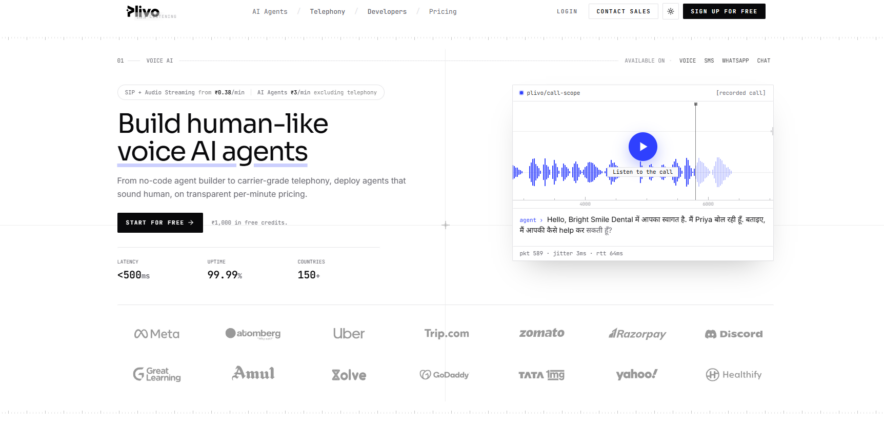
Meanwhile, Plivo positions itself as the ultimate drop-in migration target. Because it was founded by former Twilio engineers and maintains a heavily compatible API, teams can port existing codebases with minimal rewrites while enjoying robust voice AI integrations via LiveKit and Pipecat.
3. Bandwidth, Sinch, Vonage, and Bird: Enterprise and Regional Heavyweights
- Bandwidth acts as a true underlying US carrier, making it ideal for massive enterprise contact centers requiring advanced call orchestration through its Maestro platform.
- Sinch and Vonage (backed by Ericsson) offer sweeping multi-channel reach (SMS, RCS, WhatsApp, Voice) across global markets, with Vonage standing out for its low-code AI Studio agent builder.
- Bird serves as a premier European option for companies prioritizing GDPR compliance and multi-channel CRM integration.
Implications: How to Evaluate Your Next CPaaS Move
Choosing a communications provider requires looking beyond headline rate cards. Real-world invoices frequently run 1.5 to 2 times higher than baseline estimates once carrier fees, registration overhead, and failed message charges are factored in.
Before making a permanent switch, enterprises and growing teams should execute the Two-Invoice Test: pull your last two billing statements from Twilio, isolate your total volume, carrier fees, and support costs, and request a written, like-for-like quote from your top prospective vendors.
If your core product relies entirely on complex, deeply embedded custom stacks (such as Twilio Flex or multi-product Verify/Segment suites), staying put remains the most rational financial decision. However, if your team is bleeding hours over compliance rejections, inflated messaging bills, and unresponsive support queues, the market has never offered better or more specialized alternatives to make the jump.



