










By Alexandra Veitch, YouTube Government Affairs & Public Policy
September 17, 2026
In a landmark development for the American digital landscape, the United States Senate has officially recognized the burgeoning power of the creator economy. This week, Senators Cory Booker (D-NJ) and John Kennedy (R-LA) announced the formation of the bipartisan Senate Creators Caucus. This new legislative body aims to provide a dedicated forum for digital entrepreneurs to engage with lawmakers, bridge the gap between outdated regulatory frameworks and modern media realities, and acknowledge the pivotal role creators play as small business owners, job engines, and cultural architects in the 21st century.
The Evolution of the Creator Economy in Washington
The launch of the Senate Creators Caucus represents a significant milestone, building directly upon the momentum generated by the debut of the Congressional Creators Caucus last year. For years, the "creator economy"—a diverse ecosystem ranging from educational channels and independent news outlets to entertainment giants and niche hobbyists—has operated in a legislative gray area.
While these individuals drive billions of dollars in economic activity and command massive, loyal audiences, they have historically lacked a centralized voice in federal policy debates. The establishment of this caucus signals a shift: policymakers are finally treating digital content creation not as a hobby, but as a sophisticated, high-stakes business sector that requires intentional legislative stewardship.
A Chronology of Engagement
The road to the Senate floor began long before this week’s announcement. For several years, YouTube and other industry stakeholders have worked to educate congressional staffers on the business models behind digital media.
- 2025: The establishment of the House-based Congressional Creators Caucus set the stage, creating a pilot program for direct interaction between lawmakers and creators.
- Early 2026: Informal roundtables were held in Washington, D.C., where creators began articulating the unique challenges they face regarding AI, intellectual property, and platform safety.
- September 2026: The official announcement of the Senate Creators Caucus by Senators Booker and Kennedy, formalizing the effort as a bicameral pursuit.
- Post-Launch: Immediate mobilization of the caucus began, with creators descending upon Capitol Hill to advocate for specific legislative priorities, most notably the NO FAKES Act.
Bridging the Gap: The Launch Panel
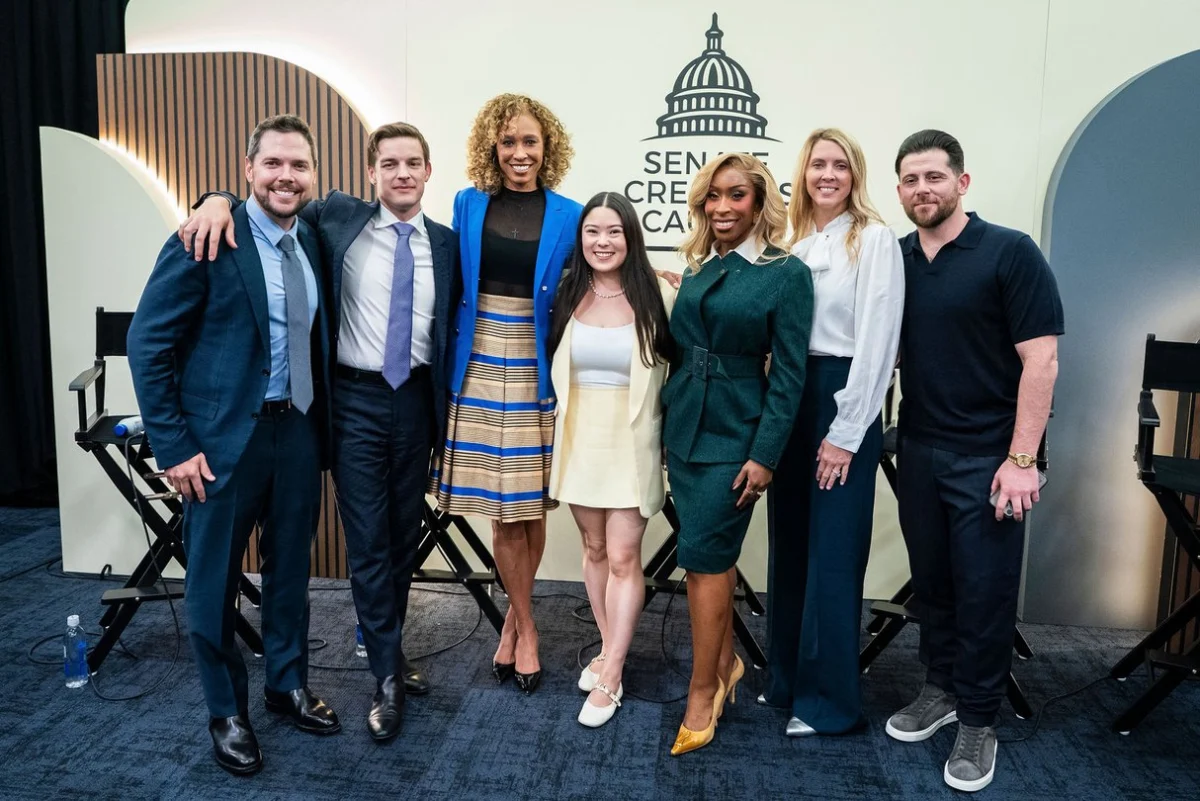
To commemorate the launch, the Senate hosted a high-profile panel discussion moderated by Dylan Wells of The Washington Post. The session provided an unfiltered look into the operations of modern media enterprises.
The panel featured a cross-section of the industry’s most influential voices:

- Jackie Aina, a powerhouse in beauty and lifestyle.
- Matthew Patrick (Game Theory), a titan of analytical storytelling.
- Ian Schwartzman (Joe Budden Network), representing the evolving landscape of podcasting and digital commentary.
- Avery Smith (Louisiana Crawfish Company), highlighting the intersection of traditional commerce and digital marketing.
- Sage Steele (The Sage Steele Show) and Mark Vins (Brave Wilderness), showcasing the diverse breadth of professional broadcasting and nature education.
These creators were joined by a cohort of industry leaders, including Dr. Javoris Hollingsworth of Gracie’s Corner, Dr. Judith Joseph, Shira Lazar of What’s Trending, Dr. Tracey Marks, and Kati Morton. Together, they painted a picture of an industry that is simultaneously precarious and incredibly lucrative, emphasizing that their businesses are built on intellectual property that is increasingly vulnerable to exploitation.
Supporting Data and Economic Impact
The necessity of the caucus is backed by staggering economic metrics. The creator economy is no longer a peripheral niche; it is a primary driver of modern employment.
As noted by Mark Vins of Brave Wilderness, the transition from a solo creator to an enterprise is common. "Today, there are 16 full-time employees and a wide network of partners, contractors, and managers that make Brave Wilderness content happen," Vins stated during the launch event. "Like all channels, we started from zero subscribers but have now created thousands of videos with over 6 billion views."
This pattern—starting with a single laptop and evolving into a company with a payroll, tax obligations, and supply chains—is the standard trajectory for successful creators. When lawmakers discuss small business legislation, tax reform, or labor laws, they are now directly impacting thousands of small-to-medium-sized production companies that have emerged organically on platforms like YouTube.
Official Responses and Perspectives
The bipartisan nature of the caucus reflects the universal appeal of the creator economy. Both leadership and industry participants have expressed a strong desire to see this initiative move beyond symbolic gestures.
The Legislative Vision
Senator Cory Booker emphasized the structural necessity of the caucus: "Content creators are more than our favorite teachers, cooks, music critics, and voices online. They are also entrepreneurs who create jobs, drive economic growth, and invest in their communities. Congress and our laws haven’t kept up. The bipartisan Senate Creators Caucus seeks to change that by educating lawmakers, advocating for policies that have creators in mind, and ensuring that creators are recognized as legitimate small businesses."
Senator John Kennedy echoed this sentiment, focusing on the influence of these figures in the public square: "America’s content creators are entrepreneurs. They’re turning good ideas into careers… That influence comes with a responsibility to be honest and tell the truth. Senator Booker and I started this caucus to hear directly from creators, better understand this growing part of our economy, and make sure they have a voice in Congress."
The Industry Perspective
Leslie Miller, Vice President of Government Affairs and Public Policy at YouTube, highlighted the human element of the industry: "YouTube creators are online storytellers, entrepreneurs, and employers in every state across the country. We’re grateful to Senators Booker and Kennedy for launching the Senate Creators Caucus to ensure America’s digital creators have a strong voice in Washington."
Implications for Future Policy
The creation of this caucus is not just about networking; it is about tangible legislative outcomes. The most pressing item on the agenda is the NO FAKES Act.
Protecting Intellectual Property in the Age of AI
Artificial intelligence has created a new frontier of risk for digital entrepreneurs. The ability to create unauthorized, hyper-realistic digital replicas of a person’s voice or likeness threatens the very foundation of a creator’s brand. During their meetings with congressional offices this week, creators underscored that their livelihoods depend on the ability to control their digital identity.
The NO FAKES Act seeks to codify these protections into federal law. By engaging directly with senators, creators are attempting to ensure that the bill is passed before the end of the year, preventing a "wild west" scenario where unauthorized AI content dilutes their value and misleads their audiences.
The Long-Term Strategic Outlook
The caucus is expected to serve as a permanent sounding board for future digital policy. Key areas of focus for the coming months and years will likely include:
- Taxation and Small Business Classification: Streamlining the way creators pay taxes and receive business grants.
- Platform Transparency: Engaging in ongoing dialogues about algorithmic fairness and content moderation.
- Intellectual Property Rights: Developing comprehensive frameworks that protect creative works from both traditional piracy and modern AI-driven scraping.
- Digital Literacy and Education: Leveraging the massive educational reach of YouTube creators to inform the public on critical policy issues.
Conclusion: A New Era of Governance
The launch of the Senate Creators Caucus is a recognition of reality. The internet has fundamentally rewritten the rules of the American economy, and the people who have successfully navigated this transition are now, rightfully, sitting at the table.
As YouTube continues to work with Senators Booker and Kennedy, and in parallel with Representatives Beth Van Duyne and Yvette Clarke in the House, the goal remains clear: to ensure that the economic and cultural impact of the creator economy continues to flourish. By institutionalizing the relationship between Capitol Hill and the creator community, the United States is taking a proactive step toward protecting the next generation of American entrepreneurs. The era of the creator as an afterthought is over; the era of the creator as a stakeholder has begun.



