










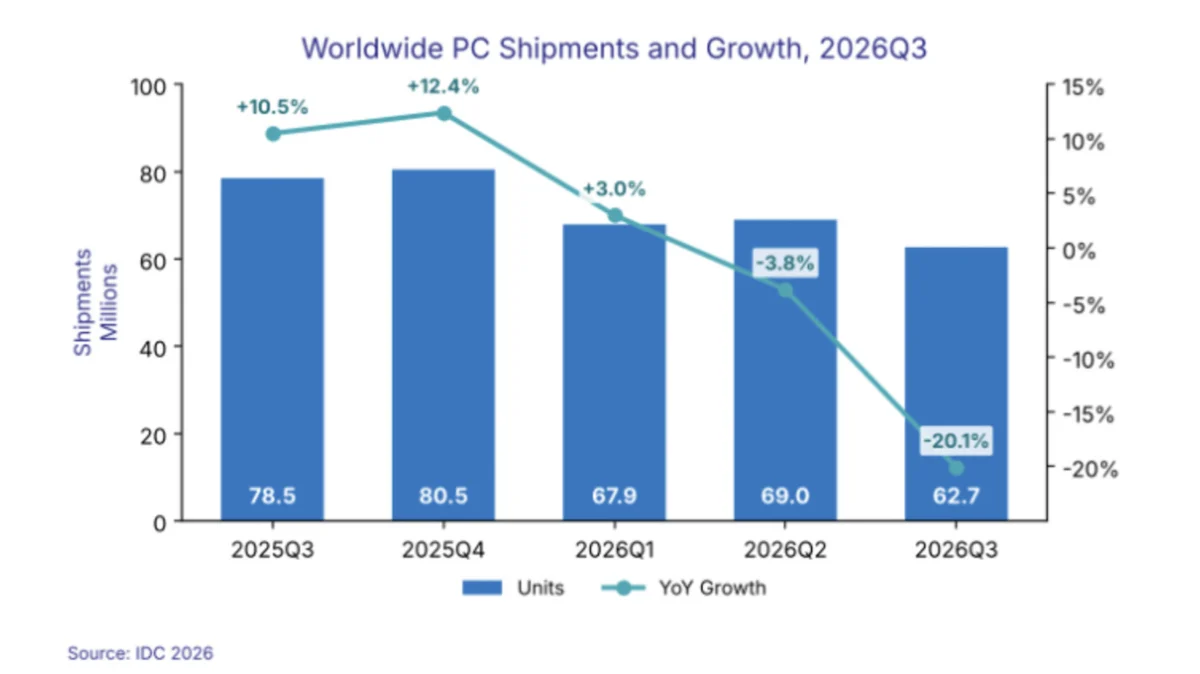
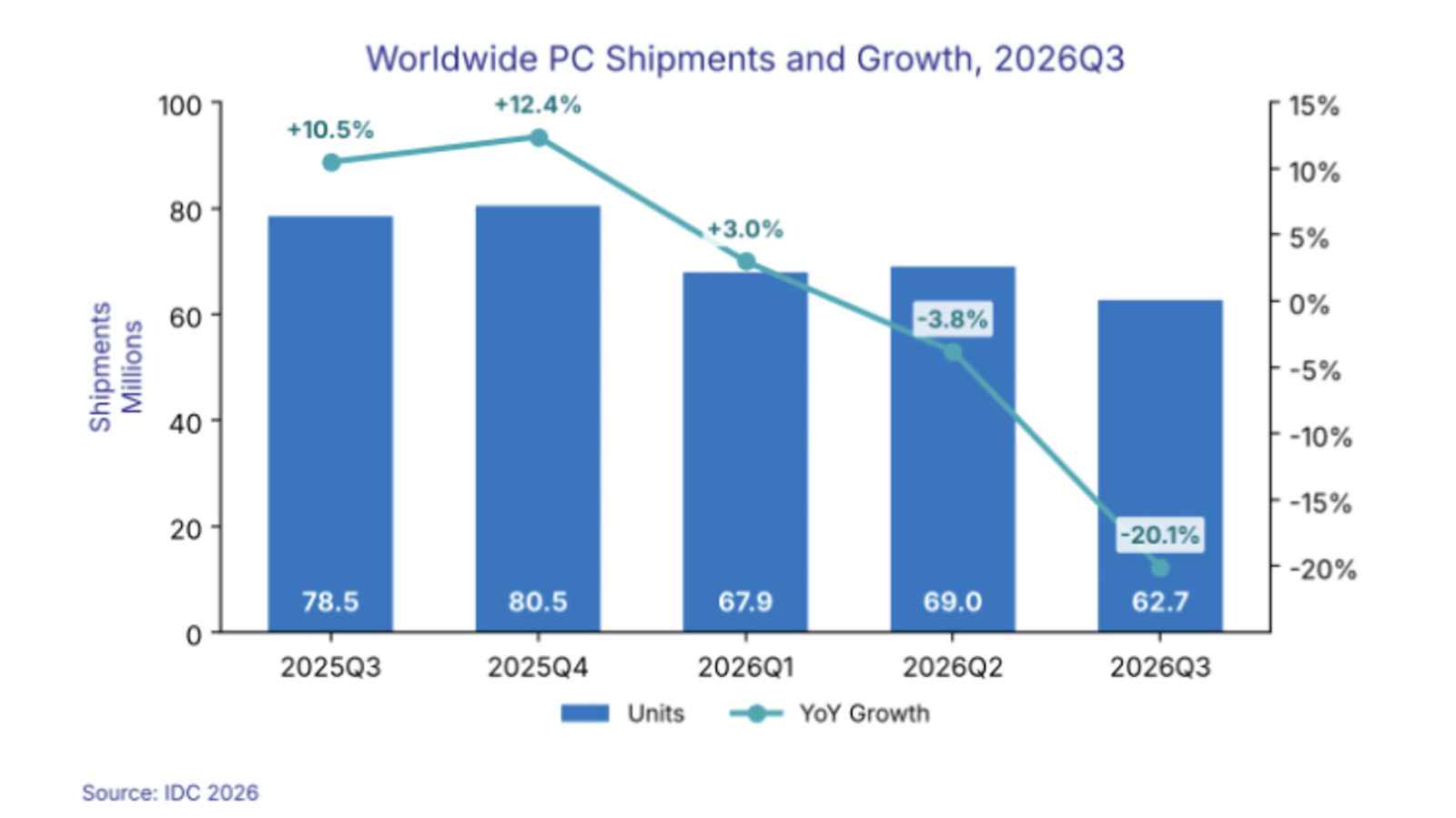
The global computing landscape is currently navigating its most turbulent period in nearly a decade. According to the latest data from the International Data Corporation (IDC), the worldwide PC market has hit a sobering milestone: shipments for the third quarter (Q3) of 2026 have plummeted to 62.7 million units. This figure represents not only a 9.1 percent contraction from the second quarter of 2026 but a harrowing 20.1 percent year-over-year decline compared to Q3 2025.
Industry analysts are calling this the direct manifestation of a long-looming crisis dubbed “RAMageddon”—a systemic failure in the memory supply chain that has sent prices for essential components soaring, effectively strangling consumer demand and corporate procurement alike.
The Chronology of a Market Contraction
To understand the severity of the current climate, one must look at the trajectory of the last two years. For nearly nine consecutive quarters, the PC market enjoyed a period of sustained growth, buoyed by remote work mandates and the urgent need for digital transformation during the mid-2020s. However, the tide began to turn in early 2026.
The Turning Point: Early 2026
In the spring of 2026, market observers noted a subtle shift. While demand remained high, the cost of DRAM and NAND flash memory—the lifeblood of modern computing—began to climb. By July 2026, the first warning bells were rung: IDC reported the first quarterly decline in PC shipments in two years. This wasn’t merely a seasonal dip; it was a structural adjustment as manufacturers struggled to balance the soaring cost of components with the price sensitivity of the average buyer.
The Downward Spiral: Q2 to Q3 2026
Throughout the summer months of 2026, the situation deteriorated. IDC’s internal forecasts were revised downward multiple times as supply chain bottlenecks solidified. Manufacturers, unable to secure affordable memory components, were forced to pass costs onto the consumer. By the time the Q3 data was finalized, it became clear that the industry was facing a "perfect storm": a combination of manufacturing shortages, inflationary pressures on raw materials, and a cooling consumer appetite for luxury tech upgrades.
Supporting Data: By the Numbers
The raw data provided by the IDC paints a grim picture of a market in retrenchment. The 20.1 percent year-over-year drop is the most significant single-quarter contraction in recent history, dwarfing the minor fluctuations seen during the pre-pandemic era.
- Q3 2026 Total Shipments: 62.7 million units.
- Quarter-over-Quarter Decline: 9.1 percent (compared to Q2 2026).
- Year-over-Year Decline: 20.1 percent (compared to Q3 2025).
- Supply Chain Impact: Lead times for high-density memory modules have increased by an average of 45 percent, according to internal industry surveys.
These numbers confirm that the “RAMageddon” phenomenon is not merely a localized issue for specific brands but a systemic failure affecting every tier of the hardware ecosystem, from budget-friendly Chromebooks to high-end enterprise workstations.
Official Responses and Expert Analysis
The industry has been scrambling to respond to the crisis. Leaders at major silicon fabrication firms and PC OEMs (Original Equipment Manufacturers) have expressed cautious concern, often highlighting the disconnect between the desire to innovate and the impossibility of cost-effective production.
Jitesh Ubrani, IDC’s research director for consumer devices, provided a sobering assessment of the current channel dynamics. “Channels are now worried about carrying too much inventory into a market where high prices are suppressing demand,” Ubrani noted in the Q3 briefing.
Ubrani further emphasized that while the market might see a fleeting wave of promotions as retailers attempt to clear old stock, the fundamental pricing structure of the industry has been permanently altered for the near term. “That could translate into promotions and some short-term relief for consumers, but we don’t expect pricing anywhere near what it was a year ago. Prices will remain elevated. With macro conditions worsening, the risk is that the outlook for the next few quarters gets worse before it gets better.”
The Implications for Consumers and Corporations
For the average user, the implications of this data are profound. The era of cheap, readily available hardware upgrades appears to be on an indefinite hiatus.
For the Individual Consumer
If you are currently in the market for a laptop or a desktop build, the advice from market analysts is binary: if you find a machine that meets your requirements at a reasonable price, buy it immediately. The days of "waiting for a better deal" are largely behind us, as inventory levels are expected to tighten further as we move into the end of the year. For those who can afford to wait, the consensus is to delay purchases for at least 12 to 18 months, allowing the market time to stabilize and supply chains to reach a new equilibrium.
For Enterprise IT
Corporate IT departments face a different set of challenges. Organizations that rely on periodic hardware refresh cycles are being forced to extend the lifecycles of existing assets. This is leading to a surge in demand for managed services, device repair, and software optimization, as companies look to squeeze extra performance out of aging hardware that would have been replaced under normal market conditions.
The Road to Recovery: Is "Normalcy" on the Horizon?
The central question facing stakeholders is when the PC market will return to pre-shortage pricing. Unfortunately, the macroeconomic indicators provide little comfort. With global inflation impacting logistics, energy costs, and the extraction of rare-earth metals necessary for semiconductor production, the barrier to entry for affordable computing remains high.
"RAMageddon" is not a short-term hurdle; it is a manifestation of an industry that grew too fast, relied on overly fragile global supply chains, and is now paying the price for that lack of diversification. As manufacturers pivot to build more resilient, localized production facilities, consumers can expect the current high-price environment to persist.
While technological innovation in the processor and graphics space continues at a breakneck pace, the physical assembly of these machines remains hostage to the availability of memory. Until that bottleneck is cleared, the global shipment numbers will likely remain suppressed. For now, the tech industry remains in a defensive posture, bracing for a winter of discontent while hoping that the Q4 holiday season—historically the strongest quarter for hardware—provides a much-needed, albeit modest, rebound.
In conclusion, the 20.1 percent contraction is a wake-up call for the entire technology sector. It underscores the fragility of the digital economy and serves as a reminder that the hardware that powers our world is subject to the same physical and economic constraints as any other commodity. As we look toward 2027, the focus will shift from growth to survival, with the industry hoping that the worst of the volatility is now behind us.



