










The media industry is currently navigating a period of profound structural change, characterized by the traditional "revolving door" between government and cable news, aggressive investments in artificial intelligence, and the search for sustainable revenue models in a post-federal-funding environment. As we move into the final quarter of 2026, major networks are repositioning themselves to capture shifting viewer demographics and ensure long-term viability in an increasingly fractured digital ecosystem.
The Revolving Door: From the West Wing to the Newsroom
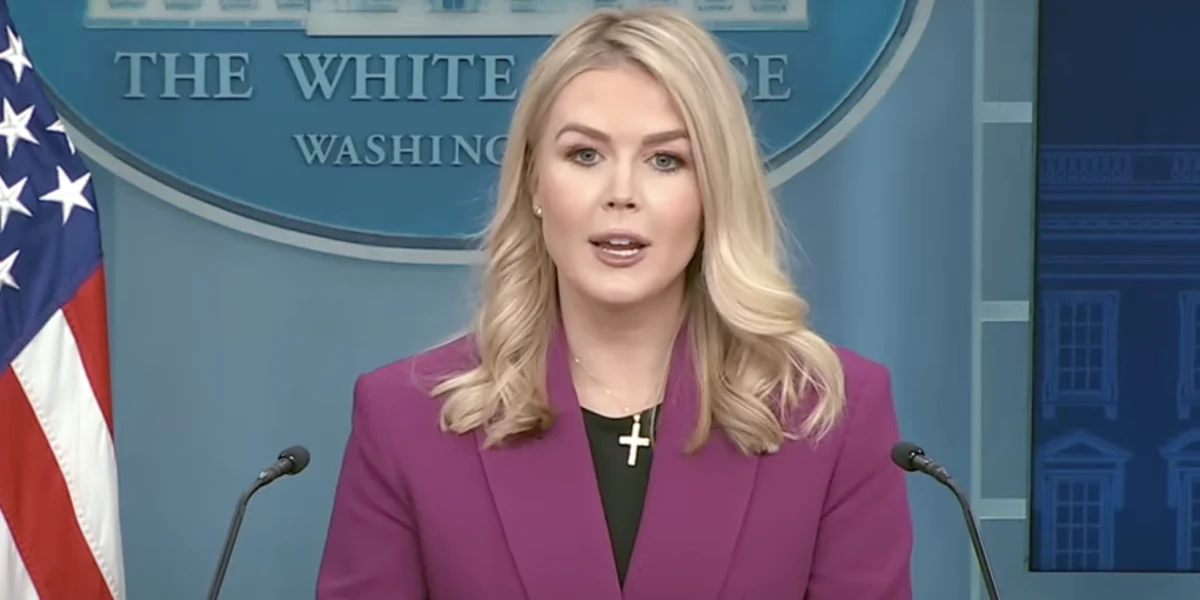
The most notable personnel shift this week involves the transition of Karoline Leavitt from the White House to the broadcast booth. Fox News Media CEO Suzanne Scott announced Monday that Leavitt, who served as the 36th White House Press Secretary from January 2025 through August 2026, will join the network as a contributor effective November 1.
Leavitt’s tenure remains a singular fixture of the current administration; she is the only individual to have held the role during President Donald Trump’s second term. Her move back to Fox News—a network where she was a familiar face prior to her executive branch appointment—underscores the cyclical nature of the "Fox News-to-White House pipeline."
"I am grateful for the opportunity to continue appearing on Fox News Channel as an official member of the extraordinary team at Fox News Media," Leavitt stated in a release. Her role will involve providing political analysis and commentary across all of the network’s platforms, effectively leveraging her recent inside-the-Beltway experience to shape the narrative of the ongoing political season.
Technological Frontiers: AI and the Evolution of Storytelling
While personnel headlines grab attention, the most radical shift in content production is occurring at Fox Nation. The streaming service is set to premiere a three-part series, Houdini: Back from the Dead, on Wednesday, October 14.
The project is being closely watched by industry analysts as it marks a departure from traditional documentary filmmaking. The series is the first full-length project on the platform to utilize entirely AI-generated imagery to "resurrect" the legendary magician, whose passing occurred exactly 100 years ago.
Lauren Petterson, president of Fox Nation, emphasized that the technology serves as a tool for historical preservation rather than a gimmick. "We’re proud to showcase a new form of historical storytelling that allows viewers to experience Houdini’s remarkable life in his own words, while remaining rooted in extensive research and historical accuracy," Petterson said. By synthesizing archival data with generative visuals, the network is testing whether audiences will accept AI-augmented history as a legitimate educational format.
Election Season Strategy: CBS and the "Nerd" Pivot
As the United States approaches the November 3 election, news organizations are scrambling to differentiate their coverage. CBS News has opted to lean into data-driven journalism with the launch of The Nerd Show.
Hosted by CBS News executive director of elections and surveys Anthony Salvanto and congressional correspondent Caitlin Huey-Burns, the program is designed to demystify complex polling data. Beginning at 5 p.m. ET, the show will stream across YouTube, X, and CBS News’ proprietary digital channels, including CBS News 24/7. This move reflects a broader industry trend toward "second-screen" viewing, where news outlets provide supplementary, deep-dive content that allows tech-savvy viewers to bypass the more generalized commentary typical of prime-time election coverage.
The Rise of Vertical Video and Subscription Revenue
ABC News is the latest major network to embrace the "Verts" format—an interactive, vertical video feed popularized by the broader Disney ecosystem. This integration into the ABC News app signifies an admission that news consumption is increasingly occurring on mobile devices in short-burst intervals. The feed curates factual news from linear, streaming, and owned-television programming, supplemented by original content from anchors and analysts.
Meanwhile, a more desperate search for revenue is playing out at PBS News. Facing a reduction in federal funding, the organization has launched "Press Pass," a subscription service. For $8 per month or $96 annually, supporters gain access to a political newsletter, Inside the White House with Liz Landers, as well as ad-free podcasts and exclusive virtual events. This transition from purely public-funded media to a hybrid subscription model represents a significant evolution for the network as it seeks to maintain its editorial independence.
Literary Pursuits and Long-Term Tenure
The media personality landscape continues to expand beyond the screen. Stephanie Ruhle, the MS NOW anchor and senior business analyst, is set to release The New Rules: Work, Life, Money and the Power of Minding Your Own Business on March 2, 2027. Published by Avid Reader Press (a division of Simon & Schuster), the book promises to deliver counterintuitive insights into the modern economy—a subject Ruhle has spent years dissecting on air.
Simultaneously, two pillars of cable news recently celebrated 15-year anniversaries. CNN’s Erin Burnett OutFront and CNBC’s Halftime Report both marked their decade-and-a-half milestones with on-air retrospectives.
Burnett’s celebration featured a surprise reunion with "day-one" guests John Avlon, Kevin Madden, and Bill Burton. At CNBC, Scott Wapner’s Halftime Report saw a reunion of its core committee members, including Josh Brown, Stephanie Link, Joe Terranova, and Steven Weiss. These anniversaries serve as a reminder of the value of continuity in an industry currently marked by rapid turnover and radical technological experimentation.
Global Leadership and Domestic Growth
Across the Atlantic, the BBC has concluded its search for a new director of BBC News and Current Affairs. Rachel Jupp, formerly the director of BBC News documentaries and long-form journalism, has been appointed to the role. Jupp emerged as the victor among four finalists, a selection praised by BBC director-general Matt Brittin.
"Rachel is an outstanding editorial leader, widely regarded for her news judgment, fairness, and high standards," Brittin remarked. Jupp’s appointment comes at a critical time for the BBC as it looks to strengthen its global footprint and modernize its editorial approach in the face of stiff digital competition.
Back in the U.S., Newsmax is doubling down on its current lineup. The network has secured a multi-year deal with Rob Schmitt, host of Rob Schmitt Tonight. According to Gary Kanofsky, the network’s VP of news and programming, the extension is a direct result of Schmitt’s ability to drive consistent audience growth in the 7 p.m. ET time slot.
Implications of a Shifting Landscape
The convergence of these events—the AI-driven historical series at Fox, the transition of a political insider to the commentary desk, and the pivot to subscription-based funding models—paints a clear picture of the media’s future.
- The Erosion of Boundaries: The flow of personnel between political offices and newsrooms continues to blur the line between journalism and partisan advocacy. As figures like Karoline Leavitt transition into media roles, the burden of maintaining objectivity falls increasingly on the networks’ editorial standards.
- Technological Pragmatism: AI is no longer a futuristic threat to the media industry; it is an active production tool. The success of Houdini: Back from the Dead will likely serve as a litmus test for whether legacy media can successfully deploy synthetic content without alienating audiences wary of "fake" media.
- The Economics of Survival: Whether through vertical video apps or subscription newsletters, news organizations are aggressively monetizing their brand loyalty. The shift from public reliance to private subscription, as seen with PBS, suggests that the "free" model of journalism is increasingly unsustainable without deep-pocketed corporate backing or direct consumer support.
As the industry looks toward 2027, the dual focus remains on audience retention and fiscal agility. The networks that succeed will be those that balance the "old guard" of trusted anchors and long-form analysis with the "new guard" of algorithmic distribution and diversified revenue streams.



