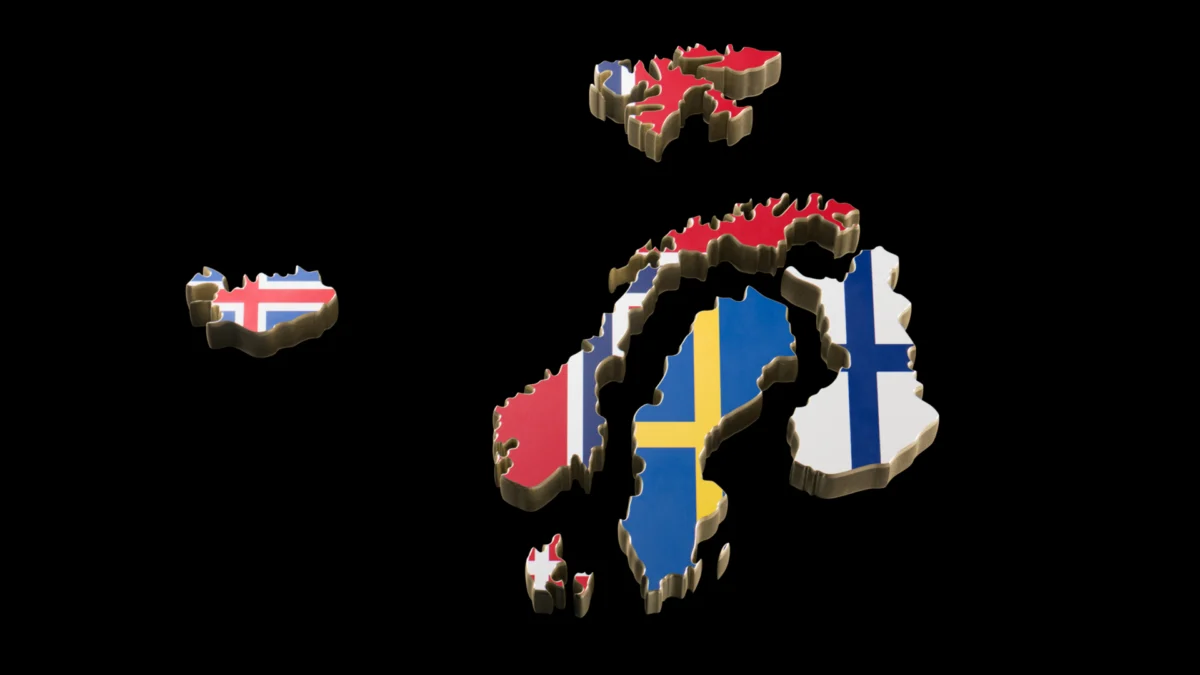
STOCKHOLM — For years, the Nordic region has quietly punched above its weight class in the global innovation economy. Long celebrated for its high quality of life, progressive governance, and egalitarian societies, countries like Sweden, Finland, Denmark, and Norway have steadily evolved into Europe’s undisputed leaders in unicorn startup density. On a per capita basis, no other region on the continent produces as many emerging enterprises valued at $1 billion or more.
Yet, the narrative in the North is shifting from high-yield ambition to large-scale application. Bolstered by structural advantages—including abundant and affordable renewable energy, rigorous data governance frameworks, and a deeply entrenched research tradition that seamlessly bridges academia and industrial manufacturing—the Nordics are rapidly constructing one of the world’s most consequential and resilient technology ecosystems.
Driven by an unprecedented surge in advanced computing infrastructure, proprietary intelligence, agile startups, autonomous machinery, and quantum research, the region is proving that a coordinated commitment to deep tech can reshape entire industries.
Main Facts: A Regional Powerhouse Takes Shape
At the heart of the Nordic tech boom is a convergence of raw computational power and strategic regional vision. The foundational infrastructure supporting this wave of artificial intelligence and high-performance computing (HPC) is expanding at a breakneck pace. AI clouds across the region are projected to deploy a staggering 1 gigawatt of capacity by the end of 2027, establishing the Nordics as a premier European infrastructure hub.
Major international cloud providers—including Bitdeer, CoreWeave, Crusoe, Hyperstack, Nscale, Verda, and Volta—are aggressively scaling operations within the region. Simultaneously, domestic heavyweights are pooling resources to build localized, sovereign AI capabilities.
In Sweden, a landmark consortium anchored by industrial giants Ericsson, AstraZeneca, Saab, SEB, and Wallenberg Investments, with SKF acting as a strategic partner, launched Sferical One. This shared supercomputer operates on two NVIDIA DGX SuperPODs equipped with 16 racks of NVIDIA DGX GB300 systems and a total of 1,152 GPUs. Powered by NVIDIA Nemotron open models, Sferical One provides researchers and enterprises with a secure, highly customizable environment to train and deploy advanced artificial intelligence without compromising data sovereignty.
Chronology: The Evolution of the Nordic AI Ecosystem
To understand how the Nordics reached this pivotal juncture, it is helpful to examine the deliberate evolution of the region’s technological landscape over the past decade:
- Mid-2010s (The Unicorn Foundation): Bolstered by robust digital literacy, universal broadband, and collaborative startup incubators, Nordic nations began producing a disproportionate number of global tech sensations—most notably Spotify, Klarna, and Minecraft creator Mojang.
- 2020–2023 (The Green Energy Advantage): As global AI training demands skyrocketed, the energy-intensive nature of data centers strained power grids elsewhere in the world. The Nordics leveraged their surplus green energy (hydro, wind, and geothermal) and cool climates to market themselves as sustainable havens for enterprise computing infrastructure.
- 2024–2025 (The Enterprise Pivot): Regional enterprises began moving past experimentation, integrating large language models and physical AI into core operations. Companies like Spotify and ABB Robotics demonstrated that localized AI could drastically cut operational costs and deployment time.
- 2026 and Beyond (The Deep Tech Explosion): Propelled by surging venture capital—Sweden’s startup ecosystem alone raised $2.8 billion in the first half of 2026, on track to hit $5 billion for the year—the region transitioned into an integrated ecosystem of infrastructure hubs, autonomous vehicle testing grounds, quantum computing labs, and specialized AI factories.
Supporting Data: By the Numbers
The quantitative evidence supporting the Nordic technology renaissance highlights a thriving, well-capitalized ecosystem:
- $5 Billion: Sweden’s projected venture capital funding for the full year 2026, following a strong $2.8 billion haul in just the first half.
- 1 Gigawatt: The projected AI cloud capacity slated for deployment across the Nordic region by the end of 2027.
- 99% vs. 80%: The operational metrics achieved by ABB Robotics using RobotStudio HyperReality, which delivers up to 99% simulation accuracy while slashing real-world commissioning time by up to 80%.
- 75% and 64x: Performance milestones achieved by Swedish speech lab Klang with Pianissimo, a Swedish transcription model fine-tuned on NVIDIA Parakeet v3 that cuts transcription errors by 75% while operating 64 times faster than previous market alternatives.
- 33%: The reduction in execution time achieved by Stockholm-based quantum startup FirstQFM using NVIDIA accelerated computing, validated on a QuantWare quantum processor.
- 50%: The reduction in autonomous solution deployment time reported by Toyota Material Handling Europe through a simulation-first approach enabled by physical AI.
Official Responses and Industry Perspectives
The rapid acceleration of deep tech in the Nordics has drawn praise from regional leaders, corporate executives, and international technology pioneers alike.
Industry leaders point out that the region’s success is not accidental, but rather the byproduct of a unique cultural and structural alignment. Anders Nilsson, speaking on behalf of various enterprise initiatives, noted that the region’s traditional strengths in engineering and cross-sector collaboration have given it a distinct edge in operationalizing artificial intelligence.
"The Nordics are moving past mere ambition and squarely into application," industry analysts observe. By combining world-class data privacy regulations with frictionless public-private partnerships, the region has created an environment where complex, high-risk technical undertakings—ranging from quantum calibration to industrial physical AI—can be safely incubated and brought to market.
The launch of collaborative physical spaces, such as the upcoming Stockholm AI Lab by the Norrsken Foundation and NVIDIA, underscores this ethos. Scheduled to open in 2027, the lab will serve as a physical nexus for AI-native founders tackling some of the world’s most intractable global challenges.
Implications: Transforming Industries from Factory Floors to Outer Space
The ripple effects of the Nordic technology push extend far beyond localized software development. Across telecommunications, industrial manufacturing, intellectual property, and even aerospace, Nordic companies are setting global benchmarks.
Nordic-Built Intelligence
Established Nordic enterprises are embedding proprietary AI into their core operations to drive unprecedented efficiencies:
- Spotify: The global audio streaming giant utilizes NVIDIA TensorRT-LLM inference software to run AI-powered podcast recommendations at scale, delivering faster, cheaper, and more personalized audio experiences to hundreds of millions of users worldwide.
- ABB Robotics: Developed RobotStudio HyperReality using NVIDIA Omniverse libraries, allowing engineers to train, test, and validate industrial robots in a virtual environment that mirrors physical firmware with 99% accuracy before touching a factory floor.
- Elisa: The Finnish telecom provider is piloting Moontalk AIRI, a real-time enterprise agentic assistant built on NVIDIA Nemotron open models that captures insights, retrieves information, and documents meetings with minimal latency.
Startups Scaling on Accelerated Computing
A new wave of agile Nordic startups is leveraging open models to disrupt traditional industries:
- Stilta: A Stockholm-based intellectual property startup that post-trains NVIDIA Nemotron open models to automate patent analysis across entire corporate portfolios, making continuous IP monitoring feasible for the first time.
- ConfidentialMind: Developed SampoTron on NVIDIA Nemotron-3-Embed, achieving a 20%+ improvement in cross-lingual retrieval accuracy across English, Finnish, and Swedish.
- Agaton: Utilizes NVIDIA Nemotron 3.5 Lightning to power its real-time customer conversation analyzer, drastically cutting response latency during live sales calls.
- Embedl & Space Cargo Unlimited: Gothenburg-based Embedl—a member of the NVIDIA Inception program—partnered with Space Cargo Unlimited to build an onboard prototype that monitors protein crystallization in space. Running on a single NVIDIA Jetson Orin NX module, the system operates autonomously without continuous ground connectivity.
Furthermore, initiatives like the Sweden AI Factory—one of Europe’s 19 EuroHPC-funded AI facilities—are actively opening their high-end infrastructure and expertise to regional startups and small-and-medium-sized enterprises (SMEs) working in life sciences, material sciences, autonomous systems, and gaming.
Autonomous Machines and Quantum Horizons
On Nordic roads and manufacturing floors, autonomous systems are becoming a tangible reality. Autonomous freight pioneer Einride is building its next-generation Einride Driver on the NVIDIA Hyperion platform, integrating safety systems and open world models. Meanwhile, Toyota Material Handling Europe is deploying simulation-first autonomous forklifts, cutting commissioning times in half.
At the absolute frontier of technology, Swedish quantum enterprises are bridging the gap between classical accelerated computing and quantum mechanics. Stockholm’s FirstQFM successfully trained a model using NVIDIA accelerated computing that trims quantum processor execution times by 33%, validated on QuantWare hardware.
As the region continues to scale its green data centers, foster deep tech startups, and pioneer physical AI, the Nordic countries are no longer just participants in the global tech economy—they are architecting its future.
Industry observers and technologists can catch further updates during NVIDIA founder and CEO Jensen Huang’s upcoming GTC Berlin keynote scheduled for Wednesday, October 21, at 11 a.m. CEST.