










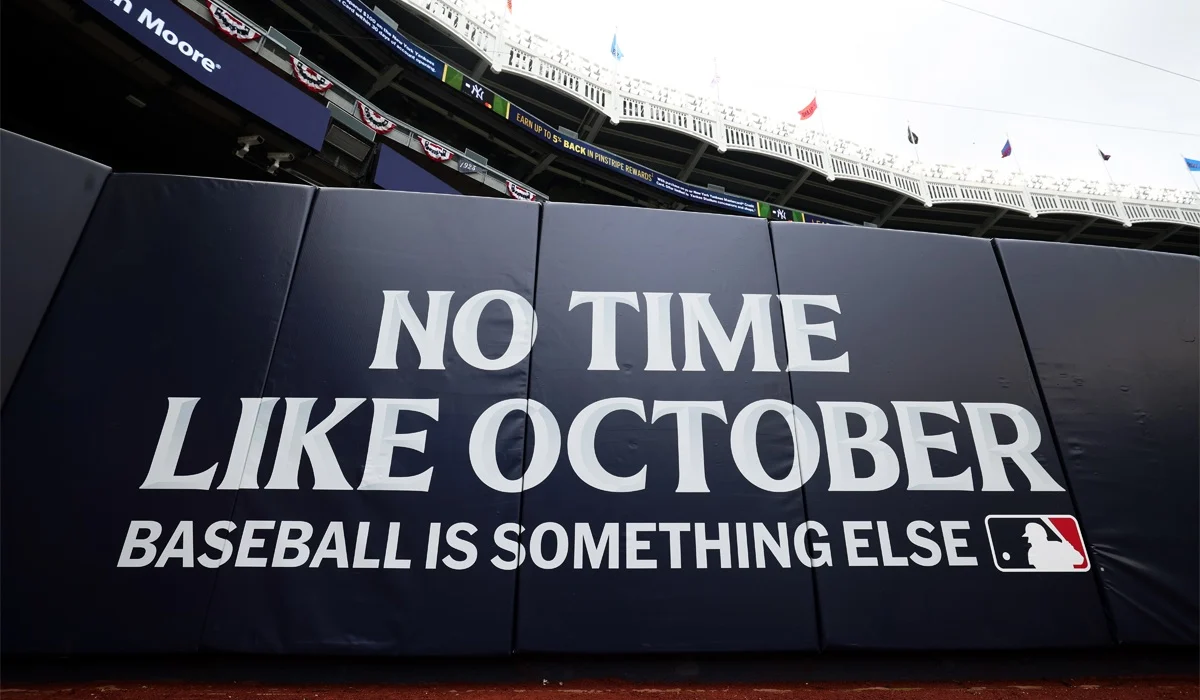
As the crisp autumn air settles over baseball stadiums across North America, Major League Baseball (MLB) is not merely waiting for the first pitch of the playoffs to signal the arrival of the postseason. Instead, the league has embarked on an aggressive, multi-channel marketing campaign designed to manufacture urgency, reclaim the cultural conversation, and redefine the postseason as an inescapable national event. With its bold new tagline, “No Time Like October,” and a series of high-impact physical and digital media activations, MLB is betting that a sense of immediacy is the key to capturing the attention of a fractured media audience.
The Strategy: Transforming Urgency into Action
In late September, as the regular season entered its final, high-stakes stretch, readers of The New York Times, The Los Angeles Times, and other major market dailies were greeted with a stark, full-page declaration: “October Starts Today.”
This was not a mere branding exercise; it was a strategic disruption. By occupying the traditional real estate of elite print journalism, MLB signaled that the postseason is not just a sporting event—it is a societal milestone that demands immediate attention. The campaign, orchestrated by the league’s marketing arm, aims to dismantle the traditional "wait-and-see" approach fans often take toward the early rounds of the playoffs, urging them instead to treat every game with the gravity of a Game 7.
"No Time Like October" serves as the thematic anchor for this year’s postseason. The message is designed to resonate with a modern audience that is bombarded with competing digital distractions. By positioning baseball as the "must-see" cultural heartbeat of the fall, the league is attempting to reclaim the narrative that the postseason is an unmissable, real-time experience that cannot be deferred or "caught up on" later.
A Chronology of the Campaign Launch
The rollout of the 2026 postseason marketing strategy followed a precise, multi-phase trajectory designed to build momentum as the regular season waned.
- Phase 1: The "Soft Launch" (Early September): MLB began teasing the postseason through organic social media content and localized stadium activations. The focus was on highlighting individual player milestones and the tight divisional races that would define the path to the playoffs.
- Phase 2: The Print Disruption (Late September): The appearance of full-page ads in major metropolitan newspapers served as the campaign’s "anchor drop." This signaled a pivot from general awareness to a sense of professional and cultural urgency. By choosing legacy print media, the league effectively courted mainstream news cycles, generating earned media across social platforms and cable sports networks.
- Phase 3: The "No Time Like October" Digital Blitz (October 1–Present): With the playoffs officially commencing, the league pivoted to high-frequency digital engagement. This includes short-form video content featuring iconic postseason moments, influencer partnerships, and real-time social commentary aimed at keeping the "October" brand at the top of the social media algorithm.
- Phase 4: Hyper-Local Integration (Ongoing): The league is currently working with regional partners to ensure that host cities are "October-ready," utilizing outdoor advertising, public transit takeovers, and community events to ensure the atmosphere is palpable before fans even step into the stadium.
Supporting Data: The Shift in Media Consumption
The shift in MLB’s marketing strategy is rooted in a fundamental change in how modern audiences consume sports. According to internal league projections and external industry data, the "leisurely" consumption of sports—watching a game while doing other tasks—is becoming less common. Instead, viewers are gravitating toward "event-based" sports consumption.
Industry analysts note that Connected TV (CTV) has become the primary battleground for sports leagues. With the rise of streaming, the distinction between "appointment viewing" and "on-demand viewing" has blurred. MLB’s strategy is a direct response to this. By measuring "real audience attention"—the degree to which a viewer is actively engaged with the screen—the league is discovering that traditional metrics like "impressions" are no longer sufficient to gauge success.
Data from the 2025 postseason suggested that viewers who engaged with "high-urgency" content (content that emphasizes the stakes of a single pitch or at-bat) were 30% more likely to remain tuned into the broadcast for the duration of the game compared to those who viewed standard promotional spots. This insight directly informed the 2026 "No Time Like October" creative direction.
Official Responses and Industry Perspective
MLB’s leadership has been vocal about the necessity of this shift. In recent discussions regarding the league’s media strategy, officials have emphasized that the postseason is the league’s most valuable product, and it requires a marketing effort that matches its prestige.
"We aren’t just selling a game; we are selling a cultural experience," noted a league spokesperson during a recent media briefing. "The ‘October Starts Today’ campaign is about acknowledging that in the modern attention economy, you have to be loud, you have to be consistent, and you have to prove to the fan that every moment matters. If you aren’t watching, you are missing out on history."
Industry leaders at the ADWEEK Exchange Series have echoed these sentiments, noting that the league’s pivot toward high-attention strategies is a template for other major sports organizations. By utilizing a mix of high-impact print, social-first video, and data-driven CTV placements, MLB is successfully navigating the transition from a legacy sport to a digital-first entertainment powerhouse.
Implications for the Future of Sports Marketing
The implications of the 2026 postseason campaign are significant, both for MLB and the broader professional sports landscape.
1. The Death of the "Impressions-Only" Metric
MLB’s focus on measuring attention rather than just reach is a warning shot to media buyers and advertisers. As the league moves forward, we can expect a continued shift toward metrics that capture engagement depth. Advertisers are increasingly demanding to know not just how many people saw an ad, but how many people cared enough to stay on the stream.
2. The Resurgence of "Eventization"
The "October Starts Today" stunt proves that legacy media still carries a unique weight when it comes to setting a cultural tone. In a digital-first world, physical, high-visibility activations—like full-page ads or large-scale stadium takeovers—act as a "pattern interrupt" that forces consumers to stop scrolling and pay attention.
3. The CTV Frontier
As baseball continues to expand its presence on streaming platforms, the ability to serve dynamic, high-attention creative via CTV will be the ultimate differentiator. The 2026 campaign is the first of many to fully leverage the capability of Connected TV to deliver personalized, high-stakes messaging that drives immediate ROI.
4. Changing the Fan Relationship
Ultimately, the goal of this campaign is to deepen the emotional investment of the fan. By framing the postseason as a finite, precious resource—"No Time Like October"—the league is subtly increasing the "cost" of missing a game. This emotional framing is designed to turn casual viewers into dedicated playoff enthusiasts, a crucial transition for maintaining viewership numbers in an increasingly fragmented market.
Conclusion: A New Standard for the Postseason
As the 2026 postseason progresses, the success of the "No Time Like October" campaign will be judged not just by viewership numbers, but by the stickiness of the audience it builds. MLB has recognized that in an era of infinite choice, the only way to win is to make the product feel indispensable.
Whether this approach will permanently change the way sports leagues market their playoffs remains to be seen. However, by daring to declare that "October starts today," Major League Baseball has successfully moved the goalposts. The league has reminded the world that while sports may be a business, the postseason remains, at its core, a theater of the urgent, the essential, and the unforgettable.
For the fans, the message is clear: the time for waiting is over. The time for October—and every high-stakes moment within it—is now.



