










The landscape of web development is undergoing a period of rapid, iterative refinement. As frontend architectures grow in complexity, the focus of the community has shifted toward three critical pillars: extreme performance optimization, the consolidation of fragmented tooling, and a re-evaluation of how we architect modern applications. This report synthesizes the latest developments from industry leaders like Anthropic, VoidZero, and SolidJS to provide a comprehensive view of the current state of JavaScript engineering.
I. Main Facts: The Pursuit of Speed and Simplicity
Recent industry trends indicate a pivot away from "feature-at-all-costs" development toward "performance-as-a-feature." Leading this charge is Anthropic, which recently demonstrated that monumental speed gains are often hidden in the smallest implementation details. Simultaneously, the ecosystem is witnessing a move toward unification, where disparate tools—long the bane of developer experience—are being consolidated under single, coherent interfaces.
The central narrative across these developments is clear: modern frontend development is maturing. The "Wild West" era of configuring dozens of incompatible build tools is giving way to centralized platforms, while core engine performance is being squeezed for every millisecond of latency.

II. Chronology of Recent Advancements
The Performance Sprint at Anthropic
In a recent two-week engineering sprint, the team at Anthropic achieved a remarkable 3x speed improvement for the Claude web application. By focusing on the "time-to-typeable" metric—a critical measure of user-perceived responsiveness—they reduced the p75 latency from 3.1 seconds to a mere 0.55 seconds.
The Launch of Vite+ 1.0
VoidZero, led by Evan You (creator of Vue and Vite), has officially launched Vite+ 1.0. This project represents a bold attempt to resolve the "tooling fatigue" prevalent in the JavaScript ecosystem. By introducing a single vp command, developers can now manage their entire stack—package management, linting, formatting, testing, and building—from a single configuration file. This release coincides with Cloudflare’s continued investment in the VoidZero ecosystem, signaling a shift toward more stable, enterprise-grade tooling infrastructure.
The Unification of Frontend Architecture
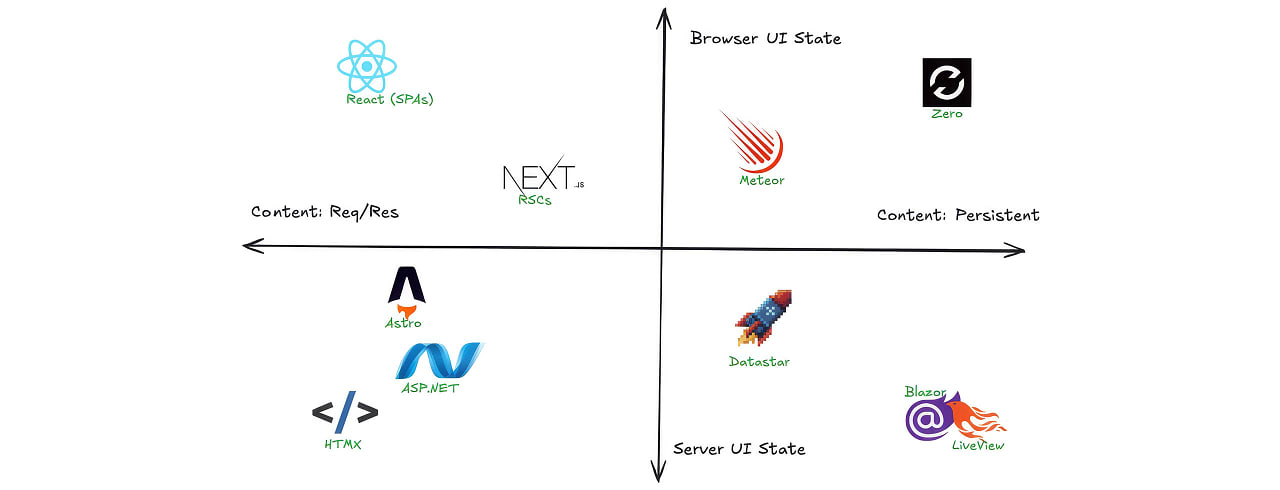
Ryan Carniato, creator of SolidJS, has sparked a new conversation regarding the "Grand Unifying Architecture" of the web. By arguing that frameworks like HTMX, React, and LiveView are essentially just different approaches to the same three fundamental jobs—navigation, content delivery, and UI feedback—Carniato is positioning Solid 2.0 to offer a universal solution that spans the spectrum from server-side rendering to instant client-side interactivity.

III. Supporting Data: Technical Deep-Dives
Decoding the V8 Engine
Performance is rarely about hardware alone; it is about how code interacts with the JavaScript engine. Matteo Collina recently shed light on the mechanics of V8 objects. His research confirms that while Object.create(null) is often used to create "clean" objects, it inadvertently forces the V8 engine into a slower "dictionary mode." By creating a standard object first and subsequently nullifying its prototype, developers can preserve "fast property" optimization, illustrating how deep knowledge of engine internals can lead to significant real-world performance gains.
Shipping More CSS, Less JavaScript
In a counter-intuitive move, GitHub engineering recently published findings on their site performance. By shifting away from CSS-in-JS and back toward more traditional CSS approaches, they managed to improve site responsiveness. This finding mirrors a broader trend: as the cost of executing large JavaScript bundles rises, developers are returning to the browser’s native capabilities to handle layout and styling.
Performance Budgeting with "Size Limit"
Andrey Sitnik’s "Size Limit" tool has emerged as a standard for maintaining performance discipline. By allowing teams to set hard budgets for their code, the tool acts as a gatekeeper in CI/CD pipelines. If a PR adds too much weight to a bundle, the build fails, ensuring that performance is treated as a first-class citizen rather than an afterthought.

IV. Official Responses and Industry Implications
The Agentic Shift in Mobile Development
The industry is moving toward an "agentic" future, where AI agents—rather than humans—handle the heavy lifting of testing and shipping code. Expo has become the primary battleground for this shift, with developers increasingly relying on automated agents to ensure the reliability of mobile deployments.
However, this rise in automation brings its own challenges. Companies like Fingerprint are responding to the surge in non-human traffic by developing advanced detection tools to distinguish between helpful, verified AI agents and malicious actors attempting to exploit web infrastructure.
Testing: The End of Manual Labor
The paradigm of testing is also undergoing a fundamental transformation. Meticulous AI, founded by former Palantir engineers, is shifting the industry away from manual test writing toward deterministic end-to-end (E2E) UI testing. By creating evolving test suites that require zero developer effort, companies like Notion and Dropbox are proving that the future of software quality lies in automated, self-healing test infrastructures.
V. Implications: Where We Go From Here
The current trajectory of the web ecosystem suggests three long-term implications for developers and organizations:
- The End of Configuration Complexity: With the advent of projects like Vite+, the era of managing a disjointed "alphabet soup" of tools is ending. Organizations will increasingly prioritize integrated platforms that reduce the cognitive load on engineers.
- Performance as a Competitive Advantage: Anthropic’s performance sprint and GitHub’s CSS migration show that speed is a critical retention factor. Companies that fail to invest in low-level optimization—like understanding how their code interacts with the V8 engine—will find themselves falling behind more lean, performant competitors.
- The Rise of the "Universal" Developer: As frameworks like SolidJS 2.0 bridge the gap between server-side and client-side paradigms, the distinction between "backend" and "frontend" development will continue to blur. Engineers will be expected to understand the full lifecycle of a request, from the server’s initial response to the browser’s final paint.
Conclusion
The JavaScript ecosystem is currently in a state of "mature consolidation." The frantic pace of innovation that defined the 2010s is being replaced by a more thoughtful, disciplined approach to engineering. Whether it is through the standardization of tooling via Vite+, the pursuit of microscopic performance gains in the V8 engine, or the integration of AI-driven testing, the message is clear: the focus is no longer just on what we can build, but on how efficiently, reliably, and performantly we can deliver those experiences to the user.
As we look toward the remainder of the year, the winners in this space will be those who embrace these architectural shifts, move away from fragmented workflows, and treat performance and quality as foundational components of the development lifecycle. The "Grand Unifying" era of frontend development has arrived, and it promises to make the web faster, more stable, and significantly more enjoyable to build for.



