Unlocking SaaS Growth: Why Your Demo Landing Page Is Failing and How to Fix It
By Danielle Torrie Updated July 9, 2026 • 16 min read
Main Facts
Demo requests are down, sales teams are pointing fingers at marketing over lead volume and quality, and marketing responds by throwing more budget at demo ads. Yet, the problem persists.
According to industry data, one of the most common structural mistakes B2B marketers make is treating "request a demo" like a low-friction call-to-action (CTA). Asking a prospective buyer to book time with a sales representative is a substantial leap compared to downloading a guide, registering for a webinar, or browsing a product features page.
Data from Dreamdata’s 2025 LinkedIn Ads benchmark report indicates that the average B2B customer journey spans a grueling 211 days and incorporates roughly 88 distinct touchpoints. High-investment software decisions require patience, trust-building, and extensive research. Despite this reality, countless SaaS companies continue to prematurely push demo requests before buyers have gathered enough evidence, established institutional trust, or confirmed readiness for a direct sales conversation.
Furthermore, industry benchmarks—such as Unbounce’s conversion data and field research from landing page strategist Tas Bober—place realistic conversion rates for SaaS demo landing pages in the low single digits, typically hovering between 3% and 4%. Driving cold traffic to these high-friction pages guarantees an artificial performance ceiling that cannot be solved by simply tweaking button colors or rewriting headlines.
Chronology and Context: The Evolution of B2B Buying Journeys
The modern B2B SaaS marketplace has undergone a seismic shift. Over the past several years, buyers have increasingly demanded self-serve research models, preferring to evaluate software anonymously through content hubs, comparison platforms, and peer networks before ever speaking to a vendor.
Early Research Phase (Days 1–90): Prospective buyers identify organizational bottlenecks and explore top-of-funnel (TOFU) assets, such as educational guides, industry reports, and introductory blog posts.
Evaluation & Shortlisting Phase (Days 91–170): Buyers narrow down their options, examining solution summaries, pricing pages, and product-specific landing pages.
Conversion & Decision Phase (Days 171–211+): Armed with internal consensus, fully researched shortlists, and ROI projections, buyers finally reach the threshold of the demo landing page.
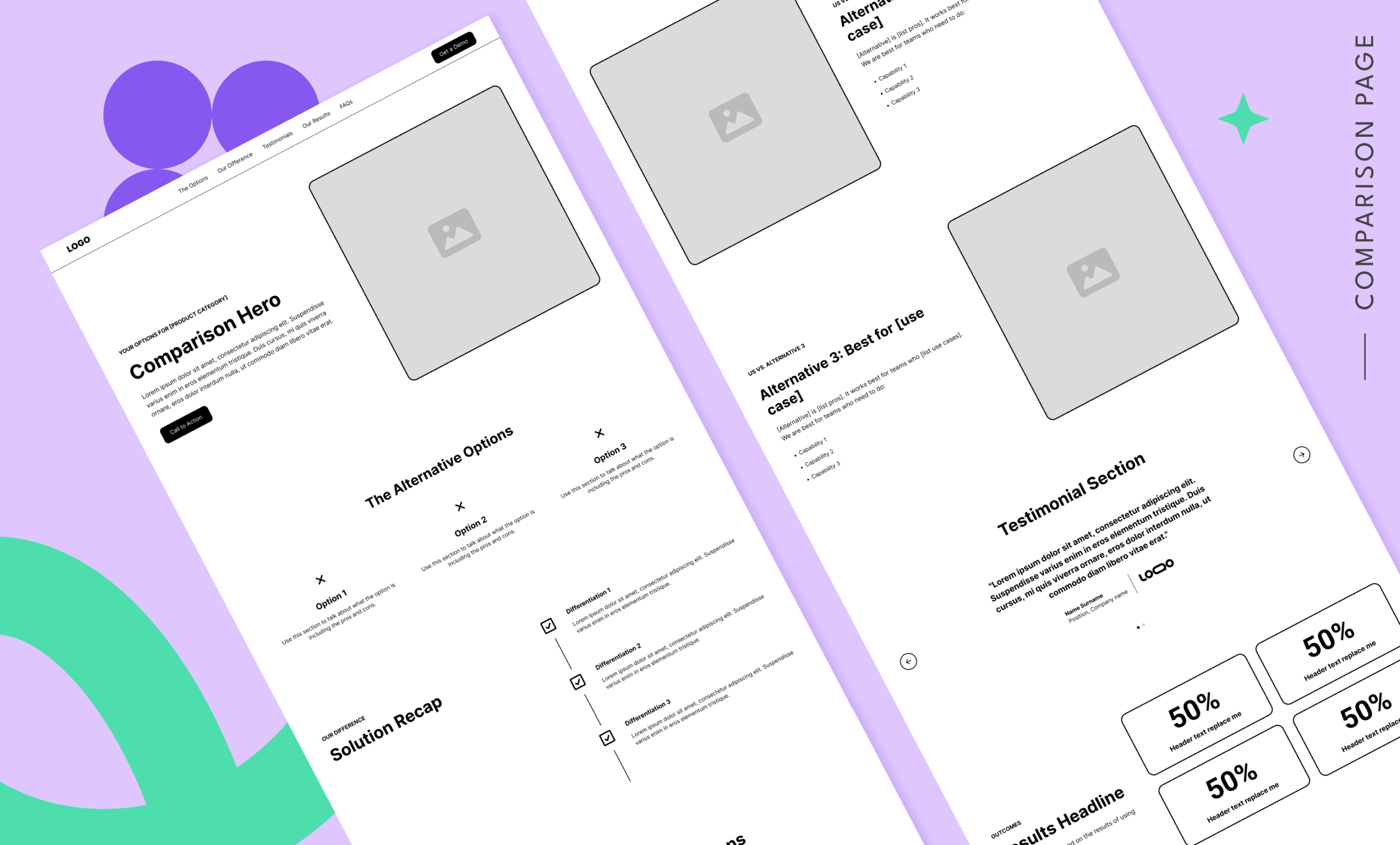
Historically, marketers treated all paid traffic identically, funneling top-, middle-, and bottom-of-funnel prospects toward a single, catch-all conversion point. However, changes in ad-quality prediction models—such as Google’s search and ad quality updates emphasizing intent-matching navigation—have forced a complete rethink. Today, high-performing growth teams utilize frameworks like Tas Bober’s "Core Four" landing page ecosystem, ensuring that demo landing pages serve strictly as the final destination for warm, deeply researched buyers rather than the initial entry point for cold traffic.
Supporting Data and Benchmarks
To diagnose a broken funnel, conversion rate optimization (CRO) experts look closely at hard data points:
3–5%: The approximate percentage of a total addressable market (TAM) in an active buying cycle at any given moment.
3.1% to 3.8%: Median conversion rates for SaaS landing pages, according to recent benchmarks from Unbounce and B2B CRO audits.
Form Field Drop-Off: Conversion benchmarks illustrate a steep performance decline based on form length. Form conversion rates average roughly 17% with five fields, drop to 11% at seven fields, and plummet below 7% when ten or more fields are required.
CTA Optimization Impact: Real-world case studies (such as updates by customer engagement platforms like FORM) show that shifting CTA language from high-pressure phrases like "Request a Demo" to lower-friction alternatives like "Take a Tour"—coupled with interactive product displays—can boost PPC conversion rates by 33% while nearly halving cost-per-lead (CPL) in ABM campaigns.
Official Responses and Expert Insights
Industry authorities agree that the root cause of poor demo page performance is rarely aesthetic; it is structural and behavioral.
"If you’re sending cold traffic to a demo page, even a well-built page will eventually hit a performance ceiling. You can improve the headline, form, proof, and CTA, but you can’t optimize your way around the fact that most visitors aren’t ready to talk to sales yet."
— Tas Bober, B2B Landing Page Expert
Marketers often fall into the trap of obsessing over micro-elements—such as form button shades or font choices—while ignoring macro-alignment issues. When sales teams complain about low-lead quality, the prescription is almost universally an operational reset: fix the targeting and warm up the traffic before attempting to harvest pipeline demand.
Implications for SaaS Marketing and Sales Alignment
The misalignment between marketing KPIs (lead volume) and sales expectations (lead qualification) creates costly friction. When low-intent traffic is driven to demo landing pages, visitors experience sticker shock, anxiety over aggressive sales tactics, or confusion regarding product fit.
1. The Real Cost of Hiding Pricing
Many sales-led SaaS organizations deliberately obscure pricing, fearing it will deter potential enterprise clients. However, withholding pricing forces buyers to submit a demo request simply to discover if a solution is remotely within budget. Providing a transparent starting range ("Starting at $X/month") or a condensed pricing grid acts as an automated filter, conserving sales bandwidth for high-fit prospects while building immediate trust.
2. Redefining the Form vs. Scheduler Debate
Choosing between a traditional lead capture form and a direct calendar link (such as Calendly) depends entirely on audience maturity.
Forms remain superior when capturing broader buying committees, handling complex enterprise routing, or vetting inbound requests via strategic qualification fields.
Schedulers excel when traffic is hyper-targeted, highly qualified, and ready for immediate human interaction—provided they do not accidentally expose sales calendars to unqualified tire-kickers.
3. Rebuilding the Page Structure Block-by-Block
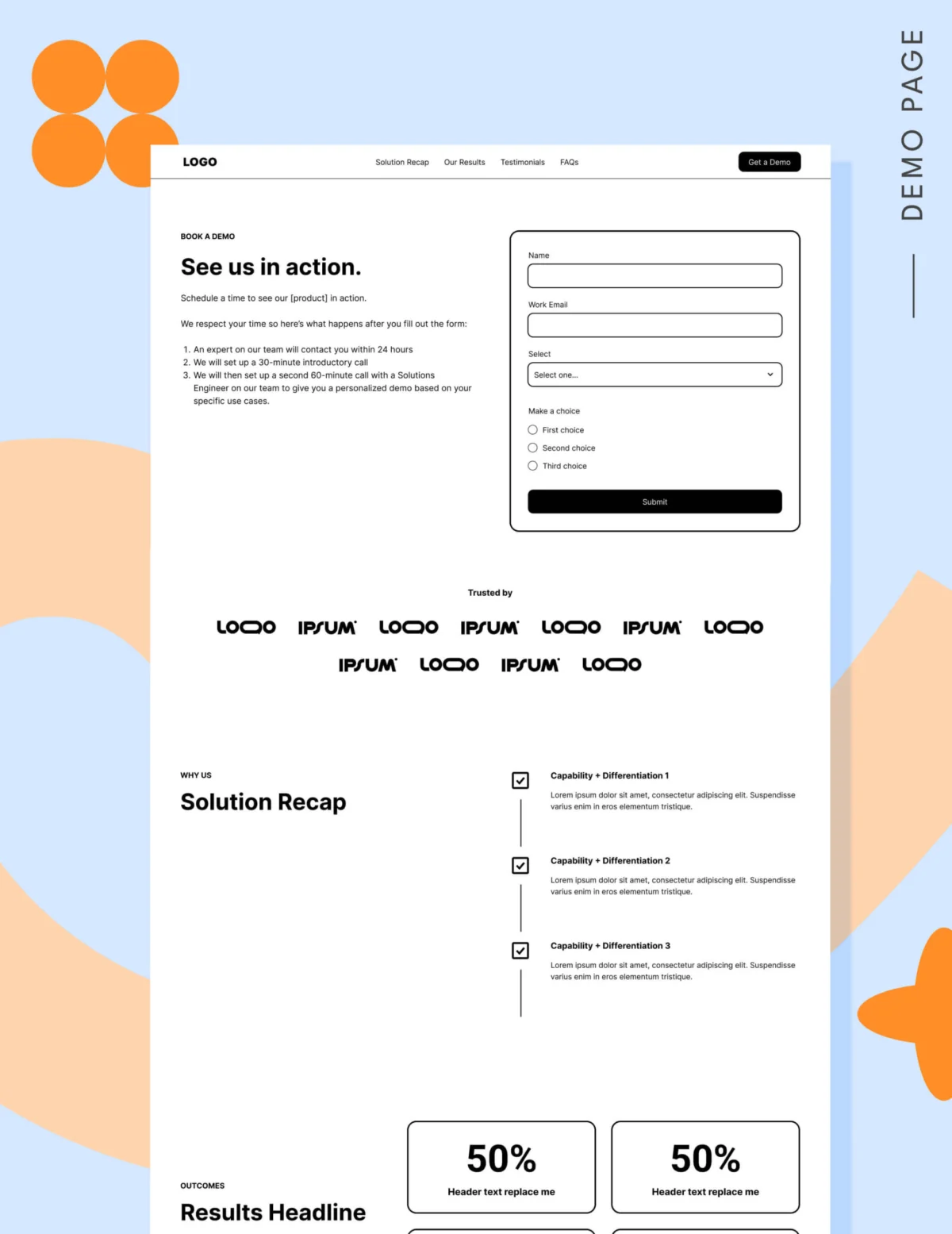
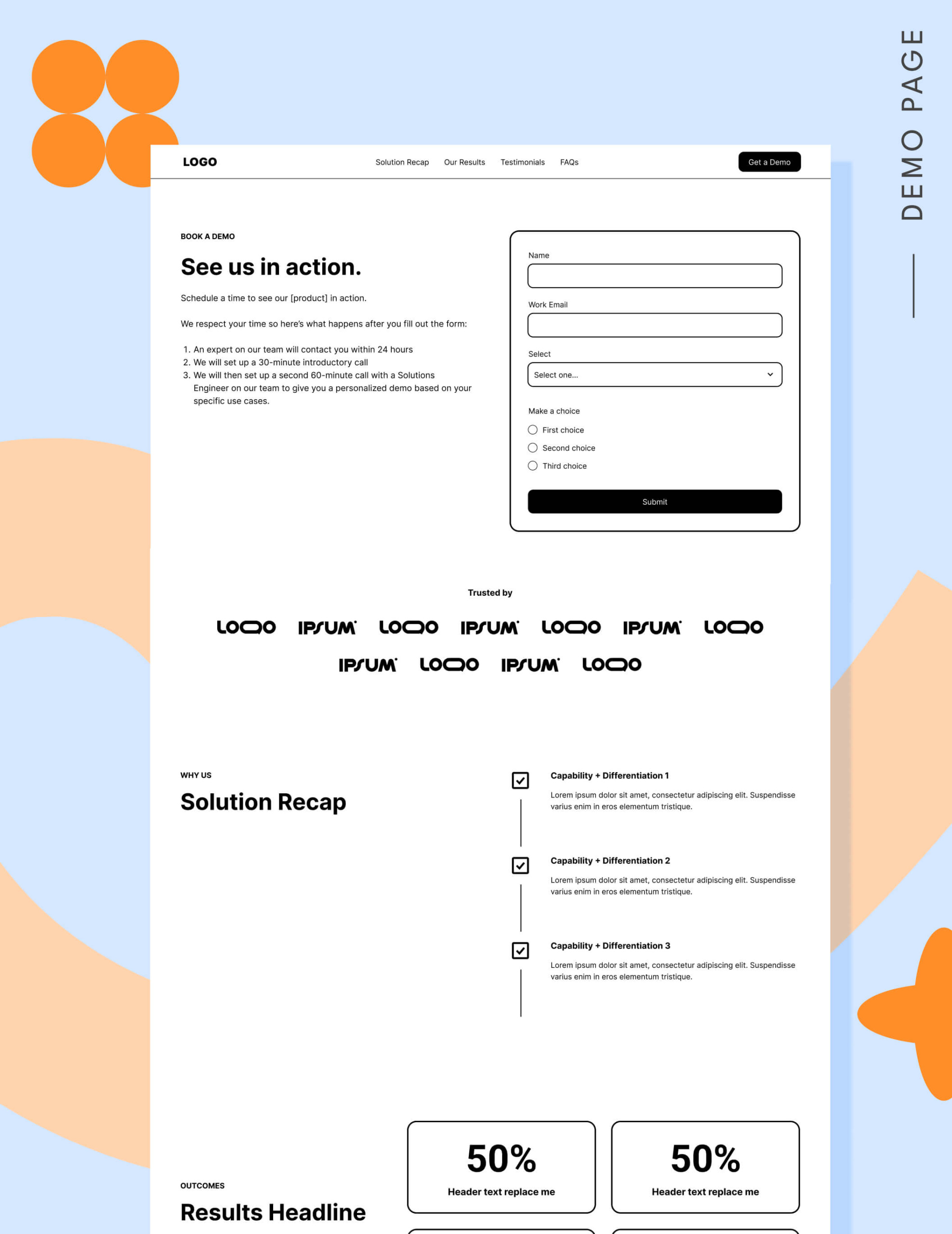
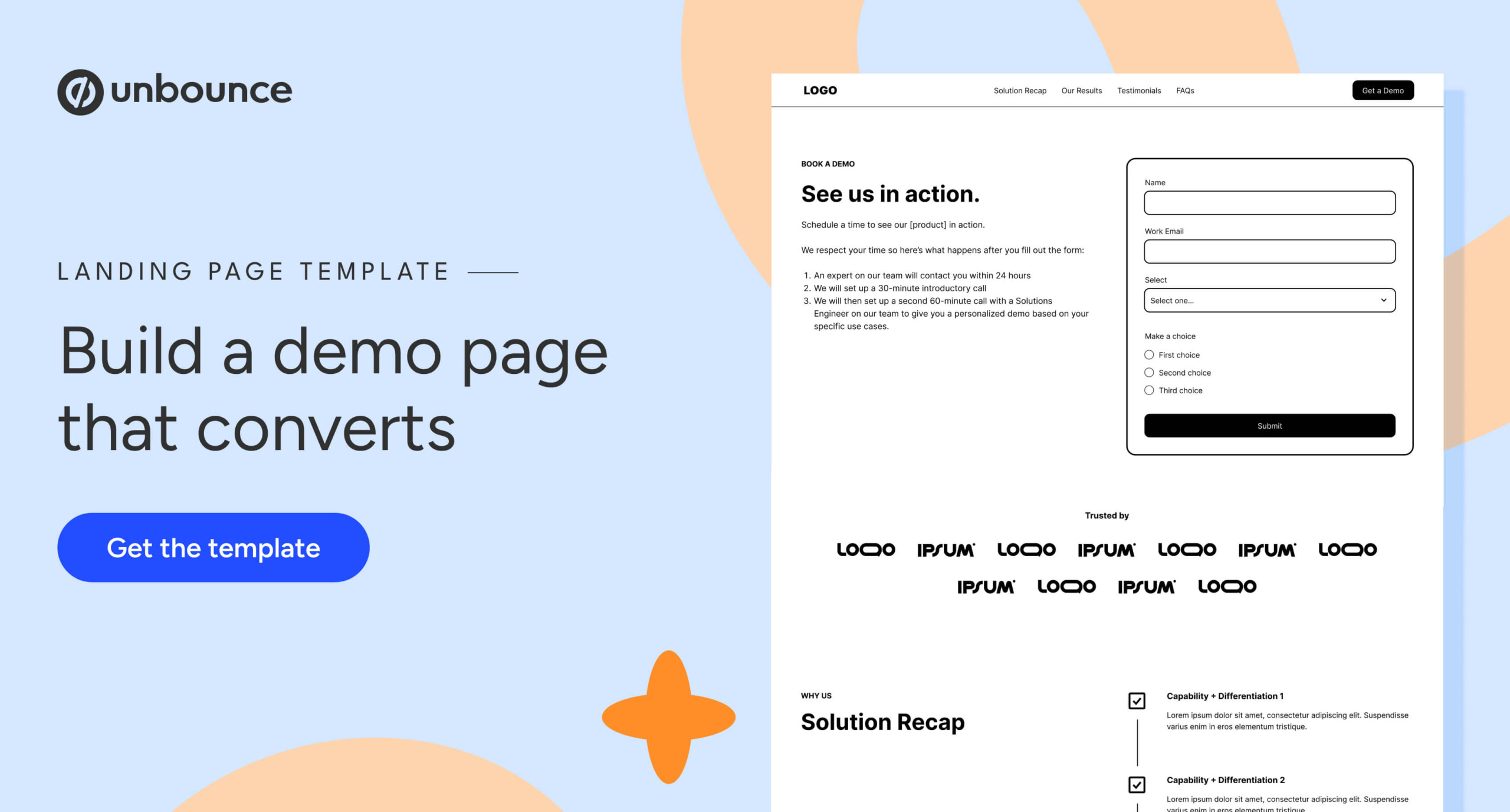
A high-converting demo landing page must dismantle hesitation systematically through a proven structural layout:
Navigation & Footer: Provide anchor links for internal page navigation and a minimal footer referencing the broader "Core Four" ecosystem (pricing, comparison, and solution pages) to accommodate non-converting researchers.
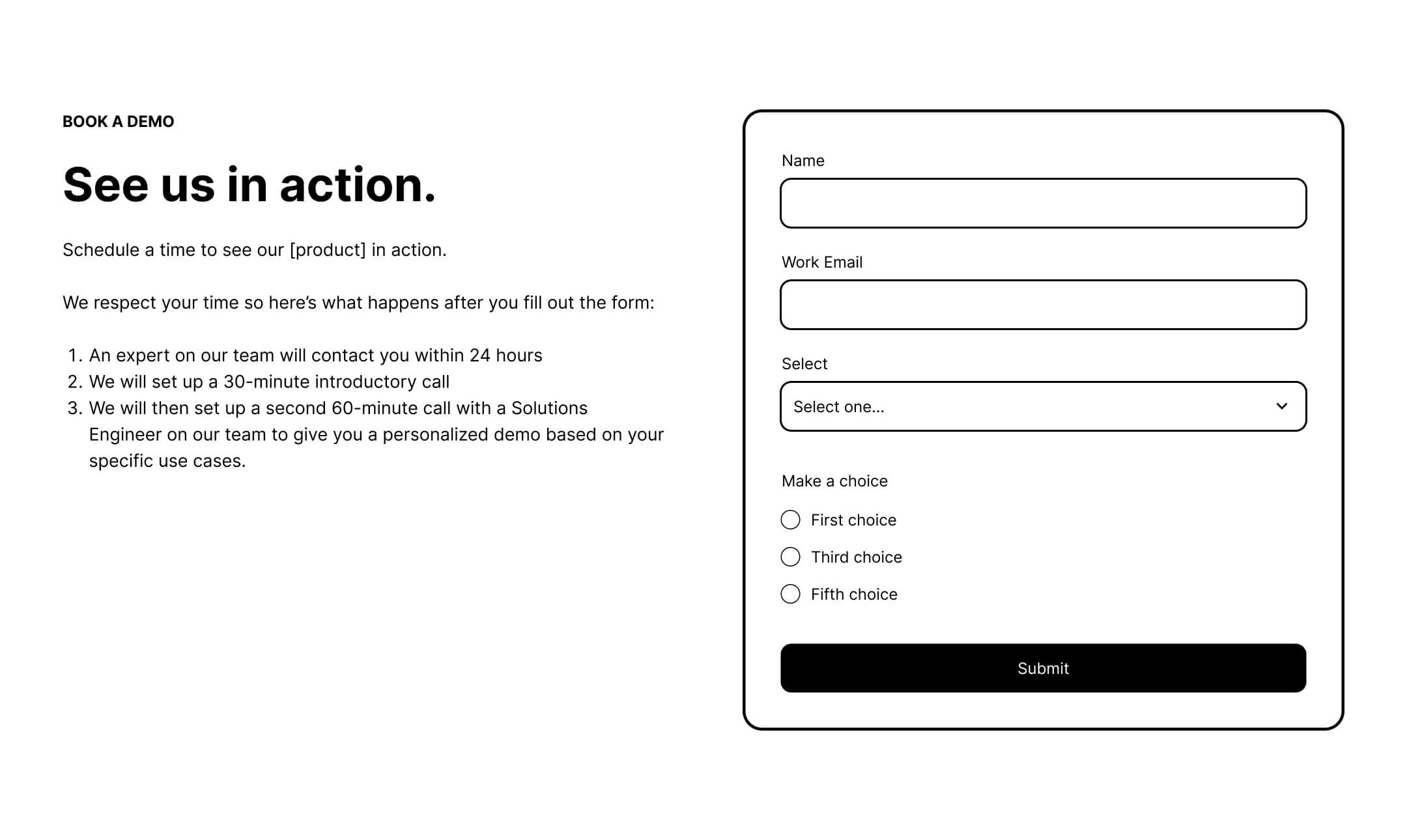
Hero Section: Place the form above the fold, but explicitly outline what happens post-submission to alleviate fears of aggressive sales calls.
Logo Garden / Social Proof: Feature recognizable brand logos or targeted testimonials to validate the visitor’s shortlist choices.
Solution Recap & Results: Briefly reinforce core differentiators and quantifiable ROI metrics.
FAQs: Proactively dismantle the top three sales objections and address implementation timelines.
Conclusion: Fix Your Targeting, Then Fix Your Page
Ultimately, generating healthy SaaS pipeline requires respecting the 211-day B2B buyer journey. Before rewriting headlines or shortening forms, growth teams must audit their traffic sources. By routing only warm, research-backed prospects to a transparent, reassuring, and structurally sound demo landing page, organizations can transform their conversion funnels from sluggish cost centers into predictable revenue engines.