









By Industry Analysis Desk
Updated: July 17, 2026
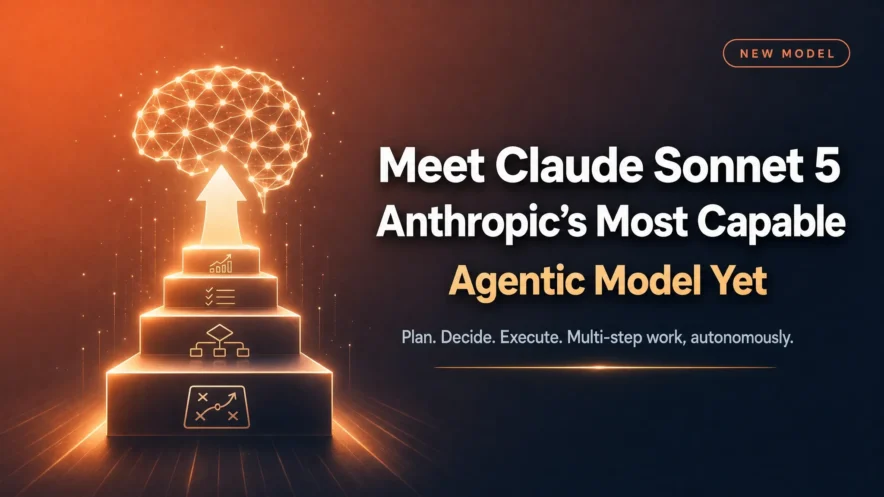
The landscape of generative artificial intelligence reached a significant inflection point on June 30, 2026, when Anthropic officially unveiled its latest mid-tier model, Claude Sonnet 5. Designed as the intellectual engine behind the company’s burgeoning suite of autonomous enterprise tools, Sonnet 5 represents more than a mere iterative update; it signifies a strategic shift from AI as a chatbot to AI as a collaborative workforce partner.
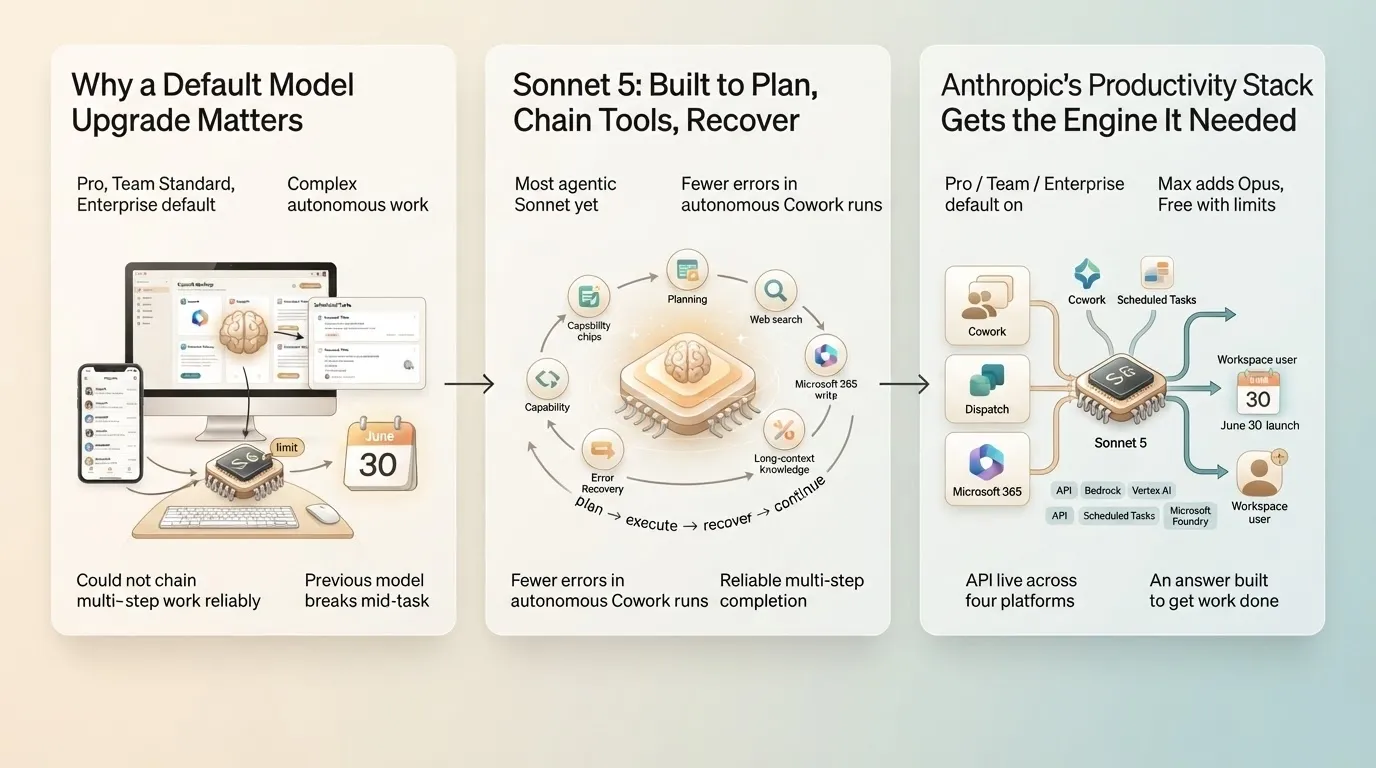
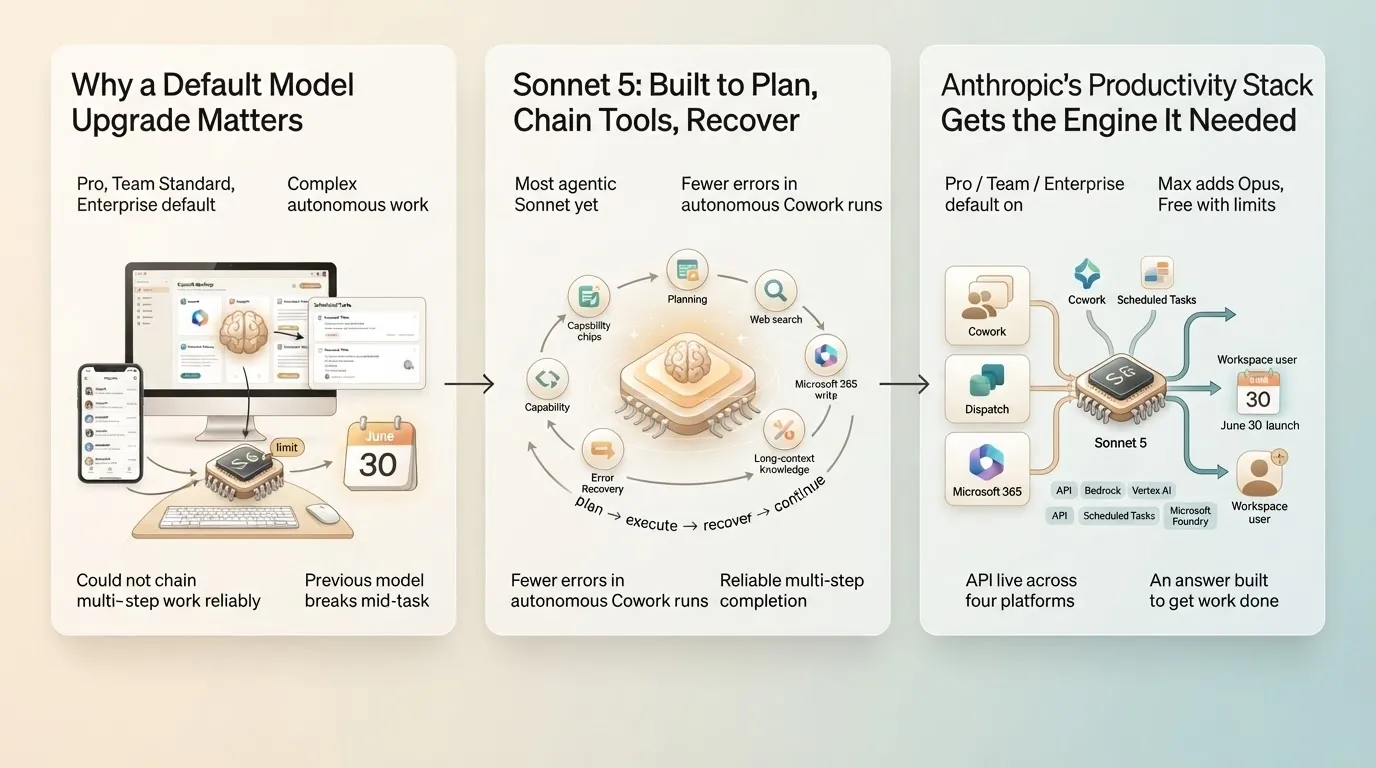
As of mid-July 2026, the model has been integrated as the default standard for Claude Pro, Team, and Enterprise users. By focusing on "agentic" capabilities—the capacity for AI to plan, execute, and troubleshoot multi-step workflows without constant human oversight—Anthropic is positioning itself to dominate the next phase of the enterprise productivity race.
1. The Core Evolution: What Defines Sonnet 5?
To understand Sonnet 5, one must move past the standard metrics of parameter counts and token speeds. Anthropic has explicitly optimized this model for "agentic" tasks. In the current vernacular of AI development, an "agent" is an intelligent system capable of navigating complex, multi-variable environments.
The Agentic Workflow
Unlike its predecessor, Sonnet 4.6, which excelled at high-speed text generation and summarization, Sonnet 5 is architected for autonomous decision-making. It is designed to handle the "dirty work" of modern digital labor:
- Logical Deconstruction: The ability to break down high-level project goals into granular, actionable sub-tasks.
- Error Recovery: A vastly improved capacity to detect when a process has veered off course and perform real-time corrections without needing to restart the entire sequence.
- Tool Orchestration: Seamless integration with web browsing, internal file systems, and enterprise-grade software like Microsoft 365.
This shift is crucial for tools like Claude Cowork and Dispatch. Where previous models might struggle to maintain context while interacting with external APIs, Sonnet 5 treats these tools as extensions of its own reasoning chain.
2. Chronology: The Road to Sonnet 5
The release of Sonnet 5 did not happen in a vacuum; it is the culmination of an aggressive development roadmap that Anthropic has pursued throughout 2026.
- Q1 2026: Anthropic introduces the beta versions of Scheduled Tasks and Dispatch, signaling a move toward asynchronous AI work.
- April 2026: The company announces major updates to its Microsoft 365 integrations, allowing Claude to "write" directly into corporate environments.
- June 15, 2026: Leaks and community speculation regarding a "Sonnet-Next" model begin to circulate on developer forums.
- June 30, 2026: Official launch of Claude Sonnet 5. The model is pushed to all major enterprise and Pro tiers immediately.
- July 2026: Integration into major cloud infrastructure platforms—Amazon Bedrock, Google Cloud’s Vertex AI, and Microsoft Foundry—is completed, ensuring wide-scale enterprise accessibility.
3. Supporting Data and Benchmark Performance
While "agentic" is a qualitative term, the quantitative improvements accompanying Sonnet 5 are substantial. According to internal benchmarks provided by Anthropic and corroborated by early-access enterprise testers, the model shows marked improvements in long-context retention.
Reasoning and Reliability
In multi-step coding and data analysis benchmarks, Sonnet 5 demonstrates a 25% reduction in hallucination rates compared to Sonnet 4.6. More importantly, in "agentic" simulations—where the AI is tasked with navigating a complex, 10-step project—Sonnet 5 achieved a successful completion rate of 88%, compared to the 65% success rate of its predecessor.
User Sentiment
Early feedback from the Claude community, particularly on professional platforms, highlights two primary advantages:
- Context Maintenance: Users report that Sonnet 5 "remembers" the intent of long-form documents far better, even when switching between different tool-use scenarios.
- Coding Fluidity: Developers have noted that Sonnet 5 is more adept at handling complex debugging tasks where multiple files must be cross-referenced simultaneously.
4. Availability and Tiered Access
Anthropic has structured the rollout of Sonnet 5 to ensure widespread adoption across its user base:
- Paid Tiers (Pro, Team, Enterprise): Sonnet 5 is now the default. Users currently on these plans have already transitioned to the new model unless they have manually locked their environment to an older version.
- Max Plan Users: These users maintain access to the flagship Opus models for high-complexity tasks, while utilizing Sonnet 5 as the primary workhorse for day-to-day operations.
- Free Plan Users: Anthropic has opted to democratize access, allowing free-tier users to interact with Sonnet 5, albeit with stricter usage caps to manage computational load.
- API Developers: Through Amazon Bedrock, Google Vertex AI, and Microsoft Foundry, developers can now build custom agents on top of the Sonnet 5 foundation, further cementing its role as a platform-level tool.
5. Strategic Implications for the Enterprise
The release of Sonnet 5 marks a shift in the "AI Wars." Until recently, the primary battleground was chat interfaces and creative writing. Now, the battleground is enterprise utility.
Moving Beyond the Chatbox
The emergence of Claude Cowork as a general-availability feature, powered by the logic of Sonnet 5, represents a fundamental change in how corporations will interact with AI. Companies are no longer looking for a "super-search engine"; they are looking for a digital employee capable of managing workflows.
If an enterprise can assign a task to Claude—such as "analyze these 50 quarterly reports, pull the key revenue data, create a comparison spreadsheet, and draft a summary email to the executive team"—and have the AI complete that process autonomously, the value proposition of the software changes from "subscription fee" to "operational efficiency gain."
The "Agentic" Future
The industry is moving toward a future where AI does not wait for a prompt, but rather initiates action based on schedules or triggers. Scheduled Tasks are the first step in this evolution. Sonnet 5 acts as the brain that makes these scheduled tasks reliable enough for professional environments. If the model were to fail or lose its place during a multi-hour autonomous task, the business utility would collapse. Thus, Sonnet 5’s stability is its most valuable feature.
6. Official Perspectives and Future Outlook
While Anthropic remains characteristically lean in its public statements, their positioning is clear: AI should be a tool that gets work done, not just a tool that generates text. By focusing on the reliability of tool-use—ensuring that when the AI clicks a button or writes to a document, it does so with intent and precision—Anthropic is addressing the primary pain point of the modern CTO: trust.
As we look toward the remainder of 2026, the question is not just how powerful the next model will be, but how integrated these models will become. With Sonnet 5, the "agent" is no longer a concept for the lab; it is a feature in your browser.
Final Thoughts
For professionals currently utilizing Claude, the transition to Sonnet 5 should be largely transparent but noticeably more robust. Whether you are a coder debugging a complex repository or an analyst synthesizing massive datasets, the model’s improved reasoning and tool-use capabilities are designed to save you time. As the market moves toward autonomous agents, Sonnet 5 provides the stability and intelligence necessary to make that transition a success.
For more information on integrating Sonnet 5 into your enterprise workflow, consult the official Anthropic API documentation or your account representative within the Google or AWS cloud ecosystems.
Disclaimer: Some links within this article may be affiliate links. If you choose to engage with these services, we may earn a commission at no additional cost to you. Our analysis remains independent and based on current industry benchmarks and user reporting.