July has proven to be an exceptionally dense month for software architecture, developer tooling, and automated workflows. The sheer velocity of innovation hitting the open-source and proprietary ecosystems highlights a sweeping industry trend: developers are no longer just writing code line by line; they are orchestrating intelligent agents, compiling static scripts into bare-metal binaries, and reclaiming sovereign control over their infrastructure.
This comprehensive review explores the most impactful tools, utilities, and frameworks released or heavily updated this month. Whether you are scaling multi-tenant applications, deploying self-hosted infrastructure, or testing the absolute limits of agentic AI code generation, this curated batch offers practical, production-ready solutions worth your time.
Main Facts: A Paradigm Shift in Developer Productivity
The July 2026 tooling landscape is defined by three major breakthroughs:
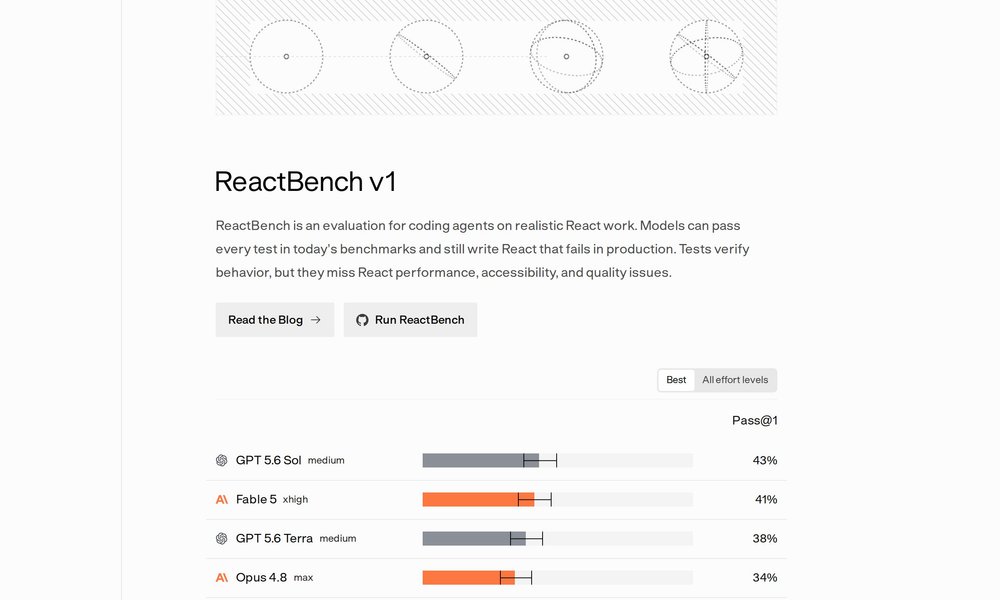
- Agentic Autonomy & Evaluation: Tools like ReactBench, Open Design, and Ponytail indicate a maturation in how engineering teams evaluate and constrain AI coding agents, shifting the focus from raw output generation to production readiness, accessibility, and minimal verbosity.
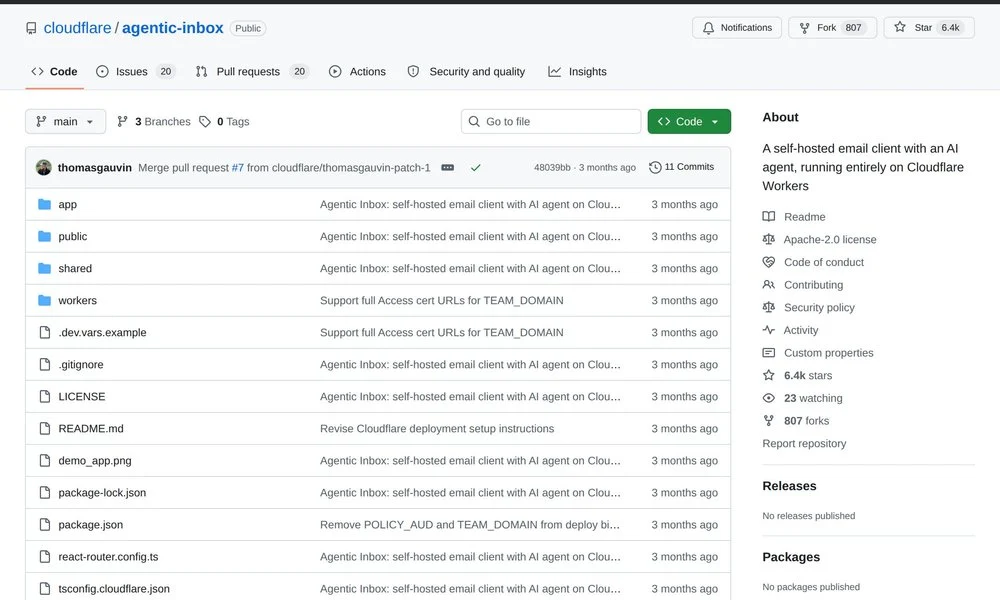
- Infrastructure Sovereignty: A massive influx of high-performance, self-hosted alternatives—such as Shoutrrr, Agentic Inbox, and VoidAuth—demonstrates a growing developer preference for escaping proprietary SaaS fees without sacrificing modern UX or security features.
- Performance Engineering at the Edge: Low-level breakthroughs, notably the elephc native PHP compiler and Apple Silicon GUI wrappers like Contained, prove that performance optimization and native experiences remain paramount.
Chronology of Releases: How the Month Unfolded
The month rolled out in waves, beginning with specialized utilities and culminating in heavy-duty infrastructure and AI orchestration frameworks.
- Early July: The focus centered heavily on local developer environments and workflow hygiene. Scripts like
prompt-macemerged to automate macOS setup for AI-first workflows, while Yerd arrived as an ultra-lightweight, non-Docker local PHP stack manager. - Mid-July: The spotlight shifted to cloud management, security, and developer infrastructure. Shoutrrr launched as an open-source social scheduling tool, while VoidAuth and Cloudflare’s Agentic Inbox brought enterprise-grade authentication and self-hosted AI email routing to individual developers.
- Late July: The heaviest innovations dropped in AI agent evaluations and systems programming. Platforms like ReactBench, Open Design, and elephc dominated discussions, showcasing novel ways to compile static PHP into native assembly and benchmark coding agents against real-world frontend challenges.
Supporting Data & Deep Dive Into July’s Top Tools
1. Code Review & Architecture Mapping
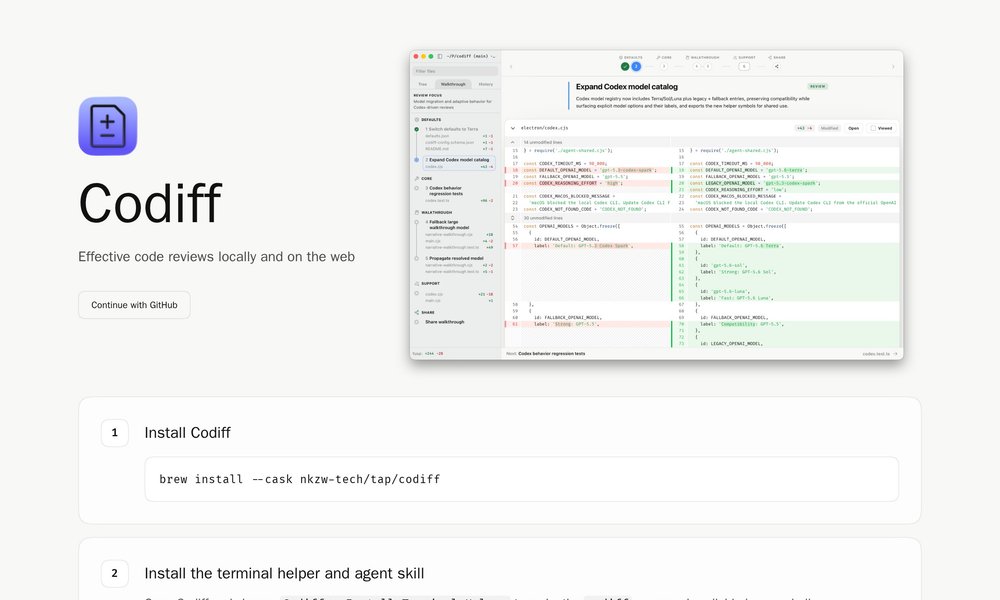
- Codiff: Reviewing Git diffs has traditionally meant flipping through cluttered web interfaces. Codiff is a fast, minimal diff viewer designed to run completely outside your code editor. It generates LLM-powered walkthroughs of code differences, supports inline commenting for GitHub and GitLab, and seamlessly exports reviews into clean Markdown formats.
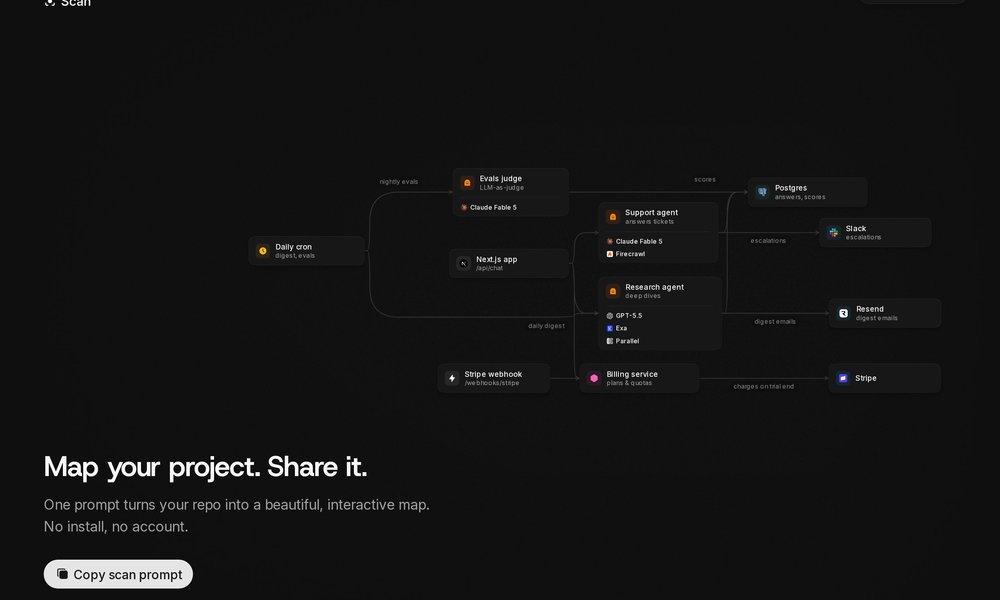
- Foglamp Scan: Dropping into an unfamiliar legacy repository can halt productivity for days. Foglamp Scan provides zero-setup, shareable codebase maps. By prompting your coding agent, it analyzes project structures and visualizes complex architectures instantly—requiring no accounts, installations, or complex configurations.
2. AI Agents, Benchmarking, and Productivity
- ReactBench: With the explosive growth of AI code assistants, engineering managers face a dilemma: which model actually writes good frontend code? ReactBench evaluates coding agents on real-world React projects, measuring performance, accessibility, and component quality rather than relying solely on naive unit test pass rates. Developed by the team behind React Doctor, its leaderboard is an indispensable resource for model selection.
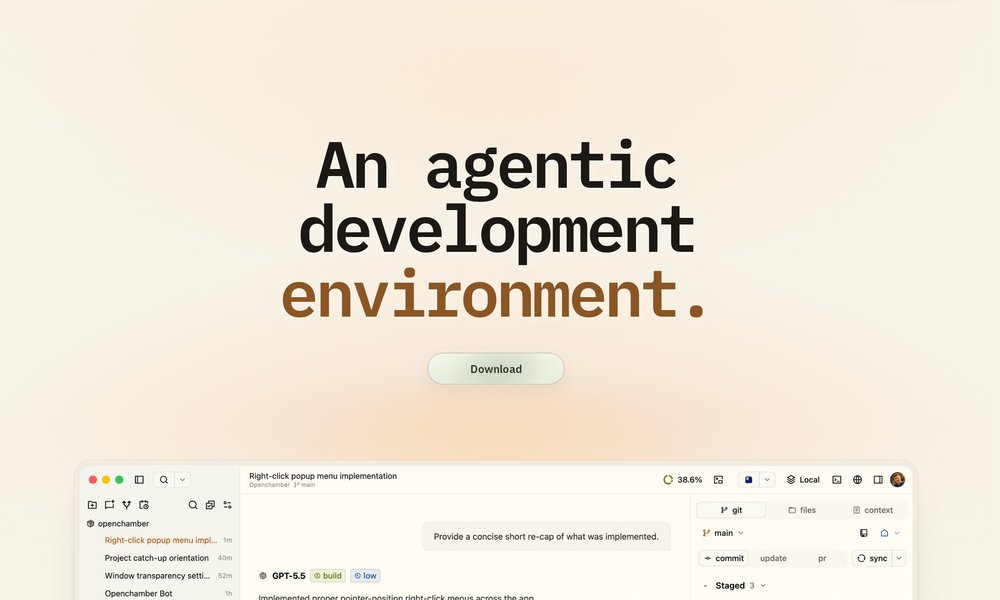
- OpenChamber: Designed as an agentic development environment, OpenChamber runs natively across macOS, Windows, and web browsers. It empowers developers to execute multi-window workflows, manage parallel multi-model runs via an integrated Agent Manager, and access environments securely via password-gated remote tunnels.
- Open Design: Hailed as an open-source alternative to proprietary solutions like Claude Design, Open Design transforms local coding agents into comprehensive design engines. Supporting 21 distinct coding agents and 151 design systems, it exports polished assets directly into HTML, PDF, PPTX, and MP4 formats under an Apache-2.0 license.
- ponytail: A common critique of AI-generated code is its bloated verbosity. ponytail is an innovative ruleset designed to force AI coding agents to write significantly less code. Benchmarks demonstrate an impressive 54% reduction in code volume without sacrificing safety or functionality, seamlessly integrating with Claude Code, Codex, and GitHub Copilot.
3. Self-Hosted Infrastructure, Auth, and Communication
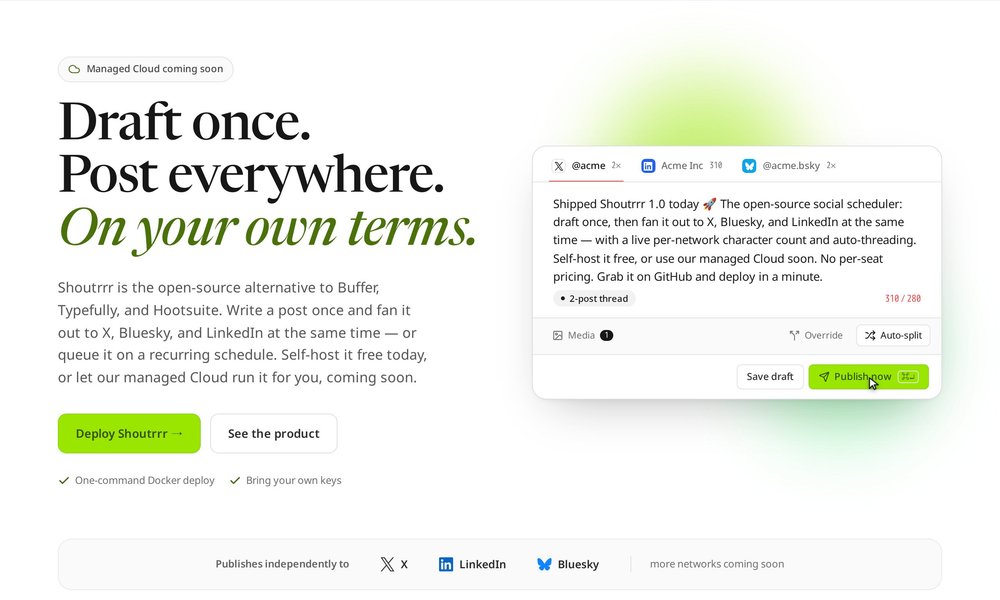
- Shoutrrr: For teams exhausted by expensive social media management platforms, Shoutrrr offers a robust open-source alternative to Buffer and Hootsuite. Supporting simultaneous publishing to X, Bluesky, and LinkedIn, it features scheduled queues, workspaces, and team access secured by encrypted credentials. It can be easily deployed via Docker.
- VoidAuth: Managing credentials across a dozen self-hosted services is a security nightmare. VoidAuth provides open-source Single Sign-On (SSO) tailored specifically for self-hosted apps. Supporting OpenID Connect, LDAP, passkeys, multi-factor authentication (MFA), and customizable branding over a PostgreSQL or SQLite backend, it completely modernizes personal and small-team infrastructure security.
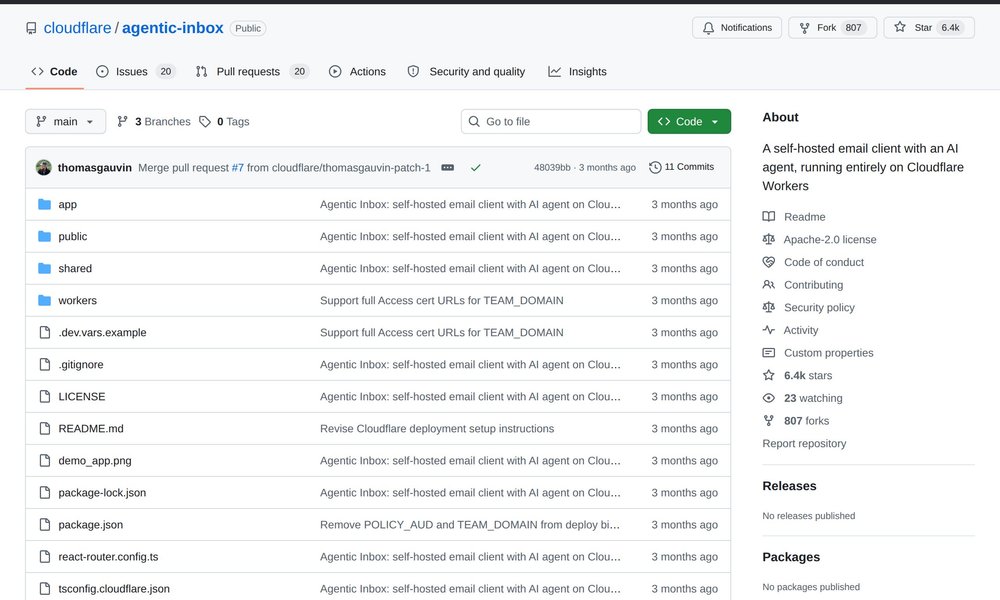
- Cloudflare Agentic Inbox: Built entirely on Cloudflare Workers, Agentic Inbox is a brilliant self-hosted email client powered by an autonomous AI agent. Inbound emails pass through Cloudflare Routing, utilizing individual Durable Objects with SQLite storage per mailbox, while attachments route securely to R2 storage. The integrated AI seamlessly reads inboxes, searches history, and drafts precise replies.
4. Native Development and Systems Programming
- elephc: Perhaps one of the most technically audacious releases of the month, elephc compiles a static subset of PHP directly into native assembly. Completely bypassing interpreters, virtual machines, and the Zend Engine, it boasts over 400 built-in functions, 21 data types, and more than 3,000 passing tests. The resulting standalone binaries and embedded prefork HTTP servers are astonishingly compact, allowing developers to ship high-performance PHP logic without a runtime.
- Contained: Following up on Apple’s Container CLI introduced last month, Contained provides a remarkably polished, native SwiftUI graphical user interface for macOS Silicon users. It wraps containers, images, volumes, and networks inside gorgeous Liquid Glass cards and floating toolbars, making local containerization feel completely native to macOS.
- Yerd: For web developers seeking a lightweight alternative to Laravel Herd, Yerd offers an 8MB background daemon for macOS and Linux that manages local PHP stacks, automatic
.testdomains with HTTPS, and databases like MySQL, MariaDB, PostgreSQL, and Redis—entirely without Docker or Electron. - TablePro & TermSCP: For data and systems engineers, TablePro delivers a native database client for Mac and iOS supporting over 21 databases with an AI-assisted SQL editor, while TermSCP offers a blazing-fast terminal file transfer utility supporting SCP, SFTP, S3, Kubernetes, SMB, and WebDAV protocols.
Official Developer Responses & Community Feedback
The developer community’s reception to July’s toolset has been overwhelmingly positive, particularly regarding projects addressing developer fatigue and infrastructural bloat.
Maintainers of tools like elephc noted that community contributions skyrocketed following benchmarks showing near C-level execution speeds for compiled PHP scripts. Meanwhile, security-conscious sysadmins have heavily praised VoidAuth and Cloudflare’s Agentic Inbox, highlighting that the industry is aggressively moving away from third-party data dependencies in favor of edge-computed, self-hosted sovereignty.
On the AI front, AI engineering leads have embraced ReactBench and ponytail. Early feedback suggests that integrating strict verbosity guardrails like ponytail into enterprise agent pipelines dramatically reduces technical debt accrued from automated code generation.
Broader Implications for the Software Industry
The releases of July 2026 signal a permanent maturation of the modern software engineering stack. We are witnessing a dual evolution:
- The Abstracting of Complexity: Complex low-level management—such as container orchestration on Apple Silicon via Contained or multi-protocol file transfers via TermSCP—is being wrapped in hyper-polished, native interfaces that reduce cognitive overhead.
- The Rise of Autonomous Efficiency: Coding is no longer bottlenecked by human typing speed, but by human review capacity. Tools like Codiff, Foglamp Scan, and ReactBench are paving the way for a world where humans act less as syntax writers and more as architectural supervisors and quality assurance directors.
As these tools transition from early-stage repositories to mission-critical production environments, developers who adopt agentic oversight, edge-native architectures, and streamlined local tooling will find themselves uniquely positioned to build faster, safer, and leaner software than ever before.