










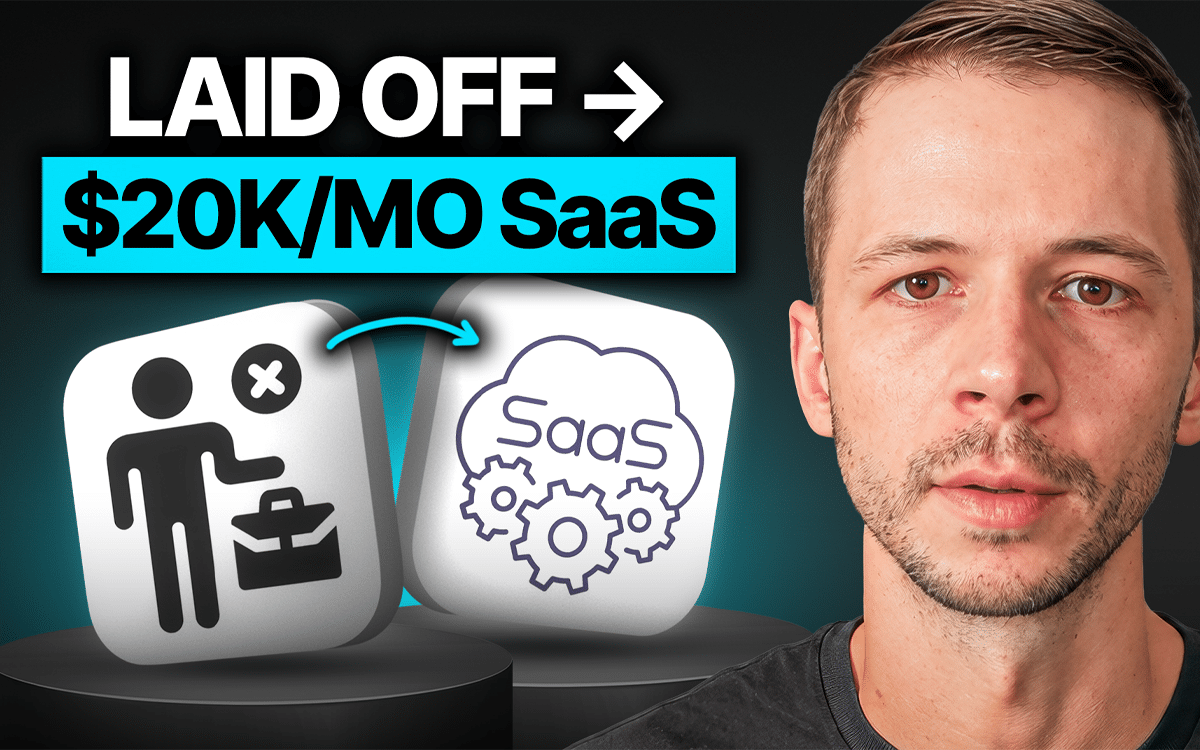
In the landscape of modern entrepreneurship, the most resilient business models often share a common origin: a founder who is their own first customer. Ben Bozzay, the visionary behind Tech Lockdown, embodies this archetype. What began as a personal struggle with digital distraction has transformed into a robust, $20,000-per-month Software-as-a-Service (SaaS) entity.
Bozzay’s journey, recently chronicled on the Niche Pursuits podcast, serves as a masterclass in organic business growth, demonstrating how a "product-led" approach—where the product evolves alongside user demand—can outperform rigid, pre-planned ventures.
The Genesis of a Digital Guardrail
Ben Bozzay’s background was the ideal incubator for a cybersecurity-focused startup. With a career spanning software engineering and cybersecurity, combined with a stint in the digital marketing agency world, Bozzay possessed the unique intersection of technical capability and SEO acumen required to identify a market gap.
In 2020, as global lockdowns forced the world into a sedentary, screen-heavy existence, Bozzay found his own productivity and digital health slipping. Like many technical professionals, he quickly realized that standard consumer-grade website blockers were insufficient. He could, quite simply, bypass his own security settings.
"I was looking for guardrails, not suggestions," Bozzay noted. By pivoting away from consumer apps and instead leveraging enterprise-grade device management protocols—the same systems corporations use to secure proprietary company hardware—he created a framework that was, for him, impossible to circumvent. This realization was the seed of Tech Lockdown.
A Chronology of Iteration
The trajectory of Tech Lockdown is defined by its refusal to force a business model onto the market before the market was ready.
- The Content Phase (2020): Bozzay began by documenting his process on platforms like Medium and Reddit. He wasn’t selling; he was sharing. The immediate influx of inquiries from readers validated that he had stumbled upon a significant, underserved pain point.
- The Paid Content Phase (2021): Recognizing that his audience was seeking more than just tips—they were seeking a step-by-step roadmap—Bozzay launched a paid membership. This served as a "productized consulting" layer, offering detailed guides that saved users hours of trial and error.
- The SaaS Pivot (2022): The limitation of paid content became clear: it was a one-time transaction. Customers would buy, solve their problem, and leave. By introducing DNS filtering and device management software, Bozzay transitioned to a subscription model, creating a permanent, value-driven relationship with his users.
- The Full-Time Commitment (2023): Following a layoff from his corporate role, Bozzay was forced to choose between a secure salary and his growing side hustle. Despite the business earning less than $2,000 in profit at the time, he opted to scale Tech Lockdown, a move supported by his wife and driven by his belief in the product’s long-term viability.
Data-Driven Growth: The Power of Targeted SEO
While many founders chase trends, Bozzay’s growth strategy was anchored in deep, technical SEO. He ignored the temptation to spread his efforts across every social media channel, focusing instead on high-intent search queries.
The "Bottom-of-the-Funnel" Advantage
Bozzay avoided generic keywords like "best website blocker," which are dominated by low-effort affiliate sites. Instead, he targeted long-tail, hyper-specific technical issues—such as "how to prevent disabling a blocker in Windows Task Manager." By providing deep, expert-level solutions, he captured a segment of the market that was actively searching for a cure, not a suggestion.
SEO Results
At its peak, Tech Lockdown attracted approximately 70,000 organic visitors per month. Bozzay attributes this success to the "depth of content." While many websites were hit hard by recent Google core updates that favored AI-generated summaries, Tech Lockdown remained stable. The reason? His content provided unique, non-generic data points derived from actual device testing—information that AI could not easily replicate or synthesize from thin, superficial sources.
Market Positioning: The Adult-Centric Model
A critical strategic decision made by Bozzay was to pivot away from the "parental control" market. The vast majority of digital safety companies focus on parents monitoring children. Bozzay recognized that adults who want to restrict themselves face a completely different set of challenges.
When a parent sets up a device for a child, the parent holds the administrative keys. When an adult sets up a device for themselves, they are essentially the administrator, the user, and the potential bypasser. This "adversarial" use case required a more robust, enterprise-level approach to device management, making Tech Lockdown’s offering distinctly more effective than standard consumer apps.
The Ecosystem of Digital Safety
Today, Tech Lockdown is not just a single tool. It is an ecosystem. The business has expanded to include LivingRoom, a secondary brand that focuses on "digital visibility."
While Tech Lockdown is built on the concept of restriction, LivingRoom is built on transparency. The app uses AI to analyze screenshots of device activity, turning digital habits into a shared experience for families or accountability partners. By diversifying his offerings, Bozzay has created a comprehensive suite that addresses both the proactive need for blocking and the social need for accountability.
Implications for Future Founders
The success of Tech Lockdown holds several profound lessons for the modern digital entrepreneur:
- Documentation as Marketing: By writing about his process, Bozzay built an audience that trusted his expertise before he ever asked for a dollar.
- The "Slow-SaaS" Method: You do not need a fully formed software platform on day one. Start by solving a problem, then charge for the solution (content), and eventually automate that solution through software.
- Niche Over Mass: By specifically serving the "self-controlled adult" market, Bozzay avoided the competitive bloodbath of the mass-market parental control space.
- Resilience to AI: In an era of automated search, proprietary, experiential, and highly technical content acts as a moat. If your business is based on generic information, it is vulnerable; if it is based on deep, lived expertise, it is defensible.
Looking Ahead: The Next Phase
Bozzay is not resting on his $20K MRR milestone. His focus has shifted to solving the "iPhone problem"—specifically, developing a management solution that does not require a factory reset of the device. If successful, this would remove the most significant barrier to entry for his potential customers.
Furthermore, his approach to scaling is notably cautious. By relying on contractors and AI-driven workflows rather than bloated hiring, he maintains high profit margins and preserves the "technical integrity" of his product.
Ben Bozzay’s journey is a testament to the fact that when you build a business out of a genuine need, the market will eventually find you. By focusing on depth, user trust, and steady evolution, he has built not just a tool, but a necessary utility for the digital age. As he continues to push the boundaries of what can be controlled, monitored, and secured on personal devices, Tech Lockdown remains a premier example of how to scale from a personal side project into a thriving, independent software business.