







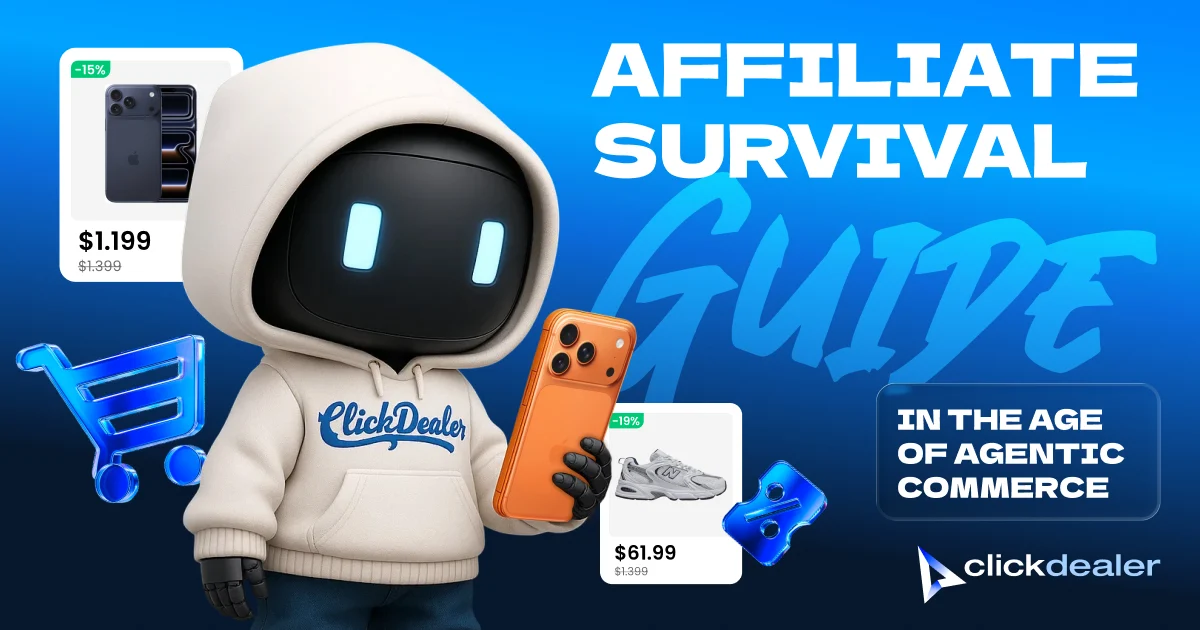
The digital commerce ecosystem is currently witnessing a tectonic shift. For two decades, the affiliate marketing industry has thrived on the predictable mechanics of the "click"—a user searches, clicks a tracked link, arrives at a merchant site, and completes a purchase. That cycle is now under existential threat.
The emergence of Google’s Agent Payment Protocol (AP2) and ChatGPT’s Instant Checkout represents the dawn of "Agentic Commerce." These technologies are designed to facilitate zero-click, zero-attribution shopping environments where AI agents handle the entire transaction on behalf of the user. For small merchants and e-commerce affiliates, the air raid sirens are sounding: the funnel that once directed millions of dollars in commission is being folded into a single, proprietary conversational thread.
The Chronology of the Zero-Click Shift
The transition toward agentic commerce did not happen overnight; it is the culmination of a decade of search engine evolution.
- 2015–2020: The Rise of Zero-Click Search. Google began prioritizing "Featured Snippets" and "Knowledge Panels," which allowed users to find answers directly on the search engine results page (SERP) without ever visiting a publisher’s website. This effectively hollowed out the top-of-funnel traffic for informational content.
- 2022–2023: The LLM Explosion. The release of OpenAI’s ChatGPT and the integration of large language models (LLMs) into Bing and Google Search turned search into a generative experience. Generic, AI-written content began saturating niche markets, diluting the value of traditional SEO-driven affiliate sites.
- 2024: The Transactional Pivot. The current era is defined by the "agentic" shift. It is no longer enough for AI to provide information; it is now being empowered to execute intent. With the introduction of AP2 and Instant Checkout, the purchase decision is being moved behind a "walled garden" where cookies and tracking pixels cannot reach.
Checking Out the Damage: The Erosion of Attribution
At the heart of the affiliate crisis is the total loss of tracking. In the traditional affiliate model, the "cookie" is the source of truth—it verifies that a specific publisher drove a specific sale.
However, in the emerging agentic ecosystem, there is no landing page, no affiliate link, and no referral code. When a user tells an AI, "Buy me the best ergonomic office chair under $300," the AI agent performs the research, evaluates the product feeds, processes the payment through a protocol like Google’s AP2, and completes the checkout. The merchant receives the order, but the affiliate who provided the foundational research or the recommendation is entirely excluded from the attribution chain.
For affiliates, this creates a "black box" environment. Search media buyers, who rely on high Click-Through Rates (CTR) to justify their ad spend, are seeing their margins evaporate as the "convenient" interface of AI checkout prioritizes platform-owned payment rails over external traffic sources.
Friction Points: The Limits of Agentic Adoption
Despite the industry hype surrounding AI-driven shopping, the road to mass adoption is paved with significant technical and psychological hurdles.
The Infrastructure Gap
The "frictionless" promise of AP2 is often undermined by the reality of backend logistics. Integrating a seamless payment protocol requires a complex alignment of merchant APIs, fraud detection systems, and regulatory compliance layers. Currently, the rollout is patchy, and many retailers are hesitant to surrender control of their checkout process—and the valuable first-party customer data that comes with it—to third-party AI agents.
The Trust Deficit
Consumers remain wary of delegating financial decisions to algorithms. Amazon’s "Buy for Me" feature, currently in limited beta, serves as a litmus test for consumer appetite. While it offers a glimpse into an auto-filled, agent-driven future, it is heavily constrained by a limited product set and lingering concerns regarding data privacy. When real money is at stake, the "human in the loop" remains a critical psychological component of the shopping experience.
The Regulatory Horizon
Regulators in the EU and the United States are beginning to scrutinize the power of these agents. When an AI makes a purchase decision, it assumes a fiduciary-like role. Who is liable if the AI makes a fraudulent purchase? How is transparency maintained if the AI is incentivized to prioritize products from its own ecosystem? These legal questions will likely act as a necessary drag on the speed of adoption, providing a vital window of time for the affiliate industry to pivot.
The New Moat: Community Over Traffic
If the old model was built on "owning the search query," the new model must be built on "owning the audience." Affiliates cannot beat AI at the game of keyword volume or generic product summaries. Instead, they must move toward high-trust, high-identity environments.
The Power of Niche Authority
AI struggles with genuine human nuance. While an agent can scrape specs for a generic product, it cannot simulate the lived experience of a hobbyist. Affiliates who focus on high-touch, human-centric niches—such as artisanal crafts, high-end technical equipment, or aesthetic-driven fashion—are effectively "bot-proof."
When a user is looking for a professional-grade camera or a specific guitar tone, they are not looking for a generated summary; they are looking for validation from a source they trust. By cultivating a recognizable brand voice, affiliates can bypass the agent layer entirely. If the audience views you as a curator of taste rather than a dispenser of links, they will visit your site directly, regardless of what the search engine or AI agent suggests.
The Shift to Experiential Content
The era of the "Top 10" listicle is effectively over. In a world where LLMs can generate a comparison table in milliseconds, publishers must prioritize content that cannot be synthesized:
- Live Reviews and Unboxings: Real-time, video-based interaction captures human emotion in a way that text-based AI cannot.
- Field Tests: Long-form, rigorous testing of products in real-world scenarios provides the "proof" that consumers crave before making significant financial commitments.
- Community-Owned Channels: Moving audiences away from public platforms and into private spaces—such as newsletters, Discord servers, or members-only forums—creates a direct line of communication that is immune to algorithmic fluctuations.
The Future of High-Ticket Sales
The "agentic" threat is most potent in low-consideration, low-cost commodity purchases. It is significantly less effective in high-ticket categories where the consumer’s fear of a "bad buy" outweighs their desire for speed.
When purchasing a $2,000 smart home system or a high-performance gaming rig, consumers are fundamentally risk-averse. They seek deep, context-heavy content—warranties, failure rates, and granular comparisons—that AI agents often gloss over. By doubling down on the complexities of these categories, affiliates can continue to provide value that justifies their role in the purchase funnel.
Conclusion: The Human Advantage
Agentic commerce is not the end of affiliate marketing, but it is the end of the "easy" era. The agents may eventually own the clicks, but they will never own the nuance, the taste, or the community connection that drives high-value consumer behavior.
The affiliates who will survive the next decade are those who stop viewing themselves as traffic brokers and start viewing themselves as community builders. By prioritizing authenticity, building private distribution channels, and focusing on high-consideration niches, publishers can create a moat that no algorithm can breach. The future of commerce is increasingly automated, but the future of influence remains profoundly human.
Ready to navigate the evolving affiliate landscape? Build your future with the right partners. Sign up with ClickDealer today to gain the insights and tools necessary to thrive in the age of agentic commerce.