









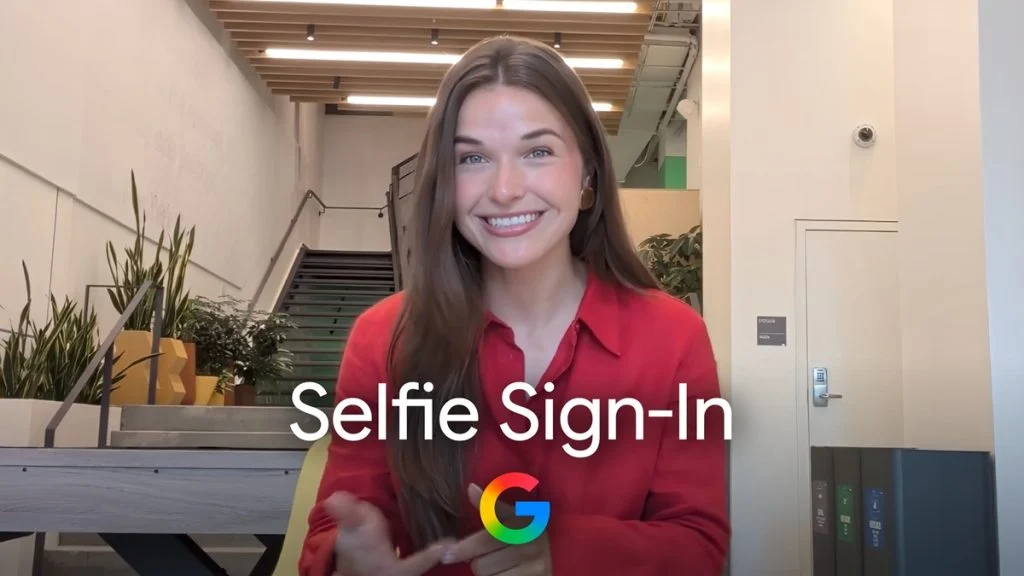
In a significant move to modernize account recovery and bolster digital identity security, Google has officially rolled out a new "Selfie Video" verification feature. Designed to address the growing frustrations of users locked out of their digital lives, this biometric solution offers a robust, user-centric alternative to traditional recovery methods. By leveraging advanced facial geometry analysis, Google is signaling a shift toward a future where "you are your password," moving further away from static knowledge-based authentication.
Main Facts: A New Layer of Biometric Security
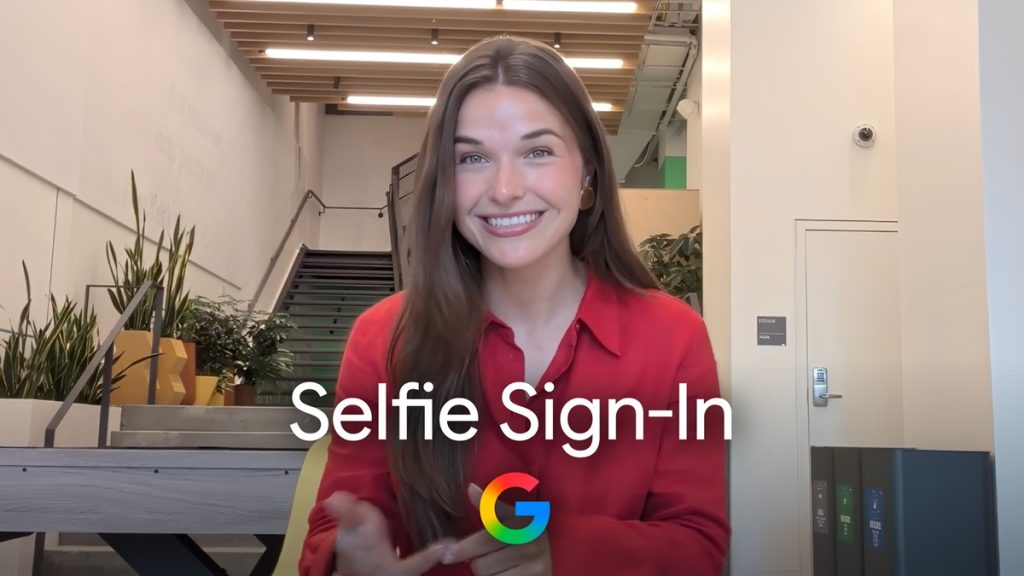
The core functionality of Google’s new verification tool is simple yet technologically sophisticated. When a user is unable to access their account—perhaps due to a forgotten password, a lost recovery phone, or an inaccessible secondary email—they now have the option to use a pre-registered selfie video to verify their identity.
Unlike simple photo-based face unlock features found on many smartphones, Google’s system requires a dynamic, recorded video. During the initial setup, users are guided through a series of simple head movements. This process allows Google to create a three-dimensional map of the user’s facial structure. When recovery is necessary, the system prompts the user to record a fresh video, which is then compared against the original baseline.
Crucially, this is not an automated "set-and-forget" feature. It is a proactive security measure. Users must explicitly opt-in and record their initial video before an account lockout occurs. The system cannot be retroactively applied to an account that is already restricted, a design choice intended to prevent malicious actors from hijacking accounts and setting up their own biometric data as a recovery vector.
Chronology: The Evolution of Google’s Identity Management
To understand the significance of this update, one must look at the trajectory of Google’s security ecosystem over the past decade.
- The Password Era (2000s–2015): For years, Google relied primarily on static passwords and simple security questions. As phishing attacks grew in complexity, these methods became increasingly vulnerable.
- The Rise of 2FA (2015–2020): Google introduced Two-Factor Authentication (2FA) via SMS and the Google Authenticator app, significantly reducing the success rate of account takeovers.
- The Passkey Revolution (2022–2024): Google spearheaded the push for passkeys—cryptographic keys that replace passwords, allowing users to sign in using their device’s local biometric sensors (like TouchID or FaceID).
- The Current Milestone (2026): The launch of Selfie Video verification represents the next logical step. While passkeys secure daily logins, this new feature addresses the "edge case" of total lockout, providing a high-confidence identity verification method that doesn’t rely on secondary devices or email access.
Supporting Data and Technical Architecture
The technology behind this feature is rooted in machine learning (ML) models trained on vast datasets of facial geometry. When a user records their video, the system does not simply look for a "match" of pixels. Instead, it extracts mathematical representations of facial features—the distance between eyes, the contours of the jawline, and the depth of the nose bridge—to create a secure biometric template.
How it works under the hood:
- Liveness Detection: To prevent "spoofing"—the act of using a photograph or a recorded video of the victim to trick the system—Google requires active participation. The user must move their head according to on-screen prompts. This ensures the video is a live, real-time capture.
- Comparison Algorithms: The system utilizes neural networks to compare the new video against the stored template. The threshold for a "match" is set extremely high to minimize false positives, ensuring that account access is granted only when there is high statistical confidence.
- Storage and Encryption: Google has emphasized that these recordings are treated with the highest tier of security. The biometric data is encrypted at rest and is not shared with third-party advertising partners.
Official Responses and Privacy Considerations
Google’s privacy documentation regarding this feature is transparent. The company explicitly states that users retain full agency over their biometric data. Because the system relies on user consent, the video is only recorded and stored when the user follows the prompts within their Google Account settings.
Furthermore, privacy advocates have questioned the implications of storing facial data in the cloud. In response, Google has built in a "right to erasure" mechanism. Users can navigate to their account security settings at any time to delete the stored selfie video. Once deleted, the biometric recovery method is immediately disabled, reverting the account to its previous recovery state.
"Our goal is to reduce the reliance on ‘knowledge-based’ recovery, which is easily phished, and move toward ‘possession-based’ and ‘inherence-based’ verification," a Google security spokesperson stated. "By giving users a way to prove their identity through their own likeness, we provide a recovery path that is both highly secure and deeply personal."
Implications for Global Security
The implications of this rollout are far-reaching, both for individual users and the broader tech industry.
1. The Decline of Phishing
Phishing remains the number one cause of account compromises. By introducing a recovery method that is impossible to replicate via a phishing link (since a hacker cannot force a victim to provide a live, moving video of themselves at the moment of a remote hack), Google has effectively neutralized a major vector for account takeovers.
2. Digital Inclusion and Recovery
For millions of users in developing regions, access to a secondary recovery email or a stable phone number for SMS codes can be inconsistent. Biometric verification allows for a consistent identity link, provided the user has a smartphone with a camera. This could significantly lower the barrier for account recovery in populations that struggle with traditional multi-factor authentication.
3. The Future of "Human-Centric" Security
This feature marks a pivot toward human-centric security. Instead of forcing users to memorize complex passwords or manage recovery codes, the system adapts to the user’s physical presence. While some privacy advocates may remain wary of the storage of biometric data, the industry trend is clearly leaning toward the elimination of passwords entirely.
4. Challenges and Limitations
Despite the technical elegance, the feature is not without its challenges. The system is currently limited by region and device capability. Not all Google Account holders will have immediate access to the feature, as it requires specific camera hardware and software versions to function correctly. Furthermore, there is a risk of "false negatives"—where a user might struggle to verify themselves if their appearance changes significantly due to medical conditions, aging, or grooming. Google has addressed this by ensuring that the selfie video is not the only recovery method, but rather an additional one.
Conclusion
Google’s introduction of selfie video verification is a landmark event in the ongoing battle for digital sovereignty. By bridging the gap between hardware-based biometrics and account recovery, Google is providing a safety net that is significantly harder to break than a forgotten password or a stolen recovery code.
While the feature is not a panacea for all security woes, it represents a mature, well-considered approach to identity verification. As the digital landscape continues to evolve, the integration of biometric, liveness-checked data will likely become the standard for major tech platforms. For now, users are encouraged to visit g.co/signin-selfie to evaluate their eligibility and take the first step toward a more secure, password-resistant future.
In a world where digital identity is the key to our financial, professional, and personal lives, the ability to prove "I am who I say I am" using nothing more than a camera lens is a powerful, necessary evolution in the history of the internet.