








By the Tech Desk
Published: June 2026
Main Facts: The End of an Era for JavaScript-Only Block Development
More than seven and a half years after the Gutenberg block editor fundamentally altered the WordPress landscape, core developers have rolled out one of the most anticipated—and debated—features in the platform’s history. WordPress 7.0 officially introduces PHP-only block registration, a streamlined architectural addition that allows developers to build and register custom blocks using exclusively PHP.
For the first time since the inception of the block editor, developers can bypass the complex modern web development stack. The new feature eliminates the mandatory requirement to learn React, configure a complex build pipeline using Webpack or Babel, or manage fragile NPM packages. By introducing a simple autoRegister => true flag within the native register_block_type() function, WordPress now automatically generates the necessary client-side JavaScript required for the editor preview and sidebar settings based purely on PHP server declarations.
However, this democratization of block creation comes with significant architectural constraints. While it promises to break down the barriers preventing thousands of legacy sites from modernizing, the feature also reignites industry-wide debates regarding performance, the evolution of the WordPress ecosystem, and the fundamental definition of a modern "native" block experience.
Chronology: The Seven-Year Journey to PHP-Only Blocks
To understand the weight of the WordPress 7.0 release, one must look back at how block development evolved:
- Late 2018 (WordPress 5.0): The Gutenberg project launches, introducing the block editor. Developers are immediately required to register blocks twice—once on the server via PHP and once on the client side via JavaScript. Building custom blocks demands proficiency in modern JavaScript tooling.
- 2019–2021: The JavaScript-heavy paradigm matures. The introduction of
block.jsonstandardizes metadata, but the barrier to entry remains high for backend PHP developers, legacy theme shops, and enterprise agencies with heavy PHP codebases. - 2022: The rise of Full Site Editing (FSE) accelerates block theme adoption, yet legacy migration stalls. Developers resort to wrapping old PHP code in messy shortcodes or heavy hybrid themes because rebuilding custom features in React is too costly.
- 2024–2025: Community pressure mounts for a server-side alternative. Core contributors begin prototyping automated client-side generation based on server declarations.
- June 2026 (WordPress 7.0): PHP-only block registration hits core. The
autoRegisterflag goes live, bridging the gap between classic PHP paradigms and the modern block-based era.
Supporting Data: How PHP-Only Blocks Work in Practice
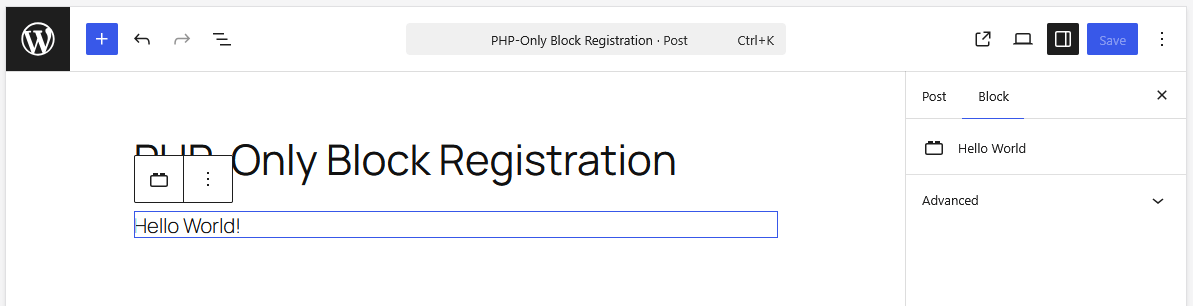
To evaluate the technical impact, developers can examine how simple a "Hello World" block has become. Under WordPress 7.0, a fully functional block interacting natively with the editor requires only this snippet:
function css_tricks_hello_world_block()
  register_block_type(
    'css-tricks/hello-world',
      [
        'title' => 'Hello World',
        'render_callback' => function ()
          return sprintf(
            '<div %s>Hello World!</div>',
            get_block_wrapper_attributes()
          );
        ,
        'supports' => [
          'autoRegister' => true,
        ],
      ]
  );

add_action('init', 'css_tricks_hello_world_block');
Expanding Functionality Through Attributes
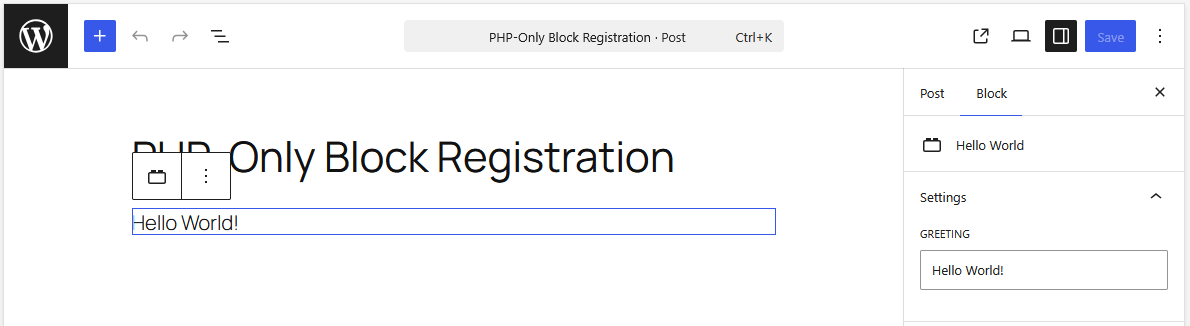
Attributes allow users to customize a block’s behavior. Traditionally, this required building complex control panels in React. In WordPress 7.0, defining attributes automatically generates corresponding input controls within the block’s Settings sidebar:
function css_tricks_hello_world_block()
  register_block_type(
    'css-tricks/hello-world',
    [
      'title' => 'Hello World',
      'render_callback' => function ($attributes)
        return sprintf(
          '<div %s>%s</div>',
          get_block_wrapper_attributes(),
          esc_html($attributes['greeting'])
        );
      ,
      'supports' => [
        'autoRegister' => true,
      ],
      'attributes' => [
        'greeting' => [
          'type' => 'string',
          'default' => 'Hello World!',
        ],
      ],
    ]
  );

add_action('init', 'css_tricks_hello_world_block');
Despite this elegance, performance and architectural benchmarks reveal stark limitations:
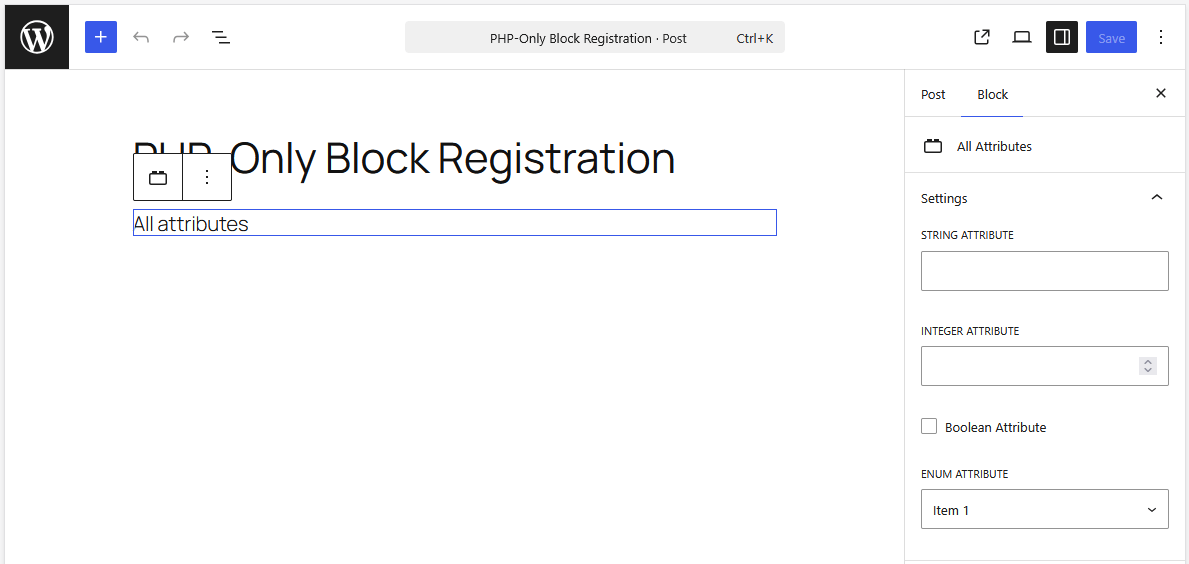
- Attribute Types: Limited strictly to strings, numbers, and booleans.
- UI Controls: Restricted to basic text inputs, number fields, checkboxes, and simple dropdowns.
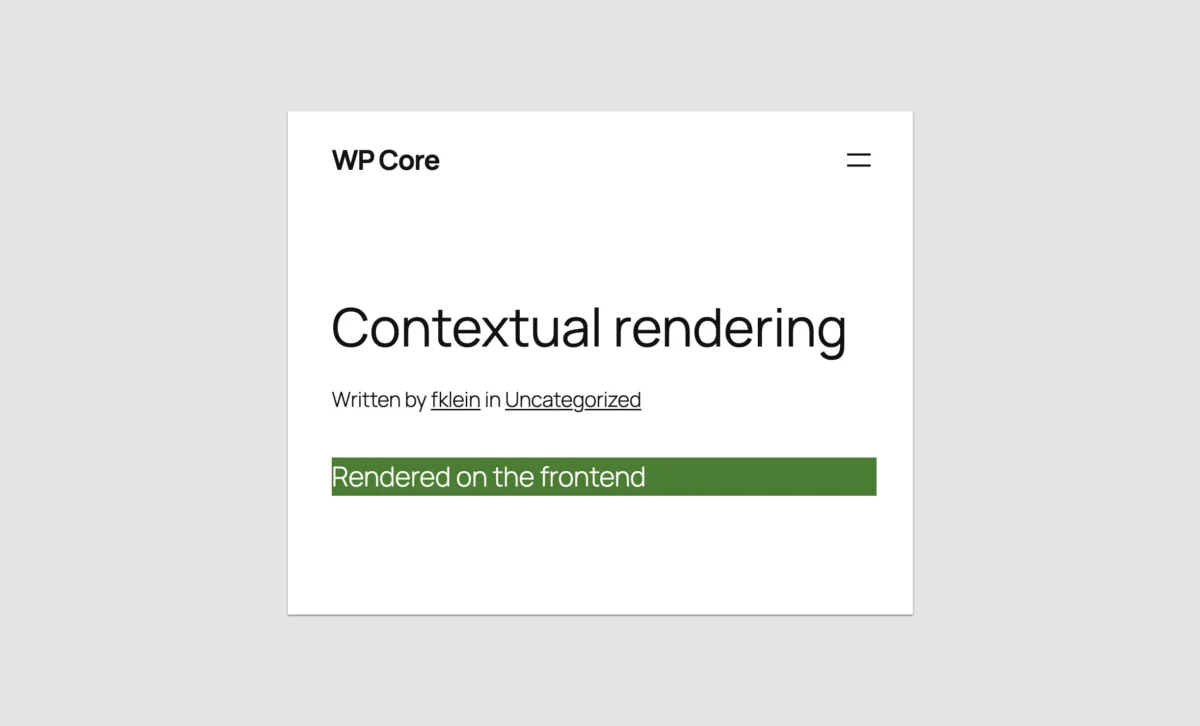
- Data Latency: PHP-only blocks query the database directly during rendering, bypassing the client-side JavaScript data store. This causes issues when displaying real-time updates, such as post titles changing dynamically inside the editor.
Official Responses and Developer Perspectives
The reaction from the WordPress community has been deeply polarized, splitting opinions between frontend purists and backend traditionalists.
The Pragmatic View: A Game Changer for Migrations
Proponents of the update argue that perfection should not be the enemy of progress. Thousands of corporate and enterprise WordPress sites remain trapped on classic themes simply because migrating custom widgets, headers, and specialized shortcodes into React-based blocks is financially prohibitive.

Lead developers behind the initiative emphasize that these blocks are not meant to compete with complex interactive UI components. Instead, they serve as a seamless bridge. "Your blocks do not need to be perfect inside the editor interface," notes early documentation on the feature. "What counts is that they render correctly on the front end. By using existing PHP code, adaptations to block themes become trivial."
The Architectural Critique: Missing Context and Capabilities
Conversely, JavaScript-heavy developers and core contributors voice deep concerns regarding UX degradation. Because PHP-only blocks render via stateless REST API endpoints:

- No Post Context: The render callback lacks out-of-the-box awareness of the current post ID during editor previews, requiring workarounds using
$_GET['post']parameters. - No DOM Interactivity: Complex client-side operations—such as mounting a JavaScript slider library onto raw markup—fail because the editor preview markup is fetched asynchronously and replaced on every re-render.
- UI Limitations: Essential modern components like native image uploaders, multi-line rich text editors, and date pickers are completely absent from the PHP registration API.
Implications: The Shift Toward Developer Experience
The arrival of PHP-0nly blocks in WordPress 7.0 carries broad implications for the platform’s ecosystem, agency business models, and core philosophy.
1. Accelerating Block Theme Adoption
The single greatest barrier to block theme adoption has always been the steep learning curve associated with modern JavaScript tooling. By removing this roadblock, WordPress 7.0 empowers classic PHP developers to transition their existing theme libraries into modern block-based architectures within hours rather than weeks.

2. A Shift in Core’s Philosophy
For years, WordPress Core pushed an aggressive "JavaScript-first" narrative. The introduction of server-driven auto-registration signals a pragmatic pivot: the platform is finally acknowledging that developer experience (DX) and business realities matter just as much as architectural purity. Reducing boilerplate code and eliminating the need to coordinate disjointed block.json, PHP, and JS files represents a massive win for solo developers and small agencies.
3. Navigating the Limitations Wisely
For developers willing to work within its guardrails, PHP block registration offers practical workarounds:

- Context Detection: Developers can distinguish between admin rendering and frontend rendering using
wp_is_rest_endpoint()checks combined with query routing inspections. - Targeted Enhancements: Using block supports, developers can quickly opt into core features like color customization, text alignments, and inserter visibility controls without writing custom CSS or React components.
- Graceful Degradation: When complex UI previews are impossible, developers can rely on custom placeholder elements to maintain an acceptable editing experience.
Conclusion: Was the Wait Worth It?
Was it worth waiting seven and a half years for PHP-only block registration?
If your goal is to build highly interactive, dynamic, native-feeling components from scratch, the answer is a definitive no. React remains the undisputed king of complex block authoring, and trying to force PHP-only blocks into interactive use cases will only lead to frustration.
However, if your goal is to rescue legacy codebases, modernize outdated client sites, and bridge the gap to block themes without retraining an entire agency in modern JavaScript tooling, this feature is an absolute triumph.
WordPress 7.0 has officially removed the highest wall blocking millions of legacy sites from entering the modern era. For that specific, vital use case, the wait was more than worth it.