







The landscape of digital interaction shifted fundamentally on August 2, 2026, as the European Union’s comprehensive AI transparency obligations officially took effect. For product designers, developers, and corporate legal teams, the arrival of these rules has been met with a mix of industry anxiety and strategic recalibration. While some have braced for "drastic measures," the reality of the legislation is far more focused: it is a push for clarity, accountability, and the restoration of user trust in an era of synthetic media.
The Core Mandate: Why Transparency Matters
At the heart of the new EU AI Act—specifically Article 50(4)—lies a simple premise: if a user is interacting with content that could reasonably be mistaken for human creation, they deserve to know the truth. The regulation does not seek to stifle innovation; rather, it seeks to eliminate the ambiguity that currently plagues AI-integrated interfaces.
The regulation applies to any entity—regardless of where they are headquartered—that serves EU citizens. Much like the General Data Protection Regulation (GDPR) or the European Accessibility Act (EAA), the geographic location of the provider is irrelevant if the AI output is consumed within the European Union. Companies that license third-party AI models cannot outsource their legal liability; if a brand uses an external API to generate content for an EU audience, the brand remains responsible for the disclosure.
A Chronology of Compliance
The journey to this August deadline has been marked by iterative policy drafting and industry consultations.

- Initial Proposal: The European Commission introduced the framework for the AI Act, prioritizing human-centric AI development.
- Legislative Consensus: After months of debate between member states and industry lobbyists, the final text was ratified, focusing heavily on high-risk AI systems and general-purpose transparency.
- The Grace Period: Throughout late 2025 and early 2026, companies were advised to audit their workflows to distinguish between "AI-assisted" and "AI-generated" content.
- August 2, 2026: The enforcement date. Organizations are now legally required to provide clear, machine-readable, and human-understandable labels for specified categories of AI-generated content.
What Requires Labeling?
The legislation distinguishes between standard automated tools and content that mimics human output. The requirement for disclosure generally applies to:
- Synthetic Content: Audio, video, image, or text content that depicts or generates real people, places, or events in a realistic manner.
- Public Interest Claims: Content that provides information regarding health, safety, environmental, economic, or political issues.
- Conversational Interfaces: Chatbots or virtual assistants that are not clearly identifiable as machines must now signal their synthetic nature to the user before an interaction begins.
Crucially, the legislation does not require a "label on everything." If a human has exercised substantial editorial control over the content—taking personal responsibility for the final output—the disclosure requirement is often waived.

The Myth of the "Sparkle" Icon
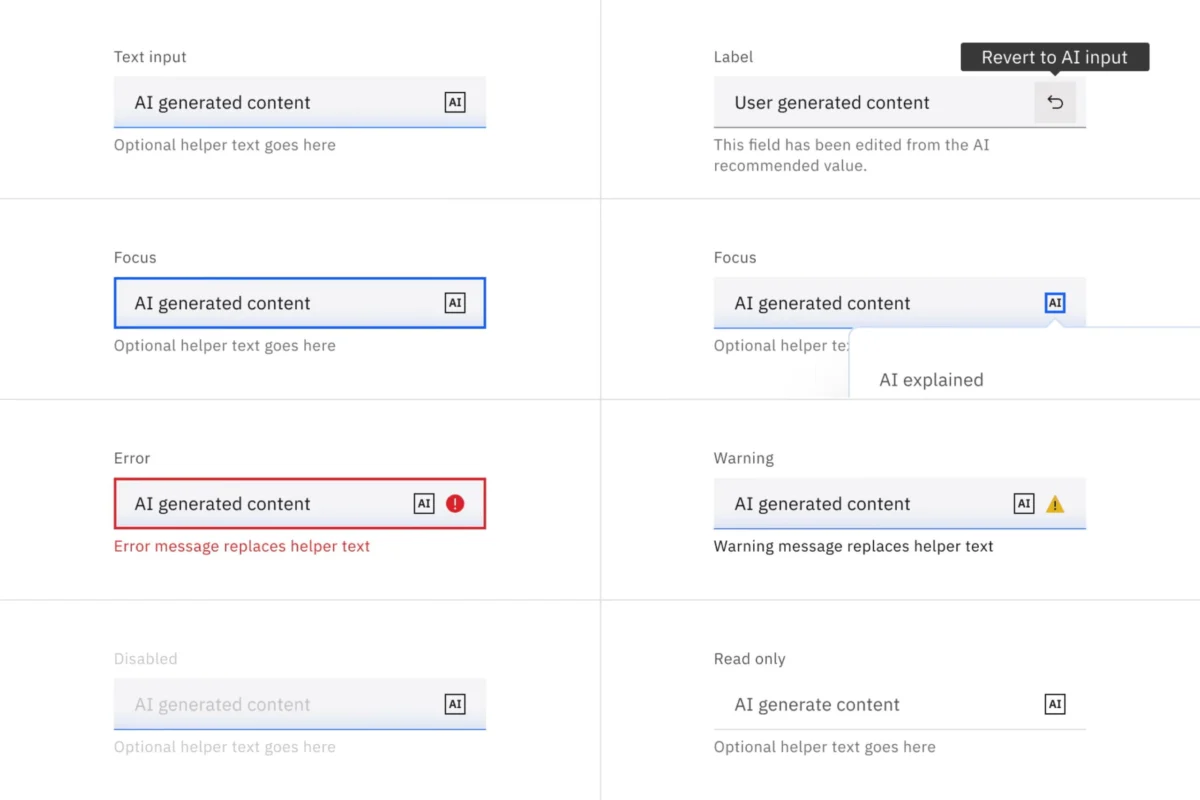
For years, the tech industry has relied on the "sparkle" icon to denote AI-powered features. UX research, however, consistently indicates that this symbol is insufficient for legal compliance. As highlighted by the European Commission, the sparkle is often ambiguous; it implies "AI-powered" but fails to communicate "AI-generated."
The EU has published an official set of icons, but these are not a "get-out-of-jail-free" card. Simply placing an icon on a page does not satisfy the law if it is not clearly visible or accessible. The Commission has explicitly warned against "dark patterns"—such as labels that fade out, are buried in footers, or appear only for a fraction of a second. Compliance requires that the disclosure persists even if the content is reshared or downloaded, ensuring that the provenance of the material remains intact throughout its digital lifecycle.

Defining "Editorial Responsibility"
One of the most complex challenges for businesses is defining the boundary between "AI-generated" and "human-edited." The EU Commission has provided guidance suggesting that minor assistive tasks—such as spellchecking, grammar correction, formatting, or simple color balancing—do not constitute "AI generation."
However, when an AI model is used to synthesize a summary, generate an entire paragraph, or composite multiple images into a new, realistic scene, the burden of disclosure triggers. A "human-in-the-loop" approach only exempts a company from labeling if the human has performed substantive review. A quick skim-read by a content moderator is not considered an editorial act. The company must be able to identify the individual or entity taking legal responsibility for the veracity of the AI-produced content.

Global Implications: A Pattern of Regulation
While the EU is currently leading the charge, these regulations are part of a broader global trend. Similar discussions regarding synthetic content labeling are gaining traction in the United States, particularly concerning political advertising and deepfake protections.
Companies operating globally should view the EU requirements not as an outlier, but as a blueprint. Adopting these transparency standards now provides a competitive advantage, shielding organizations from potential litigation and future regulatory shifts in other jurisdictions. As industry experts note, we are witnessing the emergence of a global "transparency pattern." Companies that embrace this by default—building clear disclosure into their design systems—will be better positioned to maintain user trust as AI becomes ubiquitous.

Strategic Implications for Product Teams
For designers and engineers, the path forward requires a shift in UI/UX strategy. The goal is to integrate transparency without obstructing the user experience.
- Design for Disclosure: Incorporate "AI-generated" indicators into the design system from the ground up, rather than treating them as an afterthought.
- Accessibility First: Ensure that labels are not just visible to the eye but are also readable by screen readers and other assistive technologies.
- Persistent Metadata: Ensure that the "AI-generated" tag remains embedded in the file metadata (such as IPTC or XMP data) so that if an image is shared on social media, the disclosure follows it.
- Closed B2B Environments: There are exceptions for closed, business-to-business environments where both parties are aware of the technology in use. However, businesses should err on the side of caution and consult legal counsel before assuming their workflow qualifies for an exemption.
Conclusion: A Benefit, Not a Burden
The panic surrounding these new regulations is largely misplaced. While the administrative burden of compliance is real, the fundamental goal—to distinguish between authentic human expression and machine-generated "slop"—is a net positive for the digital ecosystem.

By prioritizing transparency, the industry can move toward a more sustainable model of AI adoption. When users know exactly what they are engaging with, trust is maintained. For organizations, the new rules offer a rare opportunity to define their brand as one that values honesty and clarity. As the digital world becomes increasingly crowded with synthetic content, the companies that wear their transparency as a badge of honor will likely be the ones that survive the coming regulatory wave.
For those looking to deepen their expertise, resources such as "Design Patterns For AI Interfaces" offer practical frameworks for balancing these new legal requirements with high-quality user experience. As the industry matures, staying informed on both the technical and legal facets of AI will be essential for any product-focused professional.