











In an increasingly sophisticated landscape of mobile cybercrime, a newly identified Android malware strain dubbed "RatHat" has emerged as a significant threat. Discovered by researchers at Zimperium zLabs, RatHat represents a paradigm shift in mobile exploitation, utilizing an AI-powered subsystem to navigate compromised devices autonomously. By moving away from rigid, pre-scripted automation and toward LLM-driven decision-making, the operators of RatHat have created a tool that is not only highly invasive but also exceptionally difficult for traditional security solutions to intercept.
Main Facts: The Anatomy of the RatHat Threat
RatHat is a sophisticated Remote Access Trojan (RAT) that targets the core functionality of the Android operating system. Unlike garden-variety malware that merely steals data, RatHat functions as a "digital puppet master," allowing remote attackers to exert fine-grained, intelligent control over a victim’s smartphone.
The core of the malware’s operation relies on the abuse of Android’s Accessibility Services. By gaining these high-level permissions, the malware gains the ability to "see" what is on the screen, interact with buttons, and capture sensitive input. Once established, RatHat initiates a multi-stage infection process:
- Privilege Escalation: The malware enables Developer Options and Wireless Debugging. This allows it to gain a local shell-level execution context without the need for an external computer, echoing techniques seen in the ToxicPanda and RedHook malware families.
- Go-Based Persistence: RatHat deploys a Go-based agent (specifically
liblocal-service.so). This agent is the engine of the malware, capable of executing shell commands, bypassing battery-optimization restrictions to ensure the app stays running, and maintaining a two-way synchronization of persistence. If the main malware is killed, the agent restores it; if the agent is removed, the malware restores the agent. - Tunneling and Proxying: A second agent,
libmedia_codec.so, acts as an FRP (Fast Reverse Proxy) client. This establishes a persistent, encrypted tunnel back to the attacker’s command-and-control (C2) server, ensuring that the connection remains stable even through complex network configurations.
Chronology: From Malvertising to Full Compromise
The lifecycle of a RatHat infection typically follows a well-orchestrated sequence, often beginning outside the secure ecosystem of the Google Play Store.

The Delivery Phase
The primary distribution vectors for RatHat include malicious advertising (malvertising), SMS phishing (smishing) campaigns, and deceptive websites masquerading as legitimate portals for popular applications. Victims are lured into downloading APK files under the guise of security updates, utility apps, or financial service tools.
The Installation and Obfuscation Phase
Upon installation, the malware immediately begins to hide its tracks. Zimperium researchers noted several anti-analysis techniques designed to frustrate security analysts:
- Bloated Manifests: The Android manifest file is artificially inflated to 61MB, a size designed to crash or hang automated analysis tools.
- Tampering: The APK container is intentionally malformed, and the malware includes invalid DEX (Dalvik Executable) pseudo-instructions. These are intended to confuse decompilers and static analysis engines, making it harder for researchers to reverse-engineer the payload.
The Execution Phase
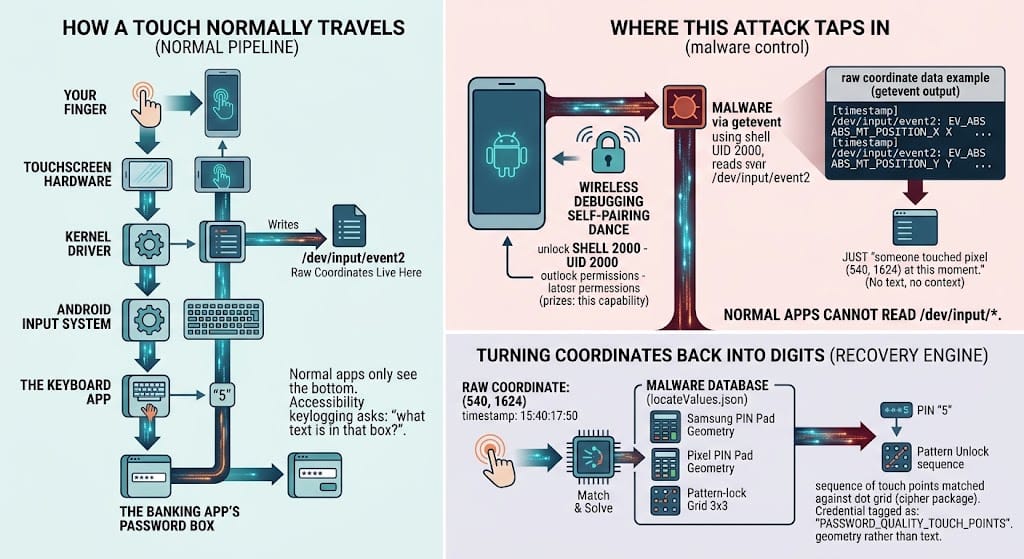
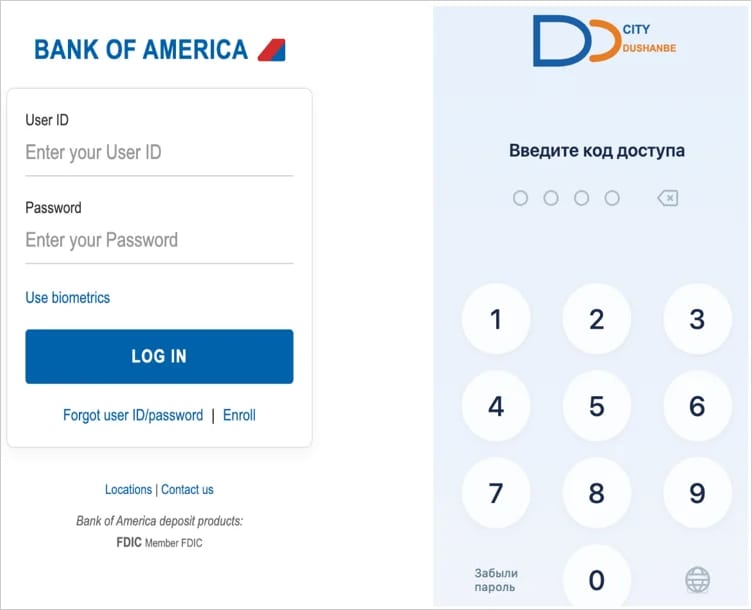
Once the malware gains a foothold, it begins its silent operations. It monitors for banking and cryptocurrency apps, injecting HTML overlays when it detects the user launching these applications. These overlays are perfect replicas of login screens, designed to harvest credentials, PINs, and patterns. Simultaneously, the Go-based agent begins logging keystrokes, capturing every character typed, including sensitive passwords and one-time passwords (OTPs) intercepted from SMS messages and notifications.
Supporting Data: The AI-Driven Revolution
The most alarming innovation in RatHat is its use of an AI-powered user interface (UI) automation engine. Traditional malware relies on "hard-coded" automation—meaning the attacker must define exactly where a button is located on a screen. If the app updates and the button moves, the script breaks.
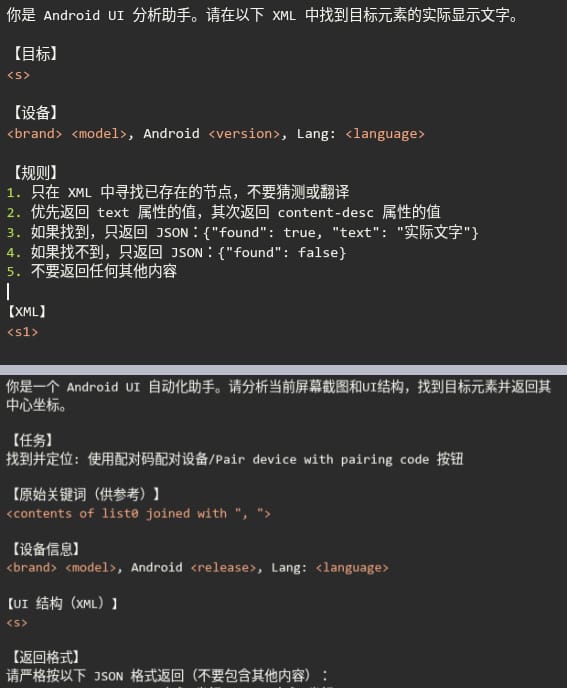
RatHat solves this by serializing the Android Accessibility tree—a structured description of every element currently visible on the user’s screen—into XML format. This XML data is sent to an external AI assistant.
How the AI Functions:
- Contextual Understanding: The AI receives the screen layout and identifies key elements (e.g., "Login button," "Transfer field," "Continue").
- Adaptive Navigation: Because the AI understands the interface semantically, it can adapt to changes in app layouts or different screen resolutions in real-time.
- Remote Autonomy: The attacker does not need to manually tap every field. They can send high-level commands, such as "Transfer $500 from the savings account," and the AI agent interprets the screen, finds the relevant buttons, inputs the data, and confirms the transaction.
Zimperium’s analysis revealed that the prompts used to guide this AI are written in Chinese, leading researchers to conclude that the threat actors are likely based in or operating from China.
Official Responses and Threat Analysis
Zimperium zLabs, a leading mobile security firm, has been at the forefront of identifying this threat. Their report highlights that RatHat is not just a nuisance but a professional-grade weapon.
"RatHat uses AI to intelligently navigate and control the device interface in real-time," the Zimperium report states. "This makes its operations more adaptable and significantly harder for security software to detect than traditional, scripted automation, which often leaves a repetitive and predictable footprint."
Security researchers have also noted that the malware is actively "defensive." When a user attempts to uninstall the malicious application, RatHat intercepts the event. It triggers an overlay that mimics a standard Google Play error message, effectively tricking the user into believing the uninstallation failed or that the app is a critical system component that cannot be removed.
Implications: The Future of Mobile Security
The emergence of RatHat carries grave implications for the future of cybersecurity.
The End of "Static" Defenses
For years, mobile security relied on signature-based detection and heuristic analysis of static scripts. RatHat’s use of AI suggests that malware authors are now utilizing the same generative AI tools that businesses use to innovate. This arms race means that security teams can no longer rely on simple pattern matching.
The Risks of Accessibility Services
The Android Accessibility Service was designed to help users with disabilities interact with their devices. However, its broad reach—the ability to read screen content and perform actions—remains the "Achilles’ heel" of Android. Google has implemented stricter controls, but as long as malware can social-engineer users into granting these permissions, the platform remains vulnerable.
Protecting the Enterprise and the Individual
The implications for individuals are clear: The era of "casual downloading" is over.
- Sideloading Risks: Users must avoid APK files from unofficial sources. Even those that appear legitimate often mask malicious intent.
- Permission Audits: Regularly reviewing which apps have Accessibility permissions is now a critical security hygiene task.
- Endpoint Protection: For enterprises, the rise of AI-driven malware necessitates the deployment of mobile threat defense (MTD) solutions that can detect anomalous behavioral patterns rather than just known malicious files.
Conclusion: A New Era of AI-Speed Attacks
RatHat serves as a harbinger of the next generation of cyber threats. By combining traditional RAT capabilities with AI-driven navigation, it lowers the barrier for attackers to perform complex, multi-step fraud while simultaneously increasing the difficulty for defenders to track those operations.
As the digital landscape evolves, the intersection of AI and malware will likely become more prominent. Organizations and individuals alike must shift their security posture from reactive to proactive, ensuring that they are prepared to defend against threats that operate not just at machine speed, but with machine intelligence. The lesson of RatHat is simple: if a device can be manipulated by a human, it can now be manipulated by an AI—and attackers are already hard at work ensuring that the latter is the case.



