










By Editorial Staff | October 1, 2026
In the rapidly shifting landscape of modern media, the relationship between digital platforms and news organizations has entered a critical new phase. With over 35 billion hours of news content consumed on YouTube globally in 2025—a staggering 12 billion of which were viewed via connected televisions—the platform has cemented its role as the primary "town square" for global information.
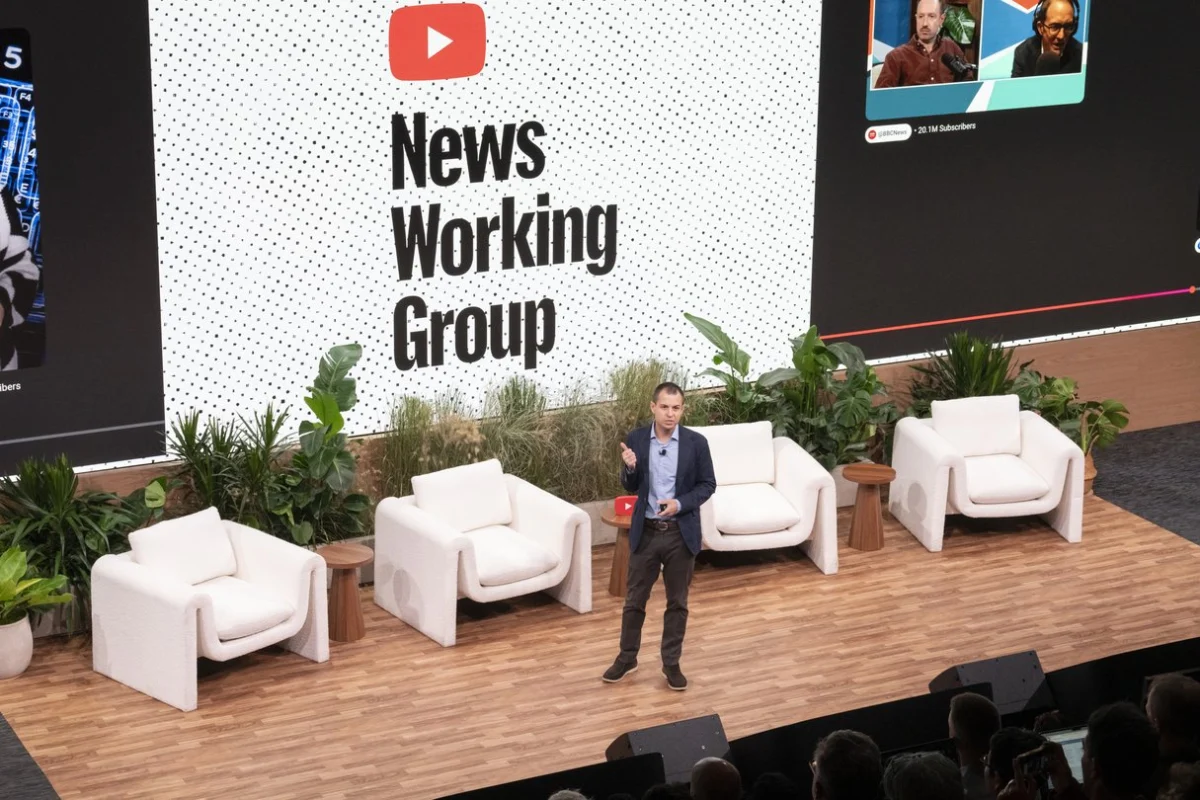
To address the complexities of this evolving ecosystem, YouTube recently convened its 14th News Working Group in New York City. The event brought together more than 100 of the world’s most influential news partners, ranging from legacy broadcasting giants to independent digital-native journalists. The objective was clear: to move beyond passive distribution and provide newsrooms with the technological infrastructure required to thrive in an era defined by artificial intelligence, fragmented attention spans, and the urgent need for audience trust.
1. The Data-Driven Evolution: Powering Editorial Decisions
The modern newsroom is no longer just about breaking a story; it is about ensuring that story reaches its intended audience in a cluttered digital environment. As news cycles accelerate, the pressure to make split-second editorial and packaging decisions has become an exhausting reality for digital teams.
Bridging the Gap Between Analytics and Creativity
YouTube is rolling out a suite of capabilities within YouTube Studio that functions as a sophisticated, AI-driven sounding board for editorial teams. These tools are designed to assist at every stage of the production cycle, from initial concept ideation to post-publish distribution strategies.
Enhanced "Insights" and "Research" destinations now allow news organizations to track emerging topics in real-time, enabling them to pivot coverage to match audience demand. Perhaps most significantly, the platform is introducing a dynamic thumbnail optimization feature. By utilizing machine learning, the system automatically serves the highest-performing thumbnail to specific audience segments, ensuring that the visual "hook" of a report is perfectly tuned to the viewer’s interests.
Furthermore, an upcoming A/B testing tool for video will allow journalists to experiment with different storytelling formats, pacing, and visual hooks. This iterative approach to journalism—where data informs the creative process—is being welcomed by industry leaders. As Cassie Thornton, VP of Video and Strategy Operations at Dow Jones, noted: "Fast-moving news cycles require us to make split-second editorial and packaging decisions daily. The integrations of insights and feedback will allow our digital teams to optimize our coverage performance, ensuring our reporting finds its audience."

2. Chronology: A Decade of News Evolution
To understand the significance of these developments, one must look at the trajectory of the YouTube News Working Group over the last 14 years.
- 2012–2016 (The Foundation Phase): The initial focus was on enabling live streaming and basic monetization, allowing traditional broadcasters to migrate their linear programming to a digital-first environment.
- 2017–2021 (The Trust Phase): In response to global misinformation concerns, the focus shifted to verification, authoritative labeling, and highlighting credible sources during major global events.
- 2022–2024 (The Integration Phase): YouTube introduced deep integrations with newsroom CMS platforms, allowing for faster syndication and more robust analytics for news partners.
- 2025–2026 (The AI-Augmentation Phase): The current era, characterized by the 14th Working Group, marks a shift toward AI-assisted production, advanced identity protection, and diversified, sustainable revenue models.
The progression from simple distribution to deep, AI-integrated infrastructure reflects the platform’s recognition that news organizations require more than just a place to upload files—they need a partner that understands the high-stakes nature of modern journalism.
3. Diversifying Revenue: Sustainability in the Digital Age
The economic model of journalism is undergoing a profound transformation. With traditional advertising revenue becoming increasingly volatile, newsrooms are looking toward direct-to-consumer models to ensure long-term sustainability.
The Role of Channel Memberships
YouTube’s "Channel Memberships" have proven to be a vital lifeline for independent reporters and specialized outlets. Over the past five years, this feature has facilitated more than $1.5 billion in direct payouts to creators, fostering a deeper bond between journalists and their most loyal viewers.
To further bolster this, YouTube is upgrading the membership experience. The platform is launching a dedicated in-app hub where exclusive content can reside, creating a "walled garden" for subscribers. Additionally, new video preview features will allow prospective members to sample exclusive content before committing, while new community features will enable direct, two-way communication between journalists and their supporters. This shift toward a subscription-based, community-supported model is essential for maintaining independent reporting in an era where market-wide ad spend can be unpredictable.
4. Safeguarding Identity in the Age of Synthetic Media
Perhaps the most pressing concern for journalists in 2026 is the rise of generative AI. The ability to easily create "deepfakes" or synthetic clones of a reporter’s voice and likeness poses an existential threat to media credibility.
Protecting the Integrity of the Reporter
The challenge of digital impersonation is twofold: it harms the individual reporter’s brand, and it erodes the public’s trust in journalism at large. During the Working Group, representatives from various news organizations expressed that protecting their brand identity is now as important as the reporting itself.

Jon Laurence, VP of Production at Newpress, emphasized this concern: "If someone can fake my likeness to report false news, trust is instantly questioned. YouTube has shown real leadership with these tools—which are critical for protecting our work and defending our identity at the pace the AI era requires."
YouTube’s response has been a commitment to "Likeness Detection." By providing creators with the ability to control their visual and auditory likeness, the platform is creating a layer of protection that ensures audiences can distinguish between an authentic report and a synthetic fabrication. The company is currently expanding this, integrating voice detection with facial recognition to improve matching accuracy. Furthermore, these tools are being moved into the mobile environment, allowing news crews on the ground to manage their digital identity and report instances of unauthorized use directly from their smartphones.
5. Implications for the Future of News
The initiatives presented by YouTube at this year’s Working Group carry significant implications for the industry.
A Shift in Power Dynamics
By empowering individual journalists and smaller newsrooms with tools that were once the exclusive domain of major media conglomerates—such as advanced A/B testing and AI-driven insights—YouTube is leveling the playing field. This could lead to a renaissance of independent journalism, where the barrier to entry for high-quality, data-informed reporting is significantly lowered.
The New Standard of Verification
As the platform continues to refine its identity protection tools, it is effectively setting a new standard for media literacy. By embedding verification and likeness protection into the infrastructure of the platform, YouTube is signaling that the burden of trust is a shared responsibility between the platform and the publisher.
Long-term Resilience
The combination of audience-supported revenue models and AI-assisted production suggests a future where newsrooms are more resilient to the shocks of the digital economy. While the challenges of AI-driven misinformation are far from solved, the focus on technical safeguards and human-centric editorial tools provides a roadmap for a sustainable, credible, and engaging future for journalism.
As we look toward the remainder of the decade, the collaboration between platforms like YouTube and the global news community will likely determine the quality and reach of the information that shapes our society. The tools are ready; the question now is how effectively the industry will leverage them to regain the trust and attention of an increasingly skeptical public.



