










In the landscape of modern education, few challenges are as persistent as the "engagement gap." While today’s students are digital natives—raised on high-octane YouTube content and interactive media—the traditional science classroom often remains tethered to outdated methodologies, yellowed worksheets, and static textbooks.
Enter Mark Rober, the former NASA engineer turned YouTube titan. On September 29, 2026, Rober officially unveiled Class CrunchLabs, an ambitious, multi-year educational initiative designed to bridge the chasm between entertainment and academia. With a massive $60 million investment and a goal to reach 70% of U.S. classrooms by 2030, this project represents more than just a series of videos; it is a systematic attempt to rewrite how the next generation interacts with STEM (Science, Technology, Engineering, and Mathematics).
The Genesis of an Educational Pivot
The inspiration for Class CrunchLabs was born from a moment of stark realization. While visiting a coworker’s home, Rober observed a student struggling through a lesson that felt centuries removed from the modern world.
"I asked his daughter what she was learning in science," Rober recalled. "She showed me an old Bill Nye video and a worksheet that looked like it had been copied a thousand times. This generation grew up on YouTube, but classroom science hasn’t evolved."
Rober, whose own channel is famous for viral, high-production engineering stunts—like glitter-bomb traps for package thieves and massive obstacle courses for squirrels—recognized that he possessed a unique set of skills. He understood how to hold the attention of a distracted digital audience, and he possessed the engineering pedigree to translate that engagement into rigorous scientific learning. He realized that if he could "hide the vegetables"—making the science inherently fun and "banger" level interesting—he could turn passive listeners into active participants.
Chronology of a Curricular Revolution
The rollout of Class CrunchLabs is a phased, high-stakes endeavor:
- Phase One (Launch Day): The platform debuted with two primary courses, "Carnival of Collisions" and "Mission Maglev." These courses utilize YouTube’s video format, supplemented by comprehensive teacher-led activities.
- The Medium-Term (2026–2028): Rober has committed to dedicating one week every month for the next four and a half years to producing content. The curriculum will expand to cover the entirety of the 6th-to-8th-grade science standards.
- The Long-Term Goal (2030): The objective is for Class CrunchLabs to be a staple in 70% of U.S. classrooms, fully integrated into standard lesson plans, and accessible in 34 different languages to ensure global reach.
Supporting Data: Why It Works
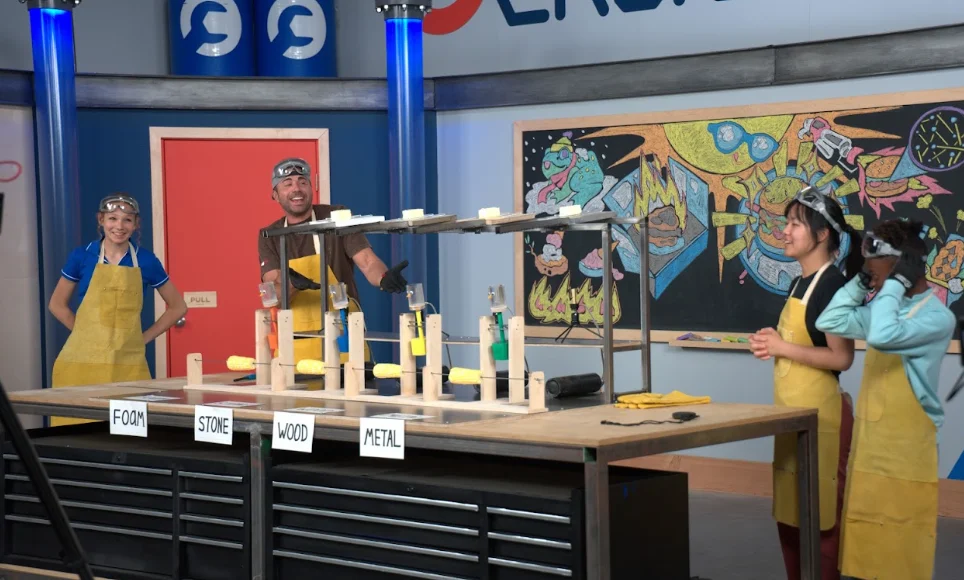
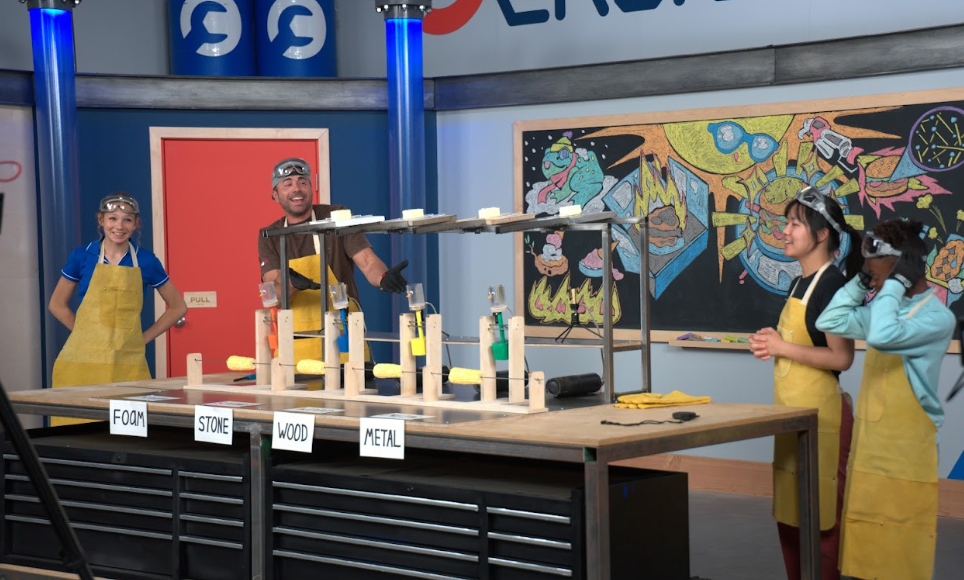
The effectiveness of the program lies in its departure from the "sage on a stage" model. Instead of relying on dry lecture-based instruction, Class CrunchLabs emphasizes visceral, hands-on experiences.
"It’s hard to memorize an equation," Rober explains, "but you remember every word to a song you sang as a teenager because it made you feel something. We’re dealing with matters of the heart."
To facilitate this, the program uses low-barrier-to-entry materials. For instance, in an upcoming lesson on potential energy dubbed "Science Blob," students build a "G-force monitor" using nothing more than a Ziploc bag, a paper-clip-laden paper dummy, and household scraps. By dropping this apparatus and observing the displacement of the "limbs," students derive the principles of mass and height-based energy without ever needing to look at a textbook equation. This ensures that the program is equitable, functioning just as effectively in underfunded Title I schools as it does in private institutions with unlimited laboratory budgets.
The Collaborative Engine
Rober is not working in a vacuum. Recognizing that he is an engineer and entertainer, not a career educator, he has intentionally sought out experts to ensure the curriculum is robust and standards-aligned.
The project features:
- Expert Partnerships: Collaboration with the National Science Teaching Association (NSTA) and NASA to ensure scientific accuracy and pedagogical validity.
- Creator Diversity: Recognizing the importance of representation, the program features a wide array of guest creators—including ElectroBOOM and How Ridiculous—ensuring that students see themselves reflected in the scientists on screen.
- Teacher-Centric Design: Rather than replacing the teacher, the content is designed to act as an assistant. Rober describes his role as "teeing up" the engagement, while the teacher facilitates the classroom discovery.
Implications: A New Standard for Philanthropy
The implications of Class CrunchLabs extend far beyond the classroom walls. By releasing high-quality, professional-grade educational content for free, indefinitely, Rober is challenging the traditional textbook industry’s pay-to-play model.
Accessibility and Equity
By mandating that all experiments utilize "trash can materials"—cardstock, straws, and binder clips—the program eliminates the financial barrier to STEM education. This is a deliberate design choice meant to democratize science, ensuring that a child’s zip code does not dictate their access to high-quality learning materials.
The "Engagement-First" Pedagogical Shift
The success of this project could force a pivot in how national standards are met. If students in schools using Class CrunchLabs show significantly higher test scores and engagement levels than those using traditional, text-heavy curricula, school districts may be pressured to move toward video-first, experiment-heavy learning models.
A Legacy Project
For Rober, this is not merely a content strategy; it is a life’s work. When asked why he is investing so heavily in this project compared to his other philanthropic efforts, he reflects on the concept of a "North Star."
"We can all have different thoughts on what happens when you die or why we’re here," Rober says. "But at the end of the day, I think we can all agree a successful life is one where you leave the world a better place than you found it. I will never beat a project like this."
Looking Ahead: The Future of the Classroom
As Class CrunchLabs gains traction, the educational community will be watching closely. The project addresses the core crisis of modern schooling: how to maintain relevance in an era of infinite digital distraction.
By weaponizing the very tools that usually distract students—YouTube, high-production storytelling, and viral trends—Rober is turning the classroom into a destination. If the initial reception is any indication, the "Carnival of Collisions" may just be the first step in a larger, more permanent transformation of the American middle school experience.
With over 1,000 videos planned and a commitment to accessibility across languages and socioeconomic lines, the project is poised to become the largest, most consistent, and most engaging science curriculum in history. In a world where the future of humanity depends on the next generation’s ability to solve complex engineering and environmental challenges, Mark Rober’s mission might just be the most important experiment he ever conducts.



