










As the festive season rolls in, it brings with it an undeniable sense of renewal—the excitement of new beginnings, the warmth of giving, and the forward-looking anticipation of chapters yet to be written. Amid the flurry of celebrations, thoughtful gift-exchanging, and strategic shopping, certain purchases transcend the transient joy of the holidays to become enduring companions for the road ahead. For students stepping into higher education or transitioning to more demanding academic years, a laptop is rarely just a gadget; it is the ultimate tool for survival, creativity, and professional preparation.
While festive sales and promotional deals present a natural window for an upgrade, savvy consumers are increasingly looking past the sticker price. The modern academic environment demands that students evaluate a machine not merely by its promotional discount, but by how well it will serve their evolving needs over a multi-year degree.
Today, a new class of computing machinery has emerged: Snapdragon-powered AI PCs. By unifying high-tier performance, exceptional battery longevity, featherlight portability, and native artificial intelligence capabilities, these devices are fundamentally altering how students evaluate notebook specifications.
Main Facts: The Shift Toward Next-Generation Student Computing
The computing landscape for higher education has undergone a paradigm shift. Traditional laptops are frequently bogged down by thermal constraints, heavy chassis designs, and batteries that fail to survive a full day away from a wall outlet. Enter Snapdragon-powered architectures—exemplified by processors like the Snapdragon X2 Plus—which harness custom Oryon CPU cores to deliver industry-leading performance-per-watt metrics.
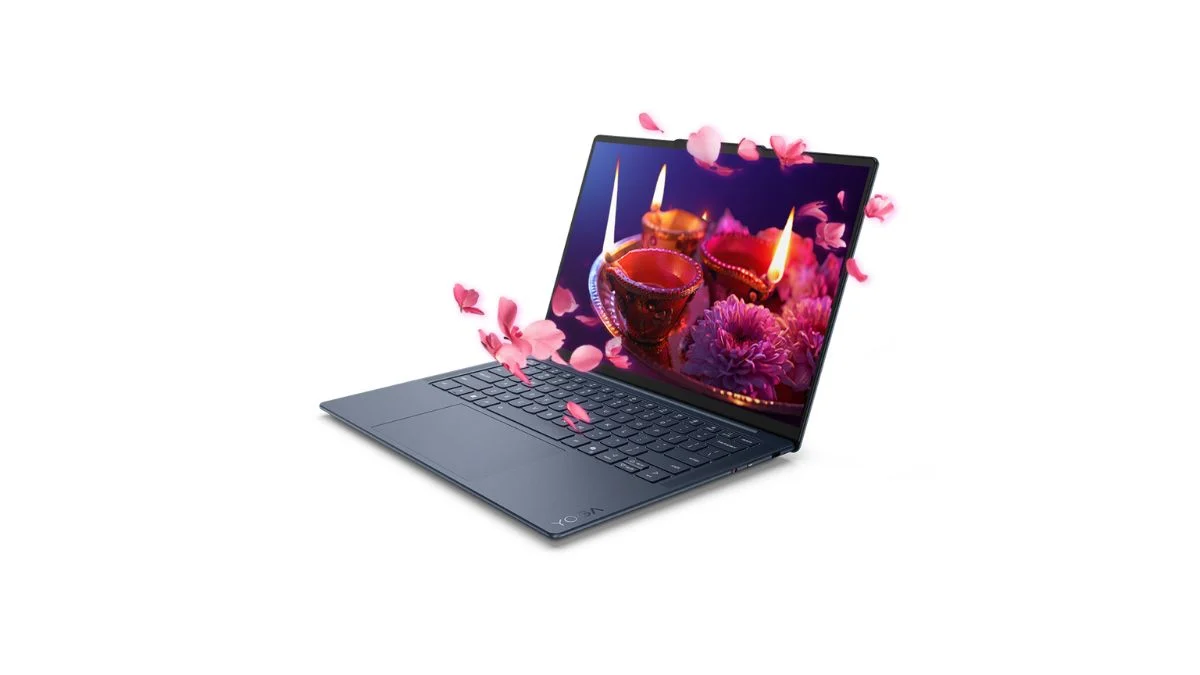
At the center of this technological wave is the Lenovo Yoga Slim 7x, a machine designed specifically to meet the rigorous demands of contemporary student life. Starting at ₹1,36,990, the device combines a featherlight build, robust processing architecture, and onboard artificial intelligence to bridge the gap between academic utility and creative ambition. To ease the financial friction during the festive shopping season, Lenovo has introduced aggressive retail incentives, including a ₹15,000 exchange bonus, up to ₹10,000 in cashback offers, and 0% interest EMI options starting at ₹5,799 per month for 18 months.
Chronology: The Evolving Lifecycle of a Student Laptop
To understand why modern laptops require advanced engineering, one must trace the chronological evolution of a student’s academic journey over a standard three-to-four-year degree program.
Year 1: The Transition and Foundation
When a student first unpacks their laptop for college, the use cases are often straightforward: word processing, extensive web research, attending virtual lectures, and streaming media. Portability is paramount during this phase. Navigating sprawling campuses requires moving constantly between morning lectures, sprawling libraries, quiet study nooks, campus cafés, and hostel rooms. A heavy machine quickly becomes a physical burden when packed alongside heavy textbooks, chargers, and notebooks.
Year 2 and 3: The Workload Escalation
As the degree progresses, the technical demands placed on the machine escalate dramatically. General coursework gives way to specialized modules. Engineering and science students may begin compiling complex codebases; humanities and business majors handle massive data sets and multi-layered presentations; design and media students find themselves wrestling with high-resolution imagery, vector graphics, and video editing suites. This is the period where underpowered laptops begin to stutter, bottlenecking workflows and causing unnecessary academic friction.
Year 4: The Capstone and Professional Portfolio
By the final year, the laptop is no longer just a tool for writing essays—it is a portfolio-building workstation. Capstone projects, complex data analysis, professional-grade content creation, and final-year dissertations require a machine that can handle sustained high-performance tasks without thermal throttling or sudden battery depletion. A future-proof device must be equipped not just for the semester at hand, but for the entirety of the degree and the immediate professional transition that follows.
Supporting Data: Engineering Excellence and Real-World Metrics
A closer examination of the hardware specifications reveals why machines like the Lenovo Yoga Slim 7x are capturing market attention among students and educators alike.
Portability Meets Endurance
- Weight: The Yoga Slim 7x tips the scales at an astonishingly light 1.17 kg, ensuring it adds virtually no strain to a heavily packed backpack.
- Battery Capacity: Equipped with a 70Wh battery, the machine is engineered to outlast traditional usage cycles. Thanks to the power efficiency of the Snapdragon X2 Plus architecture, users experience prolonged runtimes without needing to hunt for wall sockets across campus.
- Unplugged Performance Advantage: Unlike traditional x86 architecture laptops—which frequently throttle processor speeds to conserve battery when disconnected from AC power—Snapdragon-powered systems maintain their peak performance headroom even when running entirely on battery power.
Processing Power and Creative Headroom
Student workflows rarely consist of a single open application. Modern multitasking involves running web browsers with dozens of tabs, messaging apps, video conferencing tools like Camo Studio, and heavy creative software simultaneously.
- Application Compatibility: The Yoga Slim 7x comfortably drives professional-grade applications such as DaVinci Resolve, Adobe Premiere Pro, and Blender.
- User Testimony: Neeraj, a design student navigating intensive visual workloads, notes: "For my design projects, I’m often working with large image files and several applications at the same time. The Lenovo Yoga Slim 7x’s performance makes it easy to move between tasks and keep my workflow smooth, especially when I’m working on detailed images or preparing larger layouts."
Onboard Artificial Intelligence
Artificial intelligence has transitioned from a futuristic novelty into an indispensable productivity tool. However, cloud-based AI processing can introduce latency and consume excessive data. The Snapdragon X2 Plus integrates a dedicated AI engine—the Qualcomm Hexagon NPU—which delivers an impressive up to 80 TOPS (Trillions of Operations Per Element) of AI performance.
This dedicated neural processing unit handles demanding local AI tasks—such as real-time live captioning for recorded lectures, automated summarization of dense academic readings, and instant photo retouching for creative projects—directly on the device. Because these tasks are offloaded to the NPU, the central and graphics processors remain free to keep the rest of the system running smoothly without sacrificing battery life.
Visual Immersion and Ergonomics
Students spend countless hours staring at their screens, transitioning seamlessly from academic reading to video editing and evening entertainment.
- Display Specifications: The laptop features a 14-inch WUXGA OLED display, offering vibrant color accuracy, deep blacks, and crisp text rendering.
- Viewing Comfort: Operating at a standard 60Hz refresh rate with 400 nits of peak brightness, the screen is bolstered by TÜV Rheinland certification, which minimizes harmful blue light emissions to safeguard eye health during extended study sessions.
Official Responses and Market Perspectives
Industry analysts and consumer tech observers have noted a distinct change in buyer psychology during recent festive retail cycles. Rather than prioritizing raw clock speeds or isolated hardware specs, student buyers and parents are focusing on holistic ecosystem integration, artificial intelligence readiness, and longevity.
Manufacturers are responding directly to these shifting priorities. Lenovo’s retail strategy for the Snapdragon-powered lineup emphasizes experiential purchasing. By encouraging consumers to visit physical Lenovo Exclusive Stores or explore digital platforms to test the weight, display quality, and responsiveness of the Yoga Slim 7x firsthand, the brand aims to demystify AI PCs for everyday student users.
Retail promotions—such as the bundled ₹15,000 exchange bonus, ₹10,000 cashback, and structured 0% interest financing—reflect a concerted industry effort to make premium, future-proof technology accessible to a wider demographic of learners.
Implications: Preparing for the Future of Learning and Work
The integration of advanced AI PCs into the student ecosystem carries profound implications for the future of education and early career development.
- Democratization of Advanced Tech: By making high-end processing and dedicated NPU capabilities portable and affordable, students across disciplines—not just computer science or media majors—gain access to tools that accelerate research, enhance creativity, and streamline organization.
- Redefining Mobile Productivity: The ability to run intensive creative and analytical applications on battery power without performance degradation sets a new benchmark for mobile computing. Students are no longer tethered to heavy desktop rigs to execute rendering or complex coding tasks.
- Longevity and Sustainability: Purchasing a machine capable of weathering a three-to-four-year academic journey reduces electronic waste and provides better long-term value. With ongoing operating system updates, expanding software support, and continually evolving Copilot+ features, hardware purchased today remains relevant and adaptable to tomorrow’s technological leaps.
As the festive season continues to inspire new beginnings, investing in a robust, intelligent, and adaptable laptop ensures that students are not just equipped for the semester ahead, but prepared to excel throughout their academic tenure and beyond.
Disclaimer: This content is sponsored and does not reflect the views or opinions of IE Online Media Services Pvt Ltd. No journalist is involved in creating sponsored material, and it does not imply any endorsement whatsoever by the editorial team. IE Online Media Services takes no responsibility for the content that appears in sponsored articles and the consequences thereof, directly, indirectly, or in any manner. Viewer discretion is advised.



