










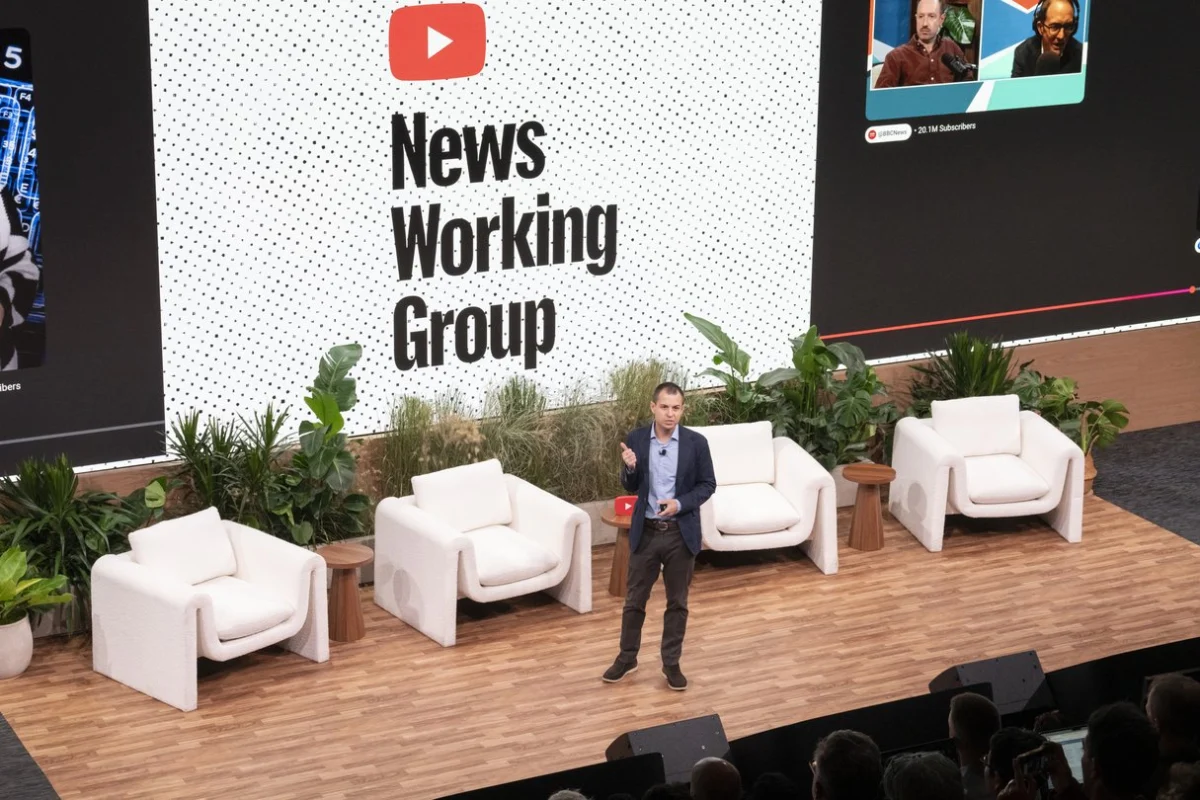
In an era defined by rapid information cycles and the transformative—and sometimes disruptive—influence of generative AI, the relationship between news organizations and digital platforms has never been more critical. In 2025 alone, global audiences consumed over 35 billion hours of news content on YouTube, with more than 12 billion of those hours originating from connected TVs. This staggering engagement figure underscores a fundamental shift in media consumption: the living room is once again the primary site of news discovery, and YouTube is its host.
Recognizing this evolution, YouTube recently convened its 14th News Working Group in New York City. The summit brought together over 100 global news leaders—ranging from legacy broadcast giants to independent digital-native reporters—to chart a course for a sustainable, credible, and innovative future for journalism.
The Evolution of the Digital Town Square
The news landscape is no longer limited to the 6:00 p.m. broadcast or the morning newspaper. Today, the "newsroom" is a fluid, multi-platform entity. The bedrock of this modern ecosystem is the diverse array of journalists working within the YouTube ecosystem.
"Fast-moving news cycles require us to make split-second editorial and packaging decisions daily," explains Cassie Thornton, VP of Video and Strategy Operations at Dow Jones. "The integration of these new insights and feedback tools allows our digital teams to optimize our coverage performance, ensuring our reporting finds its intended audience."
The recent summit served as a pivot point, moving beyond mere distribution to focus on the structural empowerment of news organizations. By providing sophisticated, data-driven tools, YouTube is attempting to solve the "discovery gap" that often leaves high-quality journalism buried beneath viral, non-news content.
1. Empowering the Editorial Workflow: Data as a Creative Partner
For modern editorial teams, the pressure to produce content at the speed of social media while maintaining the rigor of traditional journalism is an unprecedented challenge. To alleviate this, YouTube has introduced a suite of "Ask Studio" and analytics capabilities designed to act as an editorial sounding board.
From Ideation to Distribution
The new suite of tools embedded in YouTube Studio is designed to assist journalists across the entire production lifecycle. By leveraging enhanced insights and research destinations, newsrooms can now identify emerging topics before they reach peak saturation, allowing for more strategic editorial planning.

A/B Testing and Dynamic Packaging
One of the most significant hurdles in digital journalism is "packaging"—the art of creating a thumbnail and headline that captures attention without resorting to clickbait. YouTube’s new dynamic thumbnail tools automatically serve different visual iterations to specific audience segments to determine which resonates most effectively. Furthermore, an upcoming A/B testing tool for video hooks will allow journalists to experiment with different narrative structures, pacing, and visual storytelling techniques.
By analyzing historical performance, "Ask Studio" can even suggest refreshed thumbnails for evergreen content, effectively breathing new life into archive reporting and introducing older investigations to new, younger viewers who may have missed the original release.
2. Revenue Sustainability: Moving Beyond the Ad-Supported Model
For years, the journalism industry has been overly reliant on volatile advertising revenue. As the industry grapples with declining margins, YouTube is doubling down on creator-led monetization models, specifically through Channel Memberships.
The $1.5 Billion Milestone
Over the past five years, Channel Memberships have generated more than $1.5 billion in payouts to creators, proving that audiences are willing to pay for direct access and community-driven content. YouTube is now expanding this model to better serve newsrooms.
New Monetization Features
- Dedicated In-App Hubs: Publishers can now create exclusive, member-only portals for deep-dive reporting, behind-the-scenes footage, and commentary that doesn’t fit the traditional broadcast format.
- Video Previews: To drive conversion, news outlets can now offer "teasers," allowing potential subscribers to view a high-quality snippet of member-exclusive content before committing to a monthly fee.
- Community Interaction: The introduction of member-only communities provides a secure space for journalists to host Q&As, share investigative progress, and foster a loyal subscriber base, effectively turning passive viewers into active stakeholders in the reporting process.
3. The Trust Imperative: Safeguarding Identity in the Age of AI
Perhaps the most existential threat to modern journalism is the rise of deepfakes and AI-generated misinformation. When the visual and vocal likeness of a trusted reporter can be synthesized to spread falsehoods, the very concept of "trust" becomes the primary currency of the industry.
"If someone can fake my likeness to report false news, trust is instantly questioned," says Jon Laurence, VP of Production at Newpress. "YouTube has shown real leadership with these tools—which are critical for protecting our work and defending our identity at the pace the AI era requires."
Expanding Likeness Protection
YouTube’s commitment to safeguarding journalists includes a significant expansion of its Likeness Detection tools. Previously focused on visual imagery, the platform is now integrating speaking-voice detection with facial recognition to improve match accuracy. This dual-layer defense is essential for detecting unauthorized synthetic content.

Furthermore, these protections are being moved to the mobile interface. This allows news creators to manage their identity rights, review potential infringements, and take action in real-time, whether they are in the newsroom or in the field covering breaking news.
Chronology of Development: A Commitment to News
The focus on news by YouTube is not a sudden pivot, but rather the result of a multi-year strategy:
- 2023: YouTube begins expanding its "Likeness Detection" tools to include civic leaders and high-profile journalists, acknowledging the growing threat of election-related misinformation.
- Early 2024: The platform launches initial A/B testing tools for creators, which receive positive feedback from major news publishers, prompting a dedicated news-centric rollout.
- Late 2024: Following extensive discussions at the 13th News Working Group, YouTube prioritizes the development of AI-assisted editorial features.
- September 2026: The 14th News Working Group culminates in the announcement of the integrated "Ask Studio" features and expanded voice-detection safeguards, setting the agenda for 2027.
Implications for the Global Media Landscape
The implications of these developments are twofold. First, they represent a professionalization of the digital video space. By providing news organizations with the same sophisticated data analytics and AI-driven workflow tools typically reserved for entertainment creators, YouTube is helping journalism bridge the gap between legacy authority and digital-first agility.
Second, the focus on "trust as a product" signals a maturation of the platform’s relationship with news. In previous years, the friction between platforms and publishers often centered on distribution algorithms. Today, the focus has shifted to infrastructure—specifically, how to make journalism financially viable and identity-secure.
The Road Ahead
As news organizations look toward 2027, the challenge remains significant. While the tools provided by YouTube offer a pathway to improved discovery and sustainable revenue, the burden of editorial integrity remains with the journalists. However, by providing the technological guardrails for identity protection and the data-driven insights needed to reach audiences in a fragmented media environment, YouTube is positioning itself as an essential partner in the survival of independent and professional journalism.
The future of news will not be found in a single format or a single platform, but in the ability of news organizations to adapt their storytelling to the tools of the digital age. With 35 billion hours of news consumed on the platform annually, the data suggests that the audience is ready—now, the industry must continue to build the infrastructure to meet them.



