










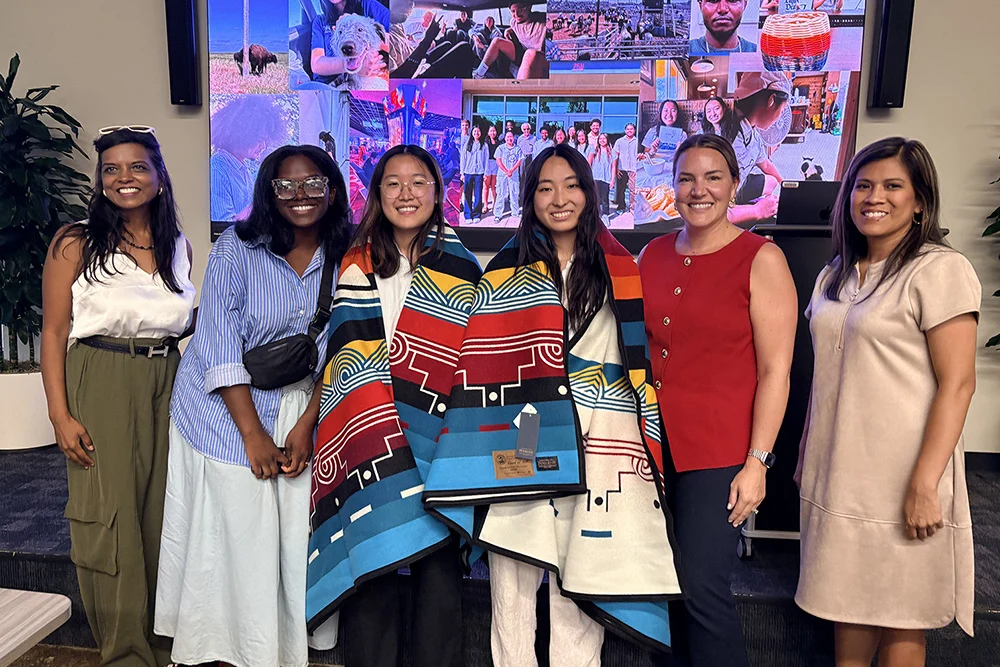
In the high-pressure environment of the Massachusetts Institute of Technology (MIT), students are conditioned to solve the world’s most complex technical problems with code, algorithms, and advanced mathematics. Yet, for Daphne Wang, a mechanical engineering student who spent her summer in Tulsa, Oklahoma, the most vital lesson wasn’t found in a textbook or a compiler. It was found in the tribal history and lived experiences of the Muscogee (Creek) Nation.
Wang’s experience is part of a growing movement at MIT—facilitated by the PKG Center for Social Impact—to reshape the next generation of engineers. By placing students in roles where technology meets deep-rooted cultural and social challenges, programs like "Code.Tulsa" are proving that the most effective engineers are not just those who can build, but those who can listen.
The Genesis of Code.Tulsa: A Student-Led Vision
The seeds for this transformative experience were planted by Jack Carson, an MIT undergraduate from Tulsa and a proud member of the Cherokee Nation. Upon arriving at MIT as a first-year student, Carson recognized a stark disparity: while his peers were accessing world-class STEM resources, many of his peers in rural, tribal communities back home were being left behind.
Carson envisioned a bridge—a way to connect the intellectual capital of MIT with the untapped potential of Native youth. He approached the PKG Center with a proposal for a summer initiative that would serve a dual purpose: provide meaningful internships for MIT students in Tulsa and create an intensive, high-level STEM camp for Native American high schoolers. With support from the Patrick J. McGovern Foundation and the George Kaiser Family Foundation, Code.Tulsa was born. Now in its second year, the program has become a landmark example of how academic institutions can engage with indigenous communities as partners rather than subjects.
Chronology: From Classroom Theory to Community Action
Early Summer: The Internship Experience
The summer program begins with a cohort of MIT undergraduates relocating to the University of Tulsa. These students are embedded within tribal governments—specifically the Muscogee and Cherokee Nations—and local nonprofits like Black Tech Street and the Urban Coders Guild.
For students like Daphne Wang and her colleague Lucy Sun, the work is immediate and high-stakes. Their primary assignment was the development of the Muscogee Nation’s first Pregnancy Risk Assessment Monitoring System (PRAMS). Unlike standard data collection, this project required a delicate balance of technical prowess and cultural competency. The students were tasked with:
- Literature Reviews: Analyzing existing health data to understand the specific needs of Muscogee women.
- Governance Modeling: Navigating the complex requirements of data sovereignty, ensuring that tribal data remained under tribal control.
- Survey Design: Crafting questions that were not only statistically valid but culturally resonant.
Mid-Summer: The Tulsa Advanced Sciences Camp (TASC)
As the interns settled into their roles, the focus shifted to the Tulsa Advanced Sciences Camp (TASC). Developed by Carson and Harvard student Allie Zong, the camp brought together 25 high schoolers from 10 different tribal nations.
The curriculum was designed to be rigorous, covering AI engineering, DNA technology, physics, and chemistry. However, the program’s philosophy went beyond technical training. Workshops were held to encourage philosophical inquiry, teaching students how to think about their future impact on their communities. As Zong noted, the goal was not to impart a static set of facts, but to foster "curiosity and the skills to teach themselves."
Late Summer: Reflection and Integration
The final weeks are marked by a synthesis of experiences. Interns like Chenise Harper, an electrical engineering major, found that the historical context provided by local leaders in Tulsa transformed their understanding of their own fields. By the end of the summer, the "social impact" aspect of their education shifted from a theoretical buzzword to a tangible, moral compass.
Supporting Data: The Ripple Effect of STEM Access
The impact of these programs is measurable in both human and academic terms. The nomination-based system for TASC, which received 160 applications from 25 different Native nations, highlights the intense hunger for STEM access in these regions.
- Student Growth: Participants like Alyssa Theofanidis, a Cherokee citizen who returned as a teaching assistant, have reported that the camp provided the necessary motivation to pursue advanced self-study in fields like calculus.
- Retention and Interest: Several camp attendees expressed a clear intent to apply to MIT, signaling a shift in the perceived accessibility of elite education for Native students.
- Efficiency Gains: According to epidemiologist Breanna McNaughton-Long, the work performed by interns like Wang and Sun accelerated tribal health initiatives that otherwise would have faced significant delays, demonstrating that these internships provide tangible value to the host organizations.
Official Perspectives: Technology as a Moral Choice
The leadership of the Muscogee and Cherokee Nations have embraced the collaboration, viewing it as a strategic investment in the next generation of tribal sovereignty.
Cherokee Nation Principal Chief Chuck Hoskin Jr. emphasized the weight of this technological advancement during his address at TASC. "Technology can be used for good, or it can be used for harm," Hoskin stated. "Your generation has the opportunity to bend that arc toward something good." He specifically lauded the partnership between the Cherokee Nation and MIT, noting that it represents a "special relationship" based on mutual respect and shared goals.
From the academic side, the PKG Center’s leadership frames the program as an essential evolution of the engineering curriculum. Alison Badgett, director of the PKG Center, explains that the center’s aim is to "integrate an engineer’s approach to problem-solving with a humanist lens." This, she argues, is the only way to ensure that technological interventions are truly beneficial to the communities they serve.
Implications: The Future of "Tech for Good"
Redefining the Engineering Identity
For many MIT students, the most significant takeaway from Code.Tulsa is the realization that "social impact" is not a separate discipline—it is a core requirement of every technical decision. Elvis Chipiro, a computer science and engineering junior, articulated this shift: "Social impact is not separate from mainstream technology; rather, it is embedded in the choices engineers make every day."
This mindset shift is critical. When engineers view their work through a lens of empathy and inclusion, they are less likely to create systems that exacerbate inequality and more likely to build tools that empower marginalized populations.
Strengthening Tribal Sovereignty
The work done by interns on projects like the PRAMS survey directly supports tribal data sovereignty—a cornerstone of modern governance for indigenous nations. By helping tribes manage, own, and interpret their own health data, students are contributing to the long-term self-determination of the Muscogee and Cherokee people.
A Model for Higher Education
Code.Tulsa serves as a blueprint for how universities can break out of their "ivory tower" silos. By partnering with local governments and nonprofits, institutions can provide their students with:
- Contextualized Learning: Real-world experience that challenges personal biases.
- Cultural Literacy: An understanding of the historical dimensions of social issues.
- Mentorship Chains: A cycle where students, interns, and high school campers support one another’s growth.
Conclusion
As Daphne Wang noted, the lessons learned in Tulsa should arguably be a "required curriculum for every single person in this country." The Code.Tulsa program proves that when the world’s brightest technical minds are brought into direct conversation with community leaders and the history of the land, the resulting innovation is more than just efficient—it is profoundly human.
In an era where technology is rapidly transforming every aspect of our lives, the ability to write code is no longer enough. The future belongs to those who, like the students of the Code.Tulsa program, understand that the most meaningful innovations are those built with the people, for the people, and with a deep, unwavering respect for the communities they serve. As these students return to MIT, they carry with them more than just technical skills; they carry a renewed sense of purpose, a commitment to equity, and the realization that their work has the power to shape a more just world.



