










The workflow of search engine optimization is undergoing a fundamental structural shift. For years, the daily routine of an SEO professional involved a tedious ritual: logging into multiple software suites, exporting massive CSV spreadsheets, filtering columns of data, and copying and pasting those metrics into AI prompts to generate insights, audits, or content briefs.
Today, that friction is rapidly disappearing. Thanks to the introduction of Model Context Protocol (MCP) servers, AI assistants like Claude, ChatGPT, and Cursor can now pull real-time SEO data directly into the chat interface. Rather than treating AI as an isolated text generator, professionals can connect live data pipelines—ranging from massive keyword and backlink databases to raw web crawler feeds and direct content management systems—straight into their analytical loops.
Main Facts: What Is an SEO MCP Server?
An MCP server acts as a standardized digital bridge. It securely connects an AI client to an external data source or platform using the Model Context Protocol framework. In the context of search optimization, an SEO MCP server allows an AI agent to fetch live keyword metrics, backlink profiles, analytics reports, crawl data, and search console performance metrics on demand.
The ecosystem broadly splits into two categories:
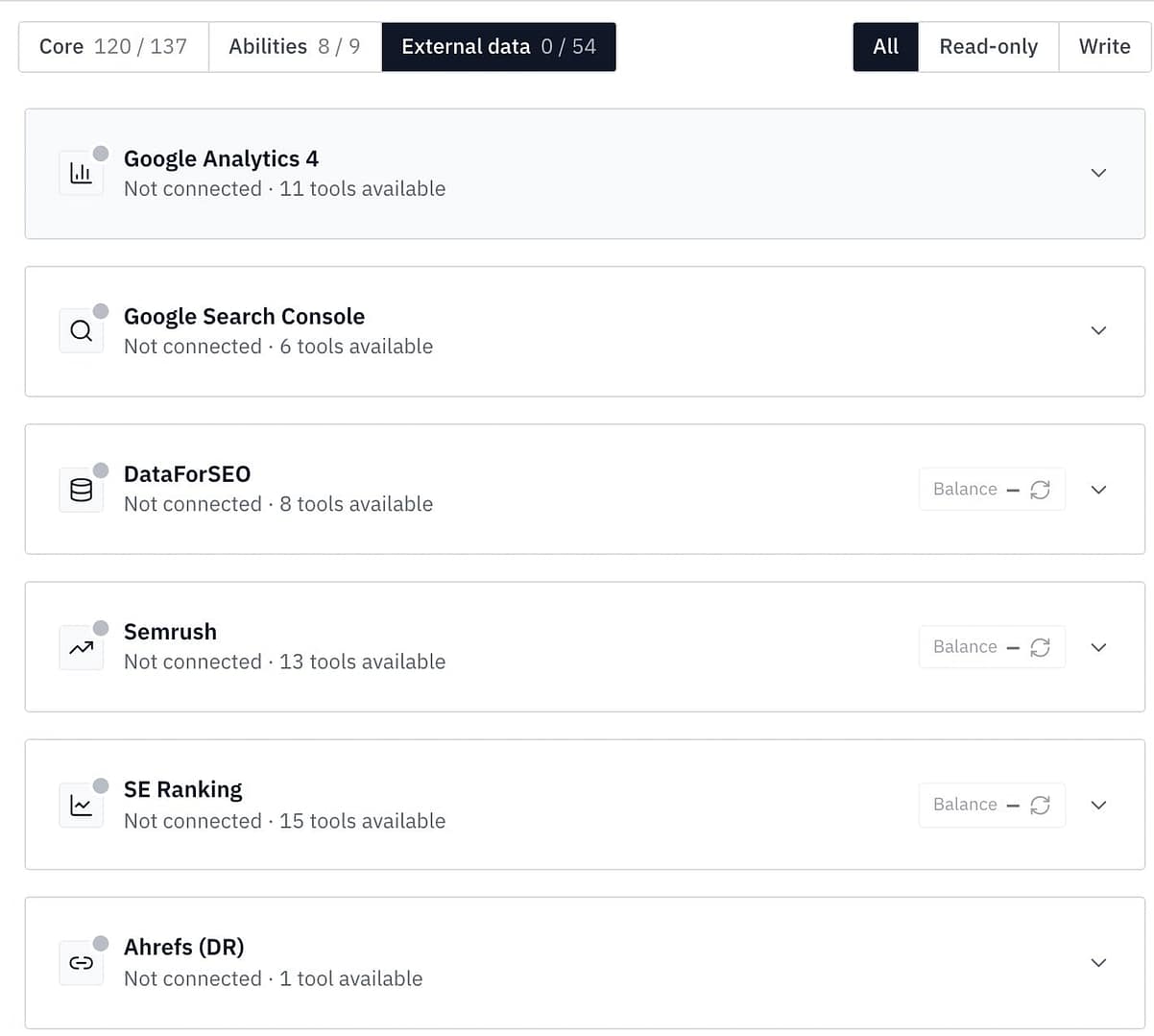
- Read-Only Data Suites: Hosted or local servers provided by major SEO software companies (such as Ahrefs, Semrush, SE Ranking, Serpstat, and DataForSEO) or web analytics platforms (Google Analytics, Google Search Console) that ingest metrics to enrich AI reasoning.
- Actionable Systems: Platforms and plugins (such as Screaming Frog’s desktop app or Themeisle’s WordPress plugin, Easy MCP AI) that not only read data but can also write, modify, or execute tasks directly within a website or local environment.
Chronology: The Rapid Evolution of AI Context Integration
- Late 2024 to Early 2025: The introduction of the Model Context Protocol establishes open standards for connecting local and remote data sources directly to large language models, primarily focusing on developer tooling and database querying.
- Mid-2025: Early adopters begin experimenting with custom API connectors to bridge tools like Google Search Console and Python scripts into AI chat environments, bypassing the need for manual CSV exports.
- Late 2025: Major SEO software vendors recognize the demand for native integrations. Companies begin rolling out official, hosted MCP endpoints to allow seamless authentication via OAuth and API keys.
- Early 2026: The ecosystem matures rapidly. Platforms like SE Ranking, Semrush, and Ahrefs release formal MCP server documentation and support. Concurrently, WordPress-specific integration plugins like Easy MCP AI bridge external SEO software data with local content management systems, enabling bidirectional control where AI can update meta descriptions, titles, and site tags automatically.
- October 2026: Comprehensive comparative audits of the leading nine SEO MCP servers reveal a robust market where users can select tools ranging from pay-as-you-go raw data endpoints to fully managed enterprise SEO suites.
Supporting Data: Comparing the Leading SEO MCP Servers
To understand the current landscape, the following matrix evaluates the primary SEO MCP servers currently available to digital marketers, developers, and site owners:
| Server | Publisher | Core Data Read | Execution Environment | Authentication | Pricing Structure | Modification Capabilities |
|---|---|---|---|---|---|---|
| Ahrefs MCP | Ahrefs | Keywords, backlinks, domains | Hosted | OAuth, MCP-scoped key | Lite plan or higher (uses API units) | Read-only / Not stated |
| Semrush MCP | Semrush | SEO, traffic, market data | Hosted | OAuth or API key header | Selected plans include 50k units/renewal | Read-only |
| SE Ranking MCP | SE Ranking | Keywords, backlinks, audits, AI search visibility | Hosted | OAuth 2.1 or API key | Included in subscriptions / Pay-as-you-go | Read-only (restricted keys) |
| Serpstat MCP | Serpstat | Keywords, competitors, backlinks, audits | Hosted or Local | OAuth / API token | Team plan and up (7-day trial) | Project creation/updates (Local) |
| DataForSEO MCP | DataForSEO | Live SERPs, keywords, backlinks, on-page | Hosted or Local | OAuth 2.0 / API credentials | Pay-as-you-go ($50 minimum) | Read-only / Not stated |
| mcp-gsc | Community (AminForou) | Search Console analytics, sitemaps | Local | Google account / Service account | Free (MIT license) | Sitemaps & properties (toggleable) |
| Google Analytics MCP | GA4 accounts, reports, realtime data | Local | Google credentials (readonly) | Open source (Apache 2.0) | Read-only | |
| Screaming Frog MCP | Screaming Frog | Crawl data, exports, screenshots | Local App | Paid license key | $279 / license / year | Local files & crawl control |
| Easy MCP AI | Themeisle | WordPress site + 6 SEO data providers | WordPress Site | OAuth 2.1 or API key | Free plugin (external tools use own accounts) | Full site SEO fields & metadata |
Official Responses and Vendor Integration Strategies
The adoption of MCP architecture highlights a philosophical shift among software-as-a-service (SaaS) providers. Rather than building proprietary, enclosed AI chat wrappers that lock users into a single platform, major SEO vendors are opening up their API layers through standardized protocols.
- Ahrefs & Semrush: By migrating to hosted Streamable HTTP endpoints (
api.ahrefs.comandmcp.semrush.com), these platforms ensure that users can query their multi-billion keyword and backlink databases securely inside third-party AI interfaces like Claude Desktop or ChatGPT without exposing underlying infrastructure. API unit consumption models remain tied directly to existing subscription tiers, avoiding secondary markup fees for MCP usage. - SE Ranking & Serpstat: These providers emphasize flexibility, offering both hosted OAuth-authenticated endpoints and local deployment options. SE Ranking highlights integration across emerging AI search visibility vectors (such as tracking performance within AI Overviews and ChatGPT search results), acknowledging that modern SEO auditing extends far beyond traditional blue links.
- Google and Open Source Contributors: While official Google support remains split—offering a dedicated, open-source GA4 MCP server while leaving Search Console integration largely to community-driven repositories like mcp-gsc—the focus is on secure, read-only data transparency using Application Default Credentials.
Implications: Workflow Transformation and Safety Guardrails
The deployment of SEO MCP servers fundamentally changes day-to-day search marketing operations, bringing distinct benefits alongside notable risks.
Operational Efficiency
Tasks that previously required opening multiple browser tabs, configuring custom filters, and manually compiling data—such as running a comprehensive content audit, cross-referencing declining organic traffic with backlink losses, or optimizing meta descriptions across dozens of pages—can now be executed through conversational prompts. An AI agent can pull live keyword data from Semrush, check historical impressions via Search Console, and draft optimized SEO titles directly into a WordPress database in a single continuous thread.
Security and Safety Considerations
Because MCP servers grant external AI agents varying degrees of access to private data and production environments, safety protocols are critical:

- The Principle of Least Privilege: Experts strongly recommend initiating every new MCP connection in read-only mode. Monitoring initial agent queries ensures that the AI does not consume excessive API credits or execute unintended commands.
- Execution Guardrails: For actionable plugins like Easy MCP AI, safeguards such as "Force draft on create," comprehensive change history logs with before-and-after snapshots, and explicit approval prompts for destructive actions (like deletions) are essential components for preventing automated mistakes.
- Authentication Scope: Utilizing scoped API keys or OAuth tokens with strict operational limits prevents runaway scripts from compromising enterprise data assets.
Conclusion
SEO MCP servers represent the bridge between raw search data and conversational intelligence. As adoption accelerates, professionals who master these protocols will shift from data gatherers to strategic directors, utilizing AI to execute complex, multi-platform optimizations in a fraction of the traditional time.



