By Tech Editorial Staff
September 23, 2026
In an era where the sheer volume of digital content threatens to overwhelm the listener, YouTube Music is pivoting from a mere library to an intelligent, conversational companion. Following the highly anticipated "Made on YouTube" event, the platform has unveiled a suite of transformative updates designed to bridge the gap between passive listening and active discovery. By integrating advanced generative AI and personalized audio curation, YouTube Music is positioning itself to fundamentally change how we interact with our soundscapes.
The State of Discovery: Data-Driven Growth
The impetus for these updates is rooted in a massive surge of user behavior. According to internal data from July 2026, YouTube Music users discovered an artist entirely new to them over 450 million times in a single month. This staggering figure highlights a clear appetite for novelty, yet it also exposes the "paradox of choice"—the difficulty of navigating a catalog that now exceeds 300 million songs, including obscure remixes, live performances, DJ sets, and covers.
T. Jay Fowler, Senior Director of Product Management at YouTube Music, frames these updates as a direct response to this scale. "Our goal is to make the act of exploration as seamless as the act of listening," Fowler noted. The platform’s latest initiatives—Ask Music and the personalized Podcast Lineup—are engineered to serve as the connective tissue between the listener’s current tastes and their future obsessions.
Chronology of the Update: From Concept to Deployment
The journey toward these features began with a focus on "Conversational Audio," a research initiative aimed at reducing the friction between intent and playback.
- Early 2026: YouTube teams began testing large language model (LLM) integrations within the Music app, focusing on understanding natural language queries rather than rigid keyword searches.
- Summer 2026: Beta testing for "Ask Music" commenced, focusing on a curated subset of users to test the accuracy of metadata interpretation across diverse genres, from underground electronic music to classical archives.
- September 2026 (Made on YouTube): The official unveiling of these tools. The company announced a tiered rollout, prioritizing Premium subscribers for early access to the AI-driven "Podcast Lineup" feature.
- Late 2026 (Forthcoming): Global deployment for all users, with localized language support expected to expand throughout the following fiscal year.
Deep Dive: The Mechanics of "Ask Music"
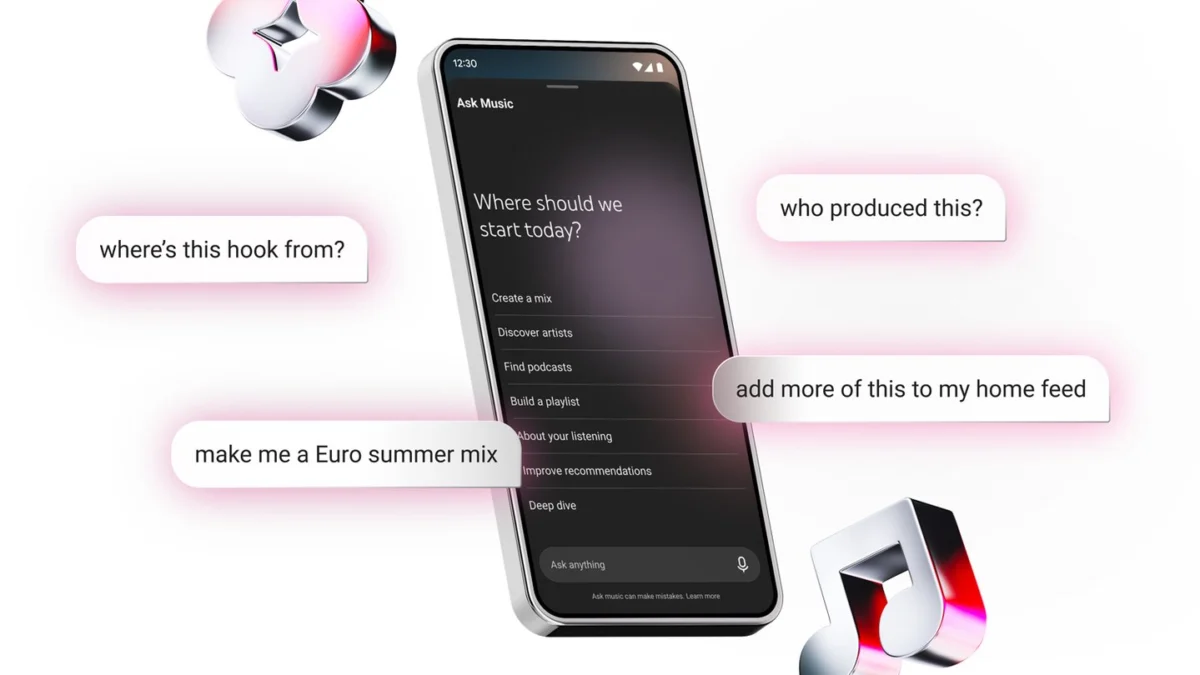
The standout feature announced at the event is Ask Music. Built directly into the architecture of the YouTube Music app, this tool acts as a conversational interface for your audio library. Unlike traditional search bars that yield a list of links, Ask Music facilitates a dialogue.
If a user asks, "Find me a song that captures the mood of a rainy night in Tokyo, but specifically in the lo-fi house genre," the system doesn’t just pull from a pre-set playlist. It interrogates the metadata of 300 million tracks to build a custom queue in real-time. This capability extends to "artist lore," allowing users to ask, "What was the inspiration behind this album?" or "Show me more tracks that feature this specific guest guitarist." By transforming the music library into a searchable, interactive database, YouTube is effectively democratizing the role of a professional music curator.
The Rise of the "Podcast Lineup"
While music discovery is a core pillar, YouTube is also acknowledging the explosion of the podcast ecosystem. The new Podcast Lineup feature is a personalized AI-audio guide designed for the "eyes-optional, hands-free" user.
For many, the friction in podcast discovery lies in the commitment required to start a new show. The Podcast Lineup solves this by providing a weekly, spoken-word preview. Using generative voice synthesis, the system summarizes why a specific show aligns with the user’s history, what the episode covers, and even highlights specific segments of interest. This creates a "digest" format that allows users to vet content before committing to a 60-minute episode, effectively acting as a personal radio host that knows exactly what the listener needs to hear.
Official Responses and Strategic Philosophy
The strategy behind these updates reflects a broader shift in Alphabet’s vision for the YouTube ecosystem. During the "Made on YouTube" presentation, executives emphasized that the "discovery engine" is the most valuable asset the company possesses.

"We aren’t just building a utility; we are building an ecosystem where the barrier between the creator and the listener is constantly lowered," said a spokesperson for the development team. "Whether it’s a bedroom producer uploading a remix or a podcast host in a professional studio, our AI doesn’t discriminate. It simply surfaces quality to the person most likely to appreciate it."
The move also serves as a strategic bulwark against competitors like Spotify and Apple Music, both of which have been aggressively deploying AI for playlist curation. By emphasizing "conversational" control—the ability to tell the app to do something rather than just finding something—YouTube is attempting to define the next generation of user experience (UX) in streaming.
Implications: The Future of Curation
The implications of these changes are profound, both for the industry and the end-user:
1. The Death of the "Generic" Playlist
With the advent of Ask Music, the reliance on static, platform-generated playlists may wane. If a user can craft a hyper-specific queue with a single voice command, the need for "Mood-based" playlists curated by humans becomes secondary to the real-time needs of the individual.
2. Revitalizing the "Long Tail"
For independent artists and niche podcasters, this is a massive boon. AI discovery algorithms are theoretically better at finding listeners for "long tail" content than traditional editorial teams, who are often forced to prioritize mainstream hits to maximize engagement. By making the entire library searchable via natural language, underground artists are no longer buried by the lack of a massive marketing budget.
3. Subscription Value and Retention
For YouTube Premium, these features act as a significant value-add. As streaming markets reach saturation, the battle for subscribers is shifting from "catalog size" to "platform intelligence." Users are increasingly likely to stay with the service that makes their discovery process the most effortless.
4. The Human Element
Despite the heavy reliance on AI, the company maintains that human discovery remains the ultimate goal. The AI is not intended to replace the thrill of finding a new favorite song; it is intended to clear the clutter so that the human connection to the music can happen faster.
Conclusion: A New Era of Listening
As we look toward the final quarter of 2026, the trajectory of YouTube Music is clear: the platform is moving away from a passive consumption model toward an active, conversational partnership. By empowering users to define their own listening journeys—whether through the deep-dive capabilities of Ask Music or the concise previews of the Podcast Lineup—YouTube is attempting to solve the fundamental problem of the digital age: how to find the signal in the noise.
For the average listener, these updates mean less time scrolling and more time experiencing. For the music industry, it signifies the beginning of a new era where discovery is dictated by intent rather than algorithm-imposed trends. As these features roll out globally, the way we "press play" will never be the same.