










In the fast-paced world of digital publishing, the myth of the lone writer crafting a masterpiece in isolation is rapidly fading. Today’s top-tier newsletter operators are running lean, highly optimized media businesses. At the forefront of this shift is Kevin Indig, a veteran growth advisor and the author behind Growth Memo.
Reaching over 29,000 founders, in-house marketing leads, and executives every week, Growth Memo has carved out a reputation for deep, data-driven insights into how search engine optimization (SEO) and artificial intelligence (AI) are fundamentally changing the digital landscape. However, producing elite original research is only half the battle. For Indig—whose decade-long resume includes leadership roles at Shopify, G2, and Atlassian, alongside advisory work for tech giants like Meta, Airbnb, and Reddit—the real challenge lies in distribution.
By combining rigorous data analysis, rapid prototyping via Substack Notes, automated scheduling through Buffer, and advanced AI tooling via OpenAI’s Codex, Indig has engineered a content engine that maximizes reach while minimizing manual overhead.
Main Facts: The Anatomy of Growth Memo’s Growth Engine
To understand how Indig maintains his publishing cadence while advising some of the world’s largest technology companies, it is essential to examine the core components of his workflow:
- The Core Publication: Growth Memo goes out weekly to an audience of over 29,000 professionals, focusing on original research regarding search dynamics and AI integration.
- The Distribution Bottleneck: Recognizing that a deeply researched article often enjoys just one day of peak attention before disappearing into the internet’s abyss, Indig treats every single newsletter as a week’s worth of modular content rather than a one-off post.
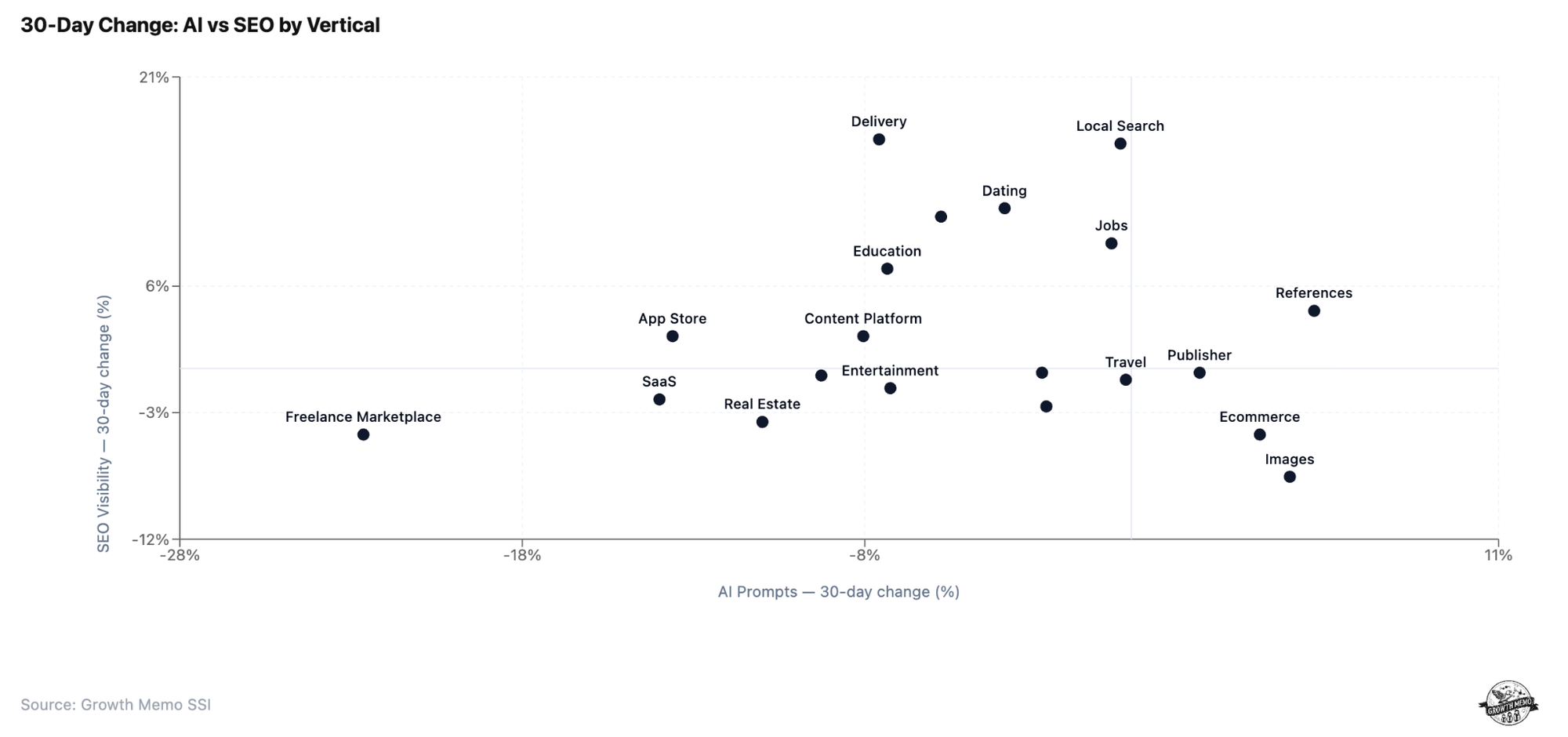
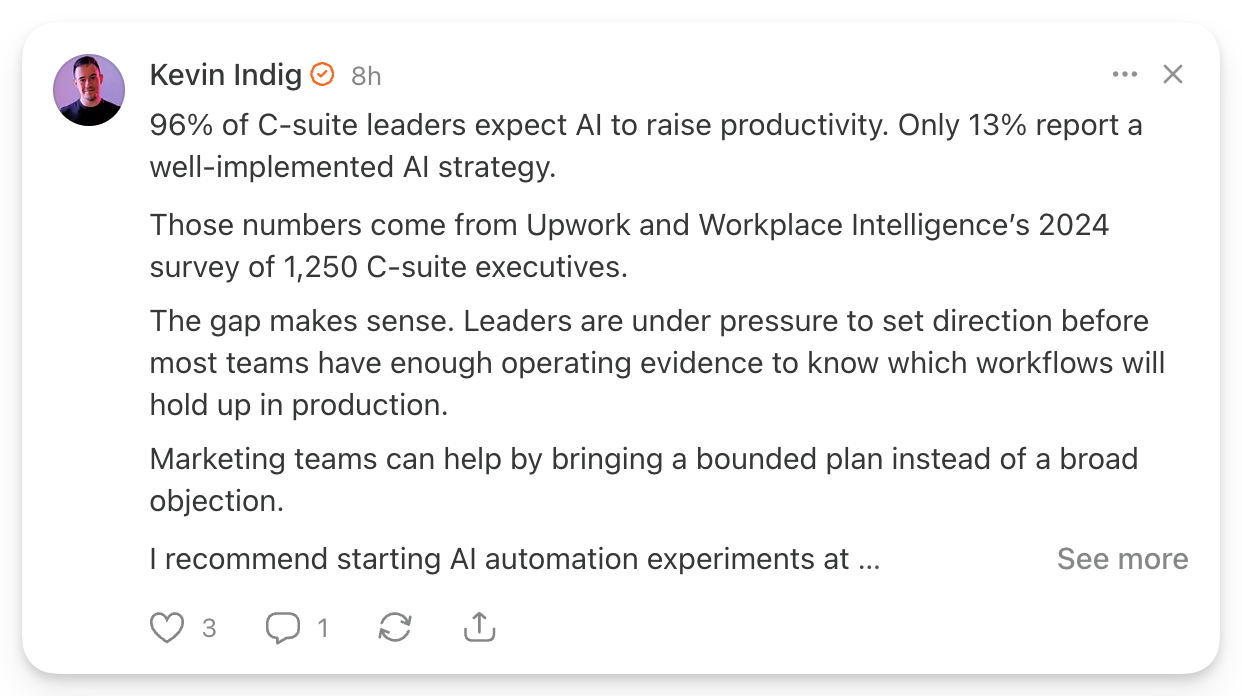
- Prototyping with Substack Notes: Before committing days of work to a comprehensive memo, Indig tests hypotheses, shares charts, and drops short-form teasers on Substack Notes. High-performing Notes frequently serve as the blueprint for full-length newsletters.
- Automation via Buffer: Utilizing Buffer’s scheduling capabilities—including its native support for Substack Notes—Indig and his team batch-prepare and automate content distribution across multiple platforms. This automation saves him an estimated two to three hours every week.
- AI-Powered Optimization: Indig leverages Buffer’s Model Context Protocol (MCP) integration, allowing coding assistants like OpenAI’s Codex to analyze his post history, evaluate performance trends, and suggest future content ideas.
Chronology: From Operator to Data-Driven Creator
Indig’s journey to becoming a leading independent publisher did not happen overnight. It is the result of years spent navigating the intersection of product, marketing, and data.
The Foundation Years (The Operator Phase)
For a decade, Indig operated in the trenches of high-growth Silicon Valley and global tech companies. Serving in pivotal growth and leadership roles at Shopify, G2, and Atlassian, he cultivated an obsession with data, search algorithms, and scalability. During this period, he developed the analytical framework that would later form the backbone of his consulting practice and writing career.
Transition to Advisory and the Launch of Growth Memo
Stepping away from full-time corporate operations, Indig transitioned into an advisory role, consulting for industry heavyweights such as Meta, Airbnb, and Reddit. Immersed daily in complex growth metrics and algorithmic shifts, he launched Growth Memo to document his findings. What began as an industry newsletter quickly scaled into a must-read publication for modern marketing leaders.
The Modern Automated Workflow
As his advisory workload intensified and travel demands increased, Indig faced a classic creator’s dilemma: how to maintain a relentless publishing schedule without sacrificing the quality of his research.
The solution was a systematic overhaul of his content pipeline. He adopted a reverse-engineering approach to ideation—testing micro-concepts on Substack Notes before greenlighting deep-dive reports. Simultaneously, he integrated Buffer into his operational stack to decouple publishing from real-time desk presence. Most recently, the adoption of Buffer’s MCP integration alongside OpenAI’s Codex has closed the loop, creating a self-sustaining ecosystem where past performance actively informs future creation.
Supporting Data: Why Repurposing and Testing Matter
The economics of content creation heavily favor creators who understand distribution leverage. Indig’s strategy is backed by fundamental shifts in consumer attention spans and platform algorithms.
- The 7-Day Content Cycle: Traditional publishers often suffer from the "publish and pray" syndrome—spending days on a single piece that generates traffic for less than 48 hours. By breaking a single Growth Memo into individual charts, key takeaways, and provocative discussion questions, Indig multiplies his surface area for discovery.
- Risk Mitigation Through Prototyping: Crafting a data-dense, fully researched newsletter can consume an entire work week. Conversely, drafting a hypothesis on Substack Notes takes minutes. By testing ideas on platforms with lower user friction, Indig ensures that his time is exclusively invested in topics that have already proven market resonance.
- Time Savings and Efficiency: Despite juggling a demanding travel schedule and end-to-end client days, Indig maintains a consistent digital footprint. He estimates that batch-scheduling content through Buffer saves him 2 to 3 hours every single week, translating to over 100 hours saved annually—time redirected back into core research and client advisement.
Official Perspectives and Insights
Indig’s operational philosophy challenges the conventional wisdom that successful creators must be constantly online, reacting in real time to the news cycle. Instead, he advocates for systems, routines, and deliberate distribution.
Reflecting on the realities of post-publication distribution, Indig notes:
"Publishing is only half the job — you also need a repeatable way to distribute your work. Buffer makes that much easier, and keeps a good post from disappearing after publication day."
On transforming a monolithic newsletter into a dynamic content ecosystem, he explains:
"A single Memo gives us several things to share. We might pull out a chart, a finding, or a question worth discussing."
Regarding his agile approach to content creation—using short-form platforms as a testing ground for long-form investments—Indig highlights the disparity in effort versus return:
"A fully researched memo takes an entire week of his time, while a Note only takes a few minutes. It’s well worth investing in the latter first."
Finally, speaking on the cutting-edge intersection of publishing workflows and artificial intelligence, Indig highlights the transformative nature of AI integrations:
"I love the MCP. Being able to connect Codex to Buffer, understand which posts perform well, and get inspiration for what to post next is unbeatable."
Implications: The Future of Newsletter Publishing
Kevin Indig’s publishing playbook offers a clear glimpse into the future of independent digital media. As the creator economy matures, the dividing line between amateur writers and professional media operations will not be writing talent alone, but the sophistication of their distribution and data infrastructure.
1. The Death of the "One-and-Done" Post
Creators can no longer afford to treat an article or newsletter as a static endpoint. The modern digital environment demands modularity. Content must be designed to be disassembled, remixed, and redistributed across multiple channels—X, LinkedIn, Threads, Bluesky, and Substack Notes—to capture fragmented audience attention across different time zones and platforms.
2. AI as an Operational Co-Pilot
The integration of tools like Buffer’s Model Context Protocol with coding and language models like OpenAI’s Codex signals a move away from guesswork in content strategy. Creators are no longer relying on intuition to plan their editorial calendars; they are using historical performance data parsed by AI to reverse-engineer audience demand.
3. Systems Over Raw Hustle
Ultimately, Indig’s success underscores a vital lesson for both emerging writers and established creators managing tens of thousands of subscribers: routine beats sporadic brilliance. Whether a creator is just publishing their first post or managing an audience of 30,000+, long-term sustainability relies on building predictable pipelines for ideation, testing, creation, and distribution.
For Indig, those pipelines are built on a foundation of deep data, automated queues, and AI assistance—proving that behind every great piece of thought leadership is a rigorously engineered operational machine.



