










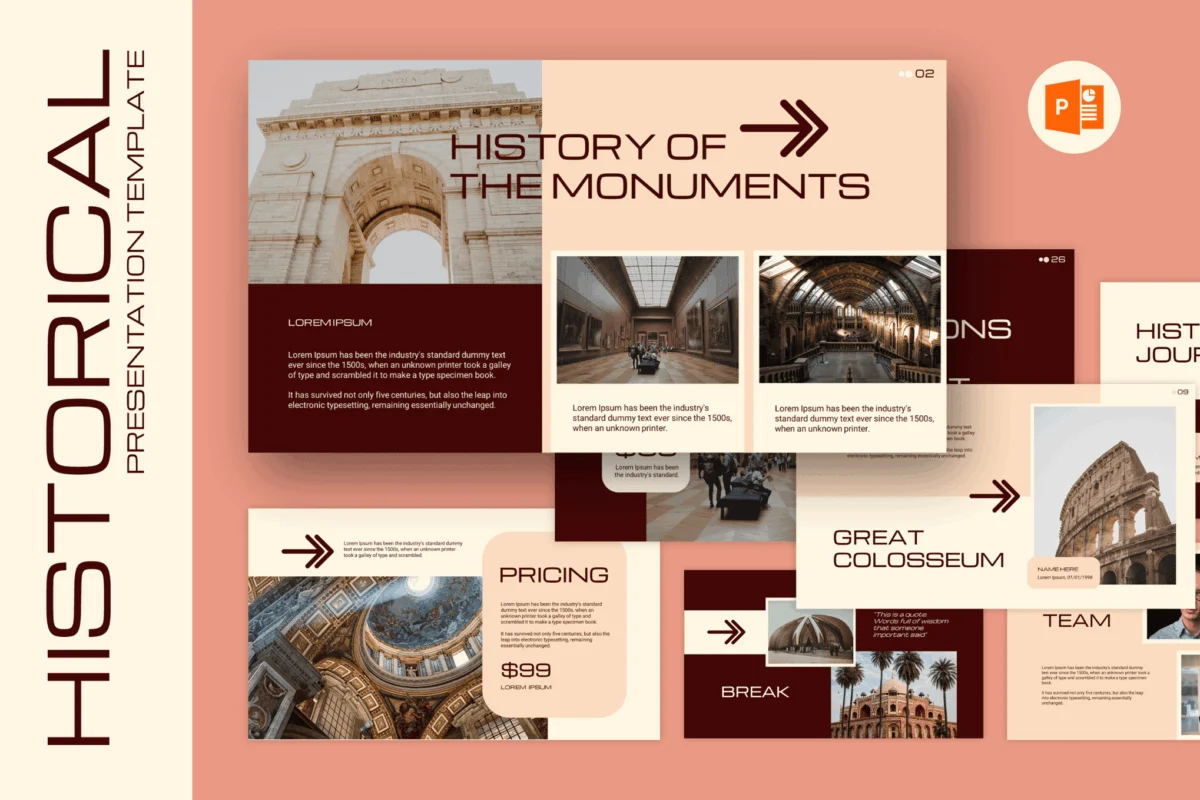
History is more than a mere collection of dates, names, and dusty artifacts; it is a living, breathing narrative that demands to be told with depth and resonance. Whether you are an educator crafting a lesson on the Industrial Revolution, a museum curator designing an exhibit walkthrough, or a student preparing a thesis defense, the way you frame your historical narrative is just as important as the facts themselves. In the modern era of digital storytelling, your slides should reflect that narrative richness, transforming static information into an immersive experience.
In this comprehensive guide, we explore how to leverage high-quality PowerPoint templates to frame history with impact, alongside essential design strategies that will ensure your presentation remains both meaningful and memorable.
The Evolution of Historical Presentation
The landscape of historical communication has shifted significantly in recent years. Gone are the days of text-heavy, monochrome slides that failed to capture the gravitas of the subject matter. Today, professional presenters rely on visual storytelling—using high-quality image frames, classic typography, and structured, intuitive content areas to support complex narratives.
By selecting the right template, you are not just choosing a background; you are choosing a vessel for your research. A well-designed template provides the scaffolding required to guide an audience through centuries of context without losing their attention.
Curating Your Visual Toolkit: Top-Tier Templates
To help you navigate the vast array of available design tools, we have curated a selection of the most effective PowerPoint templates tailored for historical, academic, and museum-based projects.
Premium Solutions for Professional Narratives
For those seeking a polished, high-end finish, several premium templates stand out for their versatility and aesthetic precision:
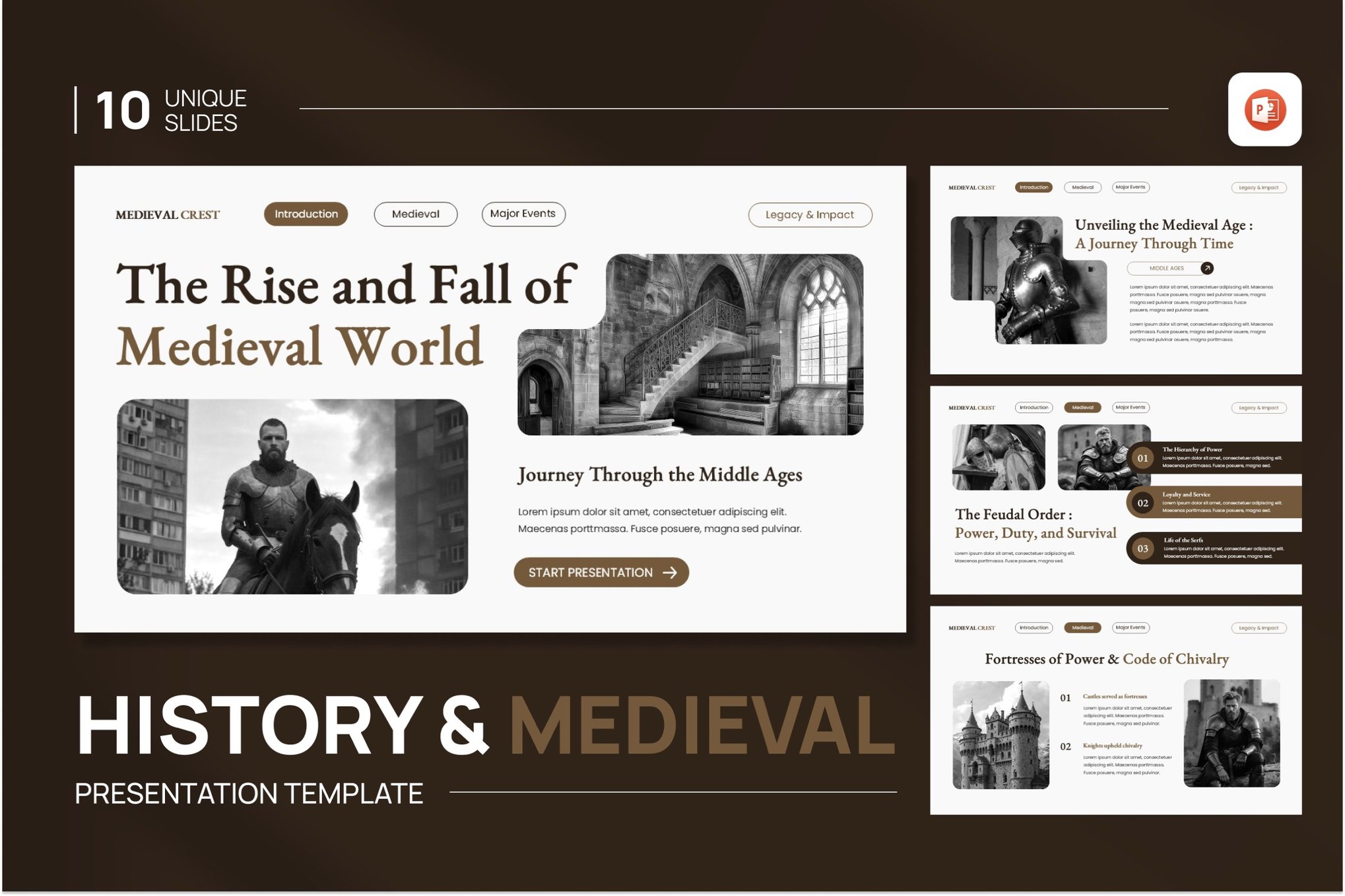
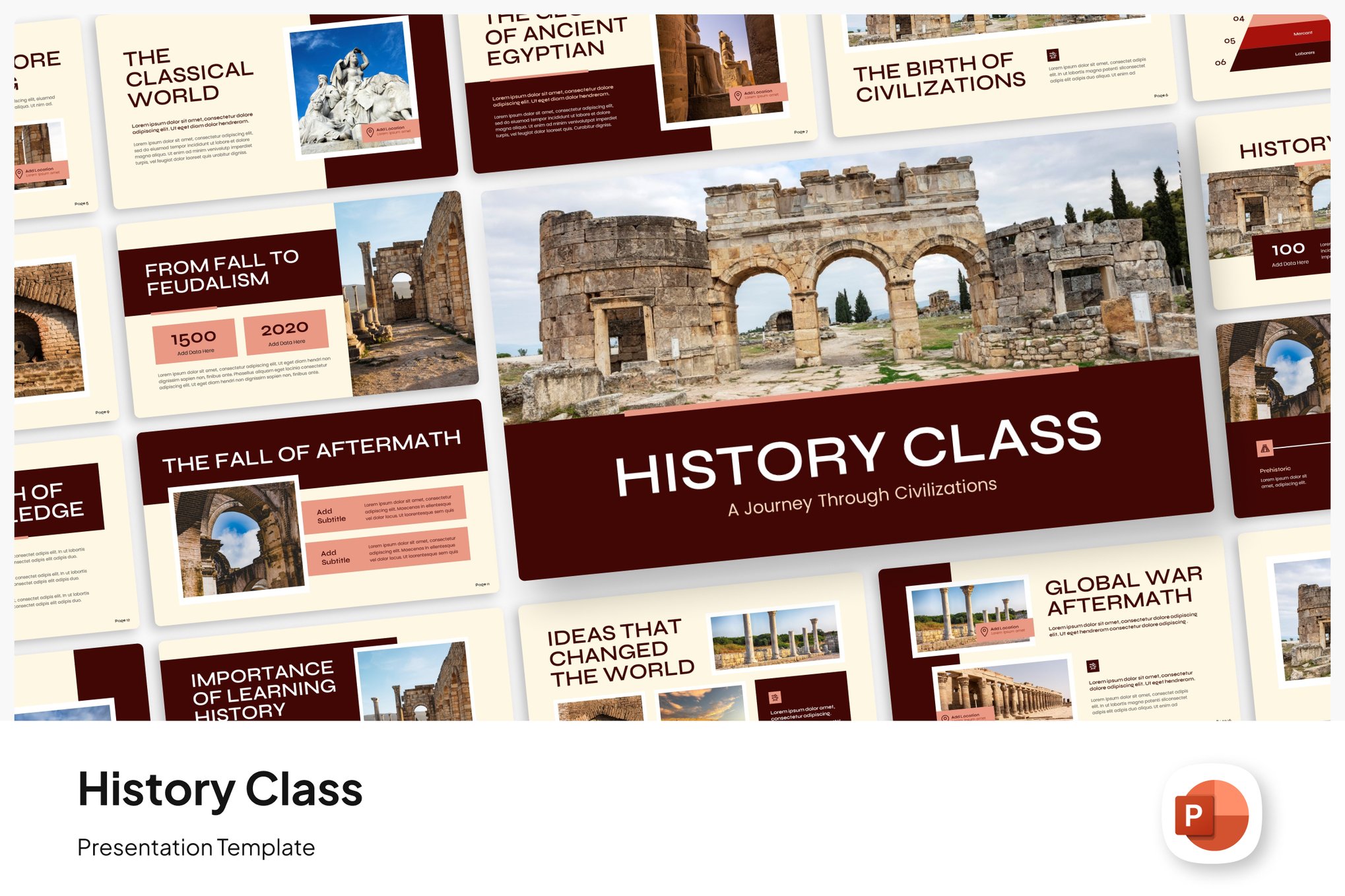
- History & Medieval PowerPoint Template: A masterpiece of versatility, this template offers ten unique slides in a 16:9 widescreen format. It is particularly effective for educational lessons where clarity and modern, professional typography are paramount.
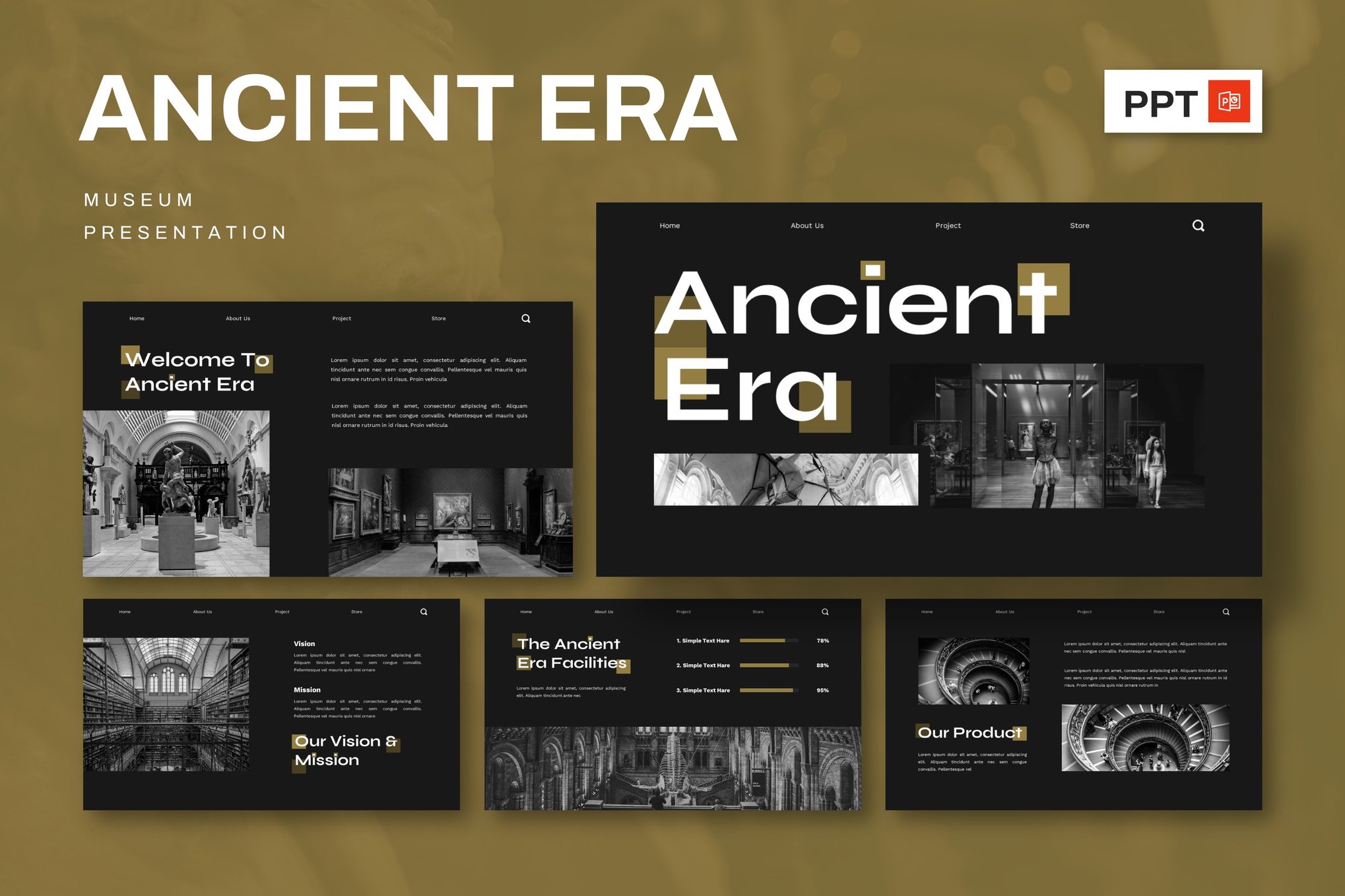
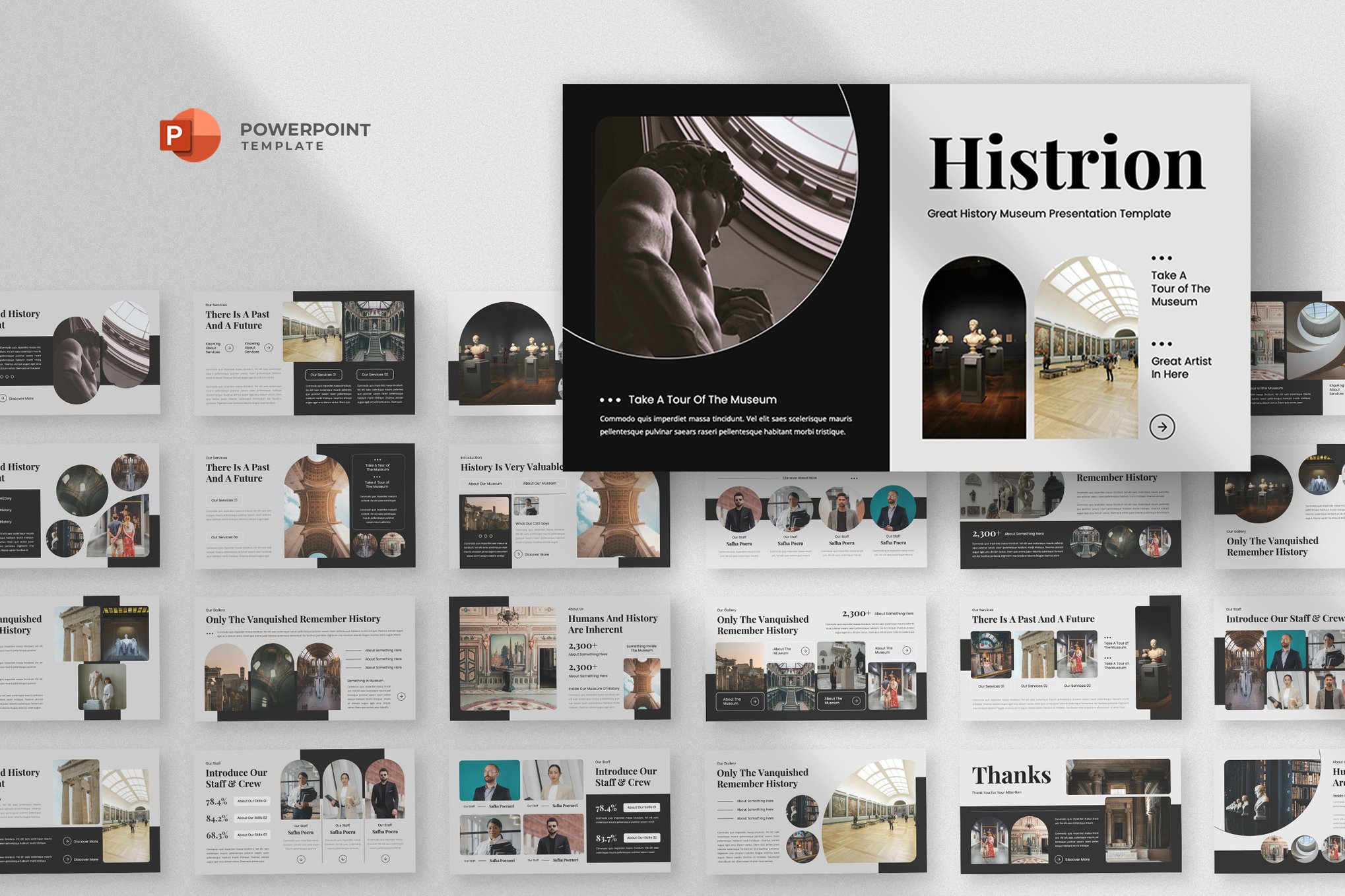
- Ancient Era – Museum Series: Perfect for archaeology and art history, these templates prioritize a minimalist and elegant aesthetic. Their compatibility with Keynote and Google Slides makes them a staple for institutions looking to bridge the gap between classic history and modern interface design.
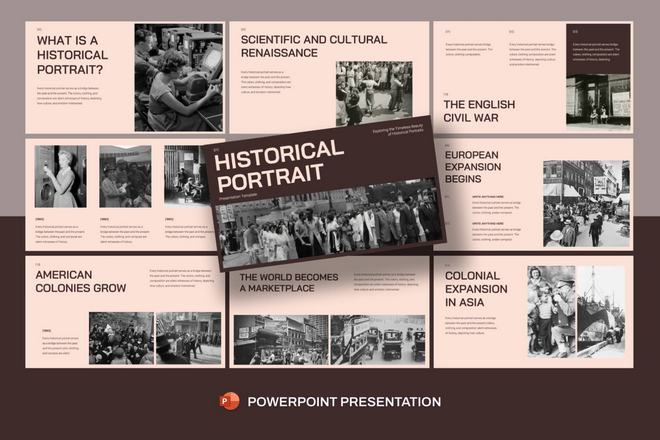
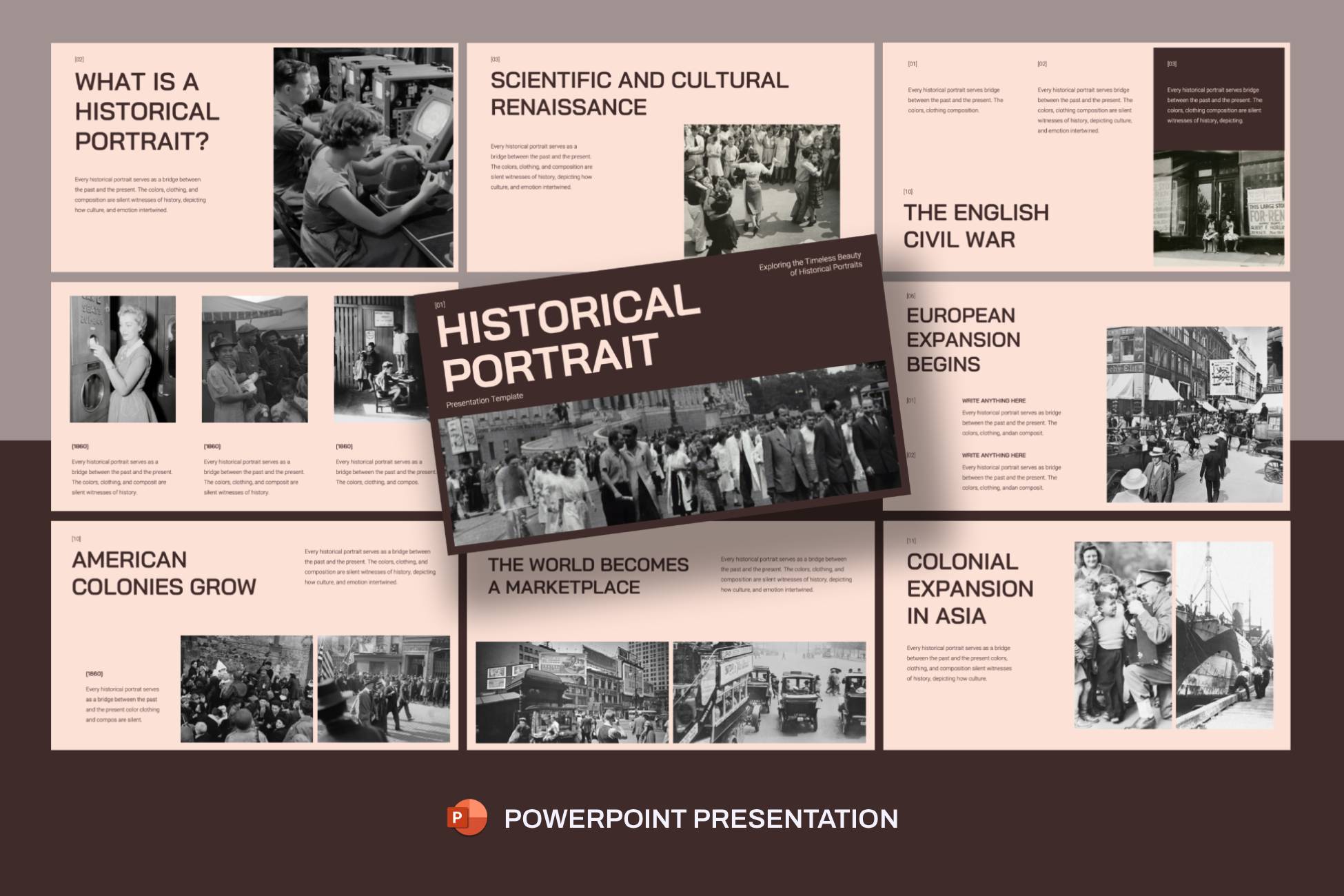
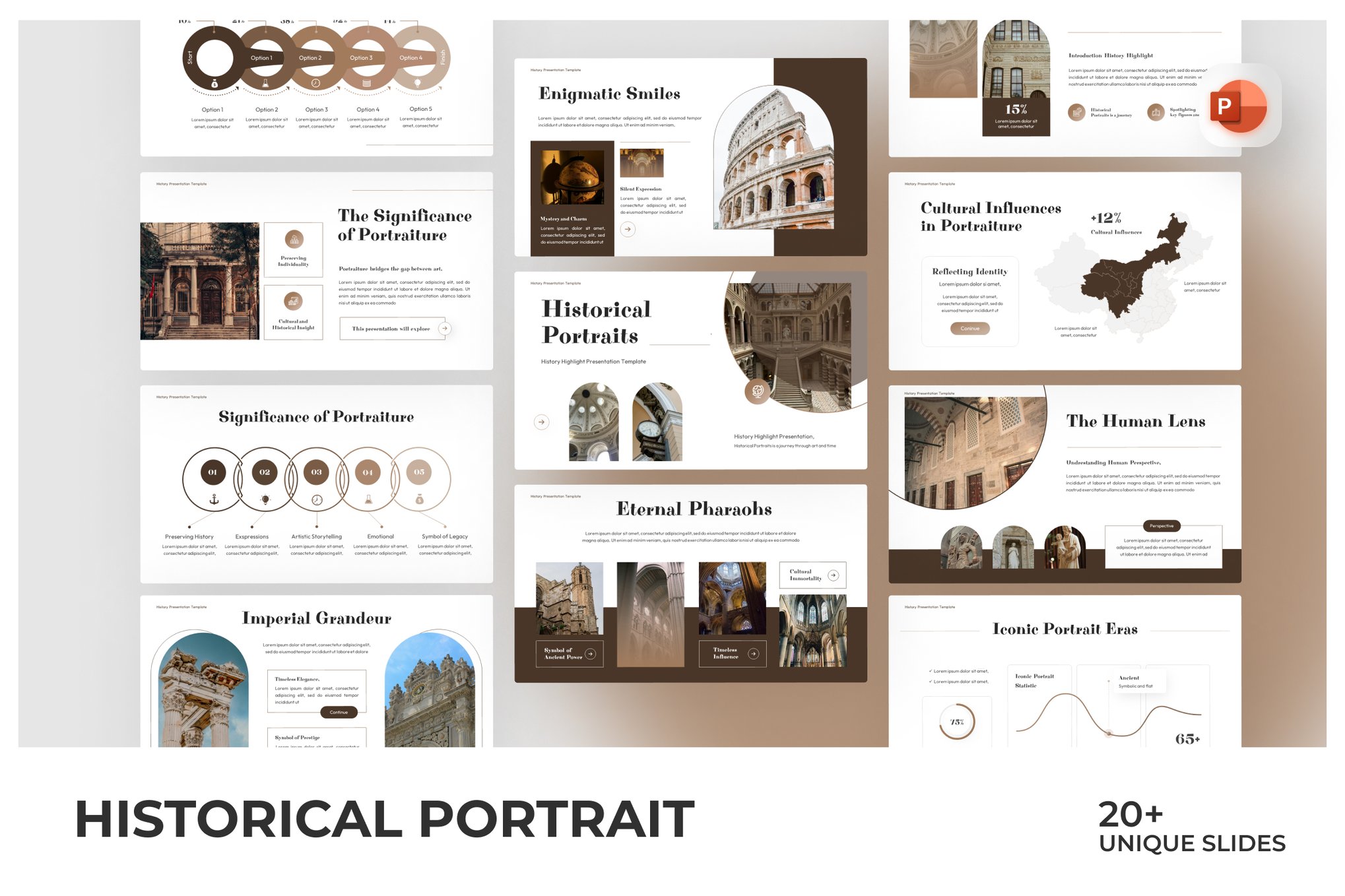
- Historical Portrait (Bold): When your presentation focuses on specific figures or personal biographies, this template provides the perfect framework. With Master Slides and built-in picture placeholders, it allows for high-impact visual storytelling that keeps the focus on the subject.
- Arthesia (Museum Profile): If your goal is to showcase exhibits or catalog artifacts, Arthesia offers structured grids and sophisticated layouts that elevate your visual content to a professional, gallery-worthy standard.
Accessible Resources: Free Templates for Educators
Budget constraints should never hinder the quality of historical education. Several high-quality, free resources provide the same level of narrative support as their paid counterparts:
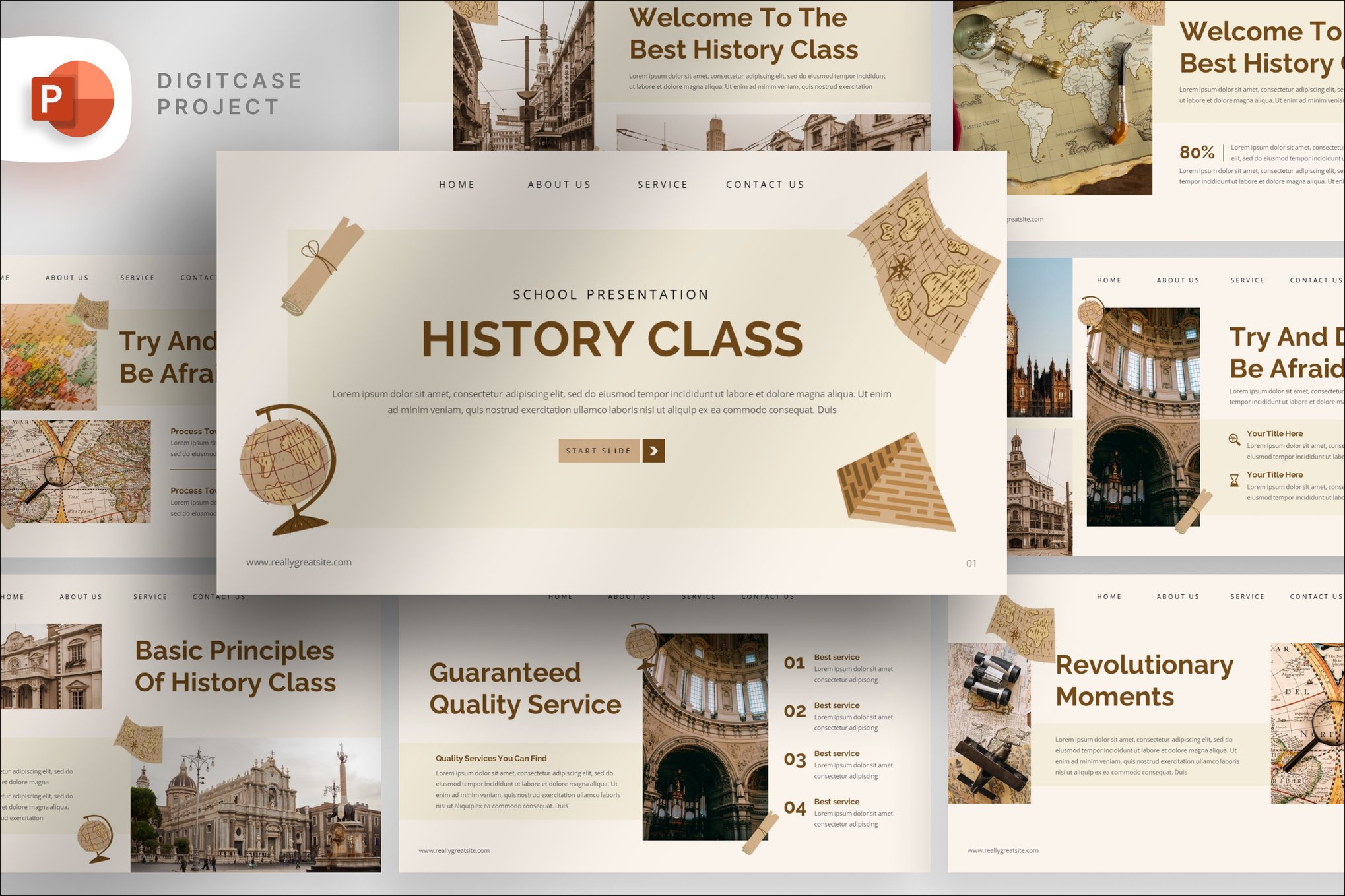
- Papyrus History Lesson: This template utilizes a textured, "old-world" aesthetic to immerse students in ancient history. It is ideal for classroom settings where a sense of place and time is crucial for student engagement.
- Reconstruction Era & The Gilded Age: Designed specifically for 11th-grade curriculum, this template provides a structured environment for analyzing complex social and political shifts, making it perfect for thesis defenses or intensive historical reports.
- World War II History Analysis: A masterclass in focused, academic design. This template includes pre-built slides for maps, troop movements, and timelines—essential for any deep-dive into mid-20th-century conflicts.
Chronology and Structure: The Backbone of Your Presentation
A common pitfall in historical presentations is the "data dump." When dealing with vast timelines, it is easy to overwhelm the audience. To maintain control over your narrative, follow these structural guidelines:
Establishing the Timeline
History is a sequence of cause and effect. Using dedicated timeline slides—available in templates like the "History Milestones" or "Unfolding History"—allows your audience to see the progression of events at a glance. Avoid putting too much information on one slide. Instead, break the timeline into thematic chapters: Pre-Conflict, The Turning Point, and The Aftermath.
The "Rule of Three" in Historical Analysis
When discussing a historical event, try to categorize your evidence into three distinct pillars:
- Political/Institutional: The laws, leaders, and power structures involved.
- Social/Cultural: How the common person lived, worked, and interacted.
- Economic/Technological: The material conditions that drove the change.
By rotating these three lenses, you provide a three-dimensional view of history that is far more engaging than a linear list of dates.
Supporting Data: Visualizing the Past
Data visualization is the bridge between raw information and audience comprehension. When presenting statistics, population shifts, or geographic changes, avoid default spreadsheet charts.
Instead, utilize the hand-made infographics often included in professional templates. Whether it is an icon representing an ancient architectural style or a graph showing the rise of industrial output, these visual aids should be clean and consistent. If a chart is too complex for a slide, simplify it to its most vital trendline and provide the full data set in a handout.
Expert Perspectives: The Role of Design in History
Historical experts and educators agree that the medium is part of the message. We spoke with design specialists who emphasize that "the visual language of a presentation should respect the era being studied."
When presenting on the Roman Empire, for example, a font choice like a serif "Trajan" style can evoke the inscriptions on monuments, immediately priming the audience for the subject matter. Conversely, using a modern, rounded sans-serif font for a lecture on the Cold War can feel jarring and disconnected. The goal of the designer is to remain invisible while ensuring the atmosphere of the presentation is grounded in the historical context.
Implications: Designing for Long-Term Impact
A successful history presentation does not end when the slideshow finishes. Its true success is measured by how much the audience retains. By utilizing structured layouts—like those found in the "Minimalist Heritage" template—you are helping the brain organize information.

Implications of Poor Design:
- Cognitive Overload: When slides are cluttered, the audience stops listening to the speaker to try and decode the text on the screen.
- Loss of Credibility: A presentation that looks "cheap" or poorly formatted can make an audience subconsciously doubt the accuracy of the historical research being presented.
The Power of Immersive Design:
When you invest time in high-quality templates, you are signaling to your audience that the subject matter is important. This creates an "authority bias" where the audience is more likely to trust the narrative because it is presented with care and professional precision.
6 Pro-Tips for Designing History-Themed Slideshows
To ensure your presentation stands out, adhere to these six design pillars:
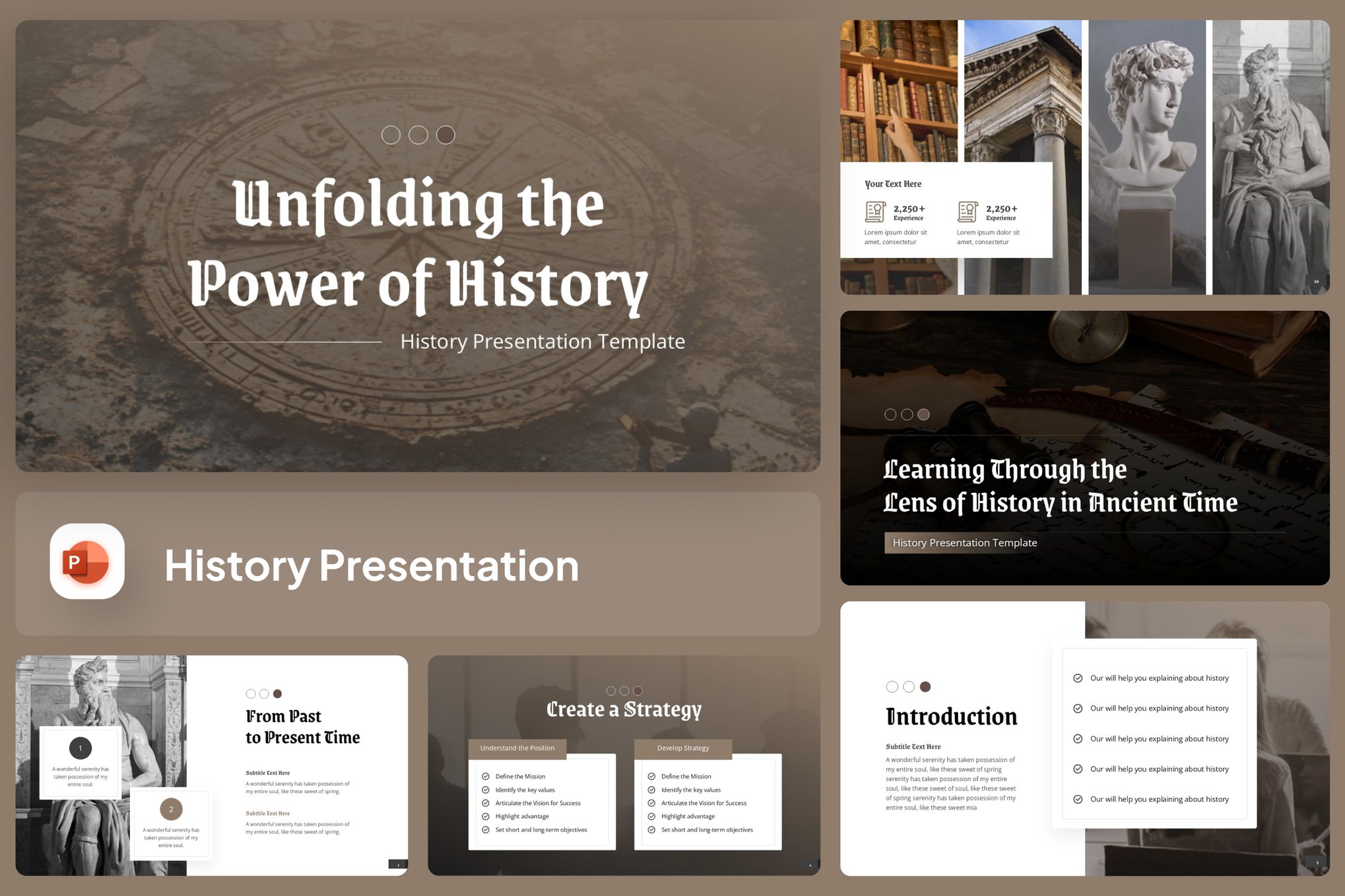
1. Match the Era
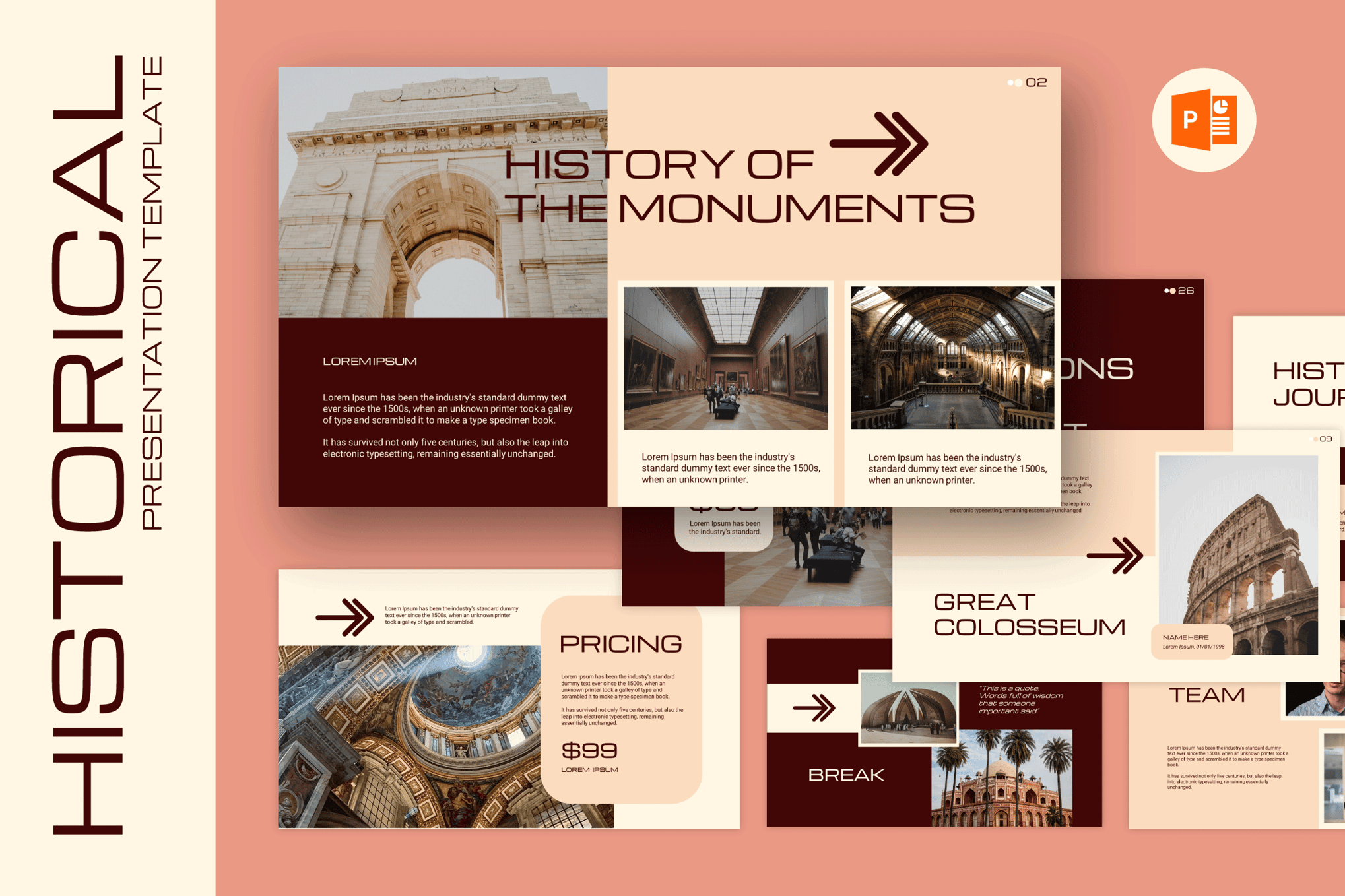
Choose fonts, colors, and textures that reflect your subject. Medieval history benefits from parchment-like backgrounds and deep, muted tones. Industrial-era history works well with starker, high-contrast, black-and-white photography.
2. Prioritize Authentic Artifacts
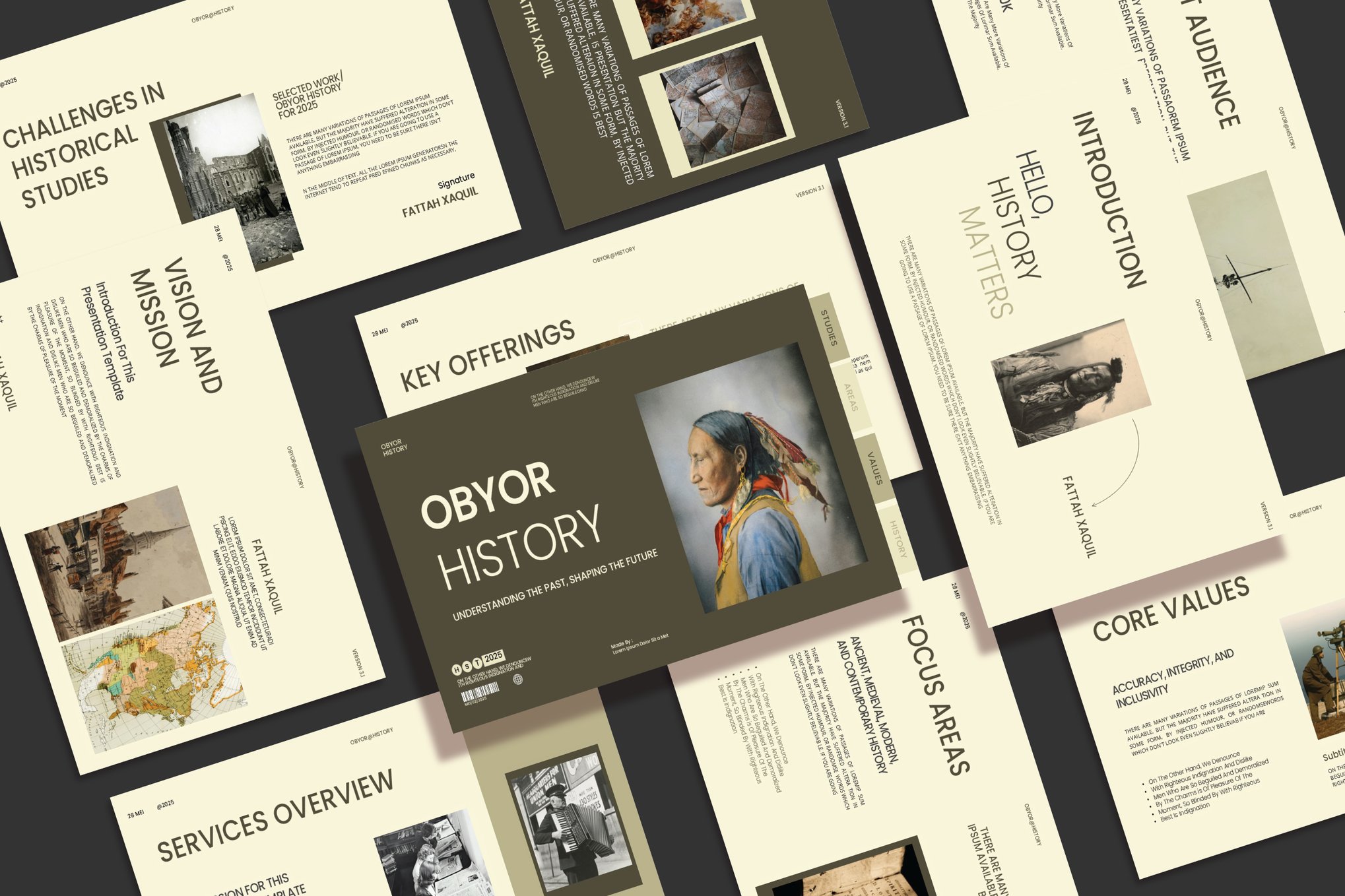
Wherever possible, use primary source material. Scans of letters, original maps, and authentic photographs hold more weight than generic stock images. These items build credibility and ground your narrative in reality.
3. The "Headline-First" Approach
Never use your slides as a script. Your audience should be able to read the headline of your slide in three seconds or less. If you need to explain more, do it verbally.
4. Consistent Timeline Mapping
Ensure your timelines look the same throughout the presentation. If you use a horizontal bar in one slide, do not switch to a vertical list in the next. Consistency helps the audience map the passage of time accurately.
5. Typographic Hierarchy
Use large, bold headers for the era or theme, and clear, readable body text for the details. Never sacrifice readability for style. Even the most beautiful "vintage" font is useless if the audience cannot read it from the back of the room.
6. The Balance of Mood vs. Message
Aged textures and dark backgrounds are atmospheric, but they can significantly impact contrast. Always test your slides on a projector. If your text is "lost" in a textured background, add a semi-transparent overlay to ensure the text remains the star of the show.
Conclusion
History is the ultimate story, and it deserves to be told with the best tools available. By choosing a template that aligns with your subject, organizing your data into digestible chronological segments, and applying professional design principles, you can turn a standard presentation into a powerful narrative journey. Whether you are in the classroom, the boardroom, or the museum hall, your goal is to make history not just seen, but felt. Choose your template wisely, curate your visuals with care, and bring the past to life.



