










By Tech & Enterprise Architecture Desk
Main Facts
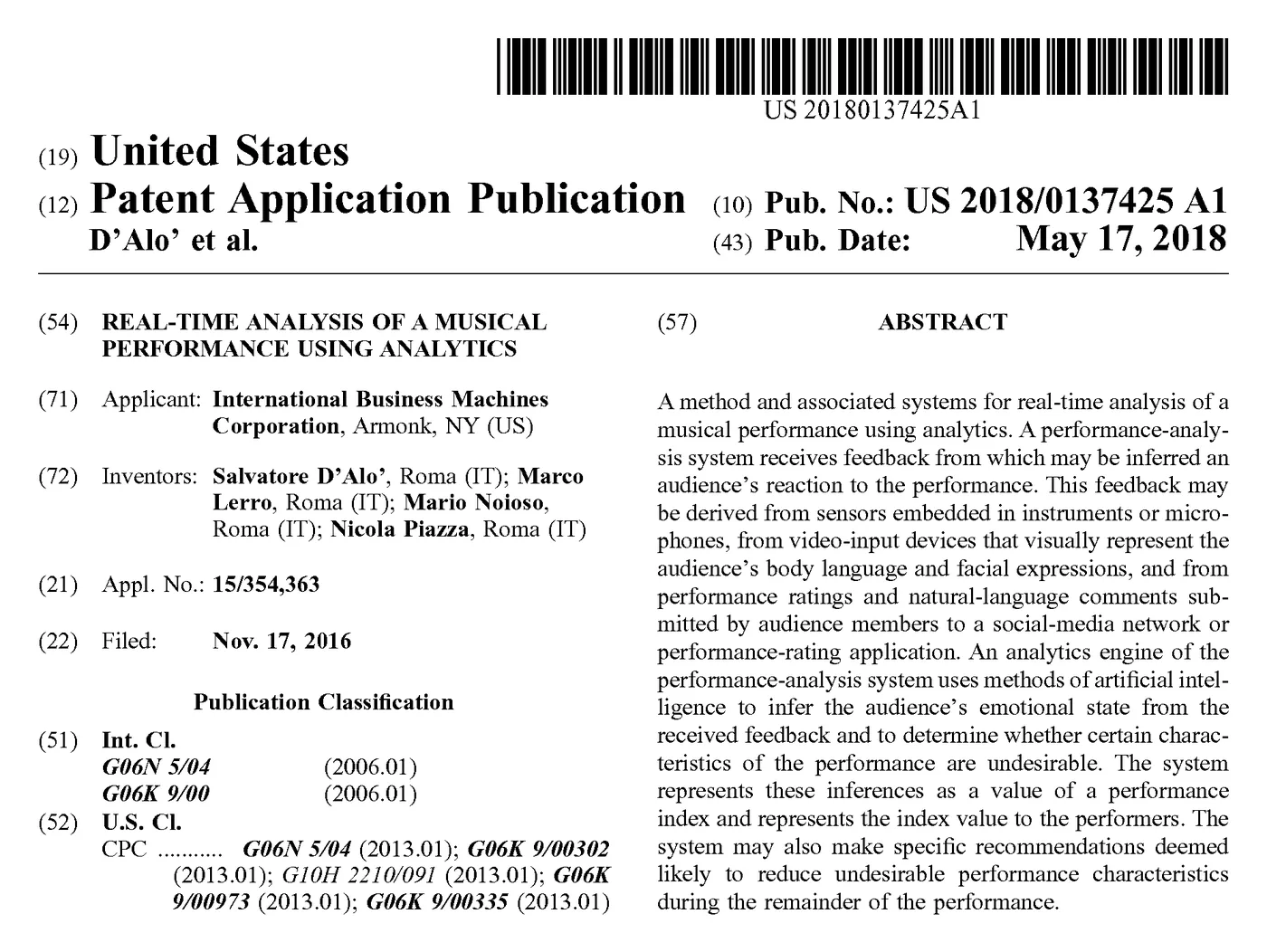
In November 2016, a team of four researchers at IBM—including S. D’Alo, M. Lerro, M. Noioso, and N. Piazza—filed a patent application with a title that sounds charmingly quaint by contemporary standards: "Real-Time Analysis of a Musical Performance Using Analytics" (subsequently published as US Patent Application US 2018/0137425 A1).
The scenario outlined in the document was a high-octane rock concert. In this theoretical ecosystem, a guitarist plays an instrument fitted with embedded sensors. Simultaneously, venue cameras scan the audience’s facial expressions and body language, concertgoers fire real-time "likes" and "dislikes" from mobile applications, and a centralized system fuses these multi-sourced inputs. In real time, the architecture delivers a singular verdict: Is the performance succeeding? If the data suggests a negative trajectory, the system prompts the performer with actionable adjustments before it is too late to save the show.
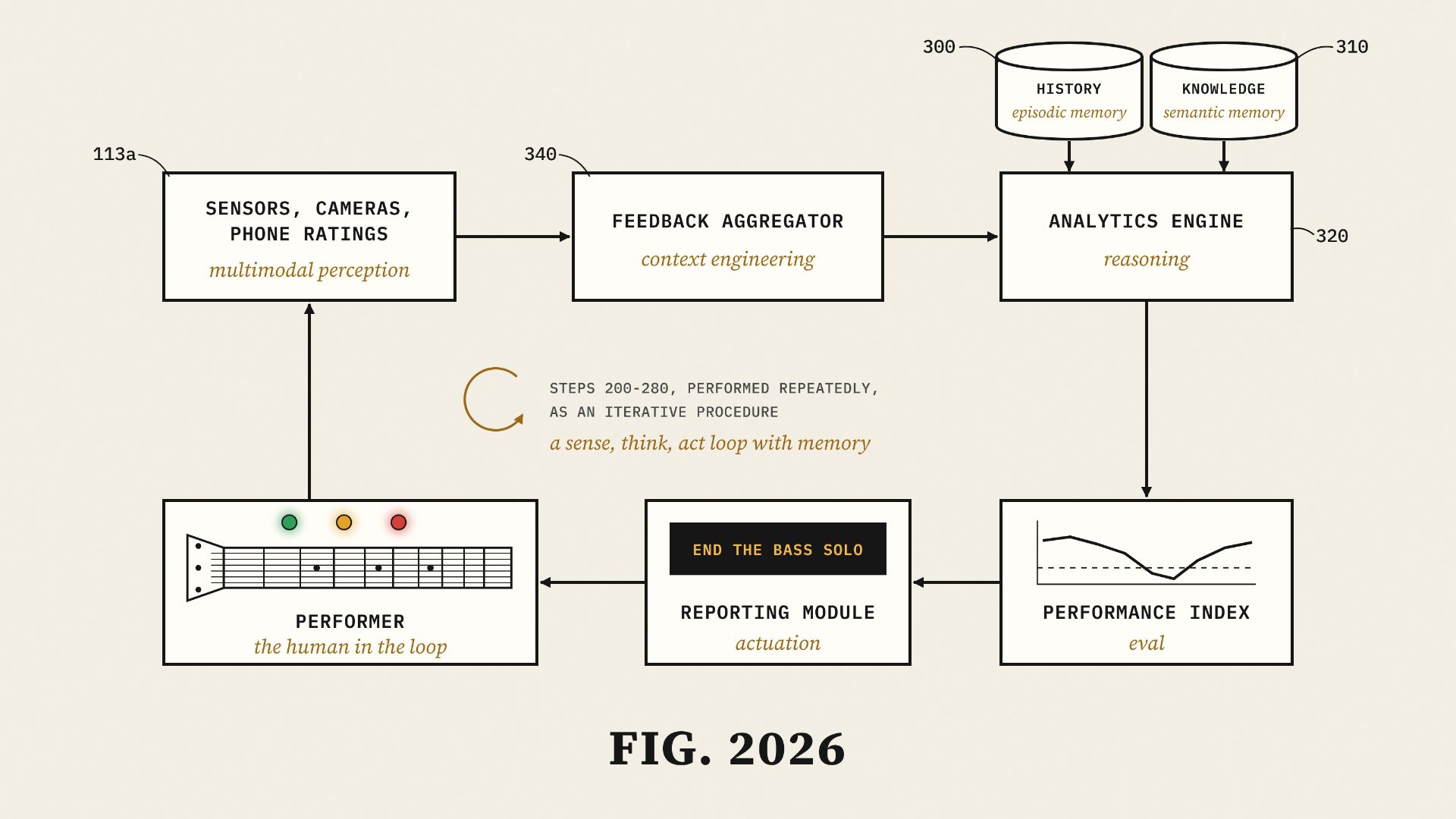
As envisioned by the inventors, physical indicators—such as an LED embedded directly into the neck of the guitar—translate this computational feedback into tangible warnings. The light glows green during correct execution, pulses yellow when the tempo begins to drift, and flips to a stark red upon a missed note.
At the time, the infrastructure powering this pipeline was designated an "artificially intelligent analytics engine," reflecting the lexical limitations of 2016 machine learning vocabulary. Today, a decade removed from that filing, modern data architects building production-grade agentic AI systems can review the patent with the benefit of hindsight. Component by component, step by step, the 2016 specification maps out the exact anatomy of a modern AI agent:
- Multimodal perception layers
- Context aggregation pipelines
- Inference engines grounded in episodic and semantic memory
- Structured evaluation (eval) functions
- Human-in-the-loop actuation frameworks
- Hard real-time operational constraints
While the original team lacked the modern taxonomy of "agents," they successfully captured the complete closed-loop architecture. This retrospective analyzes what a 2016 enterprise decision-support specification got structurally right about modern autonomous agents—and, equally instructionally, what it fundamentally missed or could not foresee.
Chronology: The Evolution from Decision Support to Agentic AI
To understand how the 2016 patent aligns with contemporary engineering, it is necessary to trace the technological timeline leading up to the current era of production AI.
2016: The Rule-Based and Statistical Horizon
- November 2016: IBM engineers file US 2018/0137425 A1. The architecture relies heavily on deterministic rules, classical ontologies, and rudimentary classifiers. Fusing audience biometrics, social media telemetry, and MIDI data streams into a coherent judgment like "the audience is losing interest because the tempo dropped" was largely aspirational.
- May 2018: The European Union’s General Data Protection Regulation (GDPR) officially becomes applicable, arriving just 18 months after the IBM patent filing. The regulation introduces stringent rules regarding biometric processing, consent, and user privacy—legal dimensions entirely absent from the 2016 patent’s focus on continuous audience surveillance.
2018–2023: The Foundation Model Revolution
- The Transformer Era: The launch of large-scale foundation models inverts the historical bottleneck of AI development. For decades, the intelligence layer (the reasoner) was weak, forcing engineers to rely on complex, rigid architectures. Foundation models provide a hyper-competent reasoning engine, temporarily blinding the industry to the surrounding infrastructure. Developers begin slapping powerful models onto raw workflows, only to watch them fail due to absent data plumbing, poor memory management, and unmanaged context windows.
2026: The Maturity of Agentic Systems
- The Present Day: Enterprise AI shifts focus from stateless prompting to stateful, multi-step agentic workflows. Engineers rediscover foundational systems engineering principles. Modern architectures converge on memory-grounded inference, strict latency budgets, and auditable evaluation loops. Re-reading the 2016 IBM patent today reveals that while the reasoning engine has evolved from brittle rules to advanced neural models, the structural loop of the system remains identical.
Supporting Data: Component-by-Component Mapping
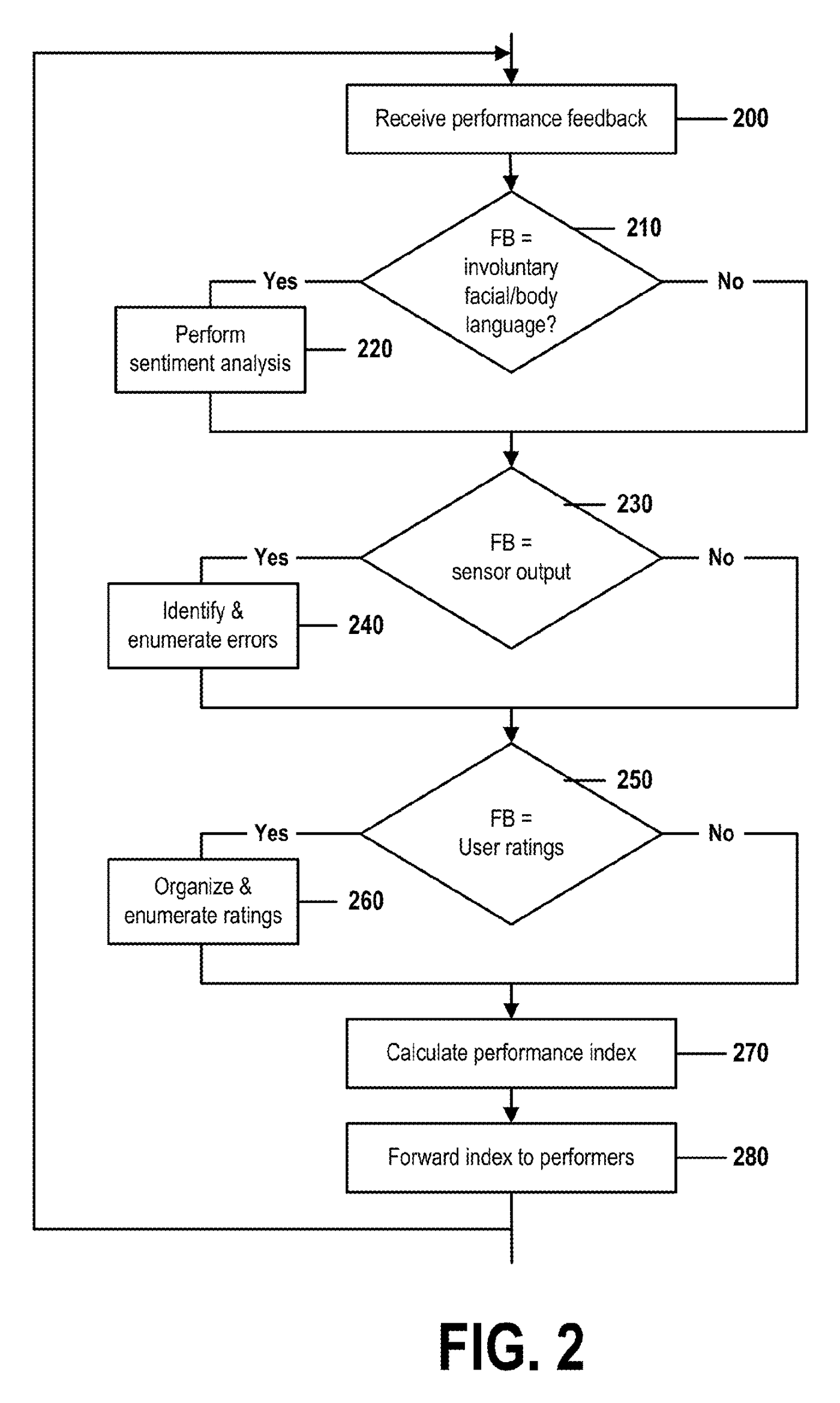
Strip away the formal prose of US 2018/0137425 A1, and the system reveals a rigorous seven-part architecture. The following breakdown compares the 2016 patent specifications with their 2026 enterprise equivalents:
| Patent Component (2016) | Description in Patent Spec | Modern Equivalent (2026) |
|---|---|---|
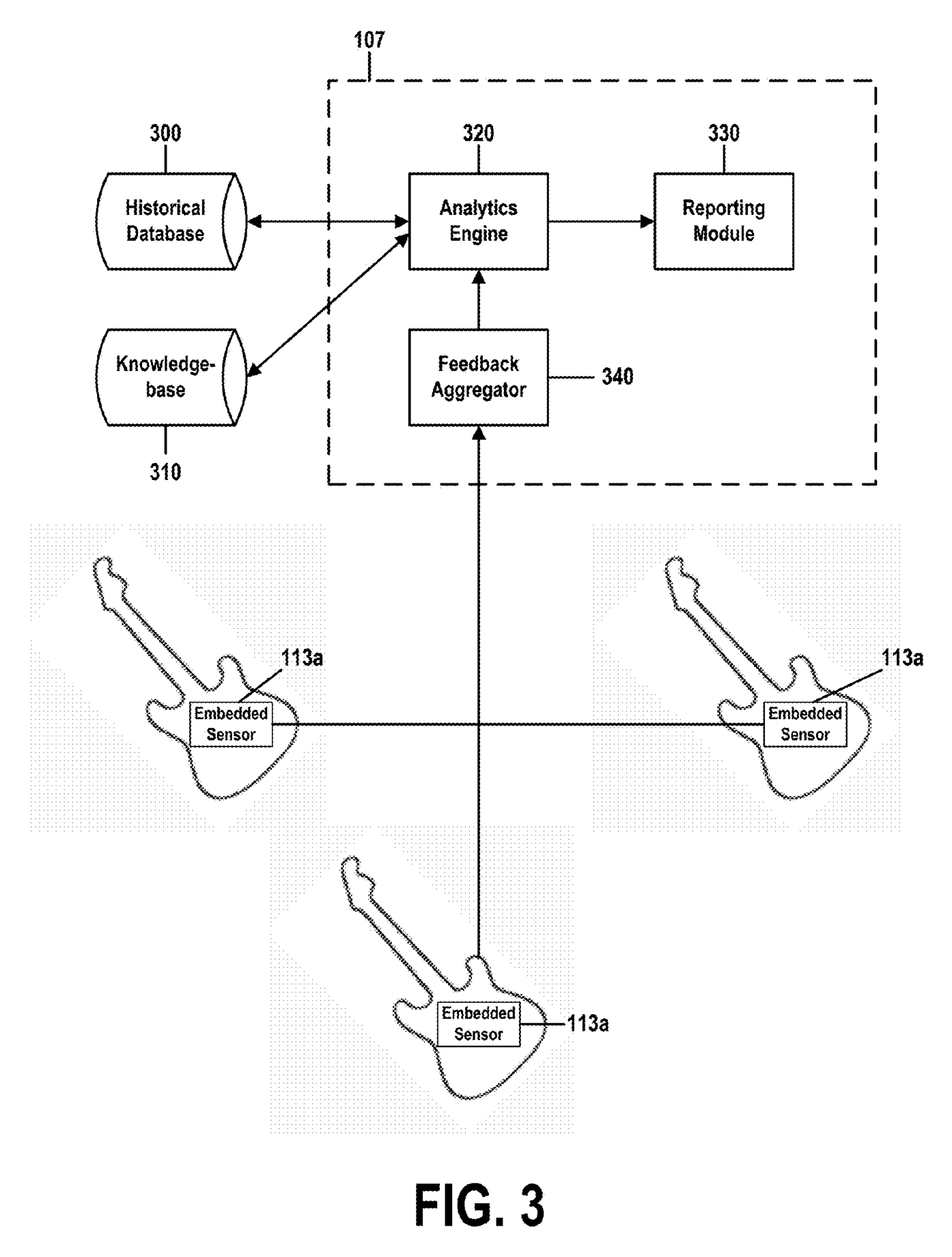
| Sensors & Cameras | Embedded instrument sensors (MIDI, tactile, ultrasonic, pressure), low-light audience cameras, and mobile web service feeds. | Multimodal Tool & Event Ingestion: Fusing objective telemetry, involuntary biometrics, and deliberate user input. |
| Feedback Aggregator | Receives, tags, sorts, and reformats all incoming streams per performer. | Context Assembly Layer: Retrieval and context packing stages that determine what the model sees, in what order, and with what formatting. |
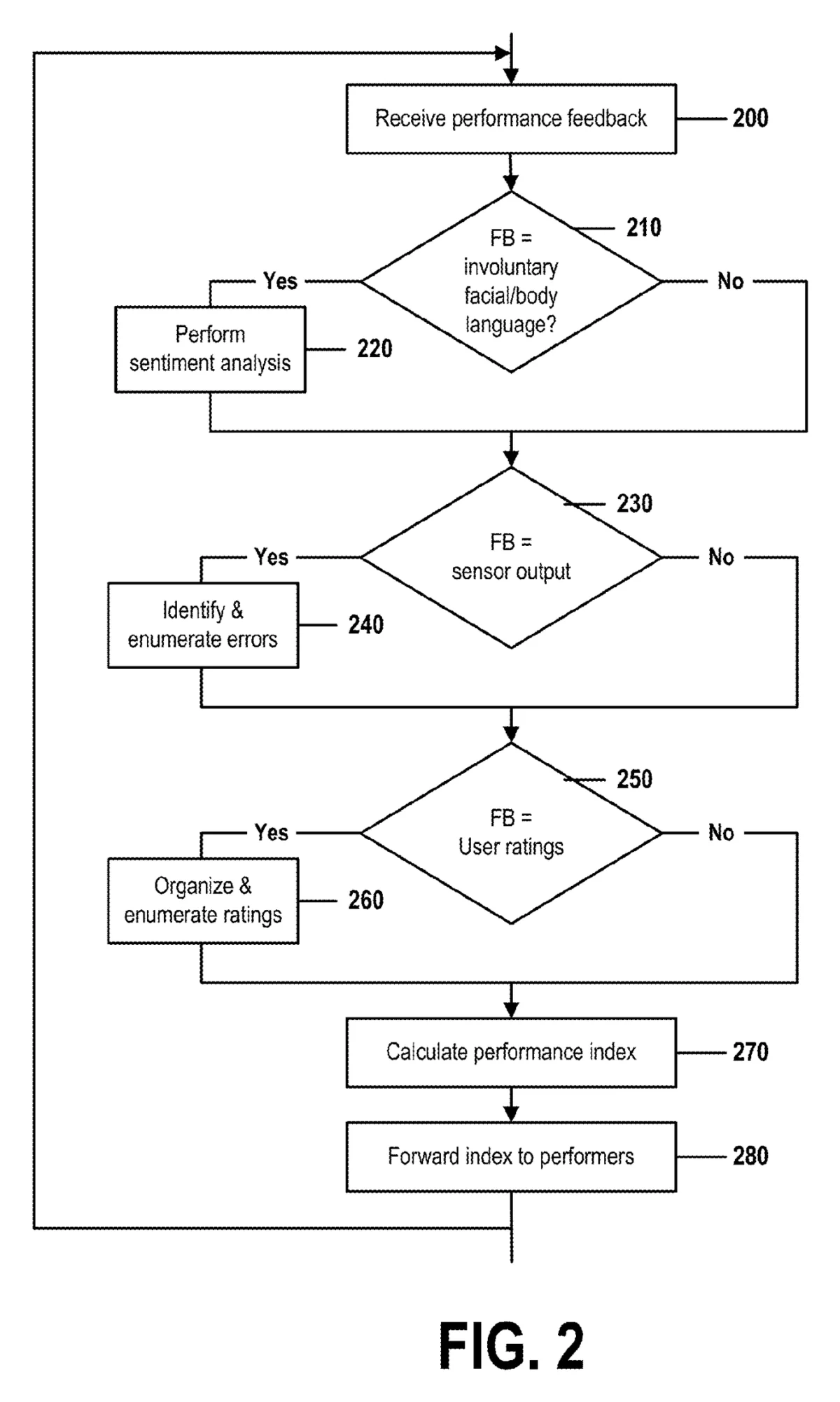
| Analytics Engine | Inferences performance characteristics using historical archives and domain knowledge bases. | Episodic & Semantic Memory: Combining historical operational data (what happened previously) with domain rules (the baseline score). |
| Performance Index | Hand-crafted evaluation function fusing positive tweets, facial sentiment, and accuracy into a single metric. | Auditable Evals: A linear, transparent scoring function with hard thresholds and persistence conditions, prized in regulated industries. |
| Reporting Module | Displays graphs, names sentiment states, recommends actions ("end bass solo"), or lights the guitar LED. | Actuation & Autonomy Dials: Human-in-the-loop escalation paths ranging from pure information to actionable recommendations. |
| Real-Time Budget | Instructions that the control loop must complete fast enough for mid-performance correction (under a second). | Latency Budgets: Strict operational constraints separating workflow agents from passive reporting systems. |
Official Responses and Engineering Perspectives
Engineers who transition from legacy decision-support architectures to modern agentic systems point to critical takeaways from the 2016 patent—both in terms of prophetic design choices and glaring omissions.
What the 2016 Architecture Got Structurally Right
- The Loop is the Product: The fundamental value was never locked inside a single inference call; it lived within the continuous, closed cycle of perception, evaluation, and correction. Modern development teams that deploy models without closing the operational feedback loop frequently encounter the same integration failures.
- Inference Requires Grounded Memory: Without the historical repository and the structured knowledge base, the 2016 engine would have functioned as an isolated sentiment classifier. This mirrors modern agent architectures: an LLM operating without episodic and semantic data stores is fluent, yet structurally incapable of organizational learning.
- Evidence Carries Provenance: The patent explicitly treats objective telemetry, inferred sentiment, and deliberate user ratings as distinct signal families with unique reliability profiles. This segregation mirrors how modern enterprise agents weigh tool outputs against retrieved enterprise documents.
- The Human is an Architectural Component: The system treats the performer as the ultimate actuator, designing interfaces explicitly around human constraints (cognitive load, attention spans, and time-to-action). An LED glowing red represents a masterclass in interface economy.
What a Decade of Development Exposes
- The Intelligence Bottleneck: In 2016, the system design was robust, but the underlying intelligence layer was fragile and dependent on strict rules. Today, that dynamic has completely inverted: organizations possess hyper-capable reasoners surrounded by brittle data plumbing, memory architectures, and context layers.
- The Illusion of Infinite Accumulation: The patent’s historical database was designed to grow indefinitely without data decay, expiration, or provable deletion. In modern enterprise environments, unmanaged agent memory becomes a severe operational liability, prone to poisoning decisions with stale data and accumulating regulatory liabilities under frameworks like the GDPR.
- The Complete Absence of Privacy Controls: Re-reading the patent through a modern regulatory lens reveals a striking blind spot: continuous facial sentiment analysis, zoom-lens tracking of individual audience members, and persistent biometrical streams are specified without a single paragraph addressing consent, data provenance, or access rights. What was an oversight in 2016 is now the primary compliance discipline of 2026 data engineering.
- Static Weights and Non-Learning Systems: The 2016 engine could infer and recommend, but operational outcomes never dynamically updated the system weights. Retrieval-augmented generation alone does not solve this; bridging the gap between passive memory accumulation and active algorithmic learning remains an open frontier in agentic AI.
Implications for Modern Agent Builders
The enduring lesson drawn from reviewing a decade-old corporate patent is that the foundational pattern of agentic AI is not novel. Perception, aggregation, memory-grounded inference, evaluation, and bounded actuation have existed for decades across control systems, enterprise monitoring platforms, and decision-support software.
The breakthrough of the 2020s is simply that the reasoning component finally works at scale. However, because reasoning is only one component out of seven, technical execution in production hinges on core data engineering disciplines rather than raw model science.
For modern engineering teams, the path forward requires returning to these foundational principles:
- Designing memory systems equipped with explicit retention and forgetting lifecycles.
- Engineering context pipelines that respect provenance and data lineage.
- Building evaluation frameworks that remain auditable in regulated sectors.
- Enforcing access entitlements directly within the data layer.
- Respecting strict latency budgets to ensure real-time responsiveness.
Ultimately, the vision of an LED lighting up on a guitar neck to deliver a single, timely, and actionable piece of guidance remains the gold standard for agentic systems. Whether applied to enterprise logistics, code generation, or musical performances, the goal of an autonomous agent is not to overwhelm the user with complexity, but to provide the right intervention while there is still time to act.
References
- S. D’Alo, M. Lerro, M. Noioso, and N. Piazza, "Real-Time Analysis of a Musical Performance Using Analytics," US Patent Application US 2018/0137425 A1, published May 17, 2018. Available via Google Patents.
- European Parliament and Council of the European Union, "Regulation (EU) 2016/679 (General Data Protection Regulation)," Official Journal of the European Union, May 4, 2016. Available via EUR-Lex.



