








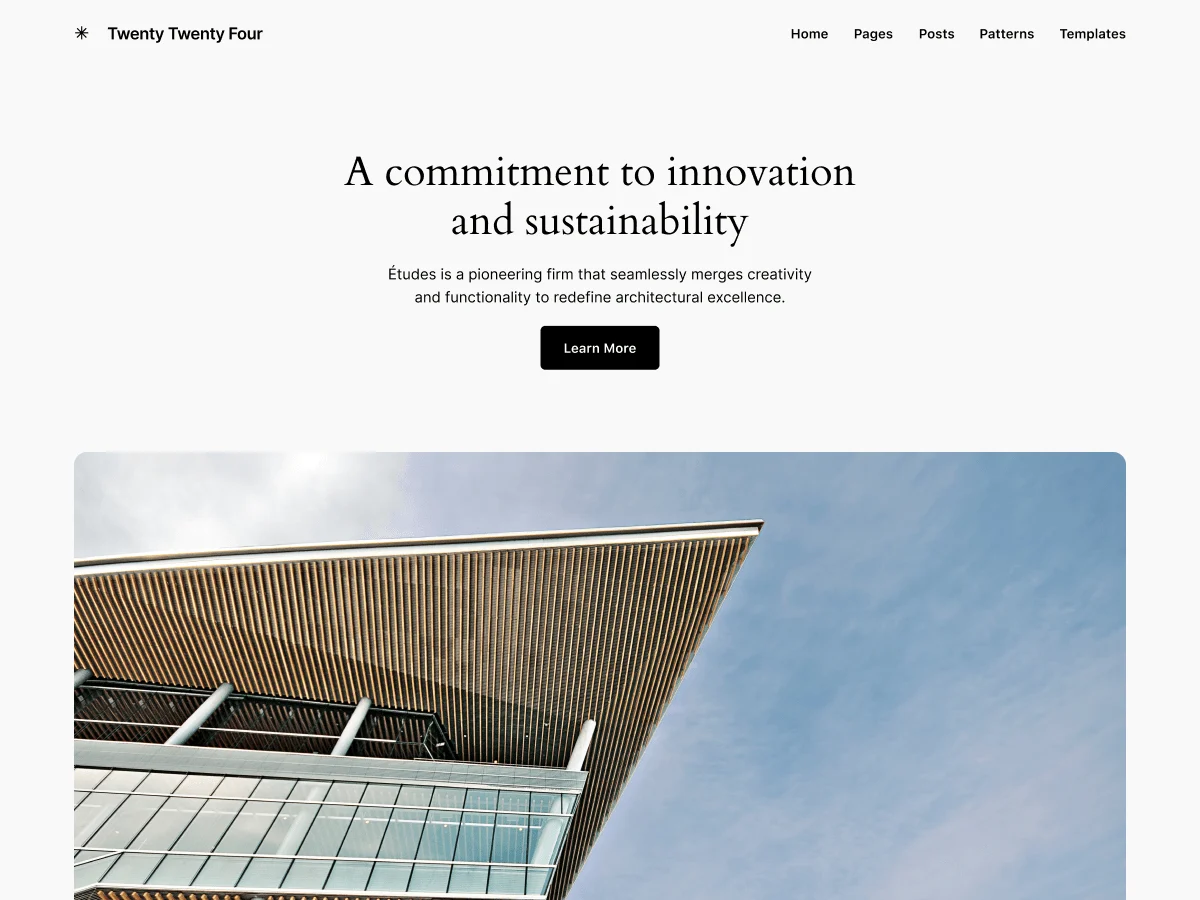
In the fast-paced digital landscape of 2024, the criteria for what constitutes a "perfect" website theme have shifted dramatically. No longer are users satisfied with static, rigid templates; modern web presence requires fluidity, adaptability, and high-performance scalability. Enter "Twenty Twenty-Four," the flagship default theme from the WordPress ecosystem that has redefined the standards for block-based web design. With over 600,000 active installations, this theme serves not merely as a cosmetic skin for WordPress sites, but as a robust, fully-featured engine designed to empower creators, businesses, and bloggers alike.
Main Facts: The Philosophy Behind Twenty Twenty-Four
At its core, Twenty Twenty-Four is built upon the fundamental principle of versatility. Unlike its predecessors, which often leaned heavily into specific niches—such as photography or long-form journalism—Twenty Twenty-Four is designed to be the "chameleon" of the WordPress directory.
The theme was built to capitalize on the revolutionary capabilities of the Full Site Editing (FSE) experience. It is a block-first theme, meaning that every aspect of the page—from the header and footer to the intricate layout of a blog post—can be manipulated within the native WordPress Site Editor without the need for custom coding or third-party page builders. By leveraging the design tools introduced in WordPress 6.4, the theme offers a seamless transition between complex business structures and minimalist personal blogs.
Key to its success is the inclusion of eight distinct style variations. These allow users to overhaul the entire aesthetic of their site—changing color palettes, typography, and spacing—with a single click. This flexibility is supported by an extensive library of block patterns, which provide pre-designed sections that users can drag and drop to build pages that look professional, modern, and cohesive.
Chronology: The Road to a Block-First Future
The trajectory of WordPress default themes provides a fascinating history of web standards. The "Twenty" series, which began with Twenty Ten, was originally intended to demonstrate the capabilities of the platform’s evolution. However, the release of Twenty Twenty-Four marks a significant turning point in this history.
- Pre-2021 (The Classic Era): Early themes focused on PHP-based templates. Customization was limited to the "Customizer" and often required child themes.
- 2021–2023 (The Transition): With the introduction of Gutenberg and the subsequent Full Site Editing, themes like Twenty Twenty-Two and Twenty Twenty-Three served as experimental grounds for block-based architecture.
- Late 2023 (The Arrival): WordPress 6.4 was released, bringing with it a suite of advanced design tools, including enhanced grouping, better image handling, and more precise spacing controls.
- The Launch of Twenty Twenty-Four: Concurrently with the maturation of the site editor, Twenty Twenty-Four was launched to showcase these features in a production-ready environment. It represented the first time a default theme felt truly "complete" out of the box, requiring zero external plugins to achieve high-end design results.
Supporting Data: By the Numbers
The adoption rate of Twenty Twenty-Four is a testament to its utility. With over 600,000 active installations, it is one of the most widely deployed themes in the WordPress repository. The data surrounding its usage suggests a few key trends:
- Versatility Index: The wide range of tag associations (Accessibility Ready, Portfolio, News, Blog, One Column) indicates that the theme is not pigeonholed into a single industry.
- Global Reach: The theme boasts translation support for dozens of languages, ranging from Arabic and Chinese to Welsh and Vietnamese. This reinforces the WordPress mission of "democratizing publishing" on a global scale.
- Community Engagement: With an active support forum and a dedicated reporting mechanism for issues, the theme benefits from a constant feedback loop. The "Downloads per day" metric consistently ranks it among the top-tier choices for new WordPress deployments.
Official Responses and Developer Perspective
The development of Twenty Twenty-Four was a collaborative effort led by the WordPress core design team. The design philosophy was articulated clearly: "The goal is to provide a blank canvas that feels finished."
In official documentation and developer blogs, the team emphasizes that Twenty Twenty-Four is intended to reduce the "time-to-first-launch." By providing high-quality, full-page design patterns, the theme removes the barrier of "blank page syndrome" that many new users face. Developers have praised the theme for its clean code structure and its strict adherence to modern accessibility standards. By ensuring that all patterns are "accessibility-ready," the theme ensures that the barrier to entry for the web is lowered for both content creators and the end-users who consume their content.
Furthermore, the integration with the site editor is not just a feature; it is an endorsement of the Gutenberg project. The theme serves as the "north star" for what developers should aim for when building block-based themes, prioritizing performance and user experience over bloated design features.
Implications for the Web Design Industry
The release and widespread adoption of Twenty Twenty-Four have profound implications for the web design industry, particularly for agencies, freelancers, and small business owners.

1. The Death of the "Theme-Lock"
Traditionally, clients were often locked into specific, proprietary themes that required expensive maintenance or specialized knowledge to modify. Twenty Twenty-Four uses native blocks, meaning that a site built today will remain compatible with future versions of WordPress. It eliminates the "vendor lock-in" that has historically plagued the WordPress ecosystem.
2. Democratizing High-End Design
Previously, if a user wanted a site with complex typography, white space, and modular layouts, they would often need to purchase premium themes or hire a developer. Twenty Twenty-Four brings these capabilities to the masses for free. It effectively raises the baseline of what a "standard" website looks like, forcing professional designers to offer more value than just "a good-looking layout."
3. Performance as a Priority
Because Twenty Twenty-Four is built with core-integrated blocks, it avoids the performance degradation often associated with "heavy" page builders. The code is lightweight, the CSS is modular, and the reliance on third-party dependencies is virtually non-existent. For a web that is increasingly prioritizing Core Web Vitals and SEO performance, this theme is a significant step forward.
4. The Future of Maintenance
For agencies, Twenty Twenty-Four simplifies the maintenance lifecycle. Because the theme follows the WordPress standard, updating a client’s site is less likely to result in layout breakage. The predictability of the theme’s behavior allows developers to focus on custom functionality rather than fixing CSS conflicts.
Challenges and Future Outlook
Despite its overwhelming success, Twenty Twenty-Four is not without its challenges. The learning curve for the Full Site Editor can be steep for users accustomed to the "Classic" WordPress experience. While the theme is intuitive, it requires a shift in mindset: users must stop thinking in terms of "pages" and start thinking in terms of "blocks and patterns."
Looking forward, the WordPress community is already looking toward how to build upon the foundation of Twenty Twenty-Four. The next iterations of themes will likely integrate more advanced interactivity, perhaps leveraging the "Interactivity API" introduced in recent versions.
The theme has effectively set a benchmark for the next decade of WordPress development. It serves as a reminder that the most powerful tools are not those that provide the most options, but those that provide the right options in a way that is accessible to everyone. Whether you are a solo blogger, a small business owner, or a developer managing a fleet of client sites, Twenty Twenty-Four offers a path toward a cleaner, faster, and more accessible web.
Conclusion
In summary, Twenty Twenty-Four is more than just a theme; it is a manifestation of the modern web’s requirements for speed, flexibility, and inclusive design. By bridging the gap between high-end aesthetic customization and user-friendly block editing, it has cemented its place as a cornerstone of the WordPress ecosystem.
As we move deeper into the era of block-based editing, the lessons learned from the development and deployment of Twenty Twenty-Four will undoubtedly influence the next generation of digital tools. For those who have yet to explore its potential, the theme offers a robust, future-proof solution that respects both the creator and the consumer. In the end, the success of Twenty Twenty-Four lies in its simplicity: it provides the structure, and it leaves the creativity entirely to the user.