










In a move that signals a seismic shift in its artificial intelligence strategy, Meta’s Superintelligence Lab unveiled a pair of high-performance models on Monday: Muse Wonder and Muse Wonder Full. This release marks the tech giant’s first definitive foray into the "frontier model" category—a tier of AI previously dominated almost exclusively by competitors like OpenAI and Anthropic.
These models, which represent a significant departure from the company’s recent focus on lightweight, latency-optimized tools, are designed to power the next generation of the Muse agent. By blending high-level reasoning capabilities with a new, proprietary approach to long-term memory, Meta is positioning itself to capture the burgeoning market for personalized, persistent AI assistants.
The Core Facts: What Are Muse Wonder and Wonder Full?
The Wonder duo constitutes a fundamental expansion of Meta’s current AI architecture. While the previously released Muse Spark model was optimized for speed and low-resource environments, the Wonder models are built for depth, complexity, and structural reasoning.
Key Technical Distinctions
- Muse Wonder: A powerful, general-purpose frontier model available via the Meta Model API. It is designed to compete directly with current industry leaders, such as GPT-6 Sol and Opus 5.5, with pricing set at $4 per million input tokens and $20 per million output tokens.
- Muse Wonder Full: The flagship offering. This model is reserved exclusively for Muse Code subscribers and will not be accessible through the public API. It represents the pinnacle of Meta’s current training efforts, intended for high-stakes coding and complex, multi-step logic tasks.
Meta’s internal benchmarking suggests these models are not just participants in the current AI race, but leaders. According to the company’s official model card, both iterations achieve performance scores on par with established industry benchmarks like Fable 5.1 and GPT-6 Astra.
A Chronological Shift in Strategy
To understand the weight of Monday’s announcement, one must look at the timeline of Meta’s AI transformation. Following a period of relative quiet regarding state-of-the-art model development, Meta underwent a major internal restructuring in August 2025. Under the guidance of Scale AI founder Alexandr Wang, who stepped in to oversee the company’s AI research and infrastructure, Meta pivoted away from reactive, incremental updates.
- Pre-August 2025: Meta focused primarily on open-source Llama iterations and small-scale integrations, often lagging behind the rapid release cadences of its Silicon Valley peers.
- August 2025: The restructuring began, emphasizing centralized, high-compute training regimes and a focus on "agentic" workflows.
- Late 2025 – Early 2026: The release of Muse Spark and the foundational Muse agent demonstrated a commitment to utility and real-world application over abstract benchmarking.
- Monday’s Launch: The debut of the Wonder models signals that Meta has completed the foundational work required to compete at the "frontier" level, leveraging its massive new infrastructure in Ohio.
This shift represents a maturation of Meta’s research division. By moving from lightweight tools to frontier models, Meta is signaling that it no longer intends to be a secondary player in the AI ecosystem.
Supporting Data: The "Active Memory" Breakthrough
Perhaps the most significant differentiator for the Wonder models is their emphasis on "Active Memory." In an era where AI models are frequently "stateless"—meaning they effectively suffer from amnesia the moment a chat window is closed—Meta is betting that the future of personal intelligence lies in continuity.
The MemoryBench Benchmark
To prove the efficacy of this new memory architecture, Meta has championed a new metric: MemoryBench. Unlike standard benchmarks that measure static knowledge retrieval, MemoryBench forces models to demonstrate "continual learning"—the ability to integrate new user information over extended timeframes without succumbing to "catastrophic forgetting."
In these tests, Muse Wonder outperformed Fable, Opus, and Astra. The goal, according to Meta, is to create an agent that can track a user’s preferences, project history, and nuanced requirements across days, weeks, and months. This is a deliberate attempt to move AI from a "search engine" interaction model to a "collaborative partner" model.
The Prometheus Engine
The training of these models was not conducted in legacy data centers. Instead, they were birthed at the Prometheus data center in central Ohio. Since coming online earlier this year, Prometheus has been touted as one of the highest-capacity AI training facilities in the world. The sheer scale of compute provided by this site allowed Meta to push the "scaling ladder"—the process of increasing model size to gain emergent reasoning capabilities—further than it had previously dared.
Official Responses and Vision
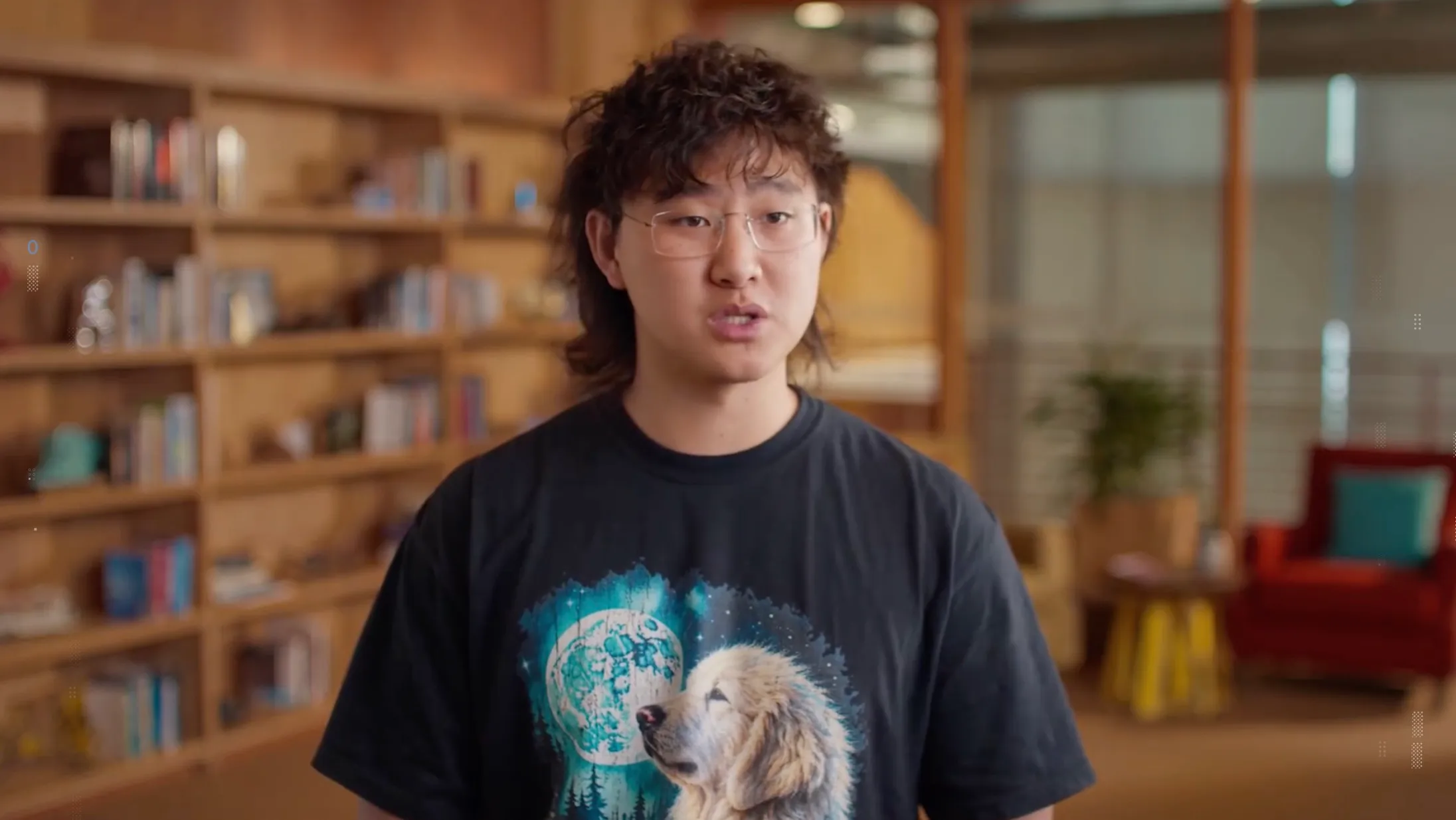
The messaging from Meta’s research team has been one of ambition and long-term utility. In a video accompanying the launch, research scientist Kavya Kopparapu emphasized the shift in focus toward the user experience:
"We put a tremendous amount of effort into making sure your model can remember what’s important to you over days, weeks, months, and beyond. This isn’t just about answering a question correctly; it’s about being a participant in your life’s work."
Meta’s blog post framing the launch characterized the move as a "major leap toward personal superintelligence." The company argues that by integrating these models into the Muse agent, they are providing a level of continuity that current market offerings fail to sustain. By locking the most capable model (Wonder Full) behind a subscription service, Meta is also making a clear play for the enterprise and power-user market, hoping to drive recurring revenue through specialized AI utility.
Implications: The New AI Frontier
The introduction of the Muse Wonder models has profound implications for the industry at large.
1. The Death of Stateless AI?
If Meta’s "Active Memory" proves reliable, the standard for what constitutes a "capable" AI will rise. Competitors will likely be forced to pivot their development toward long-term context retention. If a user can rely on an AI to remember the nuances of a project from three weeks ago, they will be unlikely to return to models that require constant context re-provisioning.
2. Market Consolidation
The decision to gate Muse Wonder Full behind a subscription while making the standard Wonder available via API reflects a sophisticated, two-pronged go-to-market strategy. Meta is capturing both the developer ecosystem—which will build apps on top of the Wonder API—and the high-value consumer base, who will pay for the "Full" version to get a superior personal assistant.
3. The Compute Arms Race
The reliance on the Prometheus data center underscores a grim reality for smaller AI firms: the barrier to entry is becoming insurmountable. To compete with the Wonder models, an organization needs not just talent, but the specialized, massive-scale infrastructure that only a handful of trillion-dollar companies can afford to build in rural Ohio and beyond.
4. Regulatory and Ethical Scrutiny
As these models gain the ability to retain "active memory" of personal user data, questions regarding privacy and data retention will inevitably reach a fever pitch. How does Meta handle the deletion of "active memories"? Who owns the synthesis of a user’s life created by these models? As Meta pushes into this "personal superintelligence" space, it will likely find itself under a microscope, both from regulators and privacy advocates concerned about the permanence of AI-recorded histories.
Conclusion
With the release of Muse Wonder, Meta has officially exited the era of being a follower. The company has moved from incremental updates to a full-scale assault on the frontier of AI reasoning and memory. While the true performance of these models will only be proven once they are deployed to millions of active users, the architecture—and the massive infrastructure backing it—suggests that the "Wonder" era of Meta’s AI development is poised to redefine the relationship between humans and their digital assistants.
For the tech industry, the message is clear: the battle is no longer just about who can build the smartest model; it is about who can build the one that remembers you best.



