










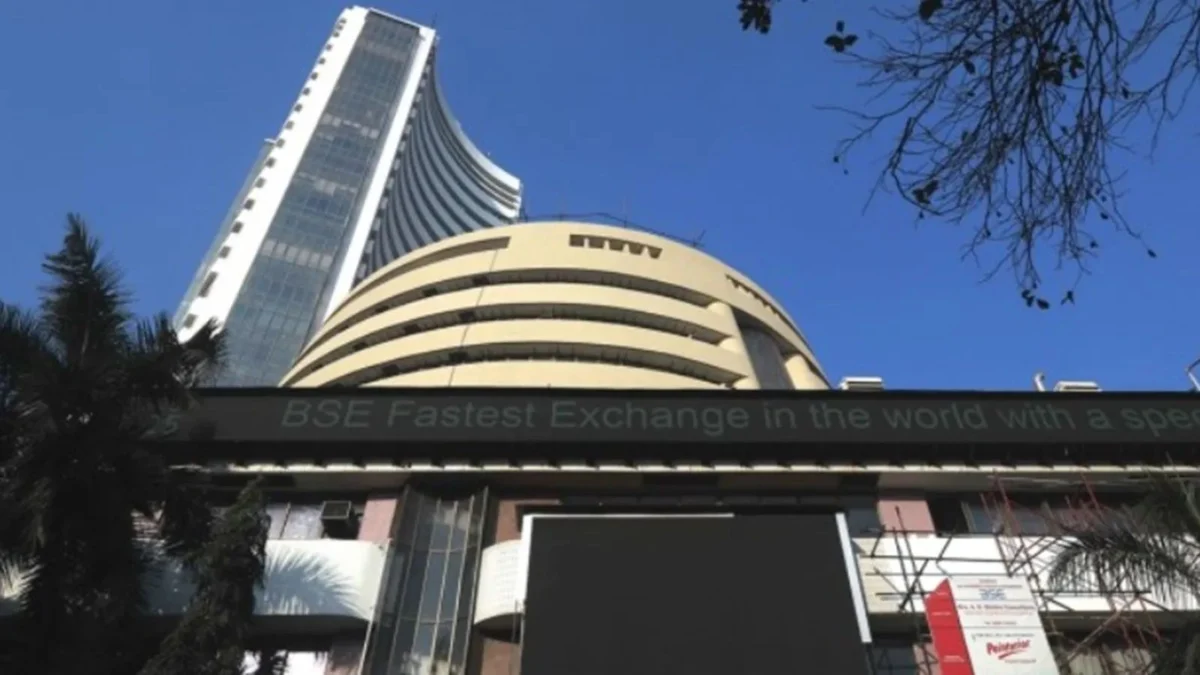
Mumbai: Indian benchmark equity indices experienced a powerful and much-needed revival on Tuesday, mounting a sharp rally of approximately 1.6% following positive indications from the central government regarding future tax consultations. The robust recovery offered a stark contrast to a prolonged 12-month period of market fatigue, injecting renewed optimism into Dalal Street and driving high-conviction buying across major heavyweight counters, particularly within the information technology sector.
The explosive session saw the 30-share BSE Sensex skyrocket by 1,109.10 points, or 1.54%, to settle at 73,033.78. Simultaneously, the broader NSE Nifty surged 358.60 points, or 1.60%, to close comfortably at 22,721.95. Despite initial hesitation and a brief morning dip that dragged the Nifty down to an intraday low of 22,288, the market demonstrated remarkable resilience, staging a steady, unyielding climb that culminated at the day’s absolute high.
Market turnover witnessed a healthy uptick, with NSE cash-market volumes rising 9% compared to the previous trading session. This expansion in activity underscored growing participation as traders rushed to capitalize on the sudden positive momentum.
1. Main Facts: Decoding the Catalyst Behind the Rally
The primary driver behind Tuesday’s dramatic market turnaround stemmed from comments made by Finance Minister Nirmala Sitharaman. During discussions surrounding upcoming fiscal policies, the Finance Minister indicated that the government is open to reviewing and considering stakeholders’ views regarding the controversial long-term capital gains (LTCG) tax during budget consultations. Furthermore, she characterized the ongoing public and corporate debate over the securities transaction tax (STT) as a "healthy" part of economic discourse.
While the Ministry of Finance made no definitive commitment or official promise to scrap or reduce either tax, the mere acknowledgement of stakeholder grievances acted as a potent psychological booster. For over a year, market participants had grown increasingly despondent over punitive taxation structures that many blamed for dampening equity investments and eroding capital formation.
This policy pivot coincided with a stellar performance by the Indian IT sector, which stepped up as the primary engine for the day’s gains. Robust quarterly numbers, encouraging AI-related revenue projections, and solid global deal pipelines—sparked initially by HCLTech’s earnings report—cascaded through the technology landscape, lifting sector giants like TCS, Infosys, and Tech Mahindra to commanding heights.
2. Chronology of the Trading Day: From Flat Open to Historic Highs
The trajectory of Tuesday’s trading session was a classic tale of intraday reversal and sustained momentum, tracking a distinct chronological path:
- Pre-Market & Opening Bell: Trading commenced on a cautious note, with the Nifty opening flat as investors weighed persistent macro headwinds, including elevated global crude oil prices and lingering anxiety over forthcoming corporate earnings reports.
- Morning Dip (Intraday Low): Early selling pressure briefly dragged the benchmark Nifty down to an intraday low of 22,288. For a brief window, it appeared that the market might succumb to the same bearish trends that have defined the past year, during which the Sensex correction deepened to roughly 15%.
- The Policy Turning Point: Mid-morning, reports regarding Finance Minister Sitharaman’s statements on LTCG and STT began circulating across financial terminals. The sentiment shifted almost instantaneously as institutional and retail investors reassessed the long-term tax outlook for equities.
- The Afternoon Surge: Fueled by the policy remarks and aggressive short-covering, buying momentum broadened. Heavyweight IT stocks broke out decisively, pulling the Nifty IT index up by more than 5%.
- Closing Bell: Buying pressure remained unabated right up to the final hour. The indices rode a wave of steady accumulation to close near the peak of the day—the Sensex finishing at 73,033.78 and the Nifty settling at 22,721.95—backed by positive market breadth and an advance-decline ratio of 1.38.
3. Supporting Data and Market Metrics
A comprehensive look beneath the surface of Tuesday’s market activity reveals distinct patterns of institutional and retail behavior, sector-specific divergence, and broader macroeconomic alignments.
Benchmark and Index Performance
- BSE Sensex: Closed up 1,109.10 points (+1.54%) at 73,033.78.
- NSE Nifty 50: Closed up 358.60 points (+1.60%) at 22,721.95.
- Nifty IT Index: Surged over 5%, standing out as the runaway sectoral leader.
- Broader Markets: The rally was heavily skewed toward large-caps. The Nifty Midcap 100 posted a modest gain of 1.06%, while the Nifty Smallcap 100 clawed back from early losses to finish marginally higher by 0.11%.
- Sectoral Laggards: Nifty Pharma was the solitary major sectoral index to close in negative territory, facing localized profit-booking.
Foreign Exchange and Debt Markets
- Indian Rupee: Appreciated significantly for the third consecutive session, gaining 50 paise to close at 95.28 against the US dollar. This strengthening was actively supported by targeted interventions and liquidity measures by the Reserve Bank of India (RBI) aimed at curbing excessive spot dollar demand and dampening speculative forex positioning.
- Global Yields & Commodities: US 10-year Treasury yields eased below 5.2%, relieving immediate valuation pressures on emerging market equities. However, Brent crude remained stubbornly elevated near $106 a barrel, continuing to pose a structural risk to domestic inflation and corporate operating margins.
4. Official Responses and Stakeholder Perspectives
The market’s reaction underscores a deep-seated craving among investors for constructive dialogue between fiscal authorities and the financial community.
Market observers noted that the 15% correction suffered by the Sensex over the preceding twelve months had created an environment ripe for relief rallies upon any positive signal. "There’s an indication that the government is likely to re-evaluate LTCG and STT. The market has been under severe pressure for the last one year," explained one senior Mumbai-based market analyst.
Industry leaders were quick to weigh in on the underlying sectoral drivers. Hariselvan Radhakrishnan, Founder & CEO of HST Wealth, pointed out that the structural strength in the technology basket was not accidental. "IT stocks led the advance after HCLTech’s quarterly performance, stronger AI-related revenue, and healthy deal wins bolstered confidence in the sector’s earnings outlook," Radhakrishnan noted.
From a technical standpoint, Nandish Shah, Deputy Vice President at HDFC Securities, highlighted the health of the broader ecosystem. Shah pointed out that market turnover had expanded notably compared to the previous session. Furthermore, the persistence of a 1.38 advance-decline ratio confirmed that interest in mid- and small-cap segments remained alive, even if large-cap index heavyweights commanded the lion’s share of the day’s headline-grabbing gains.
5. Implications and Future Outlook: Is the Bear Market Over?
While Tuesday’s 1,100-point surge provided a much-needed psychological balm to bruised portfolios, financial experts urge caution against unbridled exuberance. The market’s underlying vulnerabilities have not magically vanished overnight.
Key Risks and Challenges Ahead:
- The Speculative Nature of Tax Relief: The finance minister’s comments, while encouraging, do not constitute a binding legal or fiscal commitment. Investors must exercise patience as actual policy adjustments will depend entirely on how formal budget consultations evolve in the coming months. Until concrete amendments are tabled, expectations of tax cuts remain speculative.
- Persistent Macroeconomic Headwinds: Crude oil prices hovering near $106 per barrel present a formidable threat to India’s import bill, current account deficit, and corporate profit margins. Sustained high energy costs could easily reignite inflation fears.
- Earnings Trajectory: The long-term sustainability of the current equity rally will ultimately depend on corporate earnings delivery. While the IT sector has shown green shoots of recovery—particularly driven by artificial intelligence integration and deal pipelines—broader corporate earnings must justify elevated valuations.
- Narrow Market Breadth: The fact that benchmark indices significantly outperformed the Bank Nifty and the broader smallcap space suggests that the rally was concentrated among a select group of index heavyweights. A genuinely healthy, durable bull market typically requires broader, cross-sectoral participation.
Conclusion
Tuesday’s dramatic trading session demonstrates that investor sentiment remains hyper-sensitive to policy signals from New Delhi. By signaling an openness to dialogue regarding the capital gains tax and securities transaction tax, the government has given market participants a reason to look forward to the budget season with cautious optimism. However, for this single-day spike to blossom into a sustained structural recovery, policy signals must eventually translate into tangible regulatory reforms, complemented by robust macroeconomic fundamentals and solid quarterly corporate earnings.



