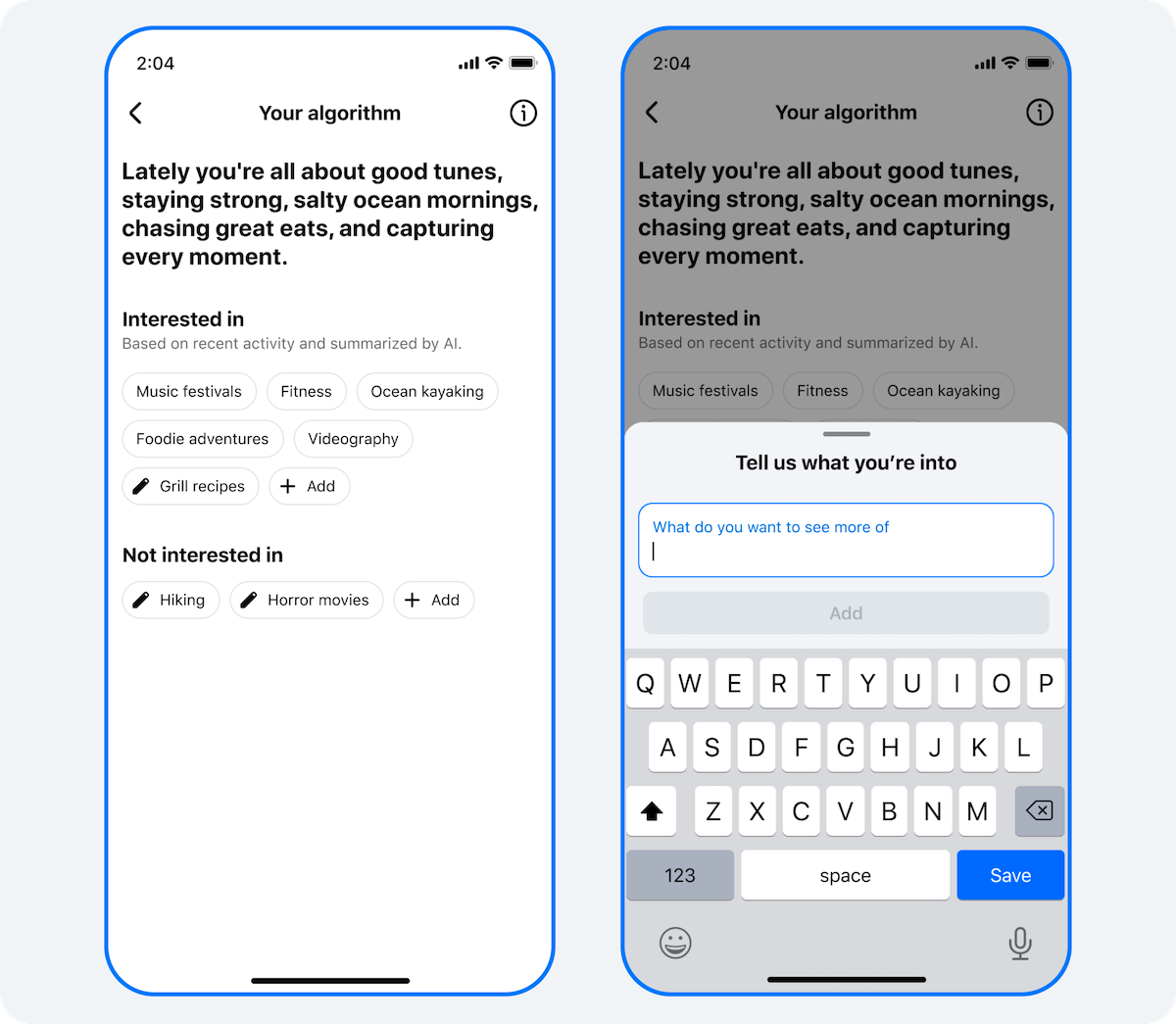
SAN FRANCISCO — In a significant pivot from the opaque recommendation engines that have defined social media for over a decade, Meta is officially handing the steering wheel back to its users. Following rolling rollouts across Instagram and Threads, the tech giant announced the official launch of “Your Algorithm” on Facebook. The new AI-powered tool allows users to reshape their main Feed and Reels simply by using natural language to describe their content preferences.
The move represents a watershed moment in how major platforms approach content discovery. By letting everyday users converse directly with the code dictating what they see, Meta is dismantling the black-box approach to algorithmic curation, aligning social media platforms closer to the user-tuned models long utilized by modern streaming services.
The Main Facts: What Is ‘Your Algorithm’?
At its core, “Your Algorithm” is an interactive, artificial intelligence-driven preference layer layered on top of Facebook’s traditional ranking systems. Rather than passively observing user behavior—such as dwell time, likes, and shares—the tool actively invites explicit human input.
Key mechanics of the new feature include:
- Natural Language Control: Users can type out explicit instructions in plain English, telling the algorithm what topics, formats, or creators they want to see more or less of.
- Real-Time Adjustments: Modifications made via the feature take effect instantly, dynamically rewriting the user’s content queue on the fly.
- Contextual Follow-ups: The AI can prompt users with targeted follow-up questions when they flag a post as “Interested” or “Not interested,” drilling down deeper into the nuances of their taste.
- Refreshed Interface: The platform’s ubiquitous three-dot menu has been overhauled, providing direct, single-tap access to “Your Algorithm” preferences straight from individual posts in the Feed.
Chronology of an Evolution: How Meta Built the Customization Wave
The arrival of “Your Algorithm” on Facebook did not happen in a vacuum. It is the culmination of a multi-year, multi-platform strategy designed to pivot Meta’s ecosystem toward granular personalization and user empowerment.
- December 2025: Meta quietly tests the waters by introducing early algorithm-tuning features specifically for Reels on Instagram, allowing short-form video consumers to tweak their watch queues.
- February 2026: Expanding the experiment to text-and-conversation-heavy spaces, Meta’s text-based platform Threads launches “Dear Algo,” a similarly themed AI feature designed to let users actively negotiate with their feeds.
- June 2026: Meta widens the aperture on Instagram, formally rolling out “Your Algorithm” across both the primary Feed and the Explore tab, signaling that the experiment is robust enough for mainstream implementation.
- October 2026: Meta officially brings the feature home to Facebook, unifying its major social ecosystem under a single philosophy of conversational algorithmic governance.
Supporting Data and Industry Context
The shift toward user-controlled algorithms is driven by a mixture of consumer fatigue, regulatory scrutiny, and changing expectations of artificial intelligence. For years, social media algorithms operated on high-engagement maximizations—often prioritizing outrage, controversy, or hyper-addictive loops over actual user utility.
Industry analysts note that platforms are facing mounting pressure to combat "feed fatigue"—a phenomenon where users become exhausted by irrelevant recommendations, repetitive content, or out-of-touch targeted ads. By giving users explicit conversational tools, Meta hopes to increase session satisfaction and retain daily active users (DAUs) who might otherwise migrate to niche, community-led alternatives.
Furthermore, the technological backbone required to parse natural language requests and translate them instantly into ranking parameters has only recently become scalable and cost-effective, thanks to advancements in Large Language Models (LLMs) deployed at the edge.

Official Responses and Meta’s Stance
Meta’s official announcements emphasize a dual mission: relevancy and transparency. In statements accompanying the rollout, company representatives stressed that the overarching goal is to make the digital space feel more personal, intentional, and less like a passive feed dictated by invisible forces.
"The introduction of ‘Your Algorithm’ reflects Meta’s broader effort to give people more influence over their social media experiences as AI increasingly shapes content discovery," the company shared in its official product briefing.
By integrating these features directly into the familiar three-dot menu, Meta is betting that reducing friction will encourage mainstream adoption. Instead of burying privacy and preference controls deep within settings menus, the company has brought them to the surface, making customization as easy as tapping a button and typing a sentence.
Implications: A New Era for Social Media and Content Creators
The deployment of conversational algorithms carries profound implications for the digital landscape, impacting everyone from casual scrollers to enterprise publishers.
1. The Death of the Monolithic Feed
The era of a single, uniform platform algorithm is rapidly drawing to a close. When millions of users begin actively tweaking their feeds to filter out noise, optimize for specific hobbies, or curate educational content, the "average" Facebook experience fractures into billions of hyper-personalized realities.
2. High Stakes for Content Creators and Publishers
For digital creators, brands, and news publishers, user-controlled algorithms introduce a new layer of complexity. Organic reach will no longer rely solely on gaming a static set of platform metrics. Instead, creators will need to win over audiences explicitly, as users use natural language tools to prune away unwanted categories. Content must be authentic, highly targeted, and genuinely engaging to survive user-curated filters.
3. A Blueprint for the Industry
As Meta successfully deploys user-controlled AI across Facebook, Instagram, and Threads, competitors like TikTok, X (formerly Twitter), and YouTube will inevitably face mounting consumer pressure to adopt similar conversational controls. Platforms that cling strictly to opaque, top-down recommendation systems risk looking archaic in a market where consumers increasingly expect to be active collaborators in their digital diets.
Ultimately, "Your Algorithm" marks a psychological turning point. Social media is transitioning from a broadcast medium where algorithms dictate reality to a bespoke service where users hold the pen, rewriting their digital worlds one sentence at a time.