










September 2026 will be remembered as the tipping point for WordPress. It was the month the platform moved beyond merely "hosting" content and began actively "talking" to the artificial intelligence assistants that are rapidly becoming the primary interface for the modern web. From managing complex e-commerce inventories to executing critical site security updates, AI is no longer a novelty—it is a functional, integrated part of the WordPress ecosystem.
This month’s WPBeginner Spotlight unpacks a whirlwind of activity, including significant milestones for WPVibe, a major dashboard overhaul for WPForms, and vital security patches that every administrator must address immediately.
Main Facts: The AI-First Shift
The core narrative of September 2026 is the rapid adoption of the WordPress Abilities API. This standardization allows plugins to "expose" their functions to AI models like Claude, ChatGPT, and Cursor.
For the end user, this means the end of the "dashboard grind." Instead of navigating through dozens of menus to find a specific setting, site owners can now describe their intent in plain English. Whether you need to generate a sales report, create a new fundraising campaign, or execute a fleet-wide security patch, the AI acts as a bridge between human intent and machine execution.
Key Takeaways:
- WPVibe Momentum: Crossed the 50,000 active install threshold, bolstered by a powerful new "Fleet Management" feature.
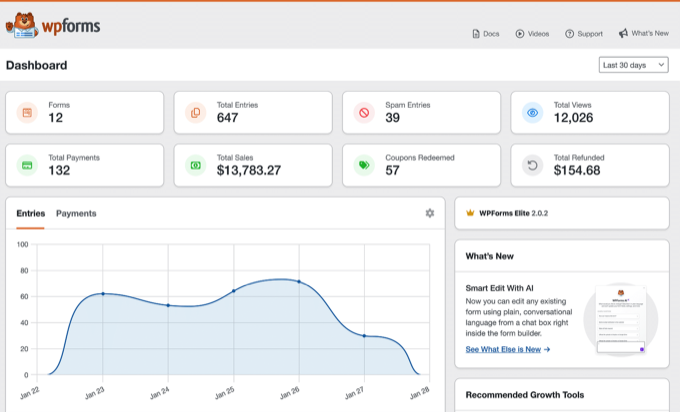
- WPForms Evolution: A new unified dashboard provides real-time visibility into form performance, payments, and entry metrics.
- Security First: WordPress 7.1.1 and 7.1.2 were released to address 12 critical vulnerabilities; WooCommerce followed with two urgent security patches.
- Universal Integration: Plugins like Duplicator, Easy Digital Downloads, and Charitable have fundamentally changed their workflows to embrace AI-driven task management.
Chronology of September 2026
The month was characterized by a rapid succession of releases, requiring site administrators to stay vigilant.
- September 1: WooCommerce 11.1 launches with 561 changes and significant store-owner features.
- September 17: WordPress 7.1.1 is released, addressing 11 security vulnerabilities. On the same day, WPForms debuts its new unified dashboard, and Universally 1.0.9 rolls out automatic language redirects.
- September 18: WooCommerce 11.1.1 is deployed to address a critical Mini-Cart bug.
- September 22: WordPress 7.1.2 arrives to patch a high-severity local file inclusion vulnerability. Duplicator 5.0 launches, and WooCommerce 11.1.2 is pushed to fix variation gallery issues.
- September 23: Easy Digital Downloads introduces AI-assistant capabilities, and WPVibe celebrates its 50,000-install milestone.
Supporting Data: The Rise of WPVibe
The meteoric rise of WPVibe—a free WordPress MCP (Model Context Protocol) plugin—serves as the primary indicator of this shift. Passing 40,000 installs on September 23 and surging to 50,000 by the end of the month demonstrates a clear demand for AI-driven site management.
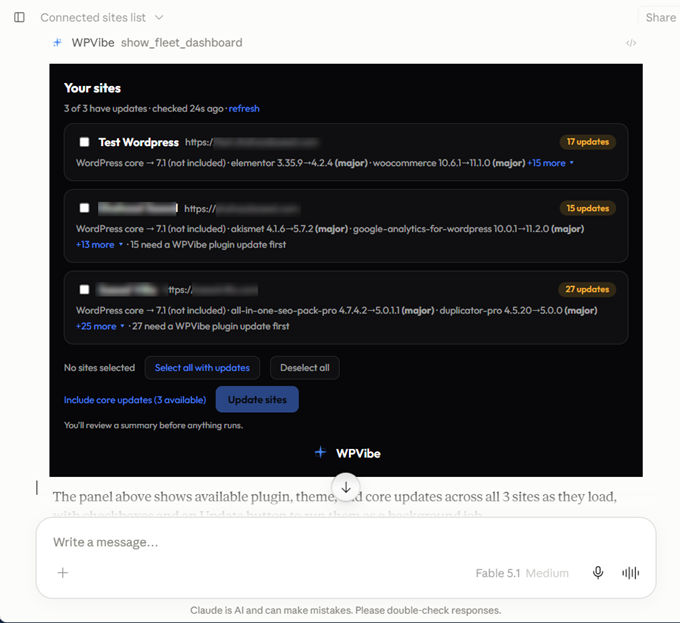
The introduction of Fleet Management is the most significant development here. Unlike traditional multi-site management tools, WPVibe utilizes a pre-and-post-update verification system. It queries the state of the site before an update and verifies the site’s health immediately after, ensuring that updates don’t inadvertently crash your site. This "fail-safe" logic, combined with the ability to initiate updates via a chat interface, represents a fundamental shift in how developers handle maintenance at scale.
Official Responses and Strategic Directions
The WordPress Core team has been careful to balance innovation with stability. While the buzz around AI is deafening, the core team has reaffirmed that AI features will remain in specialized plugins for the time being.
According to the Roadmap to WordPress 7.2, the priority for the December release remains focused on stability and refining the block editor. Mary Hubbard, WordPress Executive Director, has taken a broader industry view, assuming the presidency of the Open Website Alliance. This move signals that WordPress is doubling down on its commitment to open standards, ensuring that as AI changes the web, it does so in a way that respects the autonomy of site owners and the transparency of open-source software.
Meanwhile, Automattic’s launch of Spacefast—a hosting service designed for AI-generated static sites—suggests that the company is preparing for a future where the distinction between "writing code" and "prompting an agent" continues to blur.
Implications for Site Owners
The integration of these tools into your daily workflow is no longer optional for those wanting to maintain a competitive edge. However, this convenience brings new responsibilities.
1. The Security Obligation
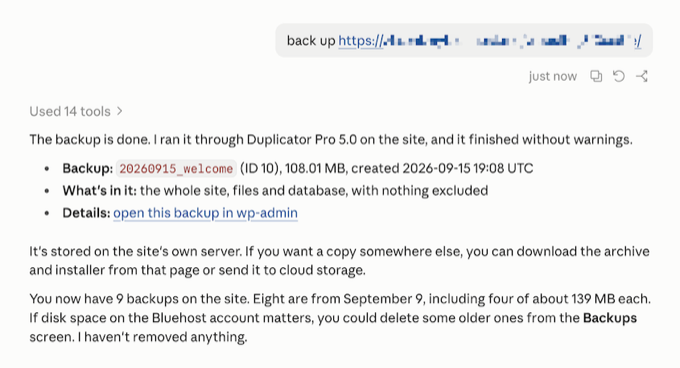
With the release of WordPress 7.1.2, which backported a critical security fix as far back as WordPress 4.7, the message is clear: Legacy is no excuse for insecurity. If your site is not on an automated update path, you are at risk. Always perform a full backup—ideally using the new AI-powered features in Duplicator 5.0—before initiating updates.
2. Streamlined Operations
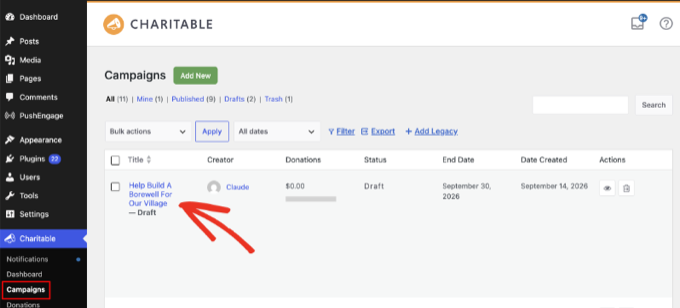
The new WPForms dashboard is a case study in efficiency. By centralizing entry, payment, and view data, site owners can pivot their strategy based on real-time data rather than guessing which forms are converting. Similarly, the ability of Charitable to allow AI to create fundraising drafts saves hours of administrative overhead, allowing nonprofits to focus on their mission rather than their plugin settings.
3. Global Reach through Automation
Universally’s new automatic language redirection and BuddyBoss’s real-time community translation mean that the barrier to entry for international markets is lower than ever. A Spanish-speaking user and an English-speaking user can now interact in the same community space, with the software facilitating the conversation in real-time. This is not just a feature; it is an expansion of the addressable audience for every community site owner.
Technical Deep-Dive: The WordPress Abilities API
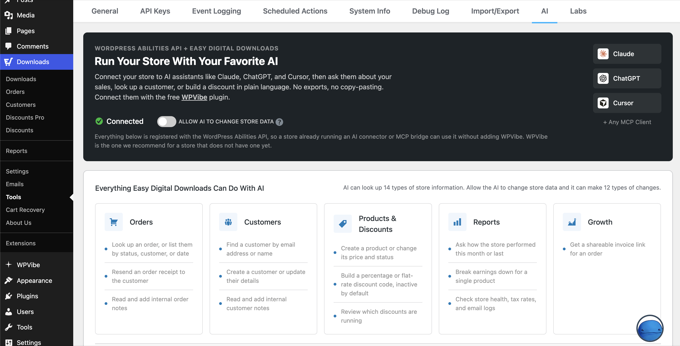
The backbone of this technological leap is the WordPress Abilities API. This standard allows a plugin to define its capabilities in a way that AI models can ingest and execute.
For instance, when you ask an AI to "create a 10% discount code for the next 30 days," the API translates that sentence into a database action within Easy Digital Downloads. The system then returns a confirmation, often with a "draft" status, allowing the administrator to exercise human oversight before the code goes live. This "human-in-the-loop" design is crucial. It ensures that while the grunt work is automated, the strategic control remains firmly in the hands of the site owner.
Future Outlook: What’s Next?
As we look toward the end of 2026, the focus will undoubtedly shift toward the stability of these AI integrations. WooCommerce 11.2, currently in beta, is already promising more granular control over checkout processes and product management.
Furthermore, the new Cookie Inspector by ConsentLayer reminds us that as we automate, we must remain compliant. Transparency in how data is collected and how cookies are set remains a legal requirement, and these new diagnostic tools are essential for any site owner operating in the EU or other regions with strict privacy regulations.
Conclusion
September 2026 was a month of consolidation. We moved from the "experimental" phase of AI in WordPress to a "functional" phase. Plugins are no longer just tools; they are nodes in an AI-powered network that you can command with natural language.
Our advice for the month ahead:
- Update: Ensure you are running WordPress 7.1.2 and the latest version of WooCommerce to patch the vulnerabilities reported this month.
- Audit: Use the new Cookie Inspector to ensure your site’s consent banner is actually blocking trackers as intended.
- Explore: If you haven’t yet, connect an AI assistant to your site using the WPVibe plugin. Even if you only use it for simple tasks, understanding how to communicate with your site via natural language will be the most important skill for a WordPress administrator in 2027 and beyond.
The WordPress ecosystem is moving faster than ever. By leveraging these AI-driven efficiencies, you aren’t just keeping up—you are building a more agile, responsive, and effective online presence. We look forward to seeing what you build next.
Got a plugin update, a major milestone, or a community story to share? Reach out to the WPBeginner team via our contact form—your news could be featured in our next Spotlight.



