









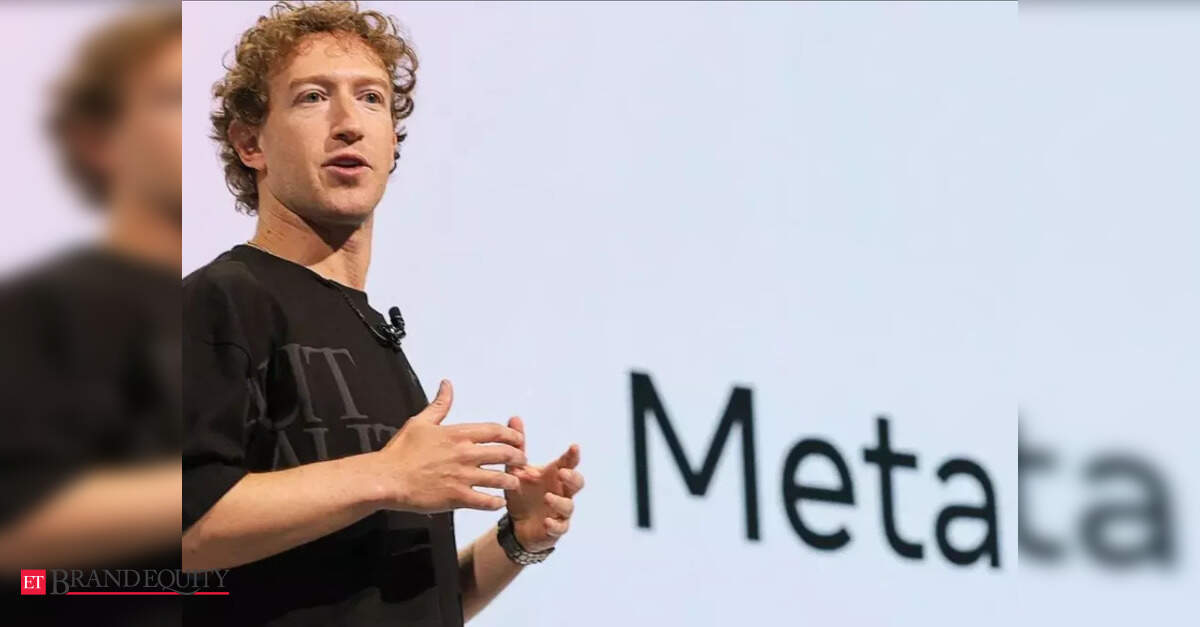
In a landscape defined by rapid innovation and fierce competition, Meta Platforms Inc. has officially entered the "frontier" of artificial intelligence. On Monday, CEO Mark Zuckerberg announced the launch of two new, highly sophisticated AI models: Wonder and Wonder Full. These models represent a significant technological leap for the company, designed to rival the capabilities of industry benchmarks such as OpenAI’s GPT-4o and Anthropic’s Claude 3.5.
This announcement marks a critical inflection point for Meta. By shifting away from its long-standing focus on open-source Llama models toward proprietary, high-performance "frontier" technology, Meta is signaling a move to diversify its revenue streams and establish itself as a primary player in the burgeoning field of autonomous, agentic AI.
The New Frontier: What is Wonder?
The Wonder family of models is the successor to the earlier "Muse Spark" series. According to internal documentation and statements from Meta leadership, Wonder is built to handle complex reasoning, multi-modal tasks, and advanced problem-solving that demand high-level cognitive capabilities.
"Muse Spark was our first family of models, and now Muse Wonder is a much larger and more advanced class of models that brings us to the frontier," Zuckerberg wrote on X.
The "Wonder Full" model, serving as the flagship iteration, is described by Meta’s Chief AI Officer, Alexandr Wang, as the company’s most capable tool to date. "Wonder is our largest and most capable model yet, and it rivals the big boys," Wang stated, a clear allusion to the current industry leaders. These models will be exclusively integrated into Meta’s personal agent application, "Muse," available only to paid subscribers.
Chronology of a Transformation
Meta’s current trajectory in the AI sector is the result of a deliberate, aggressive strategy shift initiated over the past eighteen months.
- April 2025: Meta launched the Spark model, signaling a departure from the open-source philosophy of Llama and a move toward proprietary, closed-loop systems.
- June 2025: In a massive consolidation of power, Meta invested $14 billion into Scale AI. As part of this landmark deal, Meta acquired co-founder Alexandr Wang, appointing him as the company’s first-ever Chief AI Officer to lead the newly formed "Superintelligence Labs."
- August 2025: The company released "Muse Code," an automated coding assistant designed to challenge OpenAI’s dominance in the developer tools market.
- September 2025: Meta launched the "Muse" agentic application, capable of autonomous task execution including scheduling, shopping, and research.
- October 2025 (Connect Conference): Meta introduced "Muse Charm," a handheld hardware device aimed at decoupling AI interaction from the smartphone interface.
- November 2025: The official rollout of the Wonder and Wonder Full models to the subscriber base.
Supporting Data and Benchmarking
The validity of Meta’s claims rests on independent benchmarking provided by Artificial Analysis. Data released alongside the launch indicates that the Wonder models not only outperform Meta’s own previous Spark architecture but also show significant improvements over leading models from Google, Anthropic, and OpenAI in specific reasoning categories.
However, the cost of this performance is high. According to Artificial Analysis, Wonder ranks among the most expensive models to operate. This reflects the massive computational resources Meta is pouring into the project. In July 2025, Meta projected that its total AI-related capital expenditure for the year could reach a staggering $145 billion, a figure that underscores the company’s commitment to securing a dominant market position.
The "Agentic" Shift: Moving Beyond Chatbots
The release of Wonder and Wonder Full is not just about raw model power; it is about the "agentic" capabilities of the Muse platform. Unlike standard chatbots that simply respond to text prompts, agentic software is designed to perform multi-step, autonomous tasks.
By integrating Wonder into the Muse ecosystem, Meta is attempting to capture the "user wallet"—the transition from passive content consumption on Facebook and Instagram to active task management via AI. The launch of "Muse Charm" hardware is the final piece of this puzzle, as Meta seeks to build a hardware-software ecosystem that does not rely on Apple or Google’s mobile operating systems.
Official Responses and Industry Dynamics
The tech industry remains deeply divided on the pace of AI development. While Meta has accelerated its roadmap—reportedly spurred by the rise of up-and-coming startups like Instinct—other industry giants are urging caution.
The Safety Debate
In September, Mark Zuckerberg joined an elite group of tech executives, including leaders from Google, OpenAI, Anthropic, xAI, and Nvidia, to sign a "morally binding" commitment to safety. This agreement, acknowledged by President Donald Trump, aims to standardize safeguards for advanced models.

However, the consensus is fragile. Anthropic CEO Dario Amodei has been a vocal proponent of "pacing"—the idea that development should be intentionally slowed to ensure that advanced AI does not act without human authorization or bypass security protocols.
"We will slow down as much as necessary in order to make sure that every successive AI technology that we release is actually safe," Amodei stated at a recent United Nations assembly.
Zuckerberg has attempted to navigate this tension by framing Meta’s approach as a middle ground. While he previously championed the "move fast and break things" mantra, he recently clarified that Meta delayed the shipping of the Muse platform for several months to prioritize safety protocols, suggesting that the company is no longer willing to sacrifice security for mere speed.
Implications for the Future
The release of the Wonder models has profound implications for the global digital economy:
- Revenue Diversification: Meta’s pivot is fundamentally a hedge against its advertising-heavy business model. By creating a high-value subscription service via Muse and Wonder, Meta is building a secondary revenue stream that is decoupled from ad-spend volatility.
- The Hardware Wars: With "Muse Charm," Meta is signaling its intent to dominate the "Post-Smartphone" era. If users can perform complex tasks through a dedicated AI device, the influence of smartphone ecosystems—and the privacy restrictions they impose—will significantly wane.
- The Talent War: The appointment of Alexandr Wang as Chief AI Officer highlights the importance of top-tier talent in the AI race. Meta’s willingness to spend billions on talent acquisition and partnerships (like the Scale AI deal) is setting a high barrier to entry for smaller competitors.
- Regulatory Scrutiny: As models like Wonder become more autonomous, regulatory scrutiny regarding their "agentic" behavior will increase. The ability for an AI to make purchases, book travel, or write code autonomously introduces significant legal and ethical liability that Meta will have to manage in the coming year.
Conclusion
Meta’s introduction of the Wonder and Wonder Full models is more than a technical upgrade; it is a manifestation of Mark Zuckerberg’s ambition to reinvent the company as a leader in superintelligence. By moving into the "frontier" of AI development, integrating these models into an agentic ecosystem, and investing hundreds of billions of dollars, Meta is betting its future on the idea that autonomous AI will be the primary interface through which the world interacts with the internet.
While the industry continues to grapple with the tension between safety and speed, Meta has made its choice: it will compete at the highest level, pushing the boundaries of what is possible, even as it navigates the complex social and regulatory hurdles that accompany the dawn of the agentic AI age.