Main Facts
The technology landscape experienced an unusually dense wave of tool releases this July, bridging the gap between automated workflows, local-first environments, and performance-optimized execution. The month’s ecosystem updates span across several major engineering frontiers: next-generation artificial intelligence (AI) agent evaluations, localized and self-hosted Single Sign-On (SSO) architectures, zero-dependency PHP compilation directly to native assembly, and multi-protocol terminal utilities designed to streamline infrastructure management.
Engineers and designers building modern applications face a rapidly shifting matrix of choices. This July’s releases emphasize developer ergonomics, a pivot away from proprietary SaaS lock-in toward self-hosted infrastructure, and a sophisticated integration of AI models directly into routine software development life cycle (SDLC) pipelines.
Chronology of July’s Major Releases
The July release cycle unfolded rapidly across multiple distinct technology categories, beginning with developer utilities and moving aggressively into agent-driven development ecosystems:
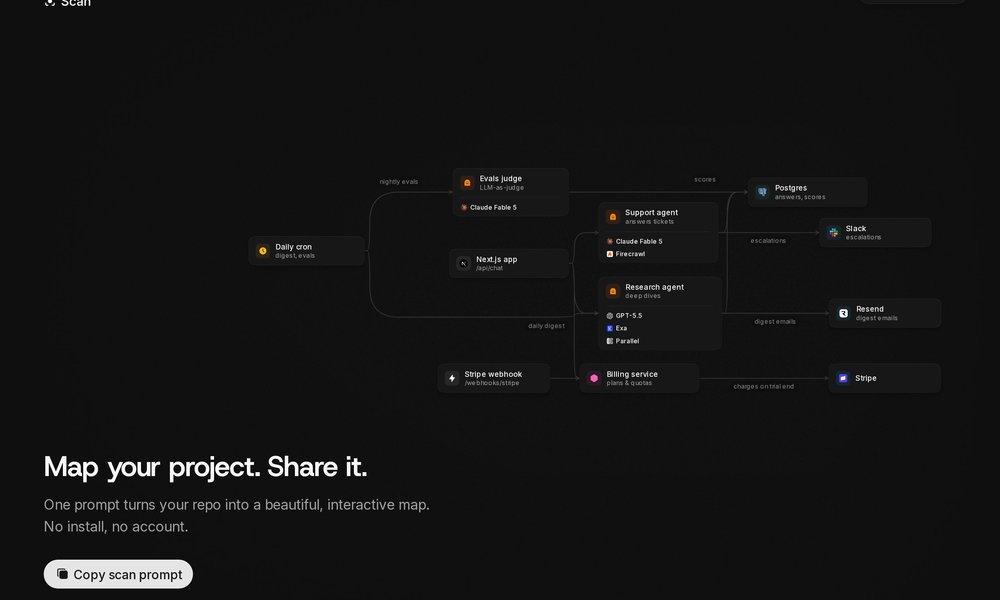
- Early July — Developer Experience & Git Workflows: Tools like Codiff and Foglamp Scan introduced zero-setup codebase visualization and LLM-powered diff walkthroughs, aiming to decrease the cognitive load of navigating unfamiliar repositories.
- Mid-July — AI Agent Evaluation & Frameworks: Benchmarking platforms such as ReactBench launched alongside agentic environments like OpenChamber and Open Design, fundamentally shifting the metric of AI capability from simple unit test pass rates to production-ready component shipping and visual design execution.
- Late July — Systems, Compilers & Infrastructure: The release of elephc (a static PHP compiler targeting native assembly), Docker’s official Go SDK, and open-source infrastructure tools like VoidAuth and Cloudflare Agentic Inbox marked a distinct return to low-level performance and self-hosted sovereignty.
Supporting Data: Breakdown of Key Tools and Frameworks
1. AI Coding Agents, Benchmarks, and Design Engines
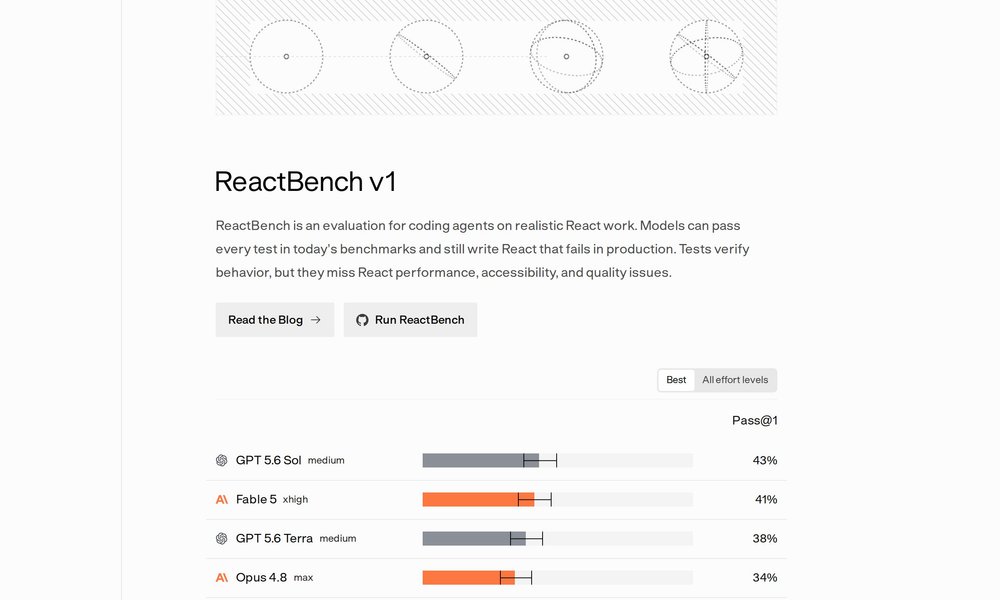
- ReactBench: Moving beyond primitive unit test evaluation, ReactBench tests coding agents on real-world React projects, evaluating performance, web accessibility, and overall code quality. Created by the team behind React Doctor, its public leaderboard helps developers choose the optimal AI model for frontend component generation.
- OpenChamber: An open-source, multi-window agentic development environment running on macOS, Windows, and browsers. It enables parallel multi-model executions via an Agent Manager, secure remote tunnel access, and features a beta mobile companion app.
- Foglamp Scan: A zero-setup tool that instructs your coding agent to analyze project structures and instantly visualize codebase architecture without requiring accounts or local installations.
- Open Design: Positioned as an open-source alternative to proprietary solutions like Claude Design, this local execution engine works with 21 coding agents and 151 design systems, exporting final assets to HTML, PDF, PPTX, and MP4 formats under an Apache-2.0 license.
- Ponytail: A specialized ruleset designed to reduce AI coding verbosity. Benchmarks indicate it reduces generated code volume by up to 54% without sacrificing code safety or reliability across major coding assistants.
2. Modern Git, Version Control, and Code Review
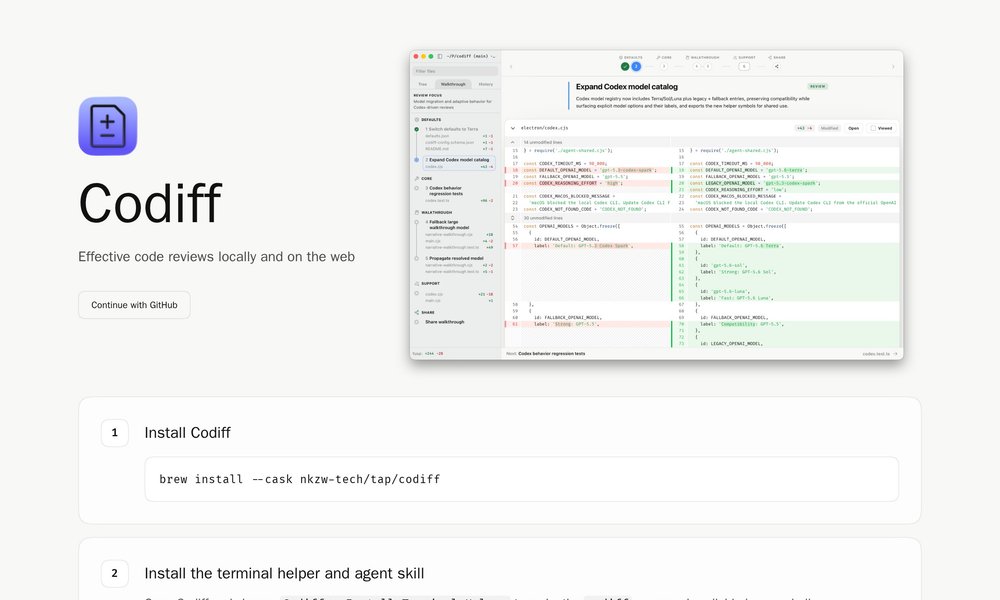
- Codiff: A minimal, lightning-fast diff viewer designed to review Git changes outside your traditional IDE. It natively generates LLM walkthroughs of code modifications, handles inline comments for GitHub and GitLab, and supports direct Markdown review exports.
3. Systems Programming, Compilers, and Infrastructure
- Elephc: A disruptive compiler that translates a static subset of PHP directly into native assembly, bypassing the Zend Engine, interpreters, and virtual machines entirely. Featuring over 400 built-in functions, 21 data types, and more than 3,000 tests, it outputs standalone, highly performant binaries alongside a prefork HTTP server.
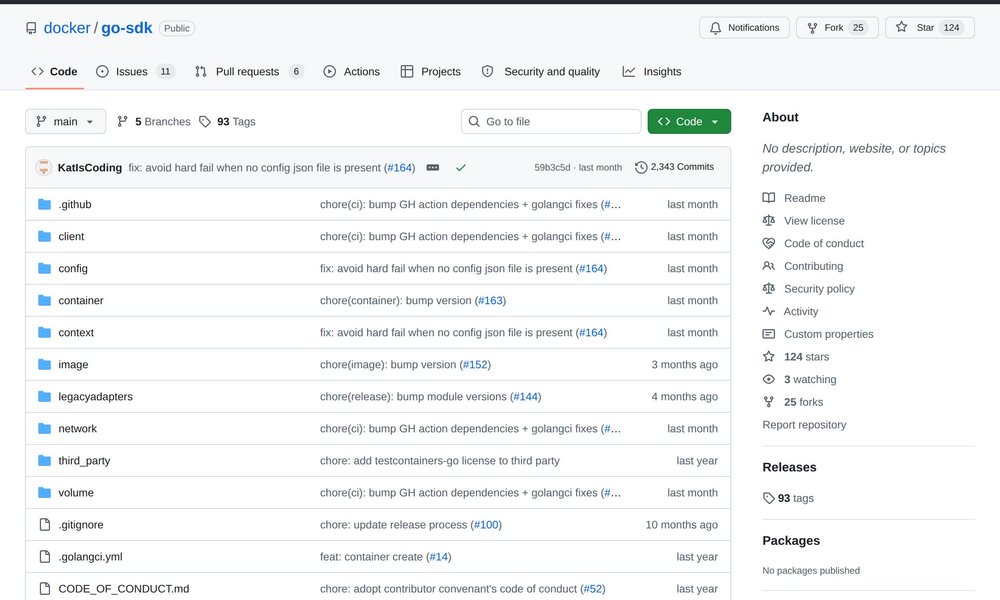
- Docker Go SDK: Docker’s official higher-level Go client simplifies image pulling with built-in authentication, container execution with automatic random ports, and advanced wait strategies, while retaining access to the low-level Moby client.
- Yerd: A lightweight, 8 MB daemon built for macOS and Linux that replaces heavy Docker setups with a streamlined local PHP stack supporting multiple PHP versions, automatic
.testdomains with HTTPS, and native database drivers like MySQL, PostgreSQL, and Redis.
4. Self-Hosted Infrastructure, Security, and Productivity
- VoidAuth: An open-source SSO solution for self-hosted infrastructure. It supports OpenID Connect, LDAP, WebAuthn passkeys, MFA, user self-registration, and encrypted storage using PostgreSQL or SQLite.
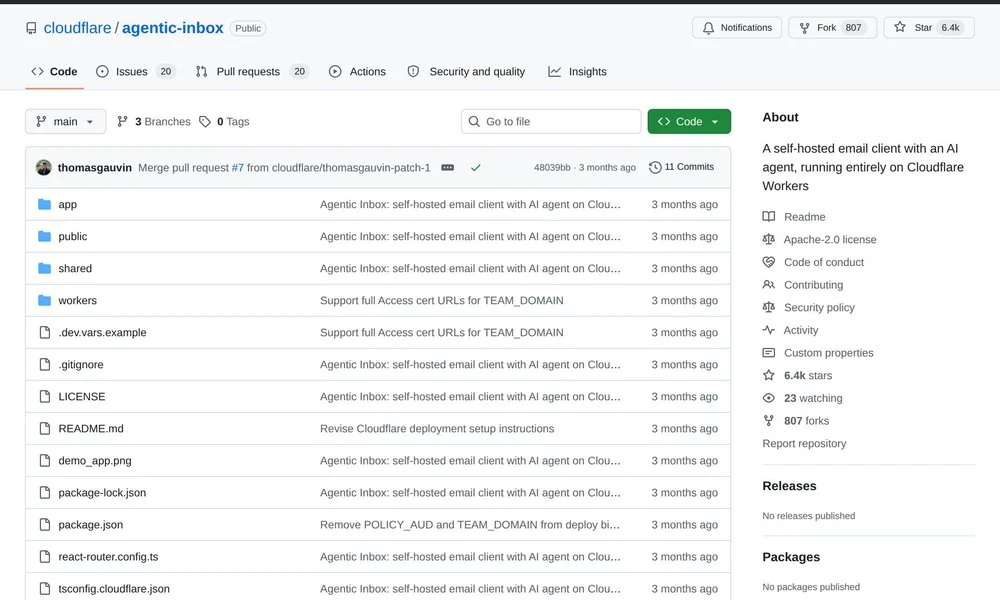
- Cloudflare Agentic Inbox: A serverless, self-hosted email client operating entirely on Cloudflare Workers. It maps inbound emails via Cloudflare Routing, assigns individual Durable Objects with SQLite per mailbox, stores attachments in R2, and leverages integrated AI agents to read, search, and draft responses.
- TermSCP: A cross-platform terminal file transfer client written in Rust that supports SCP, SFTP, FTP/S, S3, Kubernetes, SMB, and WebDAV protocols, utilizing system keychains for secure credential management.
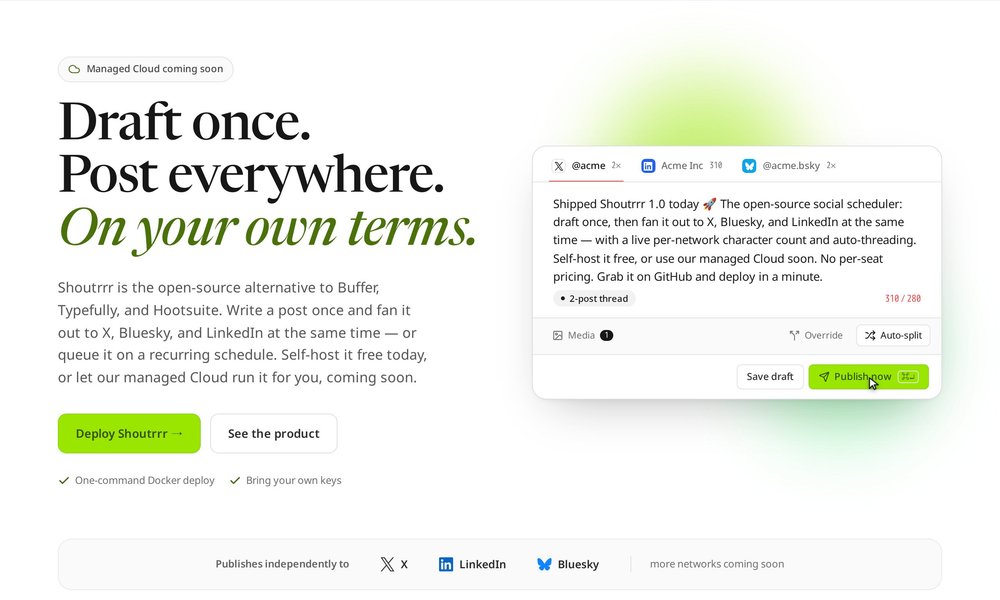
- Shoutrrr: An open-source, self-hosted alternative to social media management platforms like Buffer and Hootsuite, allowing users to draft and schedule posts across X, Bluesky, and LinkedIn with encrypted credential management.
Official Responses and Developer Community Feedback
The developer community has responded enthusiastically to the trend of local-first, self-hosted alternatives to cloud subscription models. Open-source maintainers note a distinct shift in user priorities: data ownership, minimal runtime overhead, and deterministic execution environments have taken precedence over convenience-driven SaaS platforms.
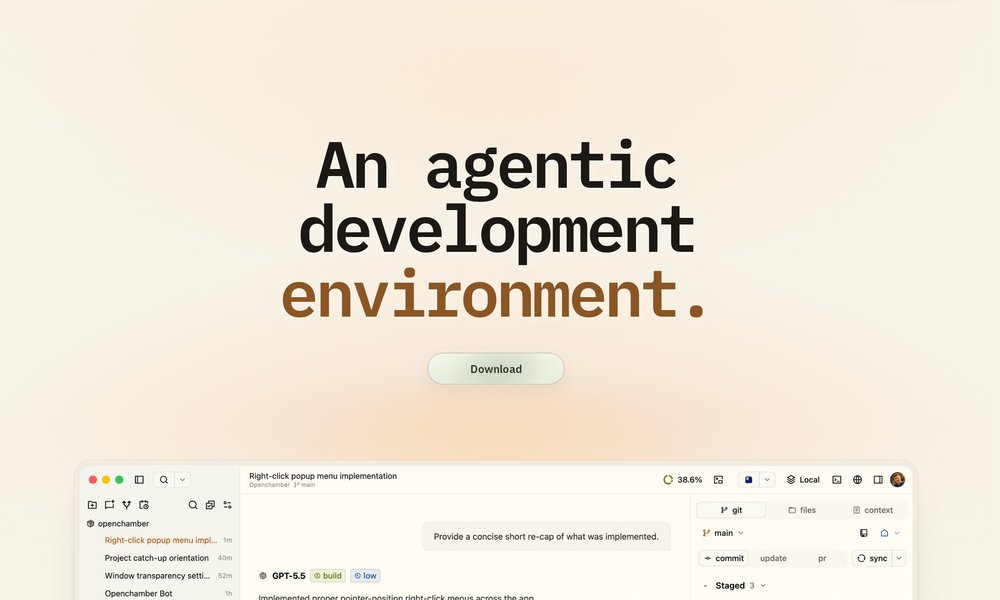
Feedback regarding elephc highlights profound interest within the PHP community, as the capability to compile code into minimal standalone binaries opens new avenues for microservices and CLI tooling written in PHP. Similarly, reactions to OpenChamber and Open Design reflect a growing demand for unified, local agent management tools that do not leak proprietary codebases to third-party cloud aggregators.
Implications for the Future of Software Engineering
The convergence of these tools signals several long-term structural shifts in the software engineering industry:
- The Rise of Agent-Native Workflows: Codebases are increasingly designed not just for human comprehension, but for AI agent readability. Tools like Foglamp Scan and Ponytail prove that controlling agent verbosity and accelerating repository comprehension are critical engineering metrics.
- Decentralization and Self-Hosting Renaissance: Tools like VoidAuth, Cloudflare Agentic Inbox, and Shoutrrr demonstrate that developers are actively reclaiming infrastructure sovereignty. By utilizing edge computing (Cloudflare Workers) and lightweight daemons (Yerd), engineering teams can bypass expensive, centralized enterprise licensing fees.
- Blurring Lines Between Interpreted and Compiled Languages: Projects like elephc challenge traditional performance paradigms, proving that mature dynamic languages can successfully adopt static compilation pathways to achieve native assembly execution speeds.
As these tools mature throughout the remainder of the year, developers who successfully integrate agentic evaluation frameworks and lean infrastructure stacks into their workflows will likely see compounding gains in deployment velocity, security posture, and overall system maintainability.