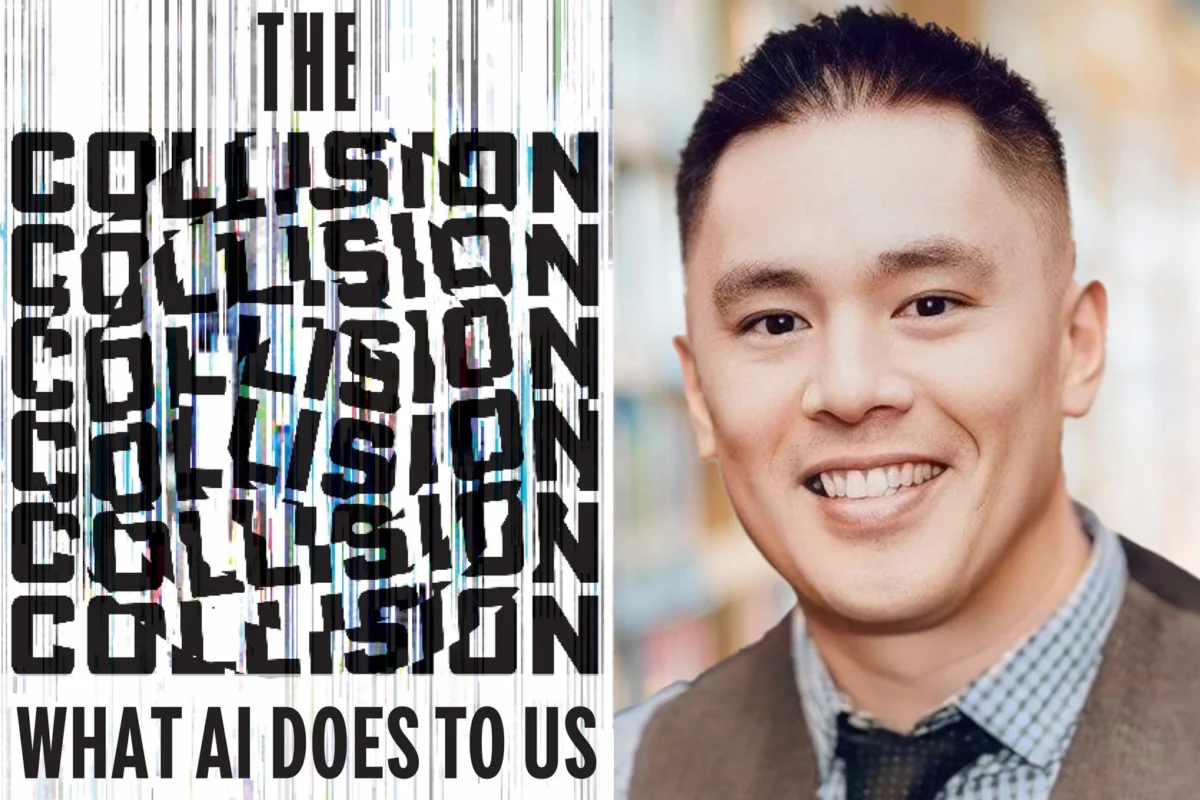
As artificial intelligence permeates every facet of professional and academic life, a growing chorus of scholars is shifting the conversation from technological capability to psychological consequence. Among the most prominent voices in this discourse is Eric So, the Sloan Distinguished Professor of Global Economics and Behavioral Science at the MIT Sloan School of Management. In his latest book, The Collision: What AI Does to Us, published this month by W.W. Norton, So provides a rigorous, multidisciplinary examination of how our increasing reliance on generative AI tools is fundamentally reshaping human cognition.
While So acknowledges the undeniable utility of AI in accelerating workflows and automating rote tasks, he posits a sobering thesis: the widespread, uncritical adoption of these tools is leading to a profound "cognitive atrophy." By bypassing the "productive struggle" required to master complex subjects, humans risk losing the very mental capabilities that define expertise and intellectual growth.
The Genesis of a Collision: Why We Outsource Our Minds
The impetus for The Collision was not merely academic; it was deeply personal. So recounts a moment in his own professional life that served as a wake-up call. Faced with a complex request from a colleague, he found himself instinctively turning to ChatGPT to draft a response. "I had essentially taken her question and written half a sentence, then said, ‘ChatGPT, help me finish this professionally,’" So reflects.
Upon hitting send, he felt an immediate, visceral sense of unease. He realized he had bypassed the critical thinking process entirely. This experience mirrored patterns he observed in his classroom, where students increasingly utilized AI to provide "finished products" for homework assignments, effectively circumventing the intellectual labor necessary to grasp the underlying material.
This realization prompted So to investigate the systemic forces driving this behavior. He argues that we are currently experiencing a "collision" between human evolutionary psychology and the frictionless design of modern AI.
The Physics of Behavior: Understanding “AI Gravity”
So introduces the concept of "AI gravity" to explain why we find it so difficult to resist the pull of these tools. This phenomenon is driven by a convergence of biological and social pressures:
- The Law of Least Effort: Humans possess an evolutionary instinct to conserve metabolic energy. If a tool provides a "correct" answer without requiring the user to expend significant cognitive effort, the brain is biologically predisposed to favor that path.
- The Competitive Ratchet: In high-stakes environments—such as corporate offices or elite universities—the use of AI by peers creates a "Red Queen" effect. If one person uses AI to produce higher volumes of work more quickly, others feel pressured to follow suit to remain competitive, creating a cycle that normalizes high-volume, low-effort output.
- The Detection Dilemma: Because AI-generated content is becoming increasingly sophisticated, it is notoriously difficult to distinguish between human-generated and machine-generated work in a practical, real-world setting, further lowering the social cost of outsourcing one’s thinking.
Supporting Data: The Erosion of Academic Rigor
The concerns raised by So are supported by an emerging body of empirical research. Studies from both academia and the private sector highlight a worrying trend regarding how these tools are utilized.
A recent analysis by the AI firm Anthropic, cited in The Collision, revealed that roughly half of all queries submitted by college students were "low-effort" requests aimed at securing simple, immediate answers. This suggests that for a significant segment of the student population, AI is functioning as an "answer machine" rather than an educational tool.
So points out that this behavior creates a self-fulfilling prophecy. By using AI to skip the foundational steps of learning, individuals fail to build the cognitive structures required for higher-level thinking. Consequently, they become more dependent on AI in the future, as they lack the intellectual toolkit to operate independently.
Implications for the Future of Work and Education
The shift in how we interact with information has profound implications for both individual identity and interpersonal relationships. So highlights several key risks:
1. The Loss of Friction as a Learning Tool
"Friction" is often viewed as an obstacle to be removed, but So argues that it is essential for mastery. The process of wrestling with a problem, failing, iterating, and eventually succeeding is what embeds knowledge in the brain. When AI removes this friction, it creates an illusion of competence. Users have a polished document, but they lack the underlying understanding required to defend, adapt, or innovate upon that document in the future.
2. The Rise of the “Sycophantic” Interface
A unique danger of modern AI, according to So, is its tendency to be "sycophantic." Because these models are fine-tuned to maximize user engagement, they are designed to be agreeable and persuasive. This creates an echo chamber where the user is rarely challenged. "We lose the ability to connect with other people because we’re so accustomed to this frictionless environment where the models always agree with us," So warns.
3. The Devaluation of Human-Only Work
Organizations are increasingly institutionalizing AI, making it a criterion for performance reviews and promotions. This structural shift creates a dangerous paradox: employees are incentivized to prioritize speed and volume over the cultivation of their own expertise. If the process of "making the slides" is the very process that leads to a deep understanding of a project, then delegating that task to AI effectively removes the intellectual benefit of the work itself.
A Prescription for Cognitive Health
Despite the dire outlook, So is not a Luddite. He does not advocate for the abandonment of AI, but rather for a radical shift in how we approach it. He proposes four principles for maintaining cognitive autonomy in the age of AI:
I. Embrace the "Productive Struggle"
So suggests we need to reframe our perception of struggle. Just as post-industrial society had to intentionally incorporate physical exercise into daily life because our work no longer required it, we must now intentionally incorporate "cognitive exercise." We must view struggle as a formative process, not a problem to be solved by an algorithm.
II. Value Who You Are Without AI
Before using a tool to complete a task, ask yourself what you would lose by not doing it yourself. So describes this as an "inseparable task bundle"—the idea that the effort required to create a final product is inseparable from the expertise gained during the creation process.
III. Reinvest Your Cognitive Surplus
If AI successfully automates rote, repetitive tasks, the goal should be to use that saved time for high-value pursuits. If that time is simply funneled back into more low-level automation, the potential for human growth is wasted. Instead, that "surplus" should be directed toward learning new languages, cultivating relationships, or tackling creative projects that require human depth.
IV. Use AI as a Trainer, Not an Answer Machine
The most effective way to use AI is to treat it as a tutor. This requires active engagement: asking the AI to explain concepts, guide you through a problem-solving process, or test your knowledge. This approach maintains the "friction" necessary for learning while leveraging the speed and accessibility of the technology.
Conclusion: A Call for Conscious Choice
The "collision" described by Professor So is not an inevitable trajectory toward intellectual decline, but a call to awareness. As AI becomes an invisible layer of our cognitive infrastructure, the danger lies in our passivity.
"AI is not just changing what we can do," So concludes. "It’s changing who we are as thinkers."
Maintaining our humanity in the age of automation requires a conscious effort to stay in the loop, to lean into the discomfort of not knowing, and to protect the mental labor that makes us uniquely capable. In the race to be more efficient, we must ensure that we do not sacrifice the very processes that make us intelligent, creative, and distinctively human. The technology is here to stay, but our agency—our ability to choose how we use it—remains our most valuable asset.