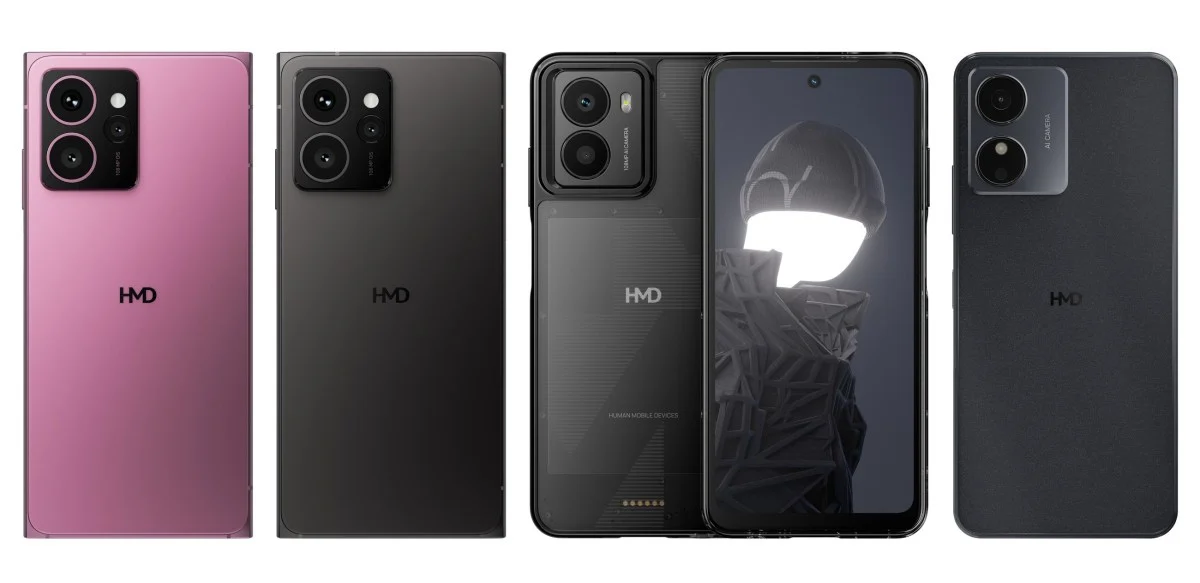
LONDON — In a development that has sent ripples through the mobile technology landscape, new reports indicate that HMD, the company once heralded as the savior of the Nokia brand in the smartphone arena, is preparing for a significant strategic pivot. According to recent intelligence originating from historically reliable industry insiders, the Finnish-rooted enterprise is reportedly planning to withdraw from select international territories and dramatically scale down production across its broader consumer device portfolio.
While the report remains unverified, it has ignited widespread speculation regarding the future viability of independent mid-tier smartphone manufacturers in an increasingly consolidated global market. As consumer upgrade cycles lengthen, manufacturing costs rise, and giants like Apple and Samsung tighten their grip on market share, HMD’s alleged retreat highlights the profound pressures facing alternative hardware ecosystems.
Main Facts
The core of the unfolding story centers on a fundamental restructuring of HMD’s business model. Leaked details suggest that the company is abandoning its broad-based, global consumer approach in favor of a hyper-targeted strategy.
- Geographic Retrenchment: HMD is reportedly preparing to exit select international markets where profitability has proven elusive or where competitive saturation is too severe to justify continued operational expenditure.
- Portfolio Reduction: Global device launches may be brought to a halt for the remainder of the calendar year. Rather than rolling out universal handsets worldwide, the company is expected to transition toward localized, market-specific releases.
- Strategic Realignment: The company’s core focus is allegedly shifting toward two distinct pillars: localized regional markets where brand equity remains strong, and the high-margin enterprise and industrial sectors.
- The Rumor Source: The intelligence first surfaced via a well-known industry tipster (@smashx_60 on X, formerly Twitter), whose past track record regarding HMD product pipelines and corporate movements lends considerable weight to the claims, despite the lack of formal corporate confirmation.
Chronology of Events and Market Shifts
To understand how HMD arrived at this precarious juncture, it is essential to examine the historical timeline of the brand and the compounding market pressures that have shaped its trajectory over the past decade.
2016–2018: The Hopeful Renaissance
Following Microsoft’s divestment of the Nokia mobile phone business, a new company named HMD Global was formed in Finland, led by former Nokia executives. Armed with an exclusive licensing agreement to use the Nokia brand on mobile phones and tablets, the startup launched with immense consumer nostalgia and goodwill. Early product rollouts—spanning both feature phones and Android-powered smartphones—focused on clean software (Android One), reliable build quality, and affordable pricing. For a brief window, the strategy succeeded in moving significant unit volumes, briefly placing HMD among the top global feature phone vendors and a notable player in the mid-tier smartphone space.
2019–2021: The Strategic Pivot and Divergence
As the global smartphone market matured, HMD faced mounting challenges in competing against aggressive Chinese original equipment manufacturers (OEMs) like Xiaomi, Realme, and Oppo, which offered superior hardware specifications at razor-thin margins. In response, HMD began recalibrating its strategy. The company gradually de-emphasized high-end flagship devices—abandoning attempts to compete with the likes of the Galaxy S-series or iPhone—and instead doubled down on durability, sustainability, and affordability.
2022–2023: The Birth of the "HMD" Brand Identity
Recognizing the limitations of relying solely on a licensed brand name, the company initiated a pivotal brand evolution. HMD began introducing hardware bearing its own name alongside the traditional Nokia branding. This transition signaled an ambition to build an independent corporate identity capable of surviving beyond the expiration of the Nokia licensing agreement. Concurrently, the company expanded its enterprise offerings, targeting B2B customers with ruggedized devices, fleet management software, and security solutions.
2024–Present: Contraction and the Current Rumors
By 2024, macroeconomic headwinds, inflationary pressures, and stagnant consumer demand for budget-friendly smartphones had severely impacted profit margins across the industry. Despite ongoing efforts to diversify—including partnerships with Mattel for novelty devices like the Barbie Phone—the core smartphone business struggled to capture meaningful market share. The latest rumors regarding market withdrawals and production freezes represent the logical, albeit painful, culmination of these long-term financial pressures.
Supporting Data and Industry Context
An objective analysis of HMD’s current standing requires looking closely at the macroeconomic realities of the modern mobile device market. The smartphone industry is currently experiencing a bifurcated reality: premium flagships continue to command high average selling prices (ASPs) and resilient consumer demand, while the ultra-budget and lower-mid-range segments are facing severe saturation and shrinking margins.
The Decline of the Feature Phone Safe Haven
Historically, HMD maintained a profitable baseline through its massive global volume of feature phones (often referred to colloquially as "dumbphones"). While smartphone sales fluctuated, feature phones provided stable cash flow in developing markets across Africa, Asia, and parts of Europe.
However, this foundational pillar faces an unmistakable expiration date.
- The 4G/5G Transition: As telecommunications infrastructure rapidly evolves, telecom operators worldwide are shutting down legacy 2G and 3G networks to reallocate spectrum for 4G LTE and 5G services.
- Shifting Demographics: Even in emerging markets, consumer aspirations are shifting. The declining cost of entry-level smartphones means that younger generations are bypassing feature phones entirely or transitioning to smart devices much earlier in life. Consequently, year-over-year demand for classic feature phones is on an irreversible downward trajectory.
Smartphone Market Dynamics
In the broader smartphone arena, HMD has struggled to break into the top tier of global vendors. According to market research metrics from firms like IDC and Canalys, the global smartphone market is heavily dominated by five primary players: Apple, Samsung, Xiaomi, Transsion, and OPPO/Vivo.
For smaller, independent brands without massive manufacturing subsidies or expansive semiconductor supply chains, competing on price is a losing battle. The cost of component sourcing, research and development, software maintenance, and global regulatory compliance has skyrocketed. For HMD, maintaining a sprawling global distribution network for devices that yield slim margins is no longer economically sustainable.
Official Responses and Corporate Stance
As of publication, HMD has not issued a formal, public press release addressing the specific claims made by the recent leaks. Corporate communications channels remain focused on existing product lines, enterprise solutions, and recent regional activations.
Industry observers note that this silence is standard procedure for publicly or privately held technology firms facing unverified rumors of internal restructuring. Companies typically refrain from commenting on leaked operational roadmaps to avoid destabilizing retail partnerships, supplier negotiations, and consumer confidence until executive leadership is prepared to execute a definitive strategic shift.
However, analysts monitoring the situation anticipate that if these rumors are grounded in truth, an official corporate communication or updated investor briefing will likely follow before the end of the current fiscal quarter, particularly as retail partners finalize inventory orders for the upcoming holiday and shopping seasons.
Implications of the Shift
Should HMD proceed with scaling down its global device portfolio and retreating from select markets, the implications for the broader mobile ecosystem, retail partners, and loyal consumers will be profound.
1. The Shrinking Landscape of Alternative Brands
The most significant impact of HMD’s reported retreat is the ongoing homogenization of the global mobile market. Over the past decade, consumers have witnessed the steady contraction of alternative smartphone brands—such as LG, HTC, BlackBerry, and now, potentially, the scaled-back presence of HMD. As independent players exit or downplay consumer channels, the market increasingly concentrates power into the hands of a few multinational conglomerates. This reduction in competitive friction can lead to less innovation, fewer design experiments, and potentially higher pricing for consumers.
2. A Strategic Pivot to B2B and Enterprise Resilience
While a retreat from consumer markets sounds alarming on the surface, refocusing on the enterprise and industrial sectors may actually represent a rational survival strategy.
- Higher Margins: Enterprise clients—such as logistics firms, healthcare providers, field-service organizations, and government agencies—prioritize device longevity, security, fleet management tools, and rugged build quality over flashy consumer features. These clients are also willing to pay a premium for reliable support contracts.
- Predictable Revenue: B2B contracts typically involve bulk orders and multi-year deployment cycles, offering hardware manufacturers much greater financial predictability than the volatile, consumer-driven retail market.
3. The Future of the Nokia Mobile Brand
For legions of consumers worldwide, the Nokia name remains deeply intertwined with the history of mobile telephony. While HMD’s use of the Nokia brand has been a vital marketing tool, the company’s gradual transition toward its own "HMD" branding suggested an inevitable parting of ways. If global consumer device production is severely curtailed, the visibility of the Nokia brand in the mobile space will inevitably dim further, marking the quiet close of yet another chapter in mobile industry history.
4. Consumer Support and Ecosystem Longevity
Current owners of HMD-branded or Nokia-branded smartphones will naturally harbor concerns regarding software updates, security patches, and warranty fulfillment if the company scales down its operations. While a shift to regional and enterprise markets does not instantly nullify existing hardware support obligations, it may mean that future software update pipelines become more conservative or restricted to specific enterprise-grade models. Consumers living in markets designated for withdrawal may find it increasingly difficult to source authorized repairs, replacement parts, or new device upgrades directly through official channels.
Conclusion
The latest rumors surrounding HMD paint a sobering picture of the realities facing mid-tier hardware manufacturers in the modern era. Caught between the relentless dominance of industry titans and the rising costs of global consumer distribution, HMD appears to be making a calculated, defensive retreat.
By pruning unprofitable international markets, halting broad global product launches, and pivoting toward the more stable enterprise and regional sectors, the company is prioritizing financial survival over global ubiquity. Whether this unverified rumor materializes into a formal corporate restructuring remains to be seen, but the writing on the wall is clear: the era of the universal, boundary-spanning independent smartphone vendor is facing unprecedented headwinds. We will continue to monitor developments closely and provide updates should HMD issue an official statement regarding its future operational roadmap.