







The landscape of website management is undergoing a tectonic shift. For years, AI tools have functioned primarily as consultants—brilliant at identifying SEO pitfalls, flagging broken links, or critiquing meta descriptions, but fundamentally paralyzed when it came to execution. A site owner might receive a comprehensive report detailing a catastrophic SEO error, only to face the tedious, manual labor of navigating the WordPress back-end to fix it.
Today, Yoast has officially closed that gap. With the latest update to its Yoast SEO Abilities, the company is moving beyond simple diagnostic reporting to enable direct, agentic control over technical SEO settings. This evolution marks a significant milestone in the integration of Model Context Protocol (MCP) and WordPress, effectively giving AI agents the "hands" to perform the work they previously could only describe.
The Core Transformation: Moving from "Consultant" to "Operator"
For most webmasters, the workflow has historically been reactive. You run an audit, receive a list of findings—perhaps a product page mistakenly categorized as a recipe or a canonical link pointing to a legacy staging site—and then spend hours manually adjusting settings in the WordPress dashboard.
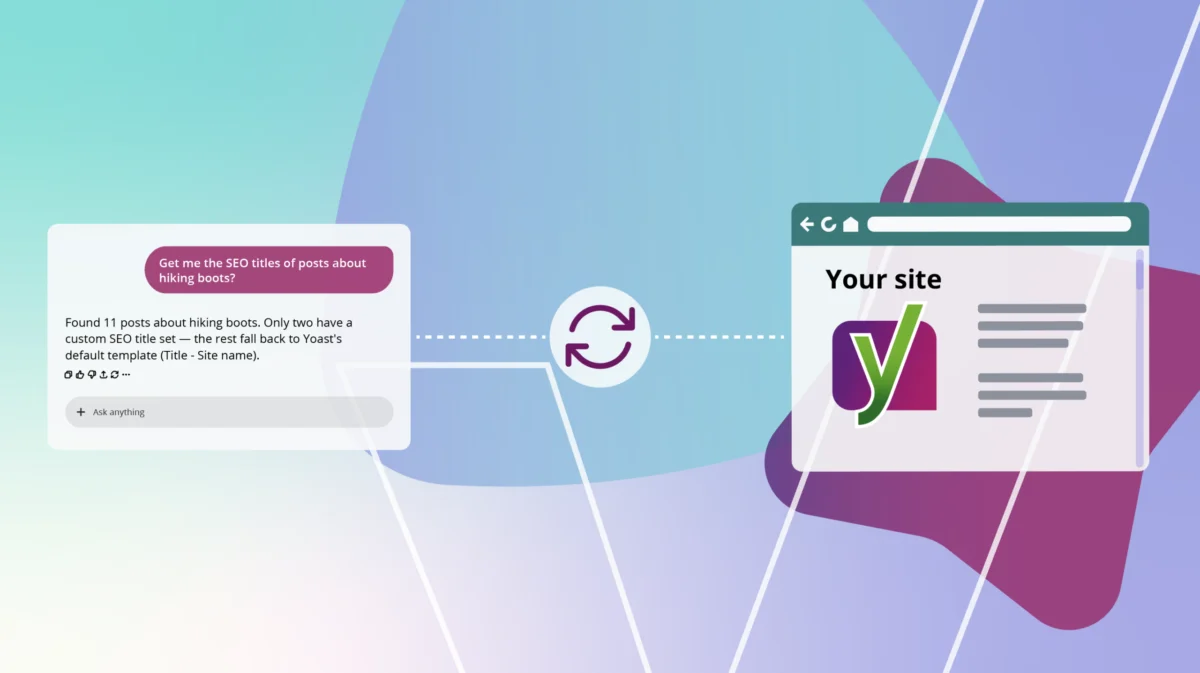
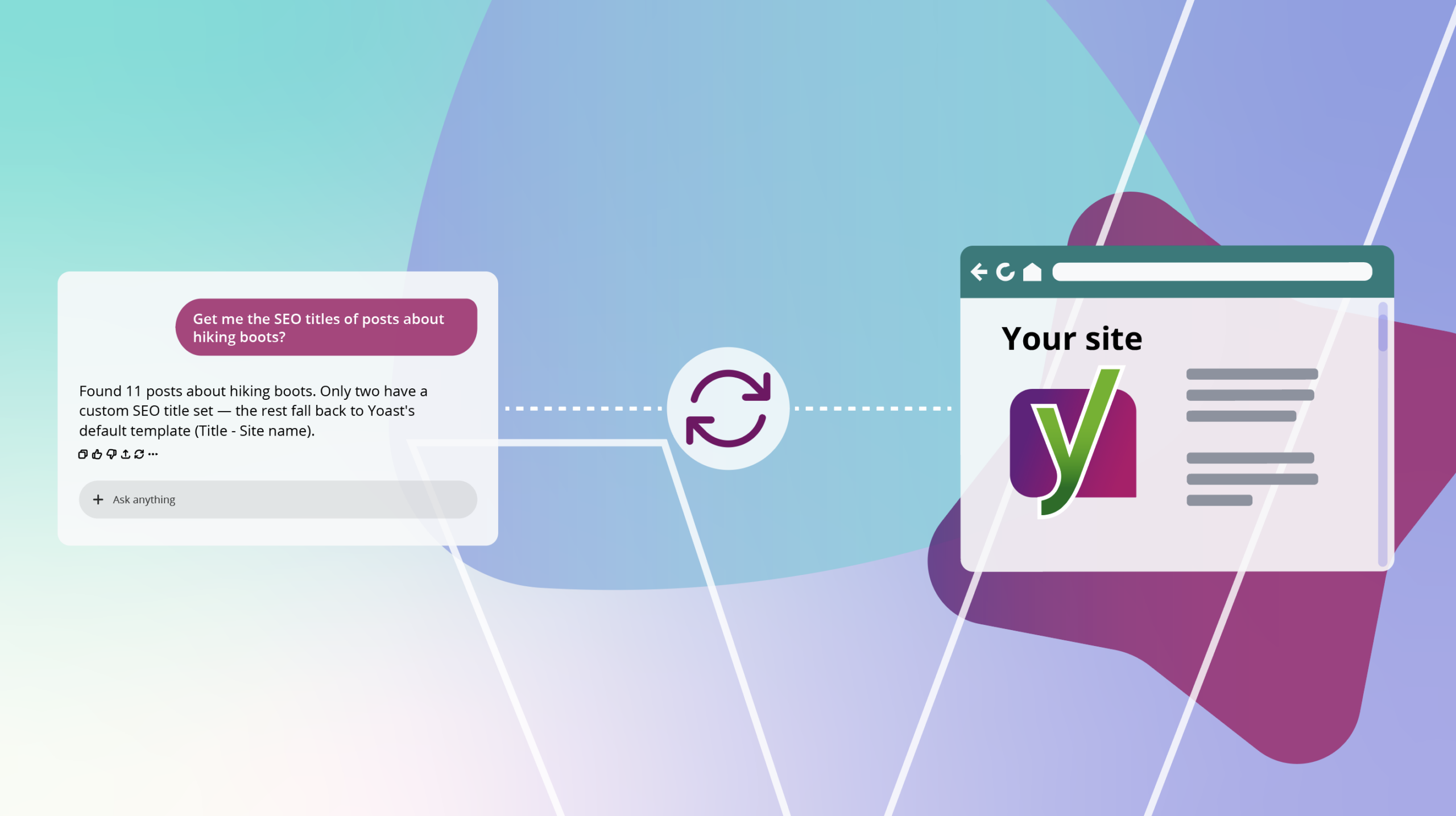
The new Yoast SEO update changes the paradigm by utilizing the WordPress Abilities API to allow AI tools to interact with the site’s underlying data. This is not just a cosmetic change; it is a fundamental shift in how WordPress sites are maintained. By providing a secure, standardized, and machine-readable interface, Yoast allows an AI agent to read an SEO field, identify a discrepancy, and apply a fix in a single, fluid session.
The Significance of the Abilities API
The WordPress Abilities API acts as the bridge between the CMS and the world of agentic AI. By leveraging this, Yoast ensures that the integration isn’t a "walled garden" or a proprietary hack. Instead, it adheres to the growing standard of MCP, ensuring that any MCP-aware client—such as Claude Desktop, Cursor, or VS Code—can interface with a WordPress site as easily as it interacts with a local file system or a code repository.
Chronology: The Path to Agentic SEO
To understand the scale of this release, one must look at the rapid maturation of the WordPress ecosystem over the last 18 months.
- April 2026 (The Foundation): Yoast SEO made its first foray into the Abilities API by registering three core metrics: SEO scores, readability scores, and inclusive language assessments. While this allowed LLMs to "see" the health of a site, the information was purely observational. There was no way to act upon the data, keeping the user tethered to their wp-admin dashboard.
- Late 2025/Early 2026 (The Rise of MCP): As the Model Context Protocol gained traction, the industry began demanding a way for LLMs to execute tasks rather than just provide advice.
- The Current Release (The Execution Phase): By expanding the API to include writable fields—such as canonical URLs, robots flags, and schema types—Yoast has effectively completed the loop. We have moved from a "read-only" era of AI-assisted SEO to an "active management" era.
Supporting Data and Technical Capabilities
The update is comprehensive, covering the technical metadata that forms the backbone of search engine indexing. Under the yoast-seo/get-post-seo-data endpoint, developers and agents can now pull a granular data set including:
- Meta Title and Description: The primary levers of Click-Through Rate (CTR).
- Robots Flags: Essential for controlling how search engines crawl sensitive or duplicate content.
- Schema Type: Defining the structure of data for search engines.
- Canonical Links: Ensuring content authority and preventing indexing conflicts.
- Social Previews: Managing how content appears when shared across various platforms.
Bulk Operations: Efficiency at Scale
One of the most powerful features of this update is the ability to perform operations in bulk. For large e-commerce sites or news publishers managing thousands of posts, the ability to trigger a single call to update robots settings or canonical tags across a batch of content represents a massive reduction in operational overhead. The system is designed to provide per-post feedback, ensuring that even in bulk, the user maintains transparency regarding exactly what has been altered.
Safety and Rollback Mechanisms
Recognizing the risks associated with autonomous agents, Yoast has implemented strict context-based safety. Changes are tied to the session state. If an agent performs a "read" before a "write," it holds the original value in its context. This allows for immediate verification and, if necessary, rapid rollback. This "measure twice, cut once" approach is essential for maintaining site integrity in an automated environment.
Official Stance: Where the AI Stops
While the capability for automation is vast, Yoast has been clear about the "human-in-the-loop" boundaries. Most notably, the Focus Keyphrase remains strictly read-only.
"Your focus keyphrase stays read-only," says the Yoast team. "You always set it yourself, and it is never generated for you."
The reasoning is rooted in editorial strategy. An automatic change to a keyphrase could invalidate content briefs, disrupt long-term SEO tracking, and skew the data-driven assessments that content teams rely on. By keeping the core strategy manual, Yoast ensures that the AI functions as a technical assistant, not an editorial director.
Implications for Agencies and Webmasters
The implications for the digital marketing industry are profound, particularly for agencies managing large portfolios of client sites.
1. Standardization for Agencies
Previously, agencies often relied on bespoke scripts or manual check-lists to manage SEO settings across multiple WordPress installs. With this release, the WordPress MCP Adapter creates a universal standard. An agency can build a single, robust AI workflow that works across every client site, regardless of their specific theme or plugin configuration, provided they are running Yoast SEO.
2. The Rise of the "SEO Agent"
We are likely to see the emergence of specialized "SEO Agents"—LLMs pre-trained or configured with specific instructions to monitor and optimize site performance 24/7. These agents will not just notify the webmaster of an error; they will be empowered to suggest, test, and apply fixes, provided they are given the necessary permissions.
3. Shift in Technical Skill Sets
As AI takes over the mechanical task of updating canonicals and robots files, the value of the SEO professional shifts upward. The focus moves from "the person who knows where to click in the WordPress back-end" to "the person who designs the logic, oversees the agent’s behavior, and audits the changes."
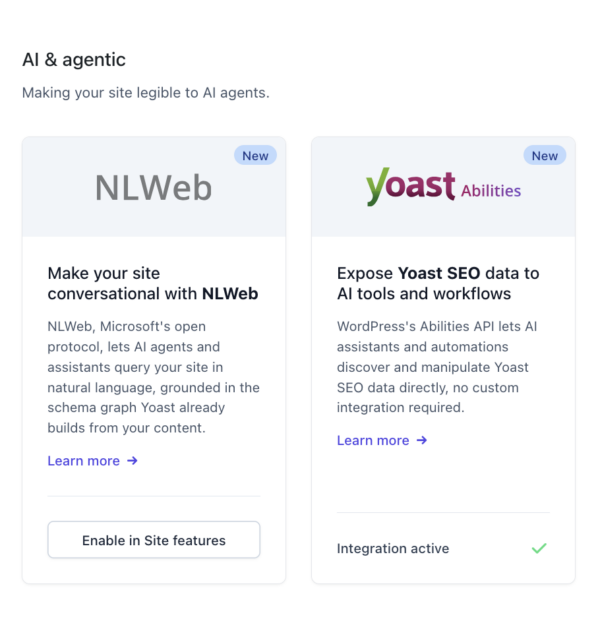
Getting Started: Implementation and Dashboard Control
The integration is designed to be accessible to those already familiar with WordPress management. To enable these features, users must first connect their preferred LLM subscription to their Yoast SEO integration.
The dashboard itself has been reorganized to reflect this new reality. Integrations are now grouped by topic, with a dedicated "AI & Agentic" category. This consolidation is a signal of the company’s long-term vision: AI is no longer a peripheral feature; it is becoming the core engine of site administration.
For developers, the documentation is comprehensive, providing typed input and output schemas that remove the guesswork from building custom integrations. Whether you are using Claude, Cursor, or a custom-built agent, the predictability of the data return ensures that your automated workflows are stable and reliable.
Conclusion: The Future of the CMS
The integration of agentic capabilities into Yoast SEO is a testament to the maturation of the WordPress ecosystem. By embracing the WordPress Abilities API and MCP standards, Yoast is positioning itself at the forefront of a new era of web management—one where the gap between identifying a problem and solving it is effectively erased.
As these tools continue to evolve, the definition of a "webmaster" will continue to change. We are moving toward a future where the CMS serves as the brain, and the AI serves as the nervous system, allowing the site to self-correct, optimize, and evolve in real-time. For those willing to embrace the shift, the efficiency gains are not just incremental; they are transformative.
Whether you are a solo blogger looking to streamline your workflow or a large-scale agency managing enterprise-level deployments, the era of the AI-powered site administrator has officially arrived. The only question remaining is: how will you use your new agents?