AMMAN / WASHINGTON / AMSTERDAM — In the murky, high-stakes underworld of international cybercrime, the moniker "ShinyHunters" has long evoked terror. Responsible for billions of stolen records and catastrophic data breaches dating back to 2019, the brand became synonymous with ruthless data theft, extortion, and psychological harassment. But as law enforcement agencies closed in, the brand devolved into a franchise operation—reminiscent of the fictional "Dread Pirate Roberts," where succession is driven not by ideology, but by arrest.
The latest chapter in this saga features a teenage mastermind working out of Amman, Jordan, a web of brazen cyberattacks targeting federal agencies and corporate giants, an exploited zero-day vulnerability in software used worldwide, and—most shockingly—allegations of murder-for-hire tied to a supposedly "reformed" European hacker.
Main Facts: The Detention of "Rey" and the Unraveling of a Cyber Empire
The international cybercrime landscape shifted dramatically when a teenager from Amman, Jordan, known by the hacker handle "Rey," was detained by local authorities. According to multiple reports, Rey—subsequently identified as Saif Al-din Khader—is currently cooperating with the Federal Bureau of Investigation (FBI) to unmask other members of the notorious hacking collective.

Khader’s detention coincided with a frantic period for ShinyHunters, who were in the middle of extorting a navigation and digital aviation unit recently divested by global aerospace titan Boeing. This extortion attempt proved to be a fatal miscalculation, injecting urgent momentum into the FBI’s investigation.
The fallout from the group’s recent campaigns has triggered sweeping operational consequences across the globe:
- The FBI Breach: ShinyHunters successfully breached an FBI recruitment database by exploiting a zero-day vulnerability in Oracle’s PeopleSoft platform, exposing sensitive personal data of more than 5,000 personnel.
- The Contractor Dismissal: The FBI subsequently terminated an Accenture contractor responsible for maintaining the compromised portal over patch-management failures.
- The Dutch Raid: Dutch police raided and arrested 24-year-old convicted cybercriminal Pepijn van der Stap (formerly known as "Umbreon"), who is now facing astonishing additional allegations of orchestrating murders abroad.
Chronology of Escalation: From Oracle Zero-Days to Digital Taunts
The path leading to Khader’s detention and the subsequent disruption of the ShinyHunters network unfolded across a dizzying summer and fall:

- June 2026: ShinyHunters begins exploiting a critical vulnerability (CVE-2026-35273) in Oracle PeopleSoft, a widely deployed SaaS platform used for human resources, payroll, and recruitment. Initially, the group targets the FBI’s database to undermine the bureau’s credibility, though these initial attempts face friction. Oracle issues an emergency patch, while security firm Mandiant releases workaround firewall rules.
- September 15, 2026: Dutch police execute a dramatic raid using flash-bang grenades on the Amsterdam residence of Pepijn van der Stap, arresting him on suspicion of aiding ShinyHunters’ data thefts.
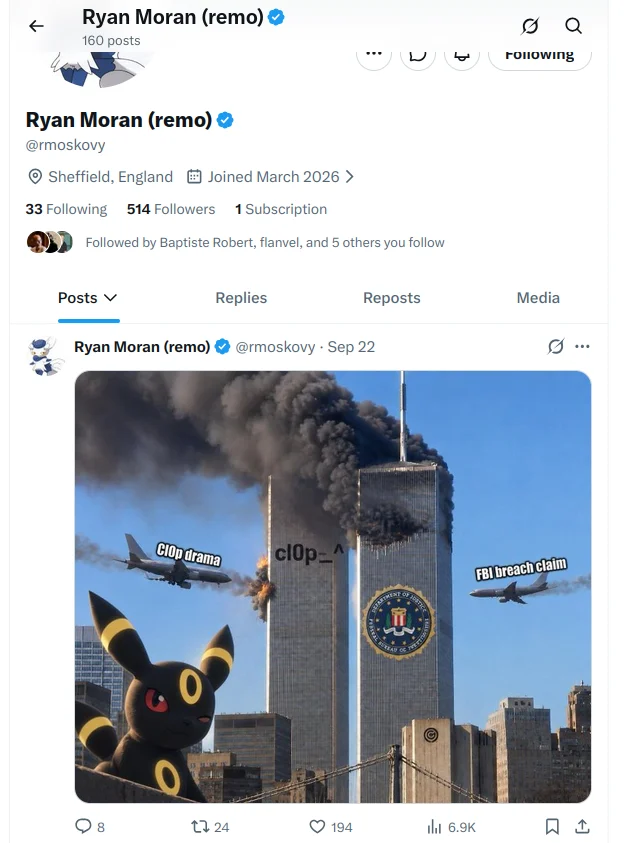
- September 15–22, 2026: Seizing control of the vacant ShinyHunters brand, Rey steps into the vacuum. He launches public taunts on Twitter/X against both the FBI and the rival ransomware cartel Cl0p, embedding the avatar of Van der Stap’s old alias ("Umbreon") in an aggressive attempt to frame the Dutchman.
- September 25, 2026: Mandiant and the Google Threat Intelligence Group (GTIG) publish a joint report confirming mass exploitation of the PeopleSoft vulnerability across diverse sectors, including healthcare, higher education, and government.
- September 28, 2026: KrebsOnSecurity publishes an exclusive detailing the Dutch arrest and Rey’s social media manipulation. Hours after journalists contact Rey’s father for comment, Rey begins scrubbing his digital footprint, deleting his accounts.
- September 30, 2026: The primary ShinyHunters darknet portal goes offline following an FBI ultimatum.
- October 3, 2026: Reuters confirms that Saif Al-din Khader (Rey) has been detained by Jordanian authorities and is cooperating with the FBI.
Supporting Data & Technical Anatomy: The PeopleSoft Exploitation
The technical backbone of ShinyHunters’ 2026 resurgence rested on calculated exploitation rather than novel malware. By zeroing in on CVE-2026-35273 in Oracle PeopleSoft, the hackers gained unauthorized access to corporate and government infrastructure.
When security engineers implemented web application firewall (WAF) rules to block the initial exploit vectors, ShinyHunters pivoted swiftly, employing a well-known URL-encoding bypass trick to circumvent Mandiant’s recommended defenses. This allowed them to infiltrate systems across agriculture, technology, transportation, and higher education.
However, the group’s hubris proved to be its undoing. After the FBI issued a formal Flash Notice (PSA260515) warning organizations against paying ransoms to ShinyHunters—and detailing the group’s aggressive tactics, including swatting and harassment—the hackers struck back against the bureau. In interviews with industry press, ShinyHunters admitted their primary goal in hacking the FBI was "a public relations and marketing initiative" to refute warnings that were hurting their extortion revenue.

Official Responses and Corporate Fallout
The tentacles of the ShinyHunters operation touched critical infrastructure, compelling swift reactions from corporate giants and government contractors:
- Boeing and Jeppesen ForeFlight: A digital aviation unit recently sold by Boeing to private equity firm Thoma Bravo for $10.55 billion became the target of the extortion attempt that sealed Rey’s fate. Boeing acknowledged the incident, stating they were actively reviewing claims involving data stolen from Jeppesen ForeFlight. Jeppesen ForeFlight maintained that internal investigations showed "no impact to our operations or products."
- The FBI and Accenture: Following the compromise of the FBI’s recruitment portal—which exposed the specializations, psychiatric records, and unit assignments of over 5,000 personnel—consulting giant Accenture removed a contractor responsible for failing to apply the critical PeopleSoft patch.
- Neo Security: Following the arrest of Pepijn van der Stap, who had reinvented himself as an "offensive security lead" at Dutch cybersecurity firm Neo Security, owner Benjamin Korper stated that an independent firm was brought in to audit the company. Korper confirmed that forensic investigators found no evidence Van der Stap had turned his offensive tooling against Neo Security or its clients.
Implications: The ‘Dread Pirate Roberts’ Franchise Model
The arrest of Saif Al-din Khader and Pepijn van der Stap illuminates a broader evolutionary trend in cybercrime: the rise of the franchise cyber-syndicate.
The original French nationals who founded ShinyHunters years ago have largely been neutralized by law enforcement. Yet, the brand itself retained immense underground equity. Freelance threat actors and youthful "greenhorns" like Rey recognized the value of purchasing old PGP keys, commandeering legacy forums, and adopting the ShinyHunters moniker to extract a 25% to 30% cut of ransom negotiations managed for allied hacker cells.

This brand-borrowing, however, carried fatal vulnerabilities. Khader’s personal opsec failures—including sharing a family computer compromised by infostealer malware that exposed his father’s credentials at Royal Jordanian Airlines—provided investigators with a definitive thread to pull. Furthermore, his reckless decision to target aviation assets tied directly to his father’s employer dramatically escalated diplomatic and law enforcement cooperation between Jordanian authorities and the FBI.
Meanwhile, the staggering parallel revelations emerging from the Netherlands—where Van der Stap faces suspicion of ordering overseas contract murders—underscore the terrifying convergence of technical data extortion with physical-world violence.
As the darknet infrastructure of ShinyHunters collapses under the weight of coordinated international pressure, the takeaway for the cybersecurity community is clear: while zero-day vulnerabilities like PeopleSoft will continue to emerge, the human elements of ego, social media bravado, and familial oversight remain the ultimate vulnerabilities that bring cybercriminal empires crashing down.