








Main Facts
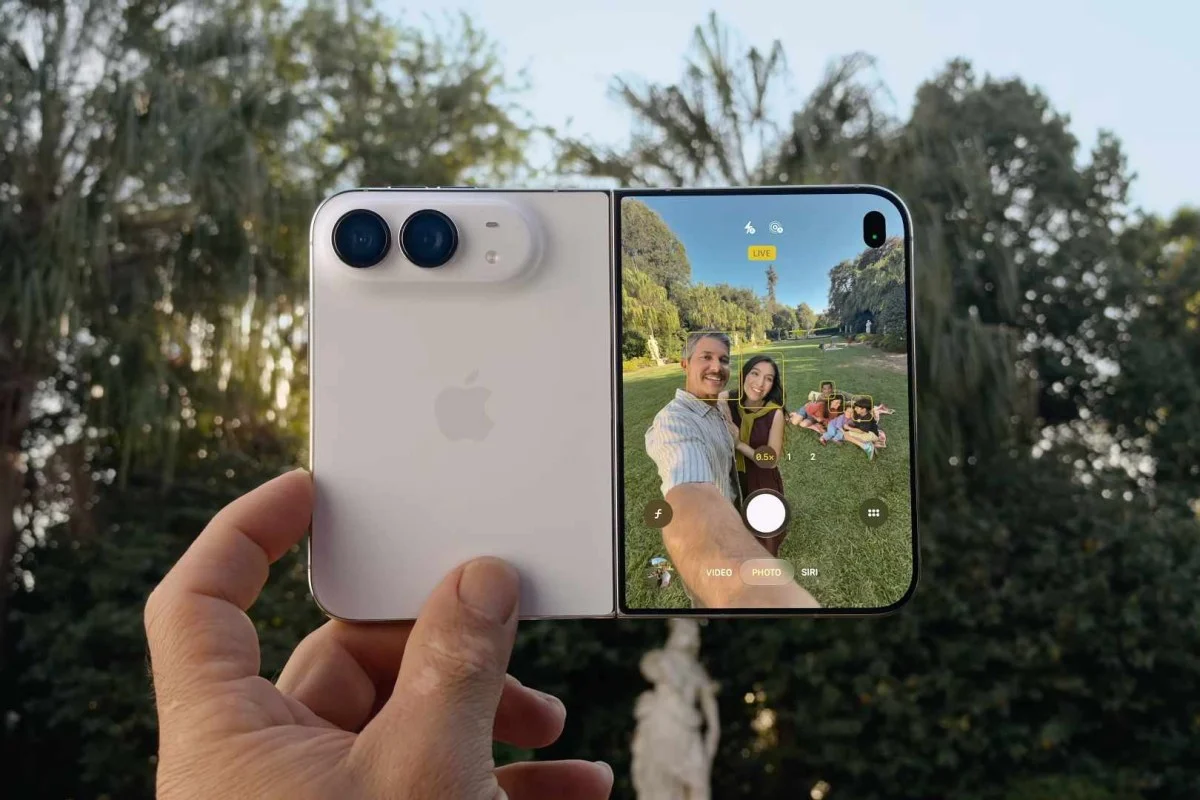
After years of rampant industry speculation and supply chain leaks, Apple has officially entered the foldable smartphone arena with the debut of the iPhone Duo. Representing the first major overhaul to the iPhone’s core physical form factor in 19 years—dating back to the launch of the original device by Steve Jobs in 2007—the iPhone Duo is undeniably a milestone release for the Cupertino-based tech giant.
Priced at a commanding $2,000 for the base tier, the Duo arrives late to a mature market segment. Foldable devices have existed for nearly a decade, with pioneering hardware iterations like the original Samsung Galaxy Fold circulating globally for seven years. Despite its belated entrance, Apple has positioned the iPhone Duo as a refined, book-style foldable aimed at capturing both high-end consumers and enterprise users seeking a hybrid mobile computing experience.

However, despite Apple’s engineering prowess, the iPhone Duo inherits many of the stubborn compromises that have plagued the foldable category since its inception. Hardware constraints inherent to the book-style design mean that the Duo sacrifices key performance metrics—such as camera fidelity, battery capacity, thermal dissipation, and long-term durability—when compared directly to traditional slate flagships like the contemporaneous iPhone 18 Pro Max.
Conversely, the device introduces notable software and hardware refinements that outpace many Android competitors. These include superior native third-party application optimization, seamless dynamic display transitions, intelligent multi-angle half-folded state utilization, and a sophisticated spatial audio speaker configuration that actively adapts to user orientation.

Chronology
The trajectory leading to the commercial release of the iPhone Duo spans nearly a decade of industry development, internal experimentation, and consumer market conditioning:
- April 2019: Samsung attempts to launch the first commercial foldable device, the Galaxy Fold, which suffers high-profile durability delays, setting a precedent of early hardware instability for the form factor.
- 2019–2024: Various Android original equipment manufacturers (OEMs), including Google, OnePlus, Oppo, and Motorola, iterate on book-style and flip-style foldables. Meanwhile, Apple files numerous patents regarding flexible glass, hinge mechanics, and crease-mitigation techniques.
- Late 2024–2025: High-profile product introductions, such as the Apple Vision Pro spatial computing headset and the ultra-slim iPhone Air, force Apple to recalibrate its pricing strategies following consumer resistance to exorbitant price points.
- Early 2026: Supply chain leaks intensify, confirming that Apple has finalized the production lines for its inaugural foldable iPhone, internally and externally referred to as the iPhone Duo.
- September 2026: Apple officially unveils the iPhone Duo at its annual hardware keynote event, demonstrating its capabilities alongside early software showcases from high-profile developers and media figures.
Supporting Data and Comparative Analysis
Evaluating the iPhone Duo requires a direct look at the technical trade-offs enforced by the foldable form factor. While Apple has managed to differentiate the device through software synergy, the physical metrics reveal stark limitations:

1. Financial Investment
- Base Price: $2,000 USD.
- Market Context: Nearly double the cost of a standard flagship smartphone (such as the iPhone 18 Pro), matching the stagnation point where first-generation foldables launched seven years prior.
2. Power and Thermal Metrics
- Chipset: Shares the same advanced silicon chipset as the iPhone 18 Pro.
- Thermal Performance: Significantly degraded compared to standard slates. Due to the extreme thinness of each folding half, the device lacks adequate thermal mass and surface area for heat dissipation, forcing aggressive and early thermal throttling under sustained CPU/GPU loads.
3. Battery Longevity and Charging
- Capacity Architecture: Split-cell battery configuration reduces spatial efficiency inside the chassis.
- Real-World Longevity: Internal testing data indicates battery life falls short of the iPhone 18 Pro Max during basic tasks on the outer screen, with severe power drain acceleration during extended video streaming on the expansive inner display. Charging speeds also lag behind non-foldable counterparts.
4. Photographic Capabilities
- Lens Array: Features a wide and ultra-wide camera system on the rear chassis.
- Compromise: The main sensor lacks parity with the iPhone 18 Pro line, and the device completely omits a dedicated telephoto zoom lens—a surprising omission given the device’s $2,000 price point.
5. Physical Durability and Ergonomics
- Ingress Protection: Boasts an IP68 dust and water resistance rating, an impressive engineering feat for a hinged device, though mechanical moving parts inherently increase long-term vulnerability.
- Biometrics: Relies on a side-mounted Touch ID fingerprint sensor embedded on the right-hand edge, presenting ergonomic challenges for left-handed users and smaller-handed demographics. Volume keys are uniquely relocated to the top edge of the frame.
- The Crease: Employs a matte nano-coating on the inner display to eliminate glare and mirror reflections, successfully reducing the visual prominence of the central hinge crease, though a faint indentation remains noticeable under direct physical examination.
Official Responses and Industry Reception
The announcement of the iPhone Duo has drawn polarized reactions from industry analysts, software developers, and early tech reviewers.
Apple’s executive team has framed the device not merely as a novelty, but as a deliberate evolution of mobile productivity. During the launch presentation, Apple representatives heavily emphasized the device’s "Flex-State" architecture—highlighting how the hinge mechanism can hold intermediate angles to transform the device into a self-standing media console, split-screen keyboard interface, or nightstand widget hub.

Third-party software developers and media figures who received early hands-on access have generally praised Apple’s software execution. Prominent industry voices noted that games and productivity apps transition between the outer cover display and the inner tablet-sized canvas with zero latency or application reloads—a persistent issue plaguing Android foldables for years.
However, consumer advocates and veteran reviewers have sounded notes of caution. Tech commentators have pointed out that despite Apple’s superior ecosystem integration, the core physical drawbacks—specifically the sub-par cameras, compromised battery life, and expensive barrier to entry—remain unsolved. Reviewers emphasize that buyers are effectively paying a massive premium for form-factor novelty while accepting a regression in raw photographic and thermal performance.

Implications for the Mobile Industry
The launch of the iPhone Duo carries profound strategic implications for both Apple and the broader consumer electronics market:
1. Validation of the Foldable Category
For years, skeptics argued that Apple’s refusal to enter the foldable market signaled the format’s ultimate irrelevance. By releasing the iPhone Duo, Apple has officially validated the book-style foldable as a permanent tier of high-end mobile hardware. This move is expected to drive mainstream consumer awareness and accelerate global foldable adoption rates past previous ceilings.

2. Developer Ecosystem Acceleration
Historically, Android foldables have suffered from a lack of native developer support, with most applications simply scaling up to fit wider aspect ratios rather than utilizing custom layouts. Apple’s ironclad control over its developer ecosystem changes this dynamic immediately. The early adaptation of major third-party apps for the iPhone Duo sets a new standard for tablet-phone hybrid software design, likely forcing Google and Android developers to redouble their optimization efforts.
3. Pricing and Market Realities
Apple’s decision to cap the base pricing at $2,000—rather than pushing past $3,000 as some market analysts initially feared—demonstrates a newfound caution. Following high-profile pricing misfires with the Apple Vision Pro and the iPhone Air, Apple recognizes that even its legendary brand cachet has limits in a macroeconomic climate where consumers scrutinize the value proposition of iterative hardware.

4. The Future of Slate vs. Foldable
Ultimately, the iPhone Duo proves that the "2-in-1 phone and tablet" proposition still involves deep technical compromises. Until battery density, thermal engineering, and glass durability advance to a point where a foldable can match the thinness, weight, and camera capability of a traditional smartphone without penalty, devices like the iPhone Duo will remain ultra-premium luxury items rather than universal replacements for standard slab phones. For prospective buyers with $2,000 to spare, the decision to purchase the iPhone Duo is less about absolute performance and more about a willingness to embrace the compromise inherent to cutting-edge hardware design.