In the quest to develop the next generation of semiconductors, high-capacity batteries, and super-strong alloys, materials science has long been a discipline defined by trial, error, and immense patience. For decades, researchers have envisioned a "materials-by-design" future—a paradigm where a scientist could simply request a material with specific physical or chemical properties, and an intelligent system would deliver the perfect atomic recipe.
Until recently, that vision was stifled by a fundamental technological hurdle: Large Language Models (LLMs), the engines behind modern AI, are fluent in human language but effectively "blind" to the three-dimensional, geometric reality of the physical world. Most of the materials that form the bedrock of our modern civilization—crystalline solids—are not composed of text, but of complex, ordered atomic lattices.
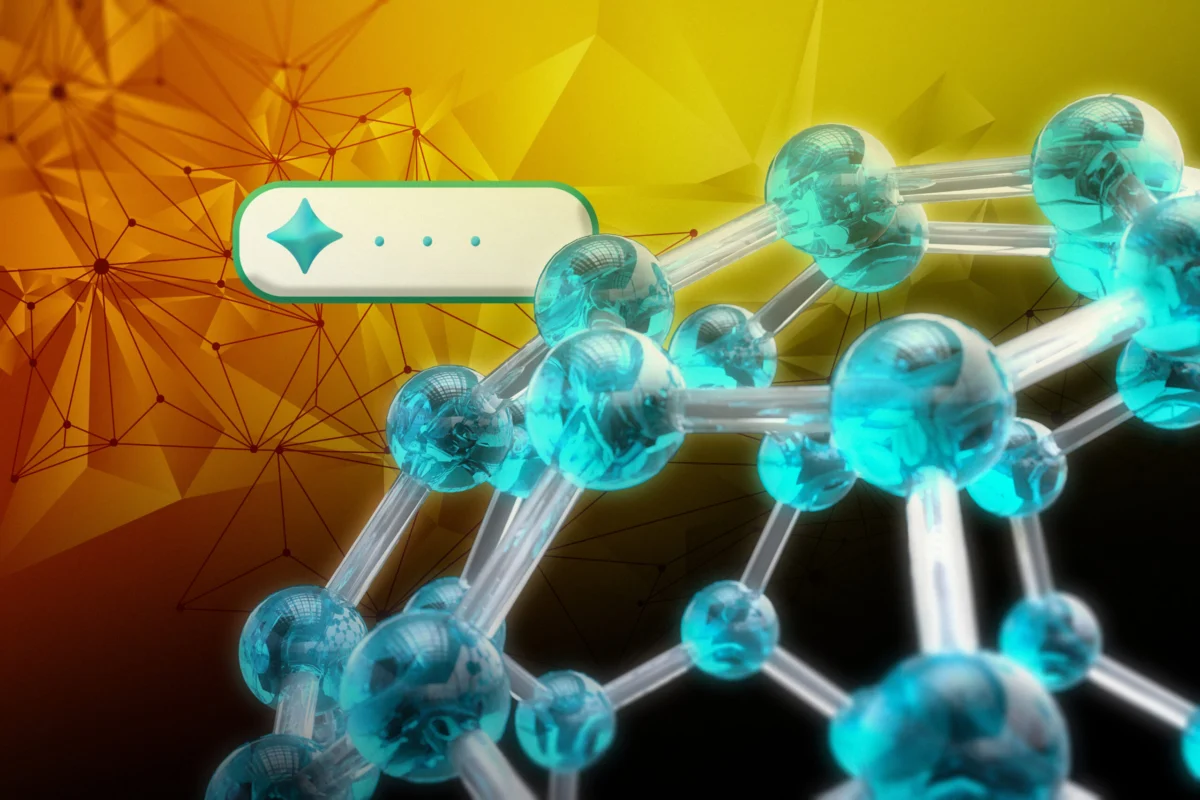
Now, a team of researchers at the Massachusetts Institute of Technology (MIT) has bridged this divide. By developing a novel multimodal AI that "sees" atomic arrangements, the researchers have created a tool capable of synthesizing chemical composition, structural geometry, and material performance. This breakthrough, published recently in Nature Communications, promises to move materials science from the era of manual discovery into an era of accelerated, AI-driven innovation.
The Core Problem: Why Text Isn’t Enough
The limitation of current AI in materials science stems from the nature of the training data. Standard LLMs are trained on vast oceans of digitized text—scientific papers, books, and reports. While these documents contain massive amounts of knowledge, they describe materials in words, not in the spatial language of chemistry.
"Most materials consist of 3D arrangements of crystals," explains Ju Li, the Carl Richard Soderberg Professor in Power Engineering at MIT. "When an AI is trained only on text, it lacks an intuitive understanding of the physical geometry that dictates how a material behaves. Furthermore, experimental literature is heavily biased toward a handful of popular crystal classes, which causes AI models to skew their predictions toward ‘safe’ or well-studied materials, ignoring potentially revolutionary discoveries hidden in less common atomic structures."
Because these models cannot visualize the bonding patterns or the structural nuances of a crystal, they struggle to extrapolate properties from one material to another. They are effectively reading descriptions of a house without ever understanding how the bricks are laid.
Chronology: From Concept to Multimodal Reality
The development of this new model did not happen overnight. It was the result of a systematic effort to move beyond "text-only" constraints.
1. Identifying the Structural Gap
The MIT team recognized that while computational databases held thousands of structural records, these were often disconnected from the qualitative insights found in peer-reviewed journals. The challenge was to marry the quantitative, high-fidelity data of computational databases with the narrative, contextual knowledge found in scientific literature.
2. The Era of Contrastive Learning
To solve this, the researchers employed an approach known as contrastive learning. This is a training technique where the model is fed pairs of data—in this case, an atomic structure and its corresponding textual description. The model learns to identify when a description matches a structure and when it does not. By repeatedly analyzing these pairings, the AI begins to "align" its internal representation of 3D space with the descriptive language of human science. This mimics the way the human brain connects visual observation with abstract terminology.
3. Training on Synthetic Narratives
Recognizing the limitations of existing research papers, the team generated a massive, AI-synthesized dataset. By creating rich, detailed narratives that explicitly link atomic structures to their properties, processing requirements, and potential applications, the researchers provided the model with a "textbook" that was much more comprehensive than any existing single paper.
4. Validation and Benchmarking
Once the model was trained, the team pitted it against traditional text-only models. They tasked both systems with identifying materials for high-performance, solid-state lithium-ion battery electrolytes. The result was clear: the multimodal model outperformed its competitors, successfully identifying promising candidates that had been previously verified by human researchers in independent, real-world experiments.
Supporting Data: The Power of Spatial Intelligence
The performance metrics of the MIT model underscore the importance of geometric awareness. In comparative tests, the model was asked to retrieve materials based on specific functional requirements.
- Alignment of Structure and Language: The model demonstrated an ability to map complex geometric arrangements—such as octahedral or tetrahedral bonding patterns—to technical descriptions.
- Improved Predictive Accuracy: When tested on electrolyte candidates for lithium-ion batteries, the model highlighted several materials that had been independently identified as high-performers, significantly reducing the "noise" or irrelevant suggestions generated by conventional LLMs.
- Generalization: Unlike models that only know what they have read, the MIT model exhibited the ability to infer the function of structures it had not explicitly seen in training, suggesting it had learned the "physics" behind the geometry.
"We found that when we used that synthetic narrative dataset, the models were significantly better at predicting the function of a material," says lead author and former MIT postdoc Yang Jeong Park. "It wasn’t just guessing; it was reasoning about the connection between the structure and the property."
Official Perspectives: Shaping the Future of Research
The implications of this research have been met with enthusiasm by the materials science community, who view this as a potential "step change" in how the field operates.
The Vision of Professor Ju Li
Professor Ju Li, who led the project, emphasizes that structure is the "heart" of the field. "If you understand the structure, you can infer quite a lot about the properties and performance of materials," he states. By building a bridge between the atomic lattice and human-readable performance data, the team has turned a "black box" into a collaborative partner for scientists.
The Industry Impact: Elsa Olivetti’s View
Elsa Olivetti, the Jerry McAfee (1940) Professor in Engineering at MIT, notes that these algorithmic integrations are rare but transformative. "This approach helps us see more deeply into three-dimensional structures and link structures to property and processing," she says. "I hope this can be one of those step changes that fundamentally alters the pace of discovery."
The project, which included the efforts of researchers Mayank Kumaran and Chia-Wei Hsu, represents a massive collaborative endeavor supported by the U.S. Defense Threat Reduction Agency, the U.S. Defense Advanced Research Projects Agency (DARPA), and the National Research Foundation of Korea.
Implications: The "AlphaFold" of Materials Science?
The comparison to AlphaFold—the AI model that famously solved the protein folding problem—is significant. Before AlphaFold, predicting the shape of a protein was a monumental, time-consuming challenge. Today, it is a task completed in seconds. The MIT team believes their model could provide a similar service for crystalline materials.
Accelerating Innovation
In sectors ranging from clean energy to national security, the ability to rapidly identify new materials is the primary bottleneck. If a researcher can query an AI to find a material that is both thermally stable and highly conductive, they can bypass years of failed lab experiments.
Democratizing Science
By providing a tool that "understands" materials, the researchers are essentially democratizing access to high-level materials expertise. Scientists at smaller institutions or in emerging industries could use this tool to screen thousands of potential compounds, focusing their physical lab time on only the most promising candidates.
A Foundation for the Future
The team is already looking toward the next phase of development: expanding the model to handle more complex, non-crystalline, or disordered materials. The foundational ability to "see" in 3D is, as Professor Li notes, "super foundational."
As the model continues to be refined, it will likely become an indispensable tool in the laboratory, akin to a microscope or a spectrometer. By teaching computers to see the atomic world, MIT researchers have provided a new lens through which the future of materials can be clearly—and quickly—envisioned.
The research, detailed in Nature Communications, serves as a reminder that the most significant leaps in technology often come from teaching machines not just to process data, but to understand the physical laws that govern our universe.