





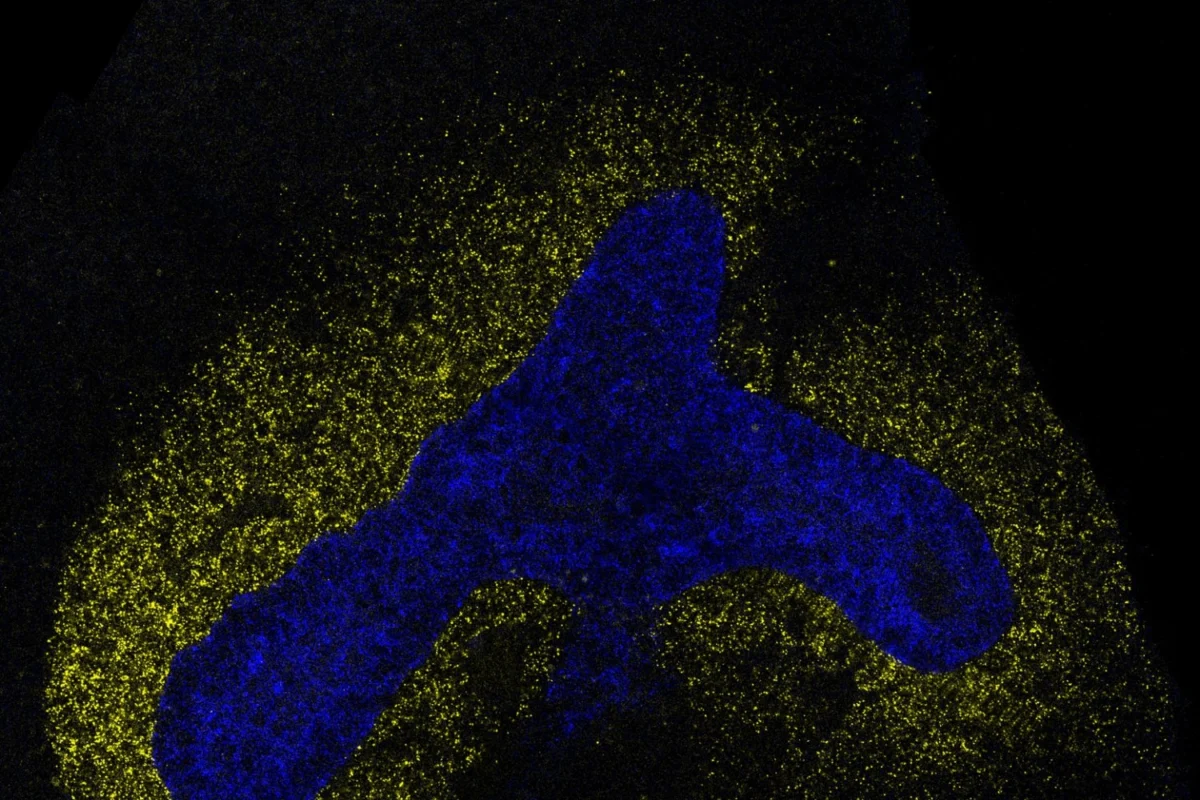
The journey from a single, undifferentiated stem cell to a complex, multi-organ human being is arguably the most sophisticated feat of engineering in the natural world. As an embryo develops, "blank slate" cells must make a series of critical decisions: becoming a neuron, a muscle fiber, or a liver cell. For decades, developmental biologists have sought to map the precise instructions governing these transformations. Now, a groundbreaking study from MIT and the Whitehead Institute for Biomedical Research has provided a master key to this biological code.
By leveraging a novel artificial intelligence model dubbed IRIS, researchers have discovered that signaling pathways—the cellular equivalent of a chemical conversation—leave behind consistent "fingerprints" of gene activity. This discovery, published in the journal Nature Methods, fundamentally changes our understanding of how cells communicate, potentially revolutionizing regenerative medicine and the study of human disease.
The Choreography of Development: How Cells Decide Their Fate
To understand the magnitude of this breakthrough, one must first appreciate the complexity of embryogenesis. A developing embryo is not a random collection of cells; it is a highly coordinated, three-dimensional structure. The fate of any given cell—its specialized function and location—is dictated by its internal gene expression. However, this is not a solitary process.
Cells exist in a constant state of social interaction. They send and receive chemical signals from their neighbors, creating a dense, multi-step signaling network. These pathways act as a relay, translating external environmental cues into specific "on" or "off" switches for the cell’s genes. Historically, scientists believed that these pathways were highly contextual, operating differently depending on the cell type. This assumption created a massive bottleneck: if every signaling pathway behaved differently in every cell type, researchers would have to map them one by one, an almost impossible task given the diversity of human tissues.
The Paradigm Shift: Discovering the Universal Fingerprint
The research team, led by MIT assistant professor of biology and Whitehead Institute member Pulin Li and graduate student Nicholas Hutchins, challenged this long-held assumption. Through their work, they discovered that signaling pathways are far more consistent than previously believed.
"We found that each signaling pathway leaves behind a unique ‘fingerprint’—a distinctive pattern of gene activity that reflects the particular signals the cell has encountered," explains Li.
Crucially, these fingerprints remain consistent across different cell types. This discovery is the "Rosetta Stone" of developmental biology. Instead of painstakingly mapping signaling in every individual cell type, scientists can now use these universal, pathway-specific fingerprints to reconstruct the signaling history of almost any cell. By analyzing the gene activity pattern, the researchers can "read" the chemical messages a cell received during its journey from stem cell to specialized tissue.
IRIS: A Neural Network Built for Biological Discovery
The technical engine behind this breakthrough is IRIS, a sophisticated machine learning model designed to recognize patterns in the complex, noisy data of gene expression. IRIS is a neural network that functions similarly to the AI models used in modern voice recognition technology.
"Think of voice recognition systems like Siri, which are trained mainly in English, but then use that training to help them recognize other languages," says Li. "This is called transfer learning, and this is why IRIS can work across many different cell types."
Chronology of the Research
- Data Acquisition: The team trained IRIS on a massive experimental dataset measuring how thousands of human embryonic stem cells responded to various combinations of six major signaling pathways across multiple developmental stages.
- Atlas Creation: This process generated a comprehensive "atlas" of signaling combinations and their subsequent effects on cell behavior.
- Validation: The researchers tested the model using single cells from mouse embryos during gastrulation—a critical stage where cells rapidly differentiate into heart, gut, muscle, and spinal cord tissues.
- Predictive Success: IRIS successfully predicted when and where specific pathways would activate, confirming its ability to decode cellular communication even in tissues it had not encountered during its initial training.
Implications for Regenerative Medicine and Organoids
The implications of this discovery for the future of medicine are profound, particularly in the realm of organoids. Organoids are miniature, 3D lab-grown structures that mimic the architecture and function of human organs. They have become vital tools for studying disease mechanisms and testing the efficacy of new drugs without the need for human or animal subjects.
However, creating high-fidelity organoids has been difficult because replicating the precise signals required to guide stem cells into specific organ tissues is notoriously complex. By identifying the exact combinations of signals that drive development, researchers can now "program" stem cells with unprecedented accuracy.
"IRIS is helping us decode the language cells use to talk to each other at a much faster rate than we could realistically achieve through experiments," says Nicholas Hutchins.
For instance, when the team applied IRIS to identify the signals required for lung development, the model accurately predicted a pathway that would encourage lung-specific cell formation. Subsequent experiments in mouse embryos confirmed these predictions. This capability allows scientists to create more reliable, accurate models of lung tissue, which could be transformative for studying conditions like asthma, pulmonary fibrosis, and lung cancer.
Toward a Roadmap for Disease Treatment
The ability to map signaling histories at scale opens new frontiers in translational medicine. Many diseases are characterized by a failure in the complex "crosstalk" between cells. By using IRIS to understand the precise signaling failures that lead to pathological states—such as the scarring found in pulmonary fibrosis—researchers can design targeted, regenerative therapies.
If scientists can identify the exact signaling combination that triggers a cell to become diseased or damaged, they can theoretically reverse or prevent the process by introducing the correct signaling cues to steer the cells toward healthy development.
The Future of AI in Biology
The success of IRIS underscores a broader trend in the life sciences: the convergence of artificial intelligence and cellular biology. As datasets in genomics and proteomics continue to grow in size and complexity, human intuition alone is no longer sufficient to find the underlying patterns.
By automating the identification of signaling histories, IRIS does more than just save time; it changes the scope of what is possible. It moves biology from a descriptive science to a predictive one. As the research team continues to refine the model, they hope to expand its capabilities to cover even more signaling pathways and a wider variety of tissues.
Ultimately, the work of Li, Hutchins, and their colleagues represents a bridge between the fundamental mystery of how a single cell builds a body and the practical goal of repairing that body when it fails. By learning the language of cells, we are finally learning how to speak back to them, and in doing so, we are gaining the power to reshape the future of human health.