








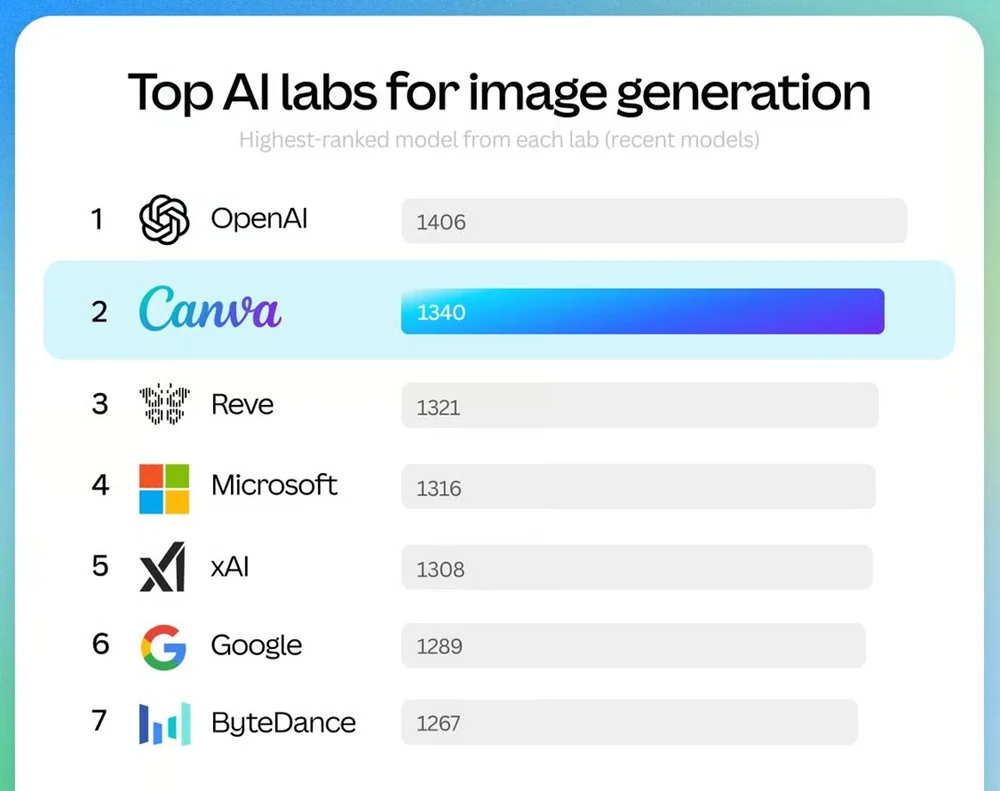
Canva, the ubiquitous design platform that has empowered hundreds of millions of users to create visual content, has officially entered the deep-tech arena of foundation model development. The company has unveiled Canva Craft, its first proprietary image generation model built from the ground up by Canva Research.
This announcement represents a seismic shift for the company, moving it from a platform that integrates third-party AI tools to a creator of its own foundational intelligence. By training its own model, Canva is not just chasing the current wave of generative AI—it is tailoring the technology specifically for the unique demands of professional graphic design, layout, and visual hierarchy.
Main Facts: The Anatomy of Canva Craft
Canva Craft is a high-performance image generation model that distinguishes itself through a unique, two-stage architectural approach. Unlike standard generative models that attempt to map text prompts directly to pixels, Craft separates the "compositional planning" stage from the "image rendering" stage. This decoupling allows the model to prioritize structural integrity, typography, and spatial relationships—areas where traditional models often falter.
Key Capabilities:
- Resolution and Flexibility: The model generates images at up to 2K resolution and supports over 30 aspect ratios, including custom dimensions, ensuring compatibility with everything from mobile stories to wide-format print media.
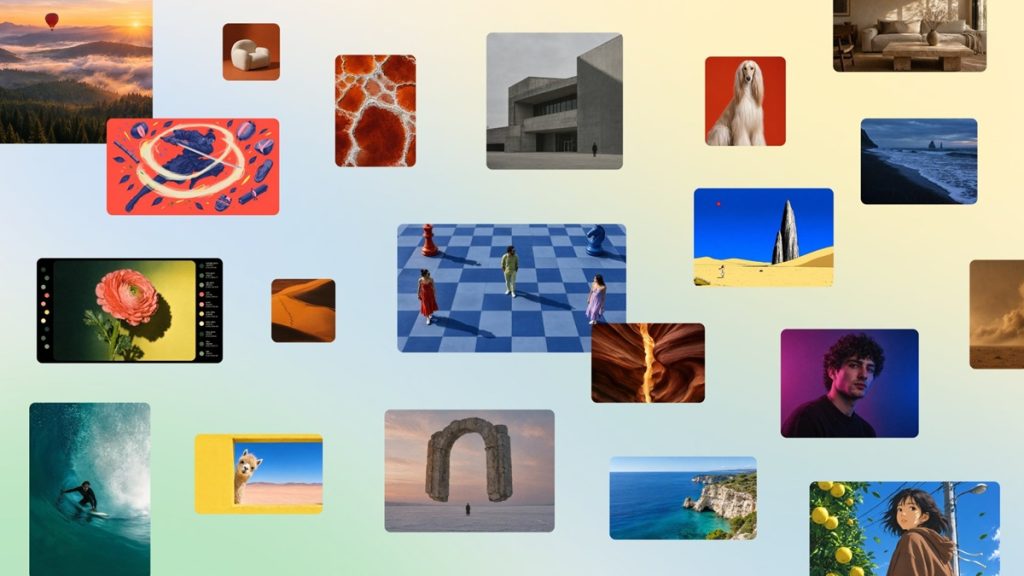
- Design-Centric Precision: Craft excels at rendering design elements such as crisp edges, alignment, and visual hierarchy. It can interpret complex spatial instructions, such as placing a "lone tree" against a "purple sky" with specific "long shadows," with a level of fidelity previously unseen in general-purpose models.
- Developer Access: Recognizing the growing need for programmatic design, Canva has opened Craft to developers via a public API. This allows businesses to integrate the model into their own marketing platforms, e-commerce suites, and advertising pipelines.
Chronology: A Path to Foundational Independence
The development of Craft did not happen overnight; it is the culmination of a multi-year investment by Canva in its in-house research division.
- Foundation Phase: Canva Research began by curating a massive dataset consisting of millions of human-made templates from its own library. Unlike models trained primarily on raw photographs, Craft was fed posters, presentations, infographics, and typography-heavy layouts.
- Refinement Phase: Once the model was pre-trained, the team initiated an intensive supervised fine-tuning and reinforcement learning (RL) cycle. This phase was notably guided by Canva’s internal team of professional designers, who provided qualitative feedback on over 25,000 image pairs.
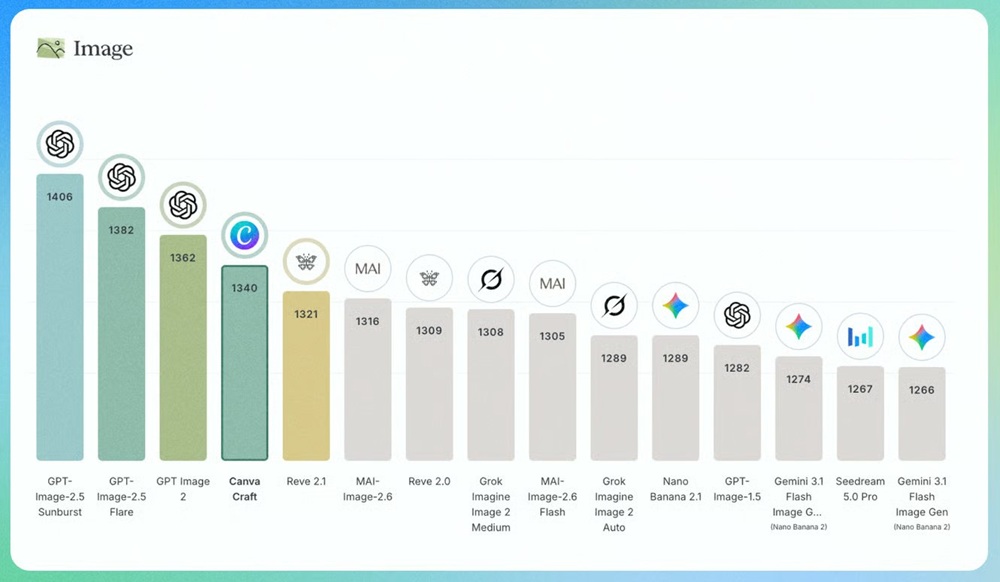
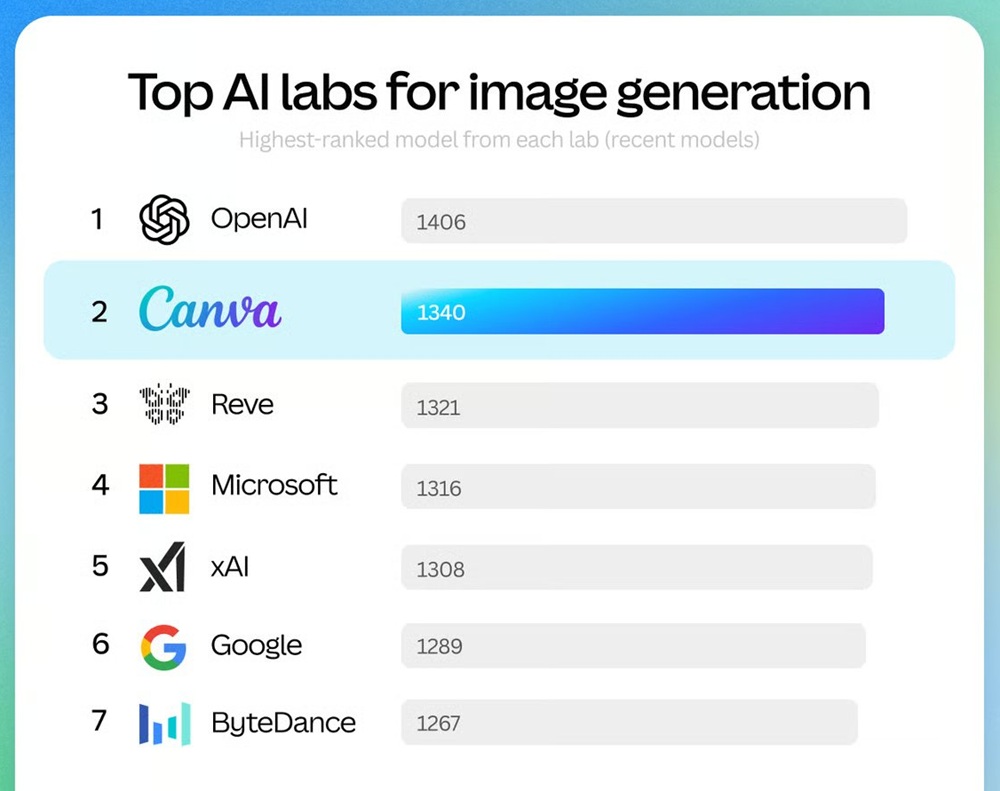
- The Benchmarking Phase: As the model neared completion, it was put to the test on DesignArena, a leading crowdsourced platform for evaluating AI design models. Craft debuted as the fourth most advanced model globally, effectively establishing Canva Research as the second most advanced AI lab in the world for image generation.
- Deployment Phase: Following successful internal trials, Craft was rolled out globally via "Dream Lab," accessible directly through the Canva interface.
Supporting Data: Why Design-Specific Training Matters
The efficacy of Craft lies in its training data. By focusing on millions of templates, the model learned the "grammar of design." While most AI models struggle to render readable text or maintain consistent layout rules, Craft uses its training on typography-rich content to deliver outputs that are actually usable in a professional context.
The Human-in-the-Loop Advantage
Canva’s approach to evaluation was distinctly human-centric. When automated metrics—which often prioritize raw pixel variance—clashed with the aesthetic judgment of professional designers, the team consistently deferred to the human experts. This feedback loop ensured that the model didn’t just produce "pretty" images, but "functional" designs.
Computational Efficiency
Scale is the ultimate hurdle for Canva, which reports that its users generate over 400 designs every second. To make Craft viable at this velocity, the engineering team employed model distillation. By compressing the model and reducing the number of inference steps required to produce an image, they achieved an order of magnitude increase in speed compared to their early prototypes, while simultaneously lowering inference costs.
Official Responses and Strategic Implications
Canva’s leadership views Craft as more than just a feature; it is the bedrock of a new design ecosystem.
Magic Layers and the Future of Editing
A standout feature of Craft is its compatibility with Magic Layers. Because the model identifies elements during its planning phase, it can generate JSON boundary boxes for every object in an image. This effectively turns a static generated image into an editable, layered design file. Users can swap out a background, move a character, or adjust typography—actions that were previously impossible with traditional "flat" AI-generated images.
Safety and Responsibility
In an era of deepfakes and misinformation, Canva has wrapped Craft in its Canva Shield safety framework. This includes:
- Real-time input/output moderation.
- Advanced privacy controls.
- Proactive risk assessments covering brand safety and cultural sensitivity.
"Our goal is to ensure that generative AI is a partner in creativity, not a risk to the brand," a Canva spokesperson noted. The company emphasizes that their safety evaluations are continuous, with researchers constantly auditing the model against emerging threats.
Implications: The Shift Toward "Programmable Design"
The release of Canva Craft carries profound implications for the design and marketing industries.
1. The Death of the "Stock Photo" Bottleneck
With Craft’s ability to follow precise instructions, the reliance on generic stock photography will likely plummet. Marketing teams can now generate highly specific assets—such as a product shot with a very specific, brand-aligned color palette and lighting scheme—in seconds, without needing a photoshoot or a complex stock search.
2. Integration into Marketing Stacks
The public API for Craft signals that Canva is positioning itself as a backend utility for the enterprise. By allowing e-commerce sites to generate product imagery on the fly, or print services to automate layout adjustments, Canva is evolving into a core infrastructure provider for the internet’s visual layer.
3. The Future of AI Assistants
With the upcoming integration of Canva MCP (Model Context Protocol), the company is preparing for an era of agentic workflows. Soon, AI assistants will be able to autonomously trigger Craft to create launch graphics, social media assets, and presentation slides as part of a larger business workflow, removing the human from the "production" side of design entirely.
Looking Ahead: What’s Next for Canva Research?
Canva is not resting on its laurels. The company has already announced that two additional model variants are in development, aimed at further increasing image quality and technical precision. Future updates will focus on:
- Enhanced Fine Print: Improving the model’s ability to render complex technical drawings and tiny, readable text.
- Deepened Control: Offering users more granular influence over the rendering process, such as light source manipulation and texture mapping.
As Canva continues to bridge the gap between creative intuition and computational power, the introduction of Craft suggests that the future of design will not be defined by who has the most skill with manual software, but by who has the best "creative intent." By embedding the principles of professional design directly into its silicon, Canva is ensuring that its platform remains the essential gateway to the digital world.